

Why Do Canadians Speak French? French is spoken across Canada today because French explorers and settlers colonized the region centuries before Britain took control. That history never fully disappeared, and it still shapes the country today.
Canadians speak French because France colonized parts of Canada starting in 1608, founding what became known as New France.
Even after British control began in 1763, laws like the Quebec Act of 1774 protected the French language, religion, and legal system, allowing French culture to survive and thrive.
The Origins of French in Canada
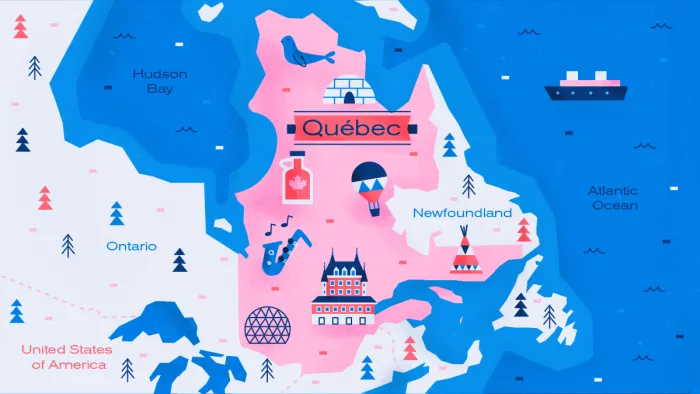
French presence in Canada began in 1534, when explorer Jacques Cartier claimed parts of the region for France. Decades later, Samuel de Champlain founded Quebec City in 1608, establishing the first lasting French settlement.
This growing colony became known as New France. Settlers arrived steadily through the 1600s, many working in the fur trade that shaped the colony’s early economy.
How the British Conquest Changed Everything
In 1763, Britain gained control of New France following the Treaty of Paris after the Seven Years’ War. This shift placed French-speaking settlers, known as Québécois, under British rule.
Rather than eliminating French language and culture, Britain made a strategic decision to preserve it. This choice would shape Canada’s identity for centuries to come.
The Quebec Act of 1774: Protecting French Culture
The British Parliament passed the Quebec Act in 1774 to secure loyalty from French-speaking colonists. It granted religious freedom to Catholics and allowed French civil law to continue alongside English law.
- Restored French civil law within Quebec.
- Guaranteed religious freedom for Catholic settlers.
- Recognized French as a functioning language of governance.
- Helped prevent Québécois support for the American Revolution.
This single law is widely considered the turning point that preserved French language and identity under British rule.
From New France to Modern Canada
Canada’s provincial structure evolved significantly after the Quebec Act. In 1791, the territory split into Upper Canada (Ontario) and Lower Canada (Quebec).
By 1867, Canada became a federal state made up of Ontario, Quebec, Nova Scotia, and New Brunswick. Quebec retained its strong French-speaking identity throughout this transition.
The Official Languages Act of 1969
Canada formally recognized English and French as its two official languages through the Official Languages Act of 1969. This law confirmed what history had already shaped: French wasn’t going anywhere.
Federal government services, documents, and institutions must offer both languages under this act. It remains one of the clearest legal reflections of Canada’s bilingual identity.
Quebec: The Heart of French-Speaking Canada
Quebec stands out as Canada’s only officially unilingual French province. Roughly 80% of Quebec’s population speaks French as a first language, and the number climbs even higher when including second-language speakers.
French is the required language for most signs, government services, and advertisements throughout Quebec. Outside of Montreal, which is largely bilingual, English is far less common in daily life.
Where Else Is French Spoken in Canada?
French isn’t confined to Quebec. Several other regions maintain meaningful French-speaking communities.
| Region | French-Speaking Status |
|---|---|
| Quebec | Only officially unilingual French province |
| New Brunswick | Canada’s only officially bilingual province |
| Ontario | Significant Francophone minority population |
| Manitoba | Historic French-Canadian communities |
| Nova Scotia | Acadian French-speaking regions |
Québécois vs. Continental French
The French spoken in Quebec, sometimes called Québécois or Laurentian French, differs noticeably from the French spoken in France. Centuries of separation shaped distinct pronunciation and vocabulary.
- Laurentian French shortens certain vowel sounds compared to Continental French.
- Everyday vocabulary differs, such as using “dîner” for lunch instead of dinner.
- Informal spoken Québécois, sometimes called joual, includes contractions like “chu” for “je suis.”
- These differences reflect 17th and 18th-century French dialects preserved through isolation.
Why French Culture Survived in Quebec
A mix of legal protection, religious identity, and cultural pride kept French alive in Quebec for centuries. The Roman Catholic Church played a major role in preserving language through schools and community institutions.
Modern Quebec has also enacted its own language laws to protect French in education, business, and government. This ongoing effort reflects a deep cultural commitment that goes beyond historical accident.
Also Read:
- Literary Tools: Mastering the Art of Powerful Storytelling and Poetry
- Standard Metaphor Examples In Literature
- Implied Metaphor (Examples in Literature & Sentences)
- 100 Metaphor Examples (Common Example Sentences)
- Visual Metaphor (Examples in Literature & Explanation)
- Metonymy Vs Metaphor (Key Differences & Examples)
- Metaphor Examples In Poetry
- Extended Metaphors Examples in Literature
- What Is Dead Metaphor? 6 Examples in Literature
- 11 Types of Metaphors in English (Definitions & Examples)
- Ditch the Screen: The Secret to Catching Every Typo in Your Draft
- Point Cloud for Construction: Reliable 3D Data for Projects
- Why Is It Called House Music? (Origin & History Explained) 2026
- Why Do My Eyelids Itch? Common Causes Explained 2026
- Why Do My Nails Hurt After Getting Acrylics? (Causes & Relief) 2026
- Why Can’t Horses Throw Up? Here’s Why 2026
- Why Won’t My Car Turn Over? Causes & Fixes 2026
- Why Does My Dog Keep Scratching? Causes Explained 2026
- Why Does My Tooth Hurt When I Lay Down? Here’s Why 2026
- Why Isn’t My Flashlight Working? Causes & Quick Fixes 2026
- Secrets to Winning Big on Online Slot Machines
Frequently Asked Questions (FAQs)
Why do Canadians speak French?
Canadians speak French because France colonized parts of Canada starting in 1608, and laws like the Quebec Act of 1774 protected the language even after British control began.
When did the French first arrive in Canada?
Jacques Cartier claimed parts of Canada for France in 1534, and Samuel de Champlain founded Quebec City in 1608, establishing the first lasting French colony.
Why didn’t the British eliminate French after the conquest?
The British passed the Quebec Act of 1774 to secure loyalty from French-speaking colonists, protecting their language, religion, and legal system instead of forcing assimilation.
Is French an official language of Canada?
Yes, French and English became Canada’s two official languages under the Official Languages Act of 1969.
What percentage of Quebec speaks French?
Approximately 80% of Quebec’s population speaks French as a first language, with the number rising further when including second-language speakers.
Is Quebec the only French-speaking province in Canada?
Quebec is the only officially unilingual French province, but French-speaking communities also exist in New Brunswick, Ontario, Manitoba, and Nova Scotia.
What is New Brunswick’s language status?
New Brunswick is Canada’s only officially bilingual province, recognizing both English and French at the provincial level.
What is Québécois French?
Québécois, also called Laurentian French, is the distinct form of French spoken in Quebec, featuring different pronunciation and vocabulary compared to Continental French.
Why does Quebec French sound different from France’s French?
Centuries of geographic separation allowed Quebec French to preserve older pronunciation patterns and develop unique vocabulary and informal speech patterns like joual.
Do all Canadians speak French?
No, only about 20% of Canadians speak French as a first language, with most concentrated in Quebec and nearby regions.
What was New France?
New France was the name of the French colonial territory in North America, established after Samuel de Champlain founded Quebec City in 1608.
How did the Quebec Act help preserve French culture?
The Quebec Act of 1774 restored French civil law, guaranteed religious freedom for Catholics, and allowed French governance structures to continue under British rule.
Conclusion
French remains part of Canada today because of deliberate historical choices, not accident. From Champlain’s founding of Quebec City to the protective Quebec Act and the modern Official Languages Act, each stage preserved French language and identity.
Quebec’s continued cultural pride and legal protections ensure French will remain a defining part of Canadian life for generations to come.
