

Genesis 9 tells a strange, unsettling story. Noah gets drunk, something happens inside his tent, and a curse falls on his grandson Canaan.
Many readers ask why was Canaan cursed instead of Ham, since it was Ham who saw his father’s nakedness. This article breaks down the whole story in plain language.
Why Was Canaan Cursed
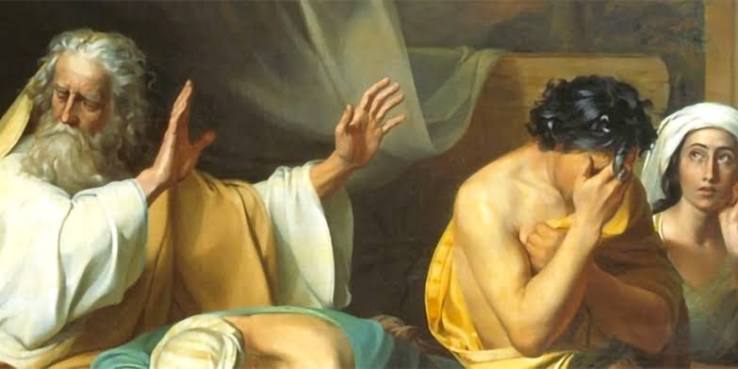
Noah cursed Canaan because of Ham’s disrespectful act of seeing and exposing his father’s nakedness. Scripture never fully explains why the curse fell on Canaan rather than Ham himself, so Jewish and Christian scholars offer several theories.
The most common view is that cursing Canaan was Noah’s way of punishing Ham through his son, since Noah had no direct authority to curse Ham after God had already blessed him.
The Genesis 9 Story in Brief
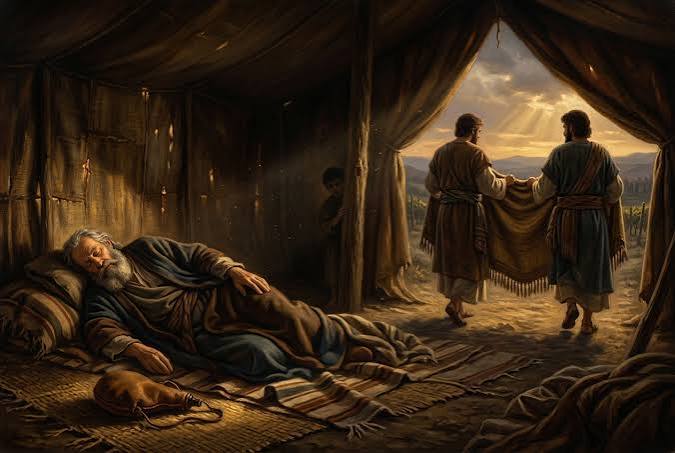
After the flood, Noah planted a vineyard, made wine, and drank until he passed out naked in his tent. Ham saw his father exposed and told his brothers, Shem and Japheth.
Shem and Japheth walked backward into the tent and covered Noah without looking at him. When Noah woke and learned what happened, he pronounced a curse on Canaan, Ham’s son.
The Exact Curse in Genesis 9:25-27
Noah declared that Canaan would be “a servant of servants” to his brothers. He then blessed Shem and Japheth, saying Canaan would serve them too.
This passage is short, only three verses, yet it has shaped centuries of theological debate and, tragically, real-world injustice.
Why Did Noah Curse Canaan Instead of Ham?
This is the central puzzle of the passage. Scripture states Ham committed the offense, yet the curse lands on Canaan, Ham’s fourth son.
Below are the leading explanations offered across Jewish and Christian tradition.
Theory 1: Noah Could Not Curse an Already-Blessed Man
God had already blessed Noah and his sons after the flood in Genesis 9:1. Some scholars argue Noah could not reverse that blessing on Ham directly.
Cursing Ham’s son instead was seen as an indirect but still severe punishment against Ham as a father.
Theory 2: Canaan Was Involved in the Incident
Some ancient commentators, including sources in the Midrash, suggest Canaan was the first to see Noah exposed and told Ham, who then told his brothers.
Under this view, Canaan bore direct responsibility rather than being an innocent bystander.
Theory 3: A Graver Act Took Place
Some rabbinic sources, including material from the Talmud, propose that “seeing nakedness” was a euphemism for something far worse than simply looking.
These interpretations suggest Ham or Canaan committed a serious act against Noah, which would explain why the punishment was so severe.
Theory 4: Canaan Was the Only Son Already Born
Genesis 9:18 implies Canaan was Ham’s son at the time of the incident, while Ham’s other sons may not have been born yet.
Cursing a future child would have had no immediate effect, so the curse fell on the son who already existed.
Theory 5: A Prophetic Statement About the Future
Some scholars view the curse as prophetic rather than purely punitive. Noah, they argue, foresaw that Canaan’s descendants would become deeply corrupt.
This view connects the curse to the later biblical accounts of the Canaanite nations.
Comparison of the Main Theories
| Theory | Core Idea | Supported By |
|---|---|---|
| Blessing already given | Noah could not undo God’s blessing on Ham | Bereishit Rabbah |
| Canaan involved directly | Canaan first saw Noah and told Ham | Midrash sources |
| Graver offense | “Nakedness” implies a severe act | Talmud, Sanhedrin |
| Only son born | Canaan already existed; other sons did not | Genesis 10:6 |
| Prophetic curse | Noah foresaw future corruption of Canaan’s line | Later Canaanite history |
What Was Ham’s Actual Sin?
The text says Ham “saw the nakedness of his father” and told his brothers outside. On the surface, this looks like carelessness rather than a serious crime.
Many scholars believe the deeper offense was disrespect and public humiliation of a parent, not the act of seeing itself.
Shem and Japheth’s careful, backward-walking response highlights just how differently a respectful son was expected to act.
Why the Curse Targeted Canaan’s Descendants
Canaan became the ancestor of the Canaanite peoples, including the Amorites, Jebusites, and Phoenicians. These nations later occupied the land promised to Israel.
The curse is often read as narrative preparation for the book of Joshua, where Israel eventually takes possession of Canaanite territory.
Historical Misuse of This Passage
For centuries, some groups wrongly used this text to justify slavery and racism, often mislabeling it the “Curse of Ham” instead of the “Curse of Canaan.”
Mainstream biblical scholarship today firmly rejects this application. The text names only Canaan, not Ham’s other sons, and it never mentions skin color or race.
What the Curse Does Not Mean
- It does not say Ham was cursed.
- It does not mention race, ethnicity, or skin color.
- It does not apply to all of Ham’s descendants, only Canaan’s line.
- It was never intended as justification for slavery.
Key Takeaways
- The curse in Genesis 9 falls specifically on Canaan, not Ham.
- Scholars offer several theories, but the Bible does not state the exact reason in full detail.
- The passage has historically been misused, but modern scholarship rejects those interpretations.
- The curse connects narratively to Israel’s later conquest of Canaan.
Also Read:
- Why Do Canadians Speak French? History & Facts Explained
- Why Is It Called House Music? Origin & History Explained
- Why Is Magnet Fishing Illegal? Laws & Rules Explained
- Why Do Dogs Eat Their Own Vomit? Should You Worry?
- Why Do Dogs Eat Leaves? Causes & What to Do
- Why Does My Dog Keep Scratching? Causes Explained
- Why Does My Dog Sleep With His Tongue Out? Here’s Why
- Why Can’t Horses Throw Up? Here’s Why
- Why Won’t My Car Turn Over? Causes & Fixes
- Why Are My Gums Bleeding When I Brush My Teeth?
- Why Are My Gums Purple? Causes & What It Means
- Why Does My Tooth Hurt When I Lay Down?
- Why Is There a White Spot on My Tooth? Explained
- Why Do My Eyelids Itch? Common Causes Explained
- Why Do My Legs Feel Tingly? Should I Be Worried?
- Why Do Your Pupils Dilate When You Look at Someone?
- Why Do My Feet Swell When I Drink Alcohol?
- Why Do My Nails Hurt After Getting Acrylics?
- Why Do I Have a Hump on the Back of My Neck?
- 100 Metaphor Examples (Common Example Sentences)
- Standard Metaphor Examples in Literature
- 11 Types of Metaphors in English
- Extended Metaphors Examples in Literature
- Literary Tools: Mastering the Art of Powerful Storytelling
Frequently Asked Questions (FAQs)
Why was Canaan cursed and not Ham?
Noah could not curse Ham directly since God had already blessed him. Cursing Canaan, Ham’s son, was an indirect but still severe punishment on Ham’s household.
What did Ham actually do to Noah?
Ham saw his father lying naked and drunk in his tent, then told his two brothers outside instead of covering him respectfully.
What does “servant of servants” mean in Genesis 9:25?
The phrase means the lowest form of servitude, indicating Canaan’s descendants would serve the descendants of Shem and Japheth.
Is the curse of Canaan connected to slavery?
No. This connection was a historical misuse of the text. The Bible never mentions race or skin color, and mainstream scholars reject this application entirely.
Who were Canaan’s descendants?
Canaan’s descendants included the Canaanites, Amorites, Jebusites, Hivites, and Phoenicians, many of whom lived in the land later promised to Israel.
Did Noah’s curse actually come true?
Many scholars point to Israel’s later conquest of Canaan in the book of Joshua as the fulfillment of Noah’s words.
Why did Noah get drunk in Genesis 9?
The text does not give a reason for Noah’s drunkenness beyond stating he planted a vineyard, made wine, and drank it, becoming intoxicated afterward.
What is the Jewish interpretation of this curse?
Jewish commentators in the Midrash and Talmud offer multiple explanations, including that Canaan was involved directly or that a more serious act took place.
What is the Christian interpretation of this curse?
Christian scholars often view it as a consequence of dishonoring a parent, paired with a prophetic statement about Canaan’s future descendants.
Does the Bible say Ham was cursed?
No. Genesis 9:25 specifically states “Cursed be Canaan,” never naming Ham as the one under the curse.
Why does the text call Ham “the father of Canaan”?
This phrase is repeated to make clear which of Ham’s sons is being discussed, since Ham had multiple sons.
Was Canaan already born when the incident happened?
Genesis 10:6 lists Canaan among Ham’s sons, and many scholars believe he was already born at the time of Noah’s drunkenness.
What does “uncovering nakedness” mean in the Bible?
In many Old Testament passages, this phrase is used as a euphemism, which is part of why some scholars believe more happened than simple viewing.
How long is the passage about Canaan’s curse?
The full account spans Genesis 9:20 through 9:27, only eight verses covering the vineyard, the incident, and the curse itself.
Why is this story important in the Bible?
It explains the origin of tension between Israel and the Canaanite nations and sets up later conquest narratives in the Old Testament.
Did other cultures interpret this story similarly?
Interpretations vary widely across Jewish, Christian, and secular scholarship, with no single agreed-upon explanation for every detail.
What happened to Shem and Japheth in this story?
Noah blessed both of them. Shem received a specific blessing tied to God, while Japheth was blessed with future expansion.
Is this the only curse recorded after the flood?
Yes, this is the only curse Noah pronounces after leaving the ark, making it a notable and heavily discussed passage.
Why do people still debate this passage today?
Because the Bible does not explain the reasoning in full, leaving room for multiple valid theories rather than one definitive answer.
What is the main lesson from this story?
Many teachers point to respect for parents and the seriousness of dishonoring family as the core lesson behind the passage.
Conclusion
The story of why Canaan was cursed remains one of the more debated passages in Genesis. Scripture gives the outcome clearly but leaves the exact reasoning open to interpretation.
Jewish and Christian scholars have offered several thoughtful theories over the centuries, from indirect punishment to prophetic insight. What is clear is that the text never supports the harmful ways it was later misused.
Reading Genesis 9 in its full context helps separate the actual biblical account from centuries of misinterpretation.
