

Vanilla is the flavor everyone assumes is “plain,” yet a single bottle of the real extract can cost more than a bottle of good wine. That gap between vanilla’s humble reputation and its luxury price tag is exactly what confuses shoppers.
Why Is Vanilla So Expensive? vanilla is expensive because it comes from an orchid that only blooms one day a year, must be hand-pollinated flower by flower, and needs up to a year of curing before it’s ready to sell.
Add in a global supply that’s concentrated in one storm-prone island, and you get a spice that regularly trades for more than silver.
Why Is Vanilla So Expensive?
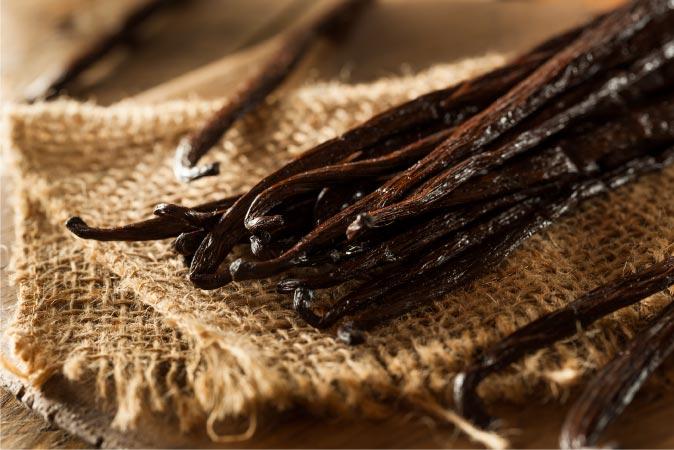
Vanilla is the second most expensive spice in the world after saffron.
The price comes from labor-intensive hand-pollination, a growing region limited to a narrow tropical band, a curing process that takes six to twelve months, and a supply chain dominated by Madagascar, which is regularly hit by cyclones.
1. Vanilla Only Grows in a Narrow Climate Window
Vanilla is an orchid, and orchids are picky. The plant only thrives between roughly 10 and 20 degrees north and south of the equator, at low altitude, with steady warmth and humidity.
That narrow band rules out most of the planet as a growing region. Only a handful of countries, mainly Madagascar, Indonesia, Uganda, Mexico, and a few Pacific islands, can produce it commercially at scale.
2. Every Flower Must Be Hand-Pollinated
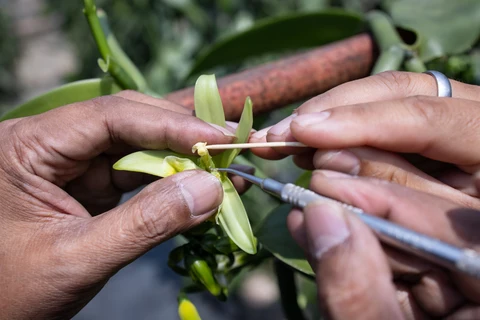
In vanilla’s native Mexico, a specific local bee once pollinated the flowers for free. That bee doesn’t exist anywhere else vanilla is grown today.
So every single flower, on every single vine, has to be pollinated by hand within a few hours of opening. The flower blooms for one day only, and a missed window means no bean at all.
This hand-pollination is skilled, repetitive farm labor with no shortcut and no machine replacement. It’s one of the biggest reasons vanilla is grouped with saffron as “labor priced,” not “commodity priced.”
3. New Vines Take Years to Produce Anything
A newly planted vanilla vine needs about three years before it produces its first usable pods. Most spice crops pay back a farmer within a single growing season; vanilla does not.
That multi-year wait means farmers are financing years of labor and land use before they see any income. That upfront risk gets built into the price of every pod that eventually reaches the market.
4. Curing Takes Six Months to a Year
Picking the bean is just the start. Green vanilla pods have almost no flavor or aroma on their own.
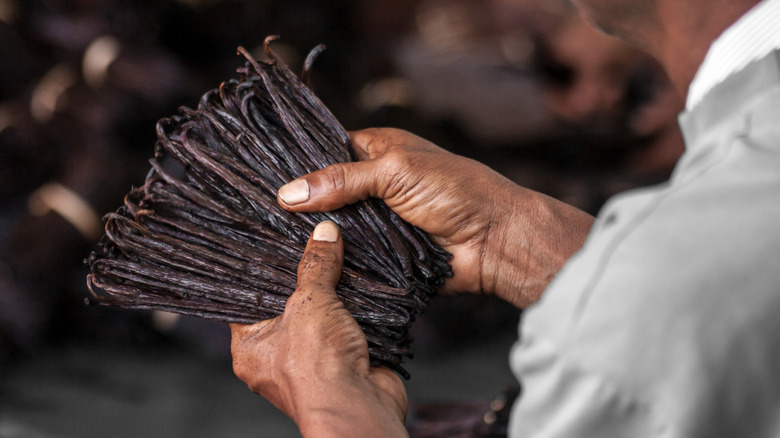
They have to go through a curing process of scalding, sweating, slow-drying, and conditioning that can stretch from six months to a full year. This is what develops vanillin and the hundreds of other aroma compounds that give real vanilla its flavor.
From the day a flower is pollinated to the day cured beans are ready for export, growers are looking at roughly 12 months of continuous, hands-on work.
5. One Island Controls Most of the World’s Supply
Madagascar produces the majority of the world’s vanilla, commonly cited around 70 to 80 percent depending on the harvest year. That concentration is a problem, because Madagascar sits directly in a cyclone corridor.
A single major storm can wipe out a large share of a season’s crop overnight. The 2017 cyclone that hit the Sava growing region is the textbook example — it destroyed enough vanilla that global prices roughly tripled in the years that followed.
Government export rules add another layer. Madagascar has at various points set minimum export price floors for vanilla, meaning beans below a certain price per kilo legally cannot leave the country.
6. How Vanilla Compares to Other Expensive Spices
| Spice | Typical Global Rank | Why It’s Expensive |
|---|---|---|
| Saffron | #1 most expensive | Hand-harvested stigmas, thousands of flowers per kilo |
| Vanilla | #2 most expensive | Hand-pollination, year-long curing, climate-limited growing zones |
| Cardamom | Mid-high | Labor-intensive hand-picking, limited growing regions |
| Cinnamon (Ceylon) | Mid | Hand-peeled bark, slower to produce than cassia cinnamon |
Vanilla consistently ranks as the second most expensive spice by weight, behind only saffron.
7. Real Vanilla vs. Imitation Vanilla
Most of what people taste as “vanilla” every day is actually synthetic vanillin, not real vanilla extract. That’s why a bottle at the grocery store can cost two dollars while another bottle a few inches away costs fifteen.
| Factor | Real Vanilla Extract | Imitation Vanilla |
|---|---|---|
| Source | Cured vanilla bean pods | Synthesized vanillin (from lignin or guaiacol) |
| Flavor complexity | Hundreds of aroma compounds | Mostly a single compound, vanillin |
| Production time | Up to 12 months | Days |
| Typical price | High | Low |
| Labeling | Must say “pure vanilla extract” in the US | Labeled “imitation vanilla” or “vanilla flavoring” |
Imitation vanilla is not inherently bad; it’s just a different, much cheaper product made through chemistry rather than agriculture.
8. Vanilla Prices Over Time
Vanilla is famous for wild price swings, more volatile than almost any other spice on the market.
| Period | Approximate Cured Price (Madagascar, per kg) | What Was Happening |
|---|---|---|
| 2014 | Around $50 | Relatively normal, pre-boom pricing |
| 2017–2018 | Up to $500–$600 | Cyclone Enawo destroyed a large share of the crop |
| Mid-2020s | Falling sharply | Larger harvests rebuilt global stock levels |
| 2025–2026 | Wide range, roughly $6–$220 depending on grade and stage | Market normalizing at the bottom of the cycle, with export floors and quality grading widening the spread |
Note that “price of vanilla” can mean very different numbers depending on whether you’re looking at farm-gate wholesale, export-grade cured beans, or retail beans sold to home cooks. Retail prices in the US for high-quality cured beans have stayed in the range of roughly $70–$110 per pound even as bulk wholesale prices fell.
9. What Determines the Price You Actually Pay
Several factors stack on top of each other by the time vanilla reaches a store shelf.
- Origin — Madagascar and Mexican vanilla generally command higher prices than Indonesian or Ugandan vanilla.
- Grade — longer, plumper, more pliable pods with higher moisture and vanillin content cost more than split or dry “extract grade” pods.
- Variety — Vanilla planifolia is the standard; the rarer Pompona and Tahitensis varieties can carry a premium.
- Currency and tariffs — since most vanilla is imported, exchange rates and trade policy directly move retail prices.
- Weather risk — every cyclone season in Madagascar adds a built-in risk premium to forward contracts.
- Middlemen and processing — extraction, bottling, and distribution all add cost on top of the raw bean price.
10. How to Buy Real Vanilla Without Overpaying
- Buy whole beans in bulk from specialty spice sellers instead of small grocery store bottles, which usually cost far more per ounce.
- Compare price per pound or per kilo, not price per bottle, since bottle sizes vary a lot between brands.
- Look for “pure vanilla extract” on the label; anything calling itself “vanilla flavoring” is imitation.
- Store beans in an airtight container away from light to protect your investment.
- Use vanilla paste or extract for everyday baking and save whole beans for dishes where the flavor really shows, like custards or ice cream.
Also Read:
- Why Do I Have a Hump on the Back of My Neck? Causes & Fixes
- Why Are My Gums Purple? Causes & What It Means
- Why Do Canadians Speak French? History & Facts Explained
- Why Is It Called House Music? Origin & History Explained
- Why Do My Eyelids Itch? Common Causes Explained
- Why Do My Nails Hurt After Getting Acrylics? Causes & Relief
- Why Can’t Horses Throw Up? Here’s Why
- Why Won’t My Car Turn Over? Causes & Fixes
- Why Does My Dog Keep Scratching? Causes Explained
- Why Does My Tooth Hurt When I Lay Down? Here’s Why
- Why Isn’t My Flashlight Working? Causes & Quick Fixes
- Why Is My Dog Drooling So Much All of a Sudden? Causes & Fixes
- Why Do Toenails Turn Yellow? Causes Explained
- Why Does Tooth Pain Come and Go? Causes Explained
- Why Is It Called Wisdom Teeth? The Real Origin Explained
- Why Do Men Have Longer Eyelashes? The Real Science Behind the Myth
- Why Are Dreams So Weird? The Science Explained
- Why Does My Dog Keep Coughing and Gagging? Causes and When to Worry
- Why Have I Been on My Period for 2 Weeks? Causes Explained
- Why Do People File Bankruptcy? Common Causes Explained
- Why Is a Flea Market Called a Flea Market? The Real Origin Explained
- Why Do We Have Ear Wax? The Real Purpose Explained
- Why Do Cats Love Bite? Meaning & How to Respond
- Why Is My Earwax Wet? Causes, Normal Types, and Warning Signs
- Why Is FedEx So Bad? The Real Reasons Behind the Complaints
- Why Are My Cat’s Ears Cold? Causes & When to Worry
- Why Do Dogs Get Skin Tags? Causes, Risks, and When to Worry
Frequently Asked Questions (FAQs)
Why is vanilla so expensive compared to other spices?
Vanilla requires hand-pollination, up to a year of curing, and grows only in a narrow tropical climate band. That combination of manual labor and long production time makes it the second most expensive spice after saffron.
Is vanilla more expensive than saffron?
No, saffron is still generally the most expensive spice by weight. Vanilla usually ranks second, though price gaps between the two have narrowed and shifted during vanilla’s price spikes.
Why did vanilla prices spike so dramatically around 2017?
A major cyclone hit Madagascar’s Sava region in 2017 and destroyed a large portion of that year’s crop. Since Madagascar supplies most of the world’s vanilla, the shortage pushed global prices to record highs within a year or two.
Is real vanilla extract worth the extra cost?
For baking where vanilla is a lead flavor, like custards, cookies, or ice cream, most bakers find real extract noticeably richer than imitation. For recipes where vanilla is a background note, imitation vanilla is a reasonable, budget-friendly substitute.
How can I tell real vanilla extract from imitation vanilla?
Check the label. In the US, only products made from actual vanilla beans can be called “pure vanilla extract.” Anything labeled “imitation vanilla” or “vanilla flavoring” is synthetic.
Why does Madagascar dominate vanilla production?
Madagascar has the tropical climate vanilla needs, decades of farming expertise, and an established export infrastructure. It’s estimated to supply the majority of global vanilla, though that concentration also makes global prices vulnerable to local weather.
Does vanilla ever become cheap again after a price spike?
Yes. Vanilla prices are cyclical. After the 2017–2018 spike, large follow-up harvests across Madagascar and other origins rebuilt supply and pushed wholesale prices back down significantly by the mid-2020s.
What’s the difference between vanilla extract, paste, and whole beans?
Vanilla extract is alcohol infused with vanilla flavor, paste is a thicker blend that includes vanilla bean seeds, and whole beans are the cured pods themselves. Whole beans offer the strongest flavor but need extra prep, while extract is the most convenient for everyday baking.
Why do vanilla beans look shriveled and dark?
That’s normal. Cured vanilla beans are meant to be dark brown and slightly wrinkled; that texture is a sign of proper curing, not spoilage.
Is Tahitian vanilla more expensive than Madagascar vanilla?
Tahitian vanilla (Vanilla tahitensis) is a different variety with a more floral flavor and is often priced at a premium due to its lower global supply compared to Madagascar’s planifolia vanilla.
Can vanilla be grown outside its usual tropical regions?
Not commercially at scale. Some greenhouse growers experiment with vanilla in cooler climates, but the yields are far too small and costly to compete with tropical production.
Why does vanilla take so long to cure?
Curing develops the vanillin and aroma compounds that give vanilla its flavor. Rushing the process results in beans with little to no scent or taste, so growers accept the long timeline as necessary.
Are there ethical or fair-trade concerns with vanilla farming?
Yes. Because vanilla farming is so labor-intensive and price-volatile, farmer income instability and fair pay are ongoing concerns in producing regions, which is why fair-trade and direct-trade vanilla sourcing has grown in popularity.
Will vanilla prices go up again soon?
Prices depend heavily on harvest size and cyclone risk each season. Analysts generally expect continued volatility rather than a single stable price, since one storm can shift the market quickly.
Why is imitation vanilla so much cheaper to make?
Imitation vanilla is synthesized in a lab from sources like lignin or guaiacol in a matter of days, skipping the years of farming and months of curing that real vanilla requires.
Conclusion
Vanilla is expensive because almost nothing about growing it can be automated or rushed.
Every flower is pollinated by hand, every pod takes about a year to become usable, and most of the world’s supply comes from one storm-exposed region.
Once you understand that chain of hand labor, waiting, and risk, the price tag makes a lot more sense — and it also explains why cheap “vanilla” on a supermarket shelf usually isn’t real vanilla at all.
