

Why Is a Flea Market Called a Flea Market? You’re browsing secondhand furniture, vintage clothes, and old records at a weekend market, and it hits you: why on earth is this called a “flea” market?
The name has nothing to do with actual bugs crawling around today, but the story behind it is genuinely tangled up in fleas, French bazaars, and more than a century of word-origin debate.
Why Is a Flea Market Called a Flea Market?
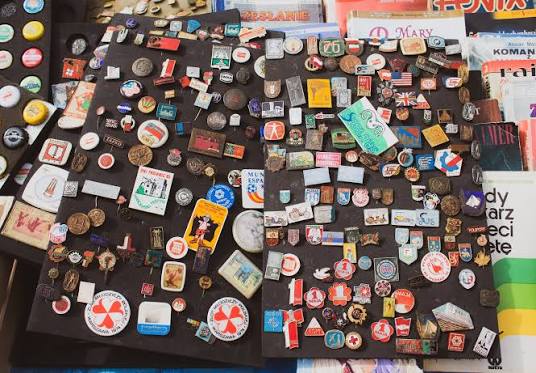
The term “flea market” most likely comes from the French phrase marché aux puces, meaning “market of fleas,” used to describe an outdoor Paris bazaar in the 1880s.
The name is thought to reference fleas that infested the secondhand furniture and clothing sold there, though a few other theories exist.
What Does “Flea Market” Actually Mean?
A flea market is an outdoor or indoor marketplace where vendors sell secondhand goods, antiques, collectibles, and various used items.
The phrase itself is what’s called a calque, a direct translation of a foreign phrase, in this case borrowed from French.
The Main Theory: Paris and the “Market of Fleas”
Le Marché aux Puces
The most widely accepted explanation traces back to Saint-Ouen, a large outdoor bazaar on the edge of Paris that became known as le marché aux puces in the 1880s.
According to the popular version of the story, an unknown bargain hunter coined the nickname after noticing that the old furniture and used clothing on sale seemed to carry fleas.
Why Fleas, Specifically?
Vendors sold worn upholstered furniture, secondhand clothing, and rags, items that were genuinely more likely to harbor fleas than newly made goods.
Whether the market was truly flea-infested or the name was simply a colorful exaggeration, the label stuck and eventually crossed into English.
The First Recorded Use in English
The Oxford English Dictionary traces its earliest English usage to a 1922 book, which explained the name by saying so many secondhand items were sold there that they were believed to carry fleas.
Interestingly, American newspapers used the term even earlier, with a reference appearing as far back as 1887.
Competing Theories on the Origin
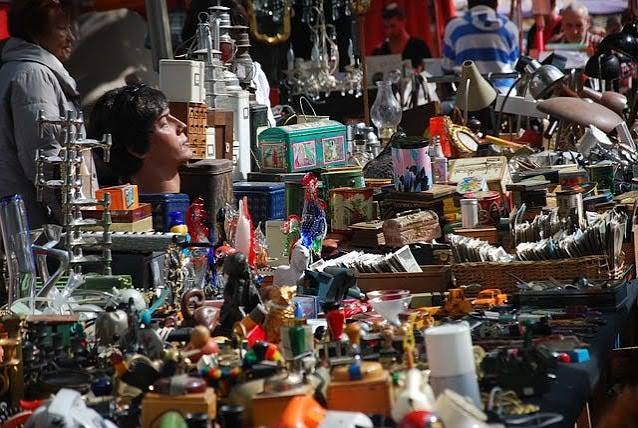
The Paris bazaar story is the most repeated explanation, but it isn’t the only one historians point to.
| Theory | Core Idea | Strength of Evidence |
|---|---|---|
| Paris marché aux puces | Named for fleas in secondhand furniture at a 1880s bazaar | Most widely cited, still debated |
| Copenhagen origin | An 1887 U.S. newspaper described a similar market in Copenhagen, not Paris | Documented but less popular |
| “Flee” market theory | Paris street renovations forced vendors to “flee” to new locations, later spelled “flea” | Weaker evidence, but a known alternate theory |
| Danish “loppemarked” | Possibly linked to Danish or German words for flea market that predate the French term | Uncertain, debated among etymologists |
The “Flee Market” Theory
A second theory ties the name to mid-19th-century Paris, when city planner Georges-Eugène Haussmann widened major boulevards and displaced many small shop owners.
According to this version, vendors were forced to “flee” their storefronts and set up in outdoor stalls instead, and “flee market” is thought to have later shifted in spelling to “flea market.”
Why the Origin Is Still Debated
Etymologists note that similar terms appeared in French, Danish, and German around the same era, which makes it hard to pin down exactly which language or country coined the phrase first.
Some records even suggest the earliest documented English use referred to a market in Copenhagen rather than Paris, complicating the tidy “French origin” story.
How the Term Spread to English and Beyond
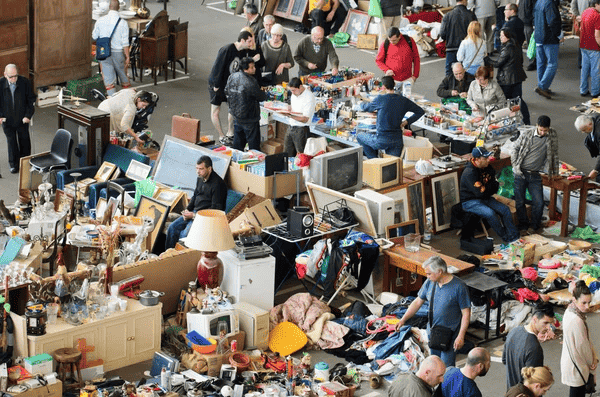
Once “flea market” entered English print in the late 1800s and early 1900s, it spread quickly across the U.S. and other English-speaking countries as a catch-all term for secondhand markets.
Today, the phrase covers everything from small neighborhood swap meets to large indoor antique complexes, regardless of any connection to actual fleas.
Flea Market vs. Similar Terms
Several related terms get used interchangeably, though they don’t always mean exactly the same thing.
| Term | Typical Setting | Common Goods |
|---|---|---|
| Flea Market | Outdoor or indoor stalls, regular schedule | Antiques, secondhand goods, collectibles |
| Swap Meet | Often outdoor, sometimes trade-focused | Used items, sometimes new goods too |
| Yard Sale | Private home, one-time event | Household items, clothing, personal belongings |
| Brocante | French term, similar to antique fair | Vintage and antique items |
| Car Boot Sale | UK term, sellers use car trunks as stalls | Secondhand household and personal items |
Fun Facts About the Flea Market Name
- The Oxford English Dictionary’s earliest citation for “flea market” dates to 1922.
- American newspaper use of the term has been traced back to 1887, predating the OED citation.
- The word “puce,” meaning flea in French, also gave English the color name “puce,” a brownish-purple shade.
- Saint-Ouen, the Paris market often credited with the name, is still one of the largest antique markets in the world today.
Mistakes to Avoid When Explaining the Origin
- Don’t state the Paris bazaar theory as definitive fact, since historians still debate it.
- Don’t ignore the earlier Copenhagen newspaper reference when discussing the term’s history.
- Don’t confuse “flea market” etymology with unrelated idioms about fleas, like “put a flea in someone’s ear.”
Related Articles
- Derring-Do: Meaning & Examples in Literature
- Crime Doesn’t Pay: Meaning & Examples
- Dollars to Donuts: Meaning & Examples in Literature
- Are You Tennessee: Unlocking This Iconic Pickup Line
- Homograph Examples & Exercises
- 9 Examples of Metaphor in Literature
- 75 Literary Devices (A to Z List)
- Standard Metaphor Examples in Literature
- Examples of Idiom in Literature
- Extended Metaphors Examples in Literature
- What Is Analogy? Analogy Examples in Literature
- 7 Examples of Figurative Language in Literature
- Litotes Examples in Literature
- Kinesthetic Imagery Examples
- Examples of Innuendo in Literature
- Literary Tools: Mastering the Art of Storytelling and Poetry
- 50 Examples of Figures of Speech
- Difference Between Simile vs. Hyperbole
- Literary Devices: Exaggeration Examples in Literature
- Pun Examples Figures of Speech
- 10 Literary Devices That Use Comparison
- Literary Devices vs. Figurative Language
- 10 Types of Figurative Language
- 10 Literary Devices Used for Humor
Frequently Asked Questions (FAQs)
Why is it called a flea market and not something else?
The most accepted theory says the name comes from the French marché aux puces, referencing fleas believed to infest secondhand furniture sold there.
Did flea markets actually have fleas?
There’s no solid proof they were more flea-infested than any other secondhand goods venue, but the perception around old furniture and clothing likely inspired the name.
When was “flea market” first used in English?
The Oxford English Dictionary cites 1922, though American newspapers used the term as early as 1887.
Is the flea market name French in origin?
Most evidence points to a French origin from marché aux puces, though some records suggest a similar term existed in Danish or German around the same time.
What is the “flee market” theory?
It suggests vendors displaced by Parisian street renovations had to “flee” to new locations, and the spelling later shifted to “flea.”
Is there a single confirmed origin for the term?
No. Historians and etymologists still debate the exact origin, since several countries had similar terms emerging around the same era.
What’s the difference between a flea market and a swap meet?
They’re similar, but swap meets sometimes emphasize trading goods, while flea markets are typically vendor stalls selling secondhand or new items.
Where is the original flea market located?
The Saint-Ouen market near Paris is often cited as the namesake, and it remains one of the largest antique markets in the world.
Does “puce,” the color, relate to the flea market name?
Yes, both come from the French word for flea, since puce is also the name of a brownish-purple color associated with flea coloring.
Are flea markets still called that everywhere in the world?
No, similar markets go by different names depending on the country, such as brocante in France or car boot sale in the UK.
Why do some sources credit Copenhagen instead of Paris?
An 1887 American newspaper article described a similar secondhand market in Copenhagen, which some etymologists argue is an equally valid early reference.
Is “flea market” an idiom?
Not exactly. It’s a calque, a direct translation from another language, rather than a figurative idiom with a non-literal meaning.
How old is the concept of flea markets, even before the name existed?
Secondhand and outdoor bazaars existed in various cultures long before the specific term “flea market” was coined in the 19th century.
Why did the name stick even though it sounds unappealing?
The eccentric, slightly unflattering name likely made it memorable, and it eventually became the standard term despite its odd connotation.
Do modern flea markets still resemble the original Paris bazaars?
Many still focus on secondhand goods and antiques, though modern flea markets vary widely, from small local markets to large curated antique fairs.
Conclusion
The name “flea market” traces back to a colorful, slightly disputed piece of etymology rooted in 1880s Paris and the French phrase marché aux puces.
Whether the true origin lies in flea-infested furniture, displaced vendors forced to “flee,” or an earlier Copenhagen reference, the name has stuck for well over a century.
Next time you’re browsing secondhand treasures at your local flea market, you’ll know the odd little backstory behind its name.
