

Minnesota locals say it like second nature: “the Cities.” But why is it called the Twin Cities in the first place?
The short answer is geography and rivalry. Minneapolis and St. Paul grew up right next to each other on the Mississippi River. They stayed separate, competitive, and distinct, yet close enough that people started calling them “twins.”
That simple explanation only scratches the surface, though. The real story involves a third city that most people forget, a name-brand rivalry, and a metro area that eventually grew far bigger than two downtowns.
Why Is It Called the Twin Cities?
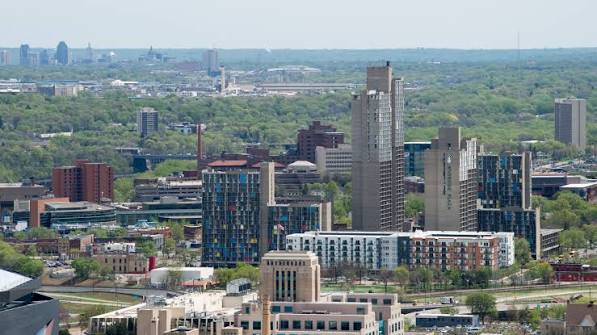
Minneapolis and St. Paul are called the Twin Cities because they sit only about ten miles apart on opposite banks of the Mississippi River.
They developed as separate, independent municipalities with their own governments, cultures, and economies. Despite that separation, their closeness made people treat them as a matched pair, so the nickname stuck.
It Started With a Different “Twin” City
Here’s the twist most articles skip. Minneapolis’s original “twin” wasn’t St. Paul at all.
In the 1840s, a town called St. Anthony was founded on the east bank of St. Anthony Falls. A few years later, settlers crossed the river and built a new town on the west bank, naming it Minneapolis.
For roughly twenty years, St. Anthony and Minneapolis functioned as their own true “Twin Cities,” facing each other across the same waterfall. St. Paul existed too, but it sat about fourteen miles away, a full day’s carriage ride at the time.
St. Anthony and Minneapolis eventually merged into a single city in 1872. Once that happened, St. Paul became the closest major neighbor, and the “twin” nickname simply transferred to the Minneapolis–St. Paul pairing we know today.
How St. Paul Got Its Name
St. Paul’s history is tangled up in legend. The area was first known informally as “Pig’s Eye,” after a fur trader named Pierre Parrant who was blind in one eye.
In the early 1840s, a Catholic priest named Lucien Galtier built the area’s first chapel and named the parish St. Paul. Settlers, many of them French and Irish Catholic immigrants, embraced the more dignified name, and it replaced “Pig’s Eye” for good.
By 1849, St. Paul had already become the capital of the Minnesota Territory, well before Minneapolis was officially incorporated.
How Minneapolis Got Its Name
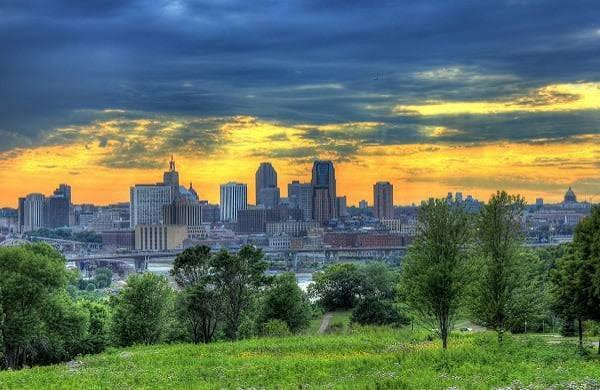
Minneapolis wasn’t the first choice either. Hennepin County commissioners officially named the west-bank settlement “Albion” before Minneapolis took hold.
A local booster pushed the name Minneapolis hard, combining the Dakota word “mni,” meaning water, with the Greek word “polis,” meaning city. The name promoted itself as fitting for a city built around a waterfall, and it eventually won out over Albion and other suggestions like “All Saints.”
Two Cities, Two Very Different Personalities
Part of why the “twin” label feels almost ironic is how different the two cities became. They share a river, but not much else in terms of culture and history.
- St. Paul: older, more compact, shaped by French, Irish, and German Catholic settlers, home to the state capitol.
- Minneapolis: younger, larger, shaped by Scandinavian and Lutheran settlers, home to the University of Minnesota and the old flour-milling industry.
Locals sometimes joke that only outsiders call them “twins,” since the two cities feel more like rival siblings than matching pairs.
Geography: Why the Closeness Matters
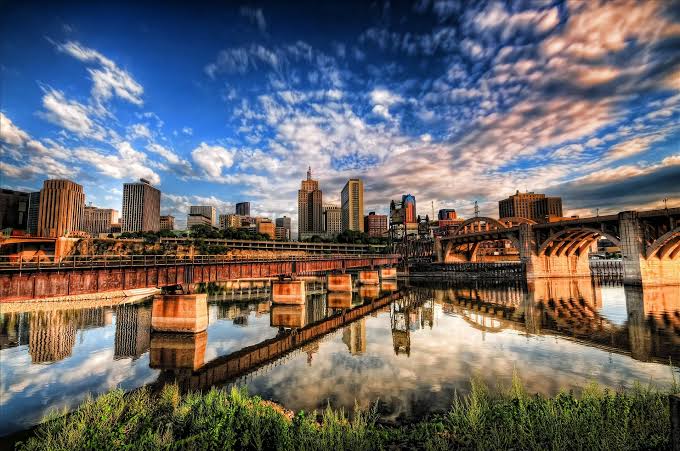
The Mississippi and Minnesota Rivers meet in this part of east-central Minnesota, and both cities grew directly out of that river geography.
Minneapolis sits mostly on the west side of the Mississippi, while St. Paul sits on the east bank near where the Minnesota River joins in. That proximity, roughly ten miles between downtowns, is the physical reason the “twin” comparison made sense in the first place.
Minneapolis vs. St. Paul at a Glance
| Feature | Minneapolis | St. Paul |
|---|---|---|
| Founded | 1867 (city charter) | 1854 (city charter) |
| Nickname | Mill City | Capital City |
| Early settlers | Scandinavian, Lutheran | French, Irish, German Catholic |
| Known for | Lakes, flour milling history, U of M | State capitol, Cathedral of St. Paul, older downtown |
| River side | West bank | East bank |
From “Twin Cities” to “The Cities”
Outside Minnesota, “Twin Cities” is the name most people recognize. Inside Minnesota, locals usually shorten it further and just say “the Cities.”
That local shorthand reflects the same idea from a different angle. Everyone already knows which two cities you mean, so the “twin” part becomes unnecessary in everyday conversation.
The Twin Cities Today
Today, “Twin Cities” often refers to more than just the two downtowns. The term is commonly used for the wider seven-county metro area governed by the Metropolitan Council.
This metro area is the third-largest in the Midwest and ranks among the largest metropolitan areas in the country. It’s home to major employers like Target, Best Buy, 3M, and UnitedHealth Group, all headquartered in or around the region.
Other “Twin Cities” Around the World
Minneapolis and St. Paul are the most famous “Twin Cities,” but the concept exists elsewhere too. Twin cities are simply two neighboring cities, often on opposite sides of a river or border, that get treated as one paired identity.
- Albury and Wodonga in Australia, split by the Murray River.
- Little Rock and North Little Rock in Arkansas.
- Dallas–Fort Worth in Texas, though usually called by both names rather than “twins.”
These pairings share the same basic pattern: close geography, separate governments, one shared nickname.
Quick Facts Box
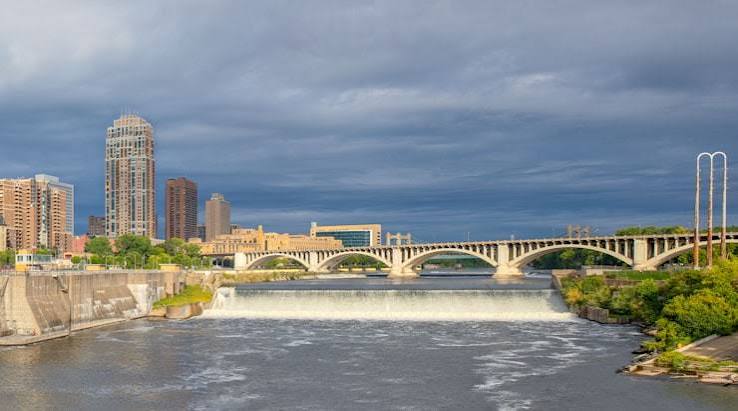
- Nickname origin: proximity, not identical size or appearance.
- First “twin” pairing: St. Anthony and Minneapolis, not St. Paul.
- Merger: St. Anthony joined Minneapolis in 1872.
- Local term: Minnesotans usually say “the Cities.”
- Modern scope: sometimes includes the full seven-county metro.
Also Read:
- Why Is It Called House Music? (Origin & History Explained)
- Why Is It Called Wisdom Teeth? The Real Origin Explained
- Why Do Canadians Speak French? History & Facts Explained
- Why Do People File Bankruptcy? Common Causes Explained
- Why Are Dreams So Weird? The Science Explained
- Why Do I Have a Hump on the Back of My Neck? Causes & Fixes
- Why Are My Gums Purple? Causes & What It Means
- Why Do My Eyelids Itch? Common Causes Explained
- Why Do My Nails Hurt After Getting Acrylics? Causes & Relief
- Why Can’t Horses Throw Up? Here’s Why
- Why Won’t My Car Turn Over? Causes & Fixes
- Why Does My Dog Keep Scratching? Causes Explained
- Why Does My Tooth Hurt When I Lay Down? Here’s Why
- Why Isn’t My Flashlight Working? Causes & Quick Fixes
- Why Is My Dog Drooling So Much All of a Sudden? Causes & Fixes
- Why Do Toenails Turn Yellow? Causes Explained
- Why Does Tooth Pain Come and Go? Causes Explained
- Why Do Men Have Longer Eyelashes? The Real Science Behind the Myth
- Why Does My Dog Keep Coughing and Gagging? Causes and When to Worry
- Why Have I Been on My Period for 2 Weeks? Causes Explained
- 75 Literary Devices (A to Z List) | Definitions & Examples
- How to Pronounce L O E W E: Master the Spanish Luxury Brand’s Name
Frequently Asked Questions (FAQs)
Why is it called the Twin Cities?
Minneapolis and St. Paul are called the Twin Cities because they sit only about ten miles apart on opposite banks of the Mississippi River, close enough to be treated as a paired identity despite being separate cities.
Were Minneapolis and St. Paul always considered twins?
Not exactly. Minneapolis’s original “twin” was the town of St. Anthony, which merged into Minneapolis in 1872. St. Paul became the closest major neighbor only after that merger.
What do locals actually call the Twin Cities?
Most Minnesotans simply say “the Cities” instead of “Twin Cities,” since everyone already understands which two cities are being referenced.
Are Minneapolis and St. Paul the same city?
No. They are two independent municipalities with separate city governments, mayors, and borders, even though they sit right next to each other.
Which city is older, Minneapolis or St. Paul?
St. Paul is older. It was settled first and became the capital of the Minnesota Territory in 1849, while Minneapolis received its city charter in 1867.
Why was St. Paul first called Pig’s Eye?
The area was nicknamed after a fur trader named Pierre Parrant, known as “Pig’s Eye” because he was blind in one eye. The name stuck to a pub and then the surrounding settlement.
Who renamed Pig’s Eye to St. Paul?
A Catholic priest named Lucien Galtier built the area’s first chapel in the early 1840s and named the parish St. Paul, and the name eventually replaced Pig’s Eye.
What does the name Minneapolis mean?
Minneapolis combines the Dakota word “mni,” meaning water, with the Greek word “polis,” meaning city, reflecting the city’s location around St. Anthony Falls.
Was Minneapolis almost named something else?
Yes. Hennepin County commissioners officially named the settlement Albion before local promotion pushed the name Minneapolis into wider use.
How far apart are Minneapolis and St. Paul?
The two downtowns sit roughly ten miles apart, which historically was a short trip but still enough distance for each city to develop its own identity.
What river separates the Twin Cities?
The Mississippi River runs through the area, with Minneapolis mostly on the west bank and St. Paul on the east bank near the Minnesota River confluence.
Is “Twin Cities” just Minneapolis and St. Paul, or the whole metro area?
Both usages exist. “Twin Cities” most often refers to Minneapolis and St. Paul specifically, but it can also describe the wider seven-county metro area.
What is the Metropolitan Council?
The Metropolitan Council is the regional government and planning agency that oversees the seven-county Twin Cities metro area, covering transit, housing, and regional planning.
Why do Minneapolis and St. Paul feel so different from each other?
The two cities were settled by different immigrant groups, Scandinavian Lutherans in Minneapolis and French, Irish, and German Catholics in St. Paul, which shaped distinct cultures over time.
What major companies are headquartered in the Twin Cities?
The region is home to Fortune 500 companies including Target, Best Buy, 3M, and UnitedHealth Group, among others.
Is the Twin Cities the same as the Mississippi River metro?
The Twin Cities sits along the Mississippi and Minnesota Rivers, but the term specifically refers to the Minneapolis–St. Paul metropolitan area rather than the river itself.
Are there other “twin cities” in the world?
Yes. The term describes any pair of close, separately governed neighboring cities, such as Albury and Wodonga in Australia or Little Rock and North Little Rock in Arkansas.
Why did St. Anthony merge with Minneapolis?
St. Anthony and Minneapolis grew close together around St. Anthony Falls, and combining into one city in 1872 made economic and administrative sense as both towns expanded.
Which is bigger, Minneapolis or St. Paul?
Minneapolis is the larger and more populous of the two cities, while St. Paul, as the state capital, holds significant political importance despite its smaller size.
Does “Twin Cities” appear on maps and in official use?
Yes. “Twin Cities” is widely used in official regional planning, media markets, and transportation naming, alongside the formal designation Minneapolis–St. Paul.
Conclusion
So, why is it called the Twin Cities? It comes down to two river cities, Minneapolis and St. Paul, growing up close enough to share a nickname while staying stubbornly independent in everything else.
The twist is that the original “twin” wasn’t St. Paul at all, but the long-forgotten town of St. Anthony. Once that town merged into Minneapolis, St. Paul inherited the title, and the name has stuck for well over a century.
Next time someone asks about the nickname, you’ll have the full story, not just the short version.
