

Why is my check engine light flashing is one of the most urgent questions a driver can ask.
A flashing check engine light is not like a steady one — it is a red-alert emergency signal from your car’s computer that something is actively going wrong right now.
Ignoring it can turn a $200 spark plug repair into a $3,000 catastrophe within minutes.
Flashing vs Solid Check Engine Light: What Is the Difference?
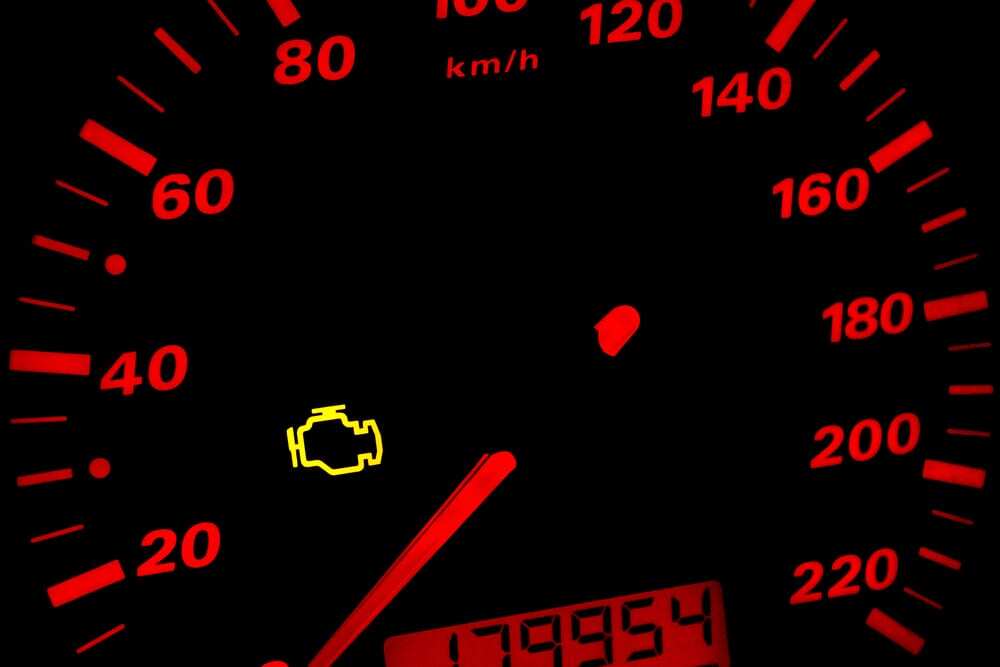
Many drivers confuse a steady check engine light with a flashing one. They are very different warnings with very different levels of urgency.
A solid check engine light means your car’s onboard computer has detected an emissions or sensor issue. It needs attention, but you can usually drive home safely and schedule a repair appointment.
A flashing check engine light means your engine is actively misfiring right now. Unburned fuel is being dumped into your exhaust system at this very moment. Every second you keep driving increases the risk of permanently destroying your catalytic converter.
| Light Behavior | Meaning | Safe to Drive? |
|---|---|---|
| Solid / Steady | Emissions or sensor issue | Yes, schedule repair soon |
| Flashing / Blinking | Active engine misfire | No — pull over immediately |
| Flashing + Power Loss | Severe misfire, ECM limiting power | No — tow the vehicle |
| Flashing + Rotten Egg Smell | Catalytic converter overheating | No — stop engine at once |
Think of your dashboard like a traffic light. A solid light is yellow — slow down and get it checked. A flashing light is red — stop now.
Why Is My Check Engine Light Flashing? The Primary Cause
The number one reason your check engine light is flashing is an engine misfire. A misfire happens when one or more cylinders fail to ignite the air-fuel mixture correctly.
When combustion fails, raw unburned gasoline passes straight through the exhaust system. That liquid fuel hits your catalytic converter, which runs at temperatures up to 1,200°F. The result is rapid overheating and permanent internal damage to the converter.
Your car’s Engine Control Module (ECM) tracks the misfire rate on every cylinder. When the misfire rate crosses a threshold — typically around 2 to 4 percent of firing events — the ECM switches the check engine light from steady to flashing. This is the ECM telling you the misfire is severe enough to cause catalytic converter damage right now.
All Common Causes of a Flashing Check Engine Light
Several underlying problems can trigger a misfire and cause the light to flash. Some are cheap and simple to fix. Others are more serious. Here is a full breakdown.
Worn or Fouled Spark Plugs
Spark plugs are the most common culprit behind engine misfires. They ignite the air-fuel mixture in each cylinder, and when they wear out or get fouled with carbon deposits, combustion fails.
Spark plugs should typically be replaced every 30,000 to 100,000 miles depending on the type. If your vehicle has high mileage and you cannot remember the last spark plug change, they are likely the first thing to inspect.
Failing Ignition Coil
Each cylinder has an ignition coil that delivers the high-voltage charge needed to fire the spark plug. When a coil fails or short-circuits, its cylinder stops firing and misfires begin immediately.
A failing ignition coil often causes the engine to shake visibly, especially at idle. In 2026 vehicles with high-performance coil-on-plug systems, a single coil failure can trigger an immediate flashing light and violent engine vibration.
Clogged or Stuck Fuel Injectors
Fuel injectors spray a precise amount of fuel into each cylinder. If an injector gets clogged, it starves that cylinder of fuel. If one gets stuck open, it floods the cylinder with too much fuel.
Both conditions cause incomplete combustion. A stuck-open injector creates what technicians call a “rich misfire,” where excess raw fuel floods the exhaust and can destroy the catalytic converter very quickly.
Vacuum Leaks
A vacuum leak allows unmetered air to enter the engine, throwing off the carefully calibrated air-fuel mixture. This lean condition causes incomplete combustion and triggers misfires.
Vacuum leaks often get worse over time as rubber hoses crack and age. They can be tricky to find without a smoke test but are usually inexpensive to repair once located.
Low Fuel Pressure
A failing fuel pump or clogged fuel filter can reduce fuel pressure below what the engine needs. When cylinders do not receive enough fuel, they misfire intermittently, especially under acceleration or at high speeds.
Low fuel pressure often causes a flashing check engine light at highway speeds, where fuel demand is highest. If the light flashes when you accelerate or merge onto a freeway, fuel pressure is a strong suspect.
Faulty Mass Airflow Sensor (MAF)
The mass airflow sensor measures how much air is entering the engine. When it fails or reads incorrectly, the ECM calculates the wrong fuel amount to inject, resulting in a lean or rich condition and eventual misfires.
A bad MAF sensor can also cause rough idling, poor throttle response, and reduced fuel economy alongside the flashing warning light.
Failing Oxygen Sensors
Oxygen sensors monitor exhaust gas composition and help the ECM fine-tune the air-fuel mixture. When an O2 sensor fails, the engine may run too lean or too rich, which can lead to misfires and a flashing light.
A faulty oxygen sensor left unaddressed can also eventually damage the catalytic converter, turning a simple $150 sensor replacement into a $2,000 converter replacement.
Catalytic Converter Damage
In some cases, the catalytic converter itself has already been damaged, possibly from a previous misfire event. A clogged or melted converter can cause back-pressure in the exhaust system, which disrupts combustion and triggers new misfires and a flashing light.
If you smell rotten eggs coming from your exhaust alongside a flashing light, the catalytic converter is likely overheating or already failing.
Low Engine Compression
Low compression in one or more cylinders means the engine cannot build the pressure needed for proper combustion. This can be caused by worn piston rings, a leaking head gasket, or damaged valves.
A compression-related misfire is more serious than an ignition or fuel issue. It often requires more extensive engine repair and may indicate significant internal wear.
Loose or Damaged Gas Cap
While a loose gas cap more commonly triggers a steady check engine light rather than a flashing one, it can cause pressure errors in the fuel system. It is always worth checking and tightening the gas cap as a first quick step.
If tightening the gas cap resolves the light, the issue was minor. If the light continues to flash after tightening, a deeper problem is present.
Common OBD2 Codes Behind a Flashing Check Engine Light
When your check engine light flashes, your car stores one or more Diagnostic Trouble Codes (DTCs) that identify the specific problem. You can read these codes with any OBD2 scanner plugged into the port under your dashboard.
| OBD2 Code | Meaning | Common Cause |
|---|---|---|
| P0300 | Random/Multiple Cylinder Misfire | Worn spark plugs, ignition coils |
| P0301 | Cylinder 1 Misfire Detected | Faulty coil or plug on cylinder 1 |
| P0302 | Cylinder 2 Misfire Detected | Faulty coil or plug on cylinder 2 |
| P0303 | Cylinder 3 Misfire Detected | Faulty coil or plug on cylinder 3 |
| P0304 | Cylinder 4 Misfire Detected | Faulty coil or plug on cylinder 4 |
| P0171 | System Too Lean (Bank 1) | Vacuum leak, bad MAF, weak fuel pump |
| P0172 | System Too Rich (Bank 1) | Stuck injector, bad O2 sensor |
| P0420 | Catalyst System Efficiency Low | Failing catalytic converter |
| P0455 | EVAP System Large Leak | Loose/damaged gas cap |
| P0130 | O2 Sensor Malfunction (Bank 1) | Faulty upstream oxygen sensor |
The P0300 series codes (P0300 through P0308 depending on engine size) are the most directly associated with a flashing check engine light. A P0300 code means multiple cylinders are misfiring, which is especially urgent.
What to Do When Your Check Engine Light Is Flashing
Acting quickly and correctly when the light starts flashing is critical. Here is exactly what to do, step by step.
Step 1: Pull Over Safely
Do not keep driving. Find the nearest parking lot, side street, or wide shoulder and pull over safely. Turn off the engine immediately after stopping. Every additional mile driven with a flashing light risks further damage to the catalytic converter and engine.
Step 2: Check for Warning Symptoms
Before restarting, assess what you noticed while driving. Is the engine shaking or vibrating? Do you smell rotten eggs from the exhaust? Is there a loss of power or rough idle? These symptom clues help narrow down the diagnosis before you even plug in a scanner.
Step 3: Check the Gas Cap
This takes 10 seconds and costs nothing. Open the fuel door, remove the gas cap, and retighten it firmly until you hear it click. If a loose cap was the issue, the light may go off after a few drive cycles. If the light continues to flash, the problem is more serious.
Step 4: Use an OBD2 Scanner
Plug an OBD2 scanner into the diagnostic port under the driver’s side dashboard. Read the stored trouble codes. Modern Bluetooth scanners like the BlueDriver or Autel MaxiCOM connect to your smartphone and provide plain-English code explanations, live sensor data, and repair guidance.
Write down every code that appears. This information is critical for any mechanic you take the car to and helps avoid paying for unnecessary parts.
Step 5: Do Not Restart and Drive
If the codes point to a misfire and you cannot fix it yourself, do not attempt to drive to the shop. Call a tow truck or roadside assistance. Most vehicle warranties and many roadside assistance plans cover towing for exactly this type of emergency.
Driving even 5 miles with a confirmed active misfire can destroy the catalytic converter entirely, taking your repair bill from $200–$500 to $2,000–$4,000 or more.
Flashing Check Engine Light Repair Costs in 2026
Repair costs vary widely depending on the root cause. Here is a realistic breakdown of what each common fix costs in 2026.
| Repair | DIY Cost | Professional Cost |
|---|---|---|
| Spark plugs (set) | $20–$80 | $100–$300 |
| Ignition coil (single) | $30–$100 | $150–$400 |
| Fuel injector (single) | $50–$150 | $200–$500 |
| MAF sensor | $40–$120 | $150–$350 |
| Oxygen sensor | $50–$200 | $150–$500 |
| Vacuum leak repair | $10–$50 | $100–$300 |
| Catalytic converter | $150–$600 | $800–$2,500 |
| Diagnostic fee | Free (scanner) | $80–$150 |
| Fuel pump | $100–$300 | $400–$900 |
The diagnostic fee is typically $80–$150 at an independent shop. Many shops apply that fee toward your repair cost if you have the work done there. Always ask about this policy upfront.
The most common and most affordable scenario is spark plug and ignition coil replacement, which runs $150–$500 total at most shops. The frightening scenario — catalytic converter replacement — is almost entirely avoidable if you stop driving the moment the light starts flashing.
Flashing Check Engine Light at High Speeds
If the light only flashes at highway speeds or during hard acceleration, the problem is likely related to fuel delivery. A weak fuel pump or clogged fuel filter cannot keep up with high fuel demand at speed, causing lean misfires under load.
High-speed misfires can also be caused by ignition coils that are failing intermittently. The coil works fine at low loads but breaks down under the heat and electrical stress of sustained high-RPM driving.
In turbocharged 2026 models, a stuck boost control solenoid can cause over-boost or under-boost conditions that trigger misfires at highway speeds. This is worth checking specifically if you drive a turbocharged vehicle.
Flashing Check Engine Light at Idle or Rough Idle
When the check engine light flashes specifically during idle or low-speed driving, the issue is more likely in the ignition system or air intake. A single misfiring cylinder causes the engine to shake visibly at idle because the smooth power delivery from other cylinders cannot compensate.
Common causes of idle-specific misfires include a single failed ignition coil, a clogged fuel injector, or a vacuum leak that only affects the engine at low manifold vacuum. If your car shakes at a red light and the light is flashing, suspect these components first.
Flashing Check Engine Light That Comes and Goes
An intermittent flashing check engine light — one that flashes briefly and then goes steady or turns off — usually indicates a borderline condition. The misfire is happening occasionally rather than continuously, meaning the ECM detects it during certain driving conditions and not others.
Common causes of an intermittent flashing light include a spark plug that is nearly worn out but not completely dead, a loose ignition coil connector, or a fuel injector that is partially clogged. While intermittent problems seem less urgent, they will typically worsen over time and eventually become a continuous problem.
Do not ignore an intermittent flashing light. Have the codes read and the root cause diagnosed before the issue escalates.
Solid vs Flashing Check Engine Light: Can You Drive?
| Scenario | Action |
|---|---|
| Steady light, car runs normally | Drive home, schedule repair within days |
| Steady light, rough idle or power loss | Drive carefully to nearest shop |
| Flashing light, car runs rough | Pull over immediately, do not drive |
| Flashing light, loss of power | Pull over, call for tow |
| Flashing light + rotten egg smell | Stop engine, call tow immediately |
| Light turns off on its own | Still have codes read — issue may recur |
How to Reset a Flashing Check Engine Light
You should only reset the check engine light after the underlying problem has been diagnosed and repaired. Resetting it without fixing the root cause simply hides the warning — the light will return, and the damage will continue.
To reset the light, use an OBD2 scanner and select the “Clear Codes” or “Reset Check Engine Light” option in the app. The scanner communicates with the car’s ECM and erases the stored trouble codes.
After clearing the codes, drive the vehicle for 10–30 miles to allow the OBD2 system to run its self-tests. If the fix was successful, the light will stay off. If the root cause was not properly addressed, the light will return within a short drive.
Some vehicles may allow a battery disconnect reset, but this method also clears other stored data like radio presets and window calibration. Using a scanner is more precise and is the preferred method in 2026 vehicles.
Flashing Check Engine Light in Specific Vehicle Types
Hybrid and Electric Vehicles
In hybrid vehicles, a flashing check engine light may relate to the hybrid battery management system, the electric motor control system, or the internal combustion engine side. Do not attempt to self-diagnose hybrid-specific codes without a scanner that supports hybrid system diagnostics. Consult a specialist for hybrid-related flashing lights.
Turbocharged Engines
Turbo engines are more sensitive to air-fuel mixture variations because the turbocharger compresses the intake charge. A small vacuum leak or weak fuel pressure that would cause only a minor issue in a naturally aspirated engine can trigger significant misfires in a forced-induction engine.
High-Mileage Vehicles
Vehicles with over 100,000 miles are more prone to multiple simultaneous causes of a flashing light. Worn spark plugs, aging ignition coils, and dirty fuel injectors may all need attention at the same time. A thorough inspection is worth doing rather than replacing components one at a time.
Flashing Check Engine Light Warning Signs Summary
A flashing check engine light almost always means one or more of these warning signs are present or about to appear. Watch for all of them.
Engine shaking or vibrating, especially at idle, is the most common physical symptom of an active misfire. A loss of power during acceleration means the engine is not delivering full combustion from all cylinders.
Rough or uneven idle, where the car sounds like it is struggling to stay running, indicates ongoing incomplete combustion.
A rotten egg smell from the exhaust means the catalytic converter is overheating and beginning to fail. Poor fuel economy that has gotten noticeably worse over recent weeks can precede a flashing light event.
Backfiring sounds, which are small explosions in the exhaust system from unburned fuel igniting, are a serious warning.
Preventive Maintenance to Avoid a Flashing Check Engine Light
The good news is that most causes of a flashing check engine light are entirely preventable with routine maintenance. Following a consistent maintenance schedule dramatically reduces the risk of an unexpected misfire event.
Replace spark plugs on schedule — every 30,000 miles for standard copper plugs and every 60,000–100,000 miles for iridium or platinum plugs.
Inspect ignition coils and boots during every tune-up for cracks, carbon tracking, or oil contamination. Keep up with fuel system maintenance including fuel filter replacement and periodic fuel injector cleaning.
Use quality fuel from reputable stations to minimize deposits in injectors and combustion chambers. Have oxygen sensors tested when other emission components are serviced, as they degrade gradually and give misleading fuel trim data before fully failing.
| Maintenance Item | Replacement Interval |
|---|---|
| Spark plugs (copper) | Every 30,000 miles |
| Spark plugs (iridium/platinum) | Every 60,000–100,000 miles |
| Ignition coils | Inspect every 50,000 miles |
| Fuel filter | Every 30,000–50,000 miles |
| Oxygen sensors | Every 60,000–90,000 miles |
| Air filter | Every 15,000–30,000 miles |
| Mass airflow sensor cleaning | Every 25,000–50,000 miles |
| Catalytic converter inspection | Every 80,000–100,000 miles |
When to See a Mechanic vs DIY
Basic checks like tightening a gas cap, reading OBD2 codes, or replacing spark plugs are well within the ability of a reasonably handy car owner. However, certain problems should always be handled by a professional mechanic.
Take the vehicle to a mechanic when compression test results show low pressure in any cylinder, when the catalytic converter needs replacement, when the flashing light is accompanied by oil consumption or coolant loss (signs of a head gasket issue), or when multiple unrelated codes appear simultaneously.
A professional can use Mode 06 diagnostic data and live sensor readings to pinpoint the exact problem without guesswork, saving you time and money on unnecessary parts.
Frequently Asked Questions (FAQs)
Why is my check engine light flashing but the car seems fine?
Even if the car seems to drive okay, a flashing light means an active misfire is occurring. Pull over and have the codes read immediately — invisible damage to the catalytic converter can happen fast.
Can I drive with a flashing check engine light to a nearby gas station?
Driving even a short distance risks destroying the catalytic converter. Only move the vehicle if absolutely necessary and call for a tow if possible.
What is the difference between a flashing and a blinking check engine light?
Flashing and blinking mean the same thing — both describe a light that is rapidly turning on and off, which signals a severe active misfire requiring immediate attention.
Will the check engine light stop flashing on its own?
It may switch from flashing to steady if the misfire temporarily stops, but the underlying problem remains. Have the stored codes read even if the light stops flashing.
How much does it cost to fix a flashing check engine light?
Repair costs range from $100–$500 for spark plugs and ignition coils up to $800–$2,500 if the catalytic converter has been damaged by driving with a misfire.
Can a bad battery cause the check engine light to flash?
Yes. Low battery voltage below 12.4V can disrupt the ECM and cause false misfire codes or real misfires. Test your battery before replacing other components.
What OBD2 code is most associated with a flashing check engine light?
P0300 (random multiple cylinder misfire) is the most common code behind a flashing light. Cylinder-specific codes like P0301 through P0308 are also directly linked.
Is it safe to reset the check engine light without fixing the problem?
No. Resetting the light without a repair only hides the warning. The light will return, and damage will continue to accumulate in the engine and catalytic converter.
Can a loose gas cap cause a flashing check engine light?
A loose gas cap typically triggers a steady light, not a flashing one. However, it is always worth tightening it as a quick first check. If the light continues to flash, the cause is more serious.
How long can I drive with a flashing check engine light?
You should not drive at all. Technicians and manufacturers consistently advise that even a few miles of driving with a confirmed active misfire can cause irreversible catalytic converter damage and multiply repair costs dramatically.
Conclusion
Why is my check engine light flashing is one of the most important questions you can answer quickly and correctly.
A flashing check engine light is your vehicle’s most urgent warning — a direct signal from the ECM that an active misfire is destroying your engine and catalytic converter in real time.
The most common causes are worn spark plugs, failing ignition coils, clogged fuel injectors, vacuum leaks, and low fuel pressure.
The fix is often simple and affordable when caught early, typically $150–$500 for ignition components. However, every additional mile driven with the light flashing risks turning that affordable repair into a $2,000–$4,000 catalytic converter replacement.
The right action is always the same: pull over safely, turn off the engine, read the OBD2 codes, and call for a tow if needed. Preventive maintenance — especially regular spark plug and ignition coil replacement — is your best defense against ever seeing that light flash in the first place.
