

Why did Hang Ease go out of business is a question that thousands of Shark Tank fans and entrepreneurship enthusiasts keep asking.
HangEase was a collapsible clothes hanger invented by a third-grader named Ryan Landis. It made it all the way to Walmart shelves and national television.
The product was clever, practical, and had real sales behind it. Yet by 2015, the website was offline, stores stopped stocking it, and the business quietly died.
The HangEase Story: From Third Grade to Shark Tank

Ryan Landis invented the HangEase collapsible hanger as a school project in 2003 when he was in third grade. His teacher challenged students to identify everyday objects that could be improved.
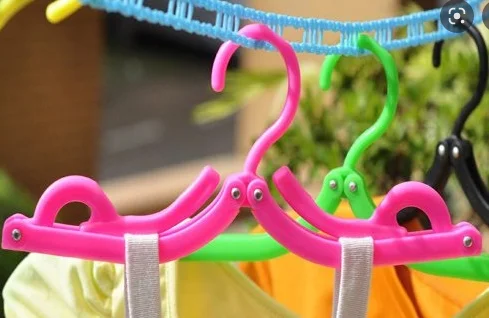
Ryan was frustrated with traditional hangers that stretched his shirt collars and broke easily. He designed a hanger with a central hinge mechanism that folded inward when a garment was pulled down, letting clothes slide off without damage.
His childhood invention caught the eye of a classmate’s parent who sold products to major retailers. That connection helped Ryan land a deal with Walmart — an extraordinary achievement for a kid.
Early Success: Walmart Deal and Real Sales Numbers
Before Shark Tank, HangEase had already proven it could sell. Ryan stocked approximately 100 Walmart stores with his collapsible hanger.
He sold 400,000 hangers, generating $200,000 in total sales and around $70,000 in profit. For a single-product startup run by a teenager, those numbers were genuinely impressive.
He also filed a patent to protect the hinge design, giving HangEase legal protection that most small inventors never manage to secure.
The Shark Tank Appearance: Season 5, Episode 27
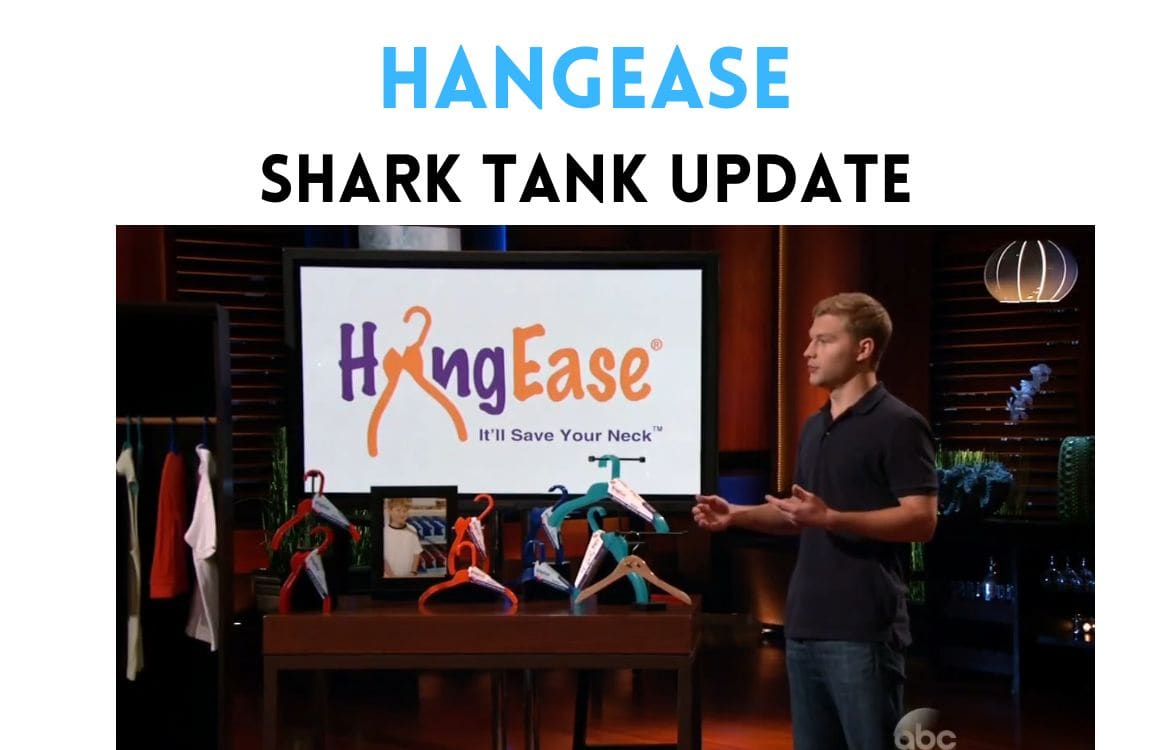
Ryan appeared on Shark Tank Season 5 seeking $80,000 for 30% equity, implying a company valuation of approximately $266,667.
He demonstrated the folding mechanism live, handed out samples, and shared his Walmart sales history. The Sharks were clearly entertained and impressed by his backstory.
Mark Cuban and Lori Greiner both expressed interest and made a conditional deal. Robert Herjavec and Kevin O’Leary opted out citing lack of necessity. Barbara Corcoran declined due to concerns about the product category.
Why the Shark Tank Deal Fell Through
The deal with Cuban and Greiner was never finalized. Several deal-breaker issues emerged during due diligence.
| Issue | Detail |
|---|---|
| Patent Validity | Greiner noted she had seen similar hangers already on the market |
| Competition Concerns | Cuban recalled seeing similar folding hangers on luggage bags |
| Pricing Problem | HangEase hangers cost nearly 4x more than standard plastic hangers |
| Founder Commitment | Sharks sensed Ryan’s interest in the business was fading |
When the Shark Tank deal collapsed, HangEase lost its single best shot at capital, mentorship, and scaled distribution — all at once.
Why Did Hang Ease Go Out of Business: The Full Breakdown
There was no single cause. The failure of HangEase was a combination of problems that compounded over time. Below is a complete analysis of every major factor.
Reason 1: The Founder Stepped Away
Ryan Landis was a teenager running a real company. The pressure of school became overwhelming, and he made the decision to pause operations to focus on his education.
That pause created a leadership vacuum at a critical moment in the business cycle. When a founder steps back, operations slow, retail relationships weaken, and competitors fill the gap.
By the time Ryan might have returned with renewed energy, the market had moved on and the Walmart relationship had gone cold.
Reason 2: Walmart Stopped Reordering
Walmart is both a massive opportunity and a serious risk for small brands. The retailer stopped reordering HangEase hangers, effectively cutting off the company’s primary revenue channel.
Large retailers run periodic line reviews where they evaluate which products earn shelf space. They favor brands with proven sales velocity, strong margins, and national recognition.
Smaller single-product companies like HangEase get replaced during these reviews by higher-margin alternatives or private-label products. Losing Walmart with no direct-to-consumer fallback was devastating.
Reason 3: High Manufacturing Cost vs. Low Retail Price

The hinge-based design that made HangEase unique also made it expensive to produce. A standard plastic hanger costs pennies to manufacture at scale.
HangEase hangers sold at roughly four times the price of traditional hangers. In a commodity product category, that price gap is nearly impossible to justify to average consumers shopping at mass-market retailers.
The cost structure simply did not work. Maintaining quality on a hinge mechanism while keeping prices competitive was a problem HangEase never solved.
Reason 4: Patent Problems and Copycats
HangEase had a patent, but patents on simple mechanical designs in commodity categories are notoriously hard to defend. Lori Greiner herself noted during the Shark Tank pitch that she had seen similar products already.
Defending patent infringement lawsuits is expensive. For a small company with limited cash, even a valid patent becomes difficult to enforce when copycats flood the market with lower-cost alternatives.
Without strong IP protection in practice, HangEase lost its unique market position to cheaper imitations.
Reason 5: No Product Line Expansion
HangEase was a one-product company from start to finish. The collapsible hanger was clever, but it was a single SKU in a market that increasingly demanded variety.
Consumer trends were shifting toward modular closet systems, the KonMari decluttering method, and smart storage solutions. HangEase had no answer to any of these trends.
Innovation has to continue beyond the first product launch. A company that stops innovating in a growing market is already beginning to decline.
Reason 6: Weak Digital and Marketing Presence
HangEase built its early success through a single retail relationship with Walmart. It never developed a meaningful direct-to-consumer channel or online presence.
As e-commerce exploded in the 2010s, brands that dominated platforms like Amazon and built engaged social media communities pulled far ahead. HangEase had no significant presence on either front.
Without digital marketing or a strong brand identity, there was no way to reach new customers after losing shelf space.
Reason 7: Saturated and Competitive Market
The home organization and closet products market is one of the most competitive retail categories in existence. Major players like ClosetMaid, Whitmor, IKEA, and dozens of private-label brands dominate shelf space.
| Competitor Type | Advantage Over HangEase |
|---|---|
| Big-Box Private Labels | Lower price, prime shelf placement |
| Chinese Manufacturers | Massively cheaper production costs |
| Established Brands | Decades of retailer relationships and trust |
| Amazon Sellers | Direct-to-consumer pricing, fast shipping |
HangEase sat in an awkward middle-ground price range. It was too expensive for budget shoppers and too basic for premium buyers. That positioning trap is extremely difficult to escape.
Reason 8: No Investor Capital After Shark Tank
When the Shark Tank deal collapsed, HangEase had no other funding pathway. The company had exhausted early profits, the Walmart channel had dried up, and there was no alternative investor lined up.
Running a product business at scale requires capital for manufacturing, inventory, logistics, and marketing. Without investment or cash flow, operations grind to a halt.
This is exactly what happened. HangEase simply ran out of money with no clear way to raise more.
Timeline of HangEase: Rise and Fall
| Year | Event |
|---|---|
| 2003 | Ryan Landis invents HangEase as a third-grade school project |
| ~2006 | HangEase gets stocked in ~100 Walmart stores |
| 2006–2013 | Sells 400,000 units, earns $200K revenue, $70K profit |
| 2014 | Appears on Shark Tank Season 5, Episode 27 |
| 2014 | Conditional deal with Cuban and Greiner; deal collapses in due diligence |
| 2014–2015 | Website goes offline; social media accounts go silent |
| Late 2010s | Company considered fully defunct |
| 2026 | No active operations, no products available anywhere |
What Happened to Ryan Landis After HangEase?
The failure of HangEase was not the end of Ryan Landis. After stepping away from the business, he completed his undergraduate degree and went on to secure a senior merchandising role at Neiman Marcus, one of America’s most prestigious luxury retailers.
He then enrolled at Rice University and completed his MBA in 2023. He also patented a Lytic peptide biosensor in 2019, demonstrating that his inventive instincts never stopped.
Ryan Landis went from a third-grade inventor to a Rice University MBA graduate. The lessons learned building and ultimately losing HangEase gave him a real-world foundation that classroom education alone could not provide.
Key Business Lessons from the HangEase Failure
The HangEase story offers clear, practical lessons for any entrepreneur building a product-based business today.
Lesson 1: A Single Retail Relationship Is a Fragile Foundation Over-dependence on one retailer like Walmart means one lost contract can end the business entirely. Building direct-to-consumer channels alongside retail is essential.
Lesson 2: Innovation Cannot Stop at Version 1 A clever first product earns attention. Continued innovation earns loyalty. HangEase never evolved beyond its original hanger concept.
Lesson 3: Cost Structure Must Match the Market If your product costs significantly more to produce than competing alternatives, you need a compelling reason for customers to pay more. “Better design” alone rarely justifies a 4x price premium in commodity categories.
Lesson 4: Founder Continuity Matters Pausing operations to focus on education is understandable, especially for a teenager. But every pause in a startup creates space for competitors and erodes retailer confidence.
Lesson 5: Due Diligence Can Kill Deals A handshake deal on Shark Tank is not a signed term sheet. Patent validity, competitive landscape, and founder commitment all get scrutinized in due diligence. Always be ready for that process.
Is HangEase Available Anywhere in 2026?
No. HangEase hangers have been fully discontinued. The official website has been offline since approximately 2014. No major retailer, third-party online store, or licensing arrangement currently sells or produces the product in any form.
Occasionally, used units may appear on resale platforms like eBay, but these are second-hand and no longer manufactured. The brand itself holds no active trademark or commercial presence.
Could HangEase Have Survived?
Potentially yes, under very different circumstances. The core product worked and solved a real problem millions of households face every day.
With a committed founder, secured investment, a DTC e-commerce channel, and product line expansion, there was a viable path forward. The window for that path was roughly 2014 to 2016, immediately after the Shark Tank episode aired.
That window closed when the deal fell through, the founder stepped back, and the retail relationship ended simultaneously.
Comparison: HangEase vs. Successful Shark Tank Products
| Factor | HangEase | Scrub Daddy (Success) |
|---|---|---|
| Initial Sales | $200K from Walmart | Strong early retail numbers |
| Shark Tank Deal | Fell through in due diligence | Secured deal with Lori Greiner |
| Founder Commitment | Stepped away for school | Full-time commitment |
| Product Line Growth | None — single SKU | Dozens of cleaning products launched |
| Digital Marketing | Minimal | Strong social media presence |
| Current Status | Defunct | One of Shark Tank’s biggest successes |
The contrast between HangEase and Scrub Daddy — both simple consumer products that appeared on Shark Tank — shows exactly how deal execution and founder commitment change outcomes.
The Market HangEase Was Competing In
The global closet organizer market was valued at over $4 billion in 2025 and is projected to reach $8.5 billion by 2035. This is a massive, fast-growing space.
But scale cuts both ways. A large and growing market also attracts well-funded competitors, aggressive private-label programs from major retailers, and ultra-low-cost manufacturers from East Asia.
For a small company with one product, one patent, and limited capital, competing in that environment without strong differentiation and a loyal customer base is extremely difficult.
How HangEase Lost Its Competitive Edge Over Time
When HangEase first entered Walmart in 2006, collapsible and folding hangers were genuinely novel. That novelty gave the product a short window of consumer curiosity and media attention.
But novelty fades fast in retail. Consumers try a product once and move on unless the brand gives them a reason to come back. HangEase never built that loyalty loop.
No loyalty program, no product updates, no social proof beyond early Shark Tank buzz. The brand became invisible almost exactly when it needed maximum visibility.
The Role of Supply Chain in HangEase’s Decline
Manufacturing a hinge-based plastic hanger at scale is more complex and expensive than producing a standard wire or solid-plastic hanger. Consistency in the hinge mechanism is critical — a hinge that fails makes the entire product worthless.
Reports from former customers noted inconsistencies in product quality. Some units worked perfectly while others experienced premature hinge failure. In a category where the competition sells at $0.50 per unit, a defective $3 hanger gets returned and never repurchased.
Quality control issues at small production volumes are expensive to fix. HangEase likely could not afford the tooling and process improvements needed to solve this problem at scale.
How Consumer Behavior Shifted Against HangEase
The mid-2010s saw a major cultural shift in how people approached home organization. Marie Kondo’s KonMari method went mainstream, encouraging people to own fewer items and declutter aggressively.
That trend was bad for a product built around managing more clothes on hangers. Consumers started buying less clothing, downsizing wardrobes, and investing in minimalist closet systems rather than better individual hangers.
HangEase had no product or marketing strategy to respond to this shift. The brand stayed still while the entire consumer mindset around closet organization moved in a different direction.
Why Single-Product Companies Struggle in Retail
HangEase was always a one-SKU business. That structure creates serious vulnerabilities that multi-product brands do not face.
Retailers prefer brands that bring multiple products to shelf reviews. A single product gives the retailer no flexibility and creates a weak relationship. When that one product underperforms, there is nothing else to offer.
Successful consumer product companies use their first hit product as a foundation to launch adjacent products. HangEase never built that pipeline, leaving it completely exposed when the original hanger lost momentum.
The Pricing Trap That HangEase Could Not Escape
Standard wire hangers cost pennies. Standard plastic hangers cost roughly $0.25 to $0.75 each at retail. HangEase hangers sold at a significant premium — reportedly nearly four times the cost of a basic plastic hanger.
That price gap demanded a clear, compelling justification in the consumer’s mind. The anti-stretch benefit was real but not immediately visible at the point of sale.
Shoppers standing in a Walmart aisle comparing a $0.50 hanger to a $2.00 hanger rarely have the time or motivation to evaluate the engineering difference. Price usually wins in a commodity category unless there is exceptionally strong branding or marketing to bridge the gap.
HangEase’s Missing Direct-to-Consumer Strategy
Amazon launched its third-party marketplace in 2000 and grew aggressively through the 2000s and 2010s. By 2014 — the year of HangEase’s Shark Tank appearance — Amazon had already become the dominant platform for household products.
HangEase had no meaningful Amazon presence and no standalone e-commerce website with real traffic. That meant when Walmart stopped reordering, there was literally nowhere else for customers to buy the product.
A DTC channel would have given HangEase higher margins, direct customer data, and independence from any single retailer. Without it, the business had no fallback when the retail relationship ended.
Frequently Asked Questions (FAQs)
Why did Hang Ease go out of business?
HangEase failed due to a combination of a collapsed Shark Tank deal, lost Walmart distribution, high manufacturing costs, founder stepping away for school, and strong market competition with no path to new investment.
Who founded HangEase?
Ryan Landis founded HangEase. He invented the collapsible hanger as a third-grade school project in 2003 and later grew it into a Walmart-stocked product before appearing on Shark Tank.
Did HangEase get a deal on Shark Tank?
Ryan Landis received a conditional deal from Mark Cuban and Lori Greiner for $80,000 in exchange for 30% equity, but the deal fell through during due diligence over patent validity and pricing concerns.
When did HangEase go out of business?
HangEase effectively ceased operations around 2014 to 2015. The website went offline, social media accounts became inactive, and products disappeared from retail shelves during that period.
Are HangEase hangers still available to buy?
No. HangEase hangers are fully discontinued as of 2026. The product is not sold in any retail store or online marketplace. The official website and brand have been inactive for over a decade.
How much did HangEase make before closing?
Before Shark Tank, HangEase generated approximately $200,000 in sales through Walmart with around $70,000 in profit from 400,000 units sold. No documented revenue exists after the business declined.
What happened to Ryan Landis after HangEase?
Ryan Landis went on to earn a merchandising role at Neiman Marcus, completed his MBA at Rice University in 2023, and patented a Lytic peptide biosensor in 2019. He moved well beyond HangEase into a successful professional career.
Why did Walmart stop selling HangEase?
Walmart stopped reordering HangEase hangers likely due to slow sales velocity, higher price point compared to standard hangers, and competition from lower-cost alternatives that offered better margins for the retailer.
What was the HangEase patent issue?
Lori Greiner noted during the Shark Tank pitch that she had seen similar collapsible hangers already on the market, raising questions about patent validity. Mark Cuban also recalled similar products, casting doubt on HangEase’s uniqueness.
Could HangEase have succeeded with the right support?
Yes. The product worked and solved a real problem. With full investment from Shark Tank, a direct-to-consumer channel, expanded product line, and consistent founder involvement, HangEase had a viable path to long-term success that it ultimately never took.
Conclusion
Why did Hang Ease go out of business comes down to a perfect storm of interconnected problems rather than one single mistake.
Ryan Landis built something genuinely impressive — a patented product that reached Walmart shelves while he was still a teenager.
The core invention worked. The early traction was real.
But the business collapsed when the Shark Tank deal fell through, the founder stepped back for school, Walmart ended the relationship, and no new capital materialized to keep things moving.
The HangEase story is not a story of a bad product. It is a story of what happens when a promising startup loses momentum at the worst possible time, with no safety net to catch the fall. For entrepreneurs, the lessons are clear: diversify your distribution, secure committed investment, keep innovating, and never let a single relationship be the lifeline your entire business depends on. Ryan Landis himself bounced back and built an impressive career. The product did not survive, but the founder absolutely did.
