

Why are wasps so aggressive is a question almost everyone asks after a terrifying outdoor encounter.
Whether you were just sipping a drink at a picnic or mowing the lawn, a suddenly furious wasp seems to come out of nowhere. The truth is, wasps are not randomly violent.
Every aggressive behavior they display is driven by biology, colony survival, and seasonal pressures.
Understanding exactly why they act this way is the key to avoiding stings, protecting your family, and knowing when to call in professional help.
Are Wasps Actually Aggressive by Nature?
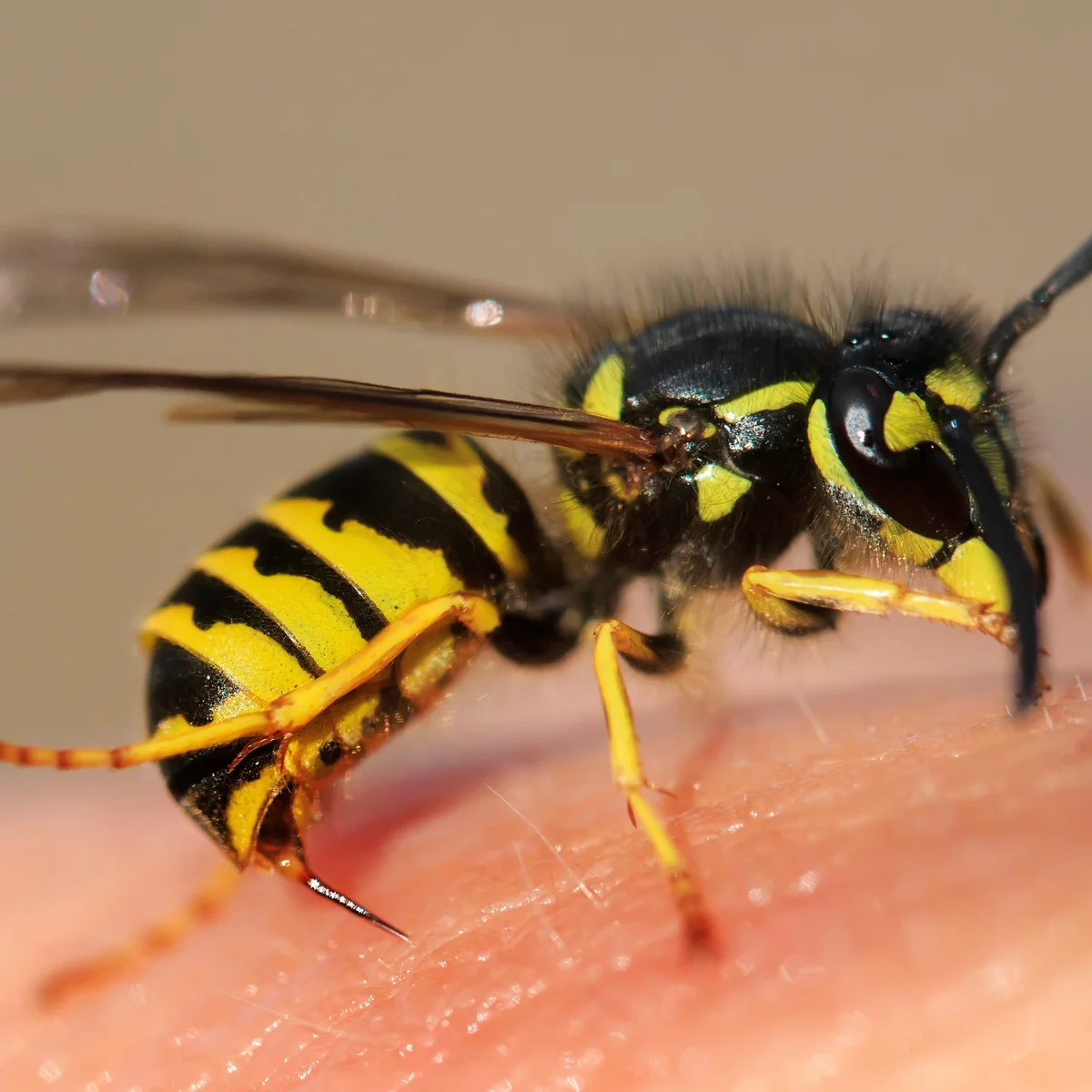
Wasps are not inherently aggressive in the way humans think of the word.
They are not looking for a fight. Their entire behavioral system is built around survival — protecting their colony, feeding their larvae, and securing food sources. Every sting is a defensive act, not an offensive one.
The confusion comes from the fact that what wasps consider a threat and what we consider a neutral action are very different things.
The Core Reason Wasps Sting — Colony Defense
The single most powerful driver of wasp aggression is the instinct to protect the nest.
Social wasps — yellowjackets, hornets, and paper wasps — live in colonies with a queen, workers, and developing larvae. The entire colony functions as a single unit. When any part of that unit is threatened, workers respond with force.
Getting too close to a nest is the most reliable way to trigger an attack. You do not have to touch it. Ground vibrations from a lawnmower or weed trimmer nearby are enough to set off a defensive swarm.
How Close Is Too Close?
Different species maintain different defensive perimeters around their nests.
Yellowjackets, which build large ground nests, are the most sensitive. A person walking over a buried nest entrance without even knowing it is there can trigger dozens of stings within seconds.
Bald-faced hornets are similarly aggressive and will defend a wide radius around their aerial nests. Paper wasps generally have smaller defensive zones but will attack without hesitation if the nest is touched or disturbed.
The Alarm Pheromone Effect — Why One Wasp Becomes Many
This is the mechanism that turns a single defensive sting into a full swarm attack.
When a wasp stings, it simultaneously releases an alarm pheromone — a chemical signal that broadcasts danger to every nearby colony member. Other wasps detect it instantly and join the defensive response.
This is why swatting at a wasp near a nest is one of the worst things you can do. If you kill or injure a wasp near its colony, the chemical signal it releases can trigger dozens of wasps to attack the same target. A dead wasp near a nest releases the same chemical warning.
Why Wasps Get More Aggressive in Late Summer and Fall
If you have noticed that wasps seem far angrier in August and September than they were in June, you are absolutely right — and there is a specific biological reason for it.
In spring and early summer, worker wasps spend their days hunting protein — caterpillars, flies, spiders, and other insects — to feed the developing larvae inside the nest. In return, the larvae secrete a sugary, carbohydrate-rich saliva that feeds the adult workers. The colony is busy, structured, and relatively calm.
What Changes in Late Summer
As summer ends, the queen stops laying eggs. The larvae disappear. The workers lose their primary food source — that larval secretion — almost overnight.
At the same time, the colony has reached its maximum population size. Yellowjacket nests can house up to 4,000 or 5,000 workers by late summer. A massive, hungry population with no internal food supply turns outward.
Workers switch from protein hunting to scavenging carbohydrates and sugars. They crash outdoor picnics, hover over drinks, investigate garbage bins, and compete fiercely over any food source they can find.
The Desperation Factor
A hungry wasp is a far more aggressive wasp.
Earlier in the season, a well-fed worker has little reason to be defensive over a sandwich. By August, that same worker is starving and will fight hard to secure any available calories. The threshold for triggering an attack drops sharply.
Hot, dry summers make this worse. Drought conditions reduce insect prey and natural sugar sources like fruit and nectar, pushing wasps to become more desperate and bold much earlier in the season.
| Season | Wasp Behavior | Main Food Source | Aggression Level |
|---|---|---|---|
| Spring | Nest building, early foraging | Protein (insects) | Low |
| Early summer | Colony growth, active hunting | Protein + larval secretion | Moderate |
| Late summer | Peak population, food competition | Sugars, scavenged food | High |
| Fall | Colony decline, queen dispersal | Any available food | Very high |
| Winter | Colony dies (except new queens) | None | Minimal |
Why Wasps Seem to Target You Specifically
You have probably experienced the feeling that a wasp is personally following you. There are real reasons this happens.
Bright floral clothing attracts wasps because flowers are food sources in nature. Wearing red, yellow, or orange patterns near a foraging wasp tells it that you might be a flower.
Sweet-smelling perfumes, sunscreen, fruit-scented shampoos, and sugary drinks all function as food cues. A wasp investigating your soda can is not being aggressive — it is doing exactly what its instincts tell it to do.
Sweat and Carbon Dioxide
Wasps can also detect carbon dioxide and certain compounds in human sweat. When you are hot and perspiring, you become more detectable to foraging wasps.
This is why summer picnics and outdoor barbecues attract so many wasps. The combination of food smells, sweet drinks, warm bodies, and the CO2 from a crowd is essentially a perfect wasp magnet.
Rapid Movement Triggers Defense
Even away from a nest, sudden movements make wasps defensive.
If a wasp lands on you and you swat at it, you have communicated a threat. The wasp may sting in response even without a nest nearby. Once stung, the alarm pheromone marks you as a target for other nearby wasps.
The counterintuitive best response is to stay still, let the wasp investigate, and move away slowly once it leaves.
Why Wasps Can Sting Multiple Times — and Bees Cannot
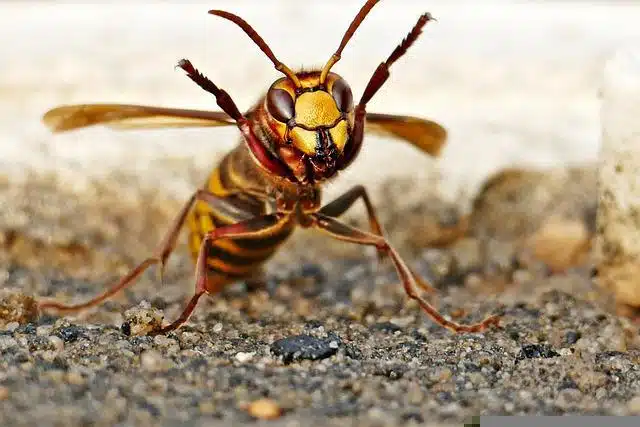
This is one of the most important biological facts about wasp aggression.
Most bees — particularly honeybees — have a barbed stinger that lodges in human skin when they sting. The bee pulls free, leaving the stinger and venom sac behind, and dies shortly after. This limits a bee to one sting per encounter.
Wasps have a smooth stinger with no barb. They can withdraw it cleanly after each sting, recover, and sting again — immediately, repeatedly, and without limit.
A single yellowjacket that feels threatened can deliver five, ten, or more stings in rapid succession. An agitated colony can deliver hundreds. This is what makes disturbing a large wasp nest genuinely dangerous.
The Most Aggressive Wasp Species You Need to Know
Not all wasps are equally aggressive. Understanding which species you are dealing with changes everything about how you should respond.
Yellowjackets — The Most Dangerous and Common
Yellowjackets are the species responsible for the majority of human wasp sting incidents. They are social wasps with colonies that peak at thousands of workers.
Their ground-level nests are often hidden inside lawn cavities, under decking, inside wall voids, or in stumps. Homeowners stumble onto them without any warning. A single disturbance at the nest entrance sends hundreds of guards into attack mode almost instantly.
They are also the primary food scavengers. At a summer barbecue or outdoor event, the wasps hovering over your plate and drink are almost certainly yellowjackets.
Bald-Faced Hornets — Large, Coordinated, and Fierce
Bald-faced hornets are technically a type of aerial yellowjacket, recognizable by their black and white coloring. They build large, gray, football-shaped paper nests in trees, shrubs, or under roof overhangs.
They defend a significant perimeter around the nest and release alarm pheromones that coordinate a rapid mass response. Their sting is painful, and a full colony defense can involve hundreds of individuals simultaneously.
Paper Wasps — Calmer But Not Safe
Paper wasps build the distinctive open, umbrella-shaped nests commonly found under eaves, in door frames, and inside empty flower pots. Their colonies are much smaller — rarely more than 75 to 100 individuals — making them far less dangerous than yellowjackets.
They are generally non-aggressive unless the nest is directly disturbed. Accidentally reaching into a door frame or picking up an item with an attached nest is the usual trigger.
Hornets — Powerful but Less Food-Focused
True hornets, including the European hornet, are large, loud, and alarming to encounter. They primarily hunt other insects rather than scavenging human food, so they are less likely to bother you at a picnic than yellowjackets are.
However, when a hornet nest is threatened, the defensive response is powerful and coordinated. Their venom is also more potent per sting than that of smaller wasp species.
Solitary Wasps — Almost Never a Problem
Mud daubers, digger wasps, and cicada killers are solitary wasps. They do not live in colonies and have no colony to defend.
Solitary wasps almost never sting humans unless directly handled or accidentally sat on. Despite their sometimes intimidating size — cicada killers can be over an inch long — they are ecologically valuable and largely harmless to people.
| Species | Colony Size | Aggression Level | Main Trigger | Nest Location |
|---|---|---|---|---|
| Yellowjacket | Up to 5,000 | Very High | Nest disturbance, food competition | Ground, wall voids |
| Bald-faced Hornet | 100–400 | Very High | Nest proximity | Aerial, trees |
| European Hornet | 200–400 | High | Nest disturbance | Tree cavities, structures |
| Paper Wasp | Up to 100 | Moderate | Direct nest contact | Eaves, door frames |
| Mud Dauber | Solitary | Very Low | Direct handling | Mud tubes on walls |
| Cicada Killer | Solitary | Very Low | Direct handling | Ground burrows |
What Triggers a Wasp Attack — The Complete List
Knowing the specific triggers lets you avoid them deliberately.
Proximity to the Nest
This is the number one trigger. The closer you are, the more likely an attack becomes. Nests hidden in the ground, inside walls, or inside hollow logs are the most dangerous because you cannot see them before it is too late.
Ground Vibrations
A lawnmower, weed trimmer, or tiller passing near an underground yellowjacket nest sends vibrations through the soil that the colony interprets as an attack. You will be swarmed before you even realize the nest is there.
Swatting or Rapid Movement
Any fast movement near a wasp is interpreted as a threat. Swatting is particularly dangerous because it may connect with the wasp, triggering the alarm pheromone response even if you are nowhere near a nest.
Strong Scents
Floral perfumes, sweet-smelling lotions, fruit-scented products, and even some hair products all attract wasps. Avoid heavy fragrance when spending time outdoors during late summer.
Bright Colors and Floral Patterns
Clothing that mimics the color and pattern of flowers — especially yellow, orange, and bright red — can attract foraging wasps. Neutral or dark colors are a safer choice for outdoor activities during peak wasp season.
Food and Sugary Drinks
Open drink cans are one of the most common ways people get stung. A wasp can crawl inside a can and sting the inside of your mouth or throat when you take a drink. This type of sting is particularly dangerous due to potential swelling near the airway.
How to Stay Safe Around Wasps — Practical Strategies for 2026
Prevention is always more effective than reaction. These strategies significantly reduce your chances of being stung.
At Outdoor Events and Picnics
Keep all food covered when not actively eating. Use airtight containers for anything sweet. Keep drinks in sealed bottles rather than open cans or cups.
Set up a wasp trap at the perimeter of your seating area before the event. Commercial wasp traps use attractant solutions that lure wasps away from the main gathering.
Dispose of food waste quickly and keep garbage bins sealed with lids. Loose food scraps and uncovered bins are major wasp attractants.
Personal Habits That Reduce Risk
Wear neutral or light-colored clothing outdoors in late summer. Avoid heavy perfume or strongly scented products before spending time outside.
Wear closed-toe shoes when walking in grassy areas where ground nests may be present. Bare feet on a lawn with hidden yellowjacket nests is a common cause of multiple stings.
Stay calm and move slowly if a wasp approaches. Do not swat, wave, or run. Let it investigate and leave, then move away steadily.
Around Your Property
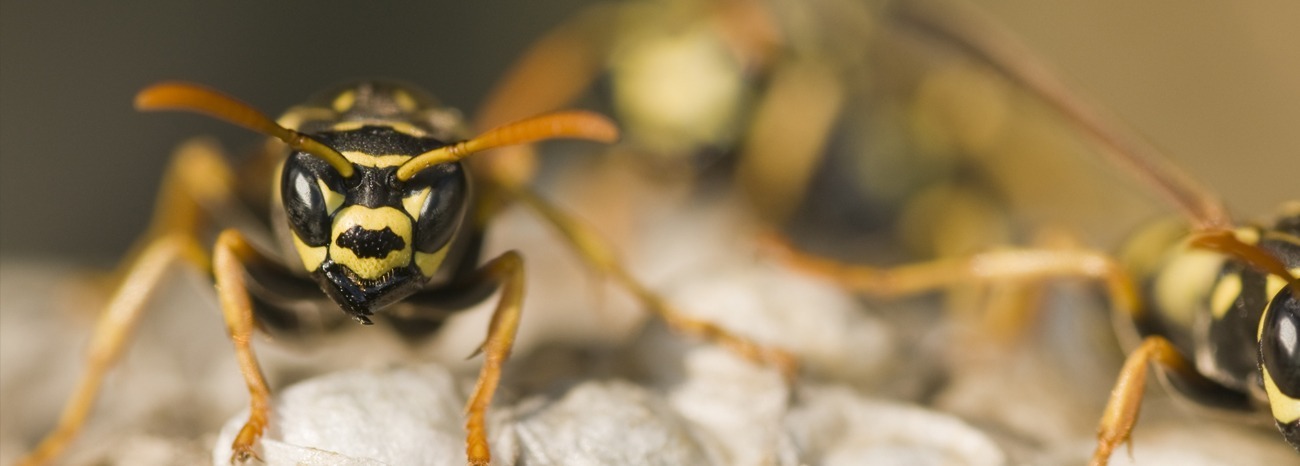
Inspect your property at the start of spring before nests grow large. Small nests treated early are far safer to deal with than full-sized summer colonies.
Seal cracks and gaps in siding, eaves, window frames, and roof edges. Wasps enter structures through tiny openings and build nests inside wall voids.
Keep garbage bins covered and away from gathering areas. Rinse food and drink containers before putting them in outdoor bins.
Remove fallen fruit from trees promptly. Rotting fruit is a sugar source that draws large numbers of foraging wasps.
| Situation | Prevention Strategy |
|---|---|
| Outdoor picnic | Cover food, use sealed bottles, set wasp traps |
| Backyard barbecue | Clear food waste quickly, cover bins, avoid perfume |
| Lawn mowing | Inspect the area first, watch for ground nest activity |
| Gardening | Wear gloves, long sleeves, watch for paper wasp nests |
| Swimming pool area | Keep poolside snacks covered, remove fallen fruit nearby |
| Outdoor dining | Pour drinks into clear glasses, check cans before drinking |
What to Do If a Wasp Lands on You
Stay still. Breathe normally. Do not flap, swat, or tense up with sudden movement.
Let the wasp walk or fly away on its own. In most cases, a wasp that lands on a person is investigating a scent or texture, not preparing to sting. Patience is almost always the right answer.
Once it leaves, move away slowly from the area. Do not return immediately to the same spot if you are near a potential nest.
What to Do If You Are Being Swarmed
Move away quickly in a straight line. Do not stop to swat. Do not jump into a body of water — wasps will wait at the surface.
Cover your face as best you can while running. Get inside a building or vehicle as fast as possible and close all doors and windows. Swatting at swarming wasps dramatically increases the number of stings you receive.
Never attempt to outrun wasps by running through bushes or tall grass. You may stumble onto another nest.
How to Treat a Wasp Sting
Leave the area immediately after being stung. The alarm pheromone from the sting will attract more wasps if you stay near the colony.
Wash the sting site with soap and water. Unlike bee stings, wasp stingers do not remain in the skin, so there is no stinger to remove.
Apply a cold compress or ice pack to reduce swelling and pain. Elevating the affected limb helps reduce swelling. Antihistamine tablets and a mild pain reliever can ease discomfort.
Signs of a Serious Allergic Reaction — Act Fast
Most people experience mild local reactions: pain, redness, and swelling at the sting site. These symptoms typically subside within a few hours.
Seek emergency medical attention immediately if you or someone nearby experiences any of the following after a sting:
- Hives or itchy skin spreading far from the sting site
- Swelling of the face, lips, or throat
- Difficulty breathing or wheezing
- Dizziness, nausea, or loss of consciousness
- Rapid or weak pulse
Anaphylaxis is rare but can be fatal without immediate treatment. Anyone with a known wasp sting allergy should carry an epinephrine auto-injector (EpiPen) at all times during outdoor activities.
When to Call a Professional for Nest Removal
Attempting to remove an active wasp nest yourself — especially a yellowjacket or hornet nest — is genuinely dangerous and frequently leads to multiple stings.
Call a licensed pest control professional if you discover any of the following:
A large nest with visible high wasp traffic. Any nest inside a wall void, attic, or other enclosed structure. A ground nest in a high-traffic area like a lawn, garden path, or near a children’s play area. Any nest that has been accidentally disturbed. A nest that cannot be safely reached or treated without risk of triggering a swarm.
Professionals wear full protective gear, use timed treatments, and conduct follow-up visits to confirm the colony is fully eliminated. The cost is almost always worth it for large or inaccessible nests.
The Ecological Role of Wasps — Why They Matter Despite It All
Despite their reputation, wasps are genuinely important to healthy ecosystems.
Social and solitary wasps collectively consume enormous quantities of pest insects — caterpillars, flies, aphids, beetle larvae, and spiders. Without them, garden pest populations would be significantly harder to control.
Adult wasps also visit flowers and transfer pollen while feeding on nectar. While not as efficient as bees, they contribute to pollination in many plant species. Some fig species depend almost entirely on wasps for pollination.
Solitary parasitoid wasps — which lay eggs inside or on other insects — are among the most important natural pest regulators in agriculture. They target species that damage crops and help maintain ecological balance without chemical intervention.
Understanding this context does not make a nest near your front door any less of a problem. But it does explain why wasps exist, why they behave the way they do, and why eliminating every wasp from your environment would cause far more problems than it solved.
Wasps vs. Bees — Understanding the Difference in Aggression
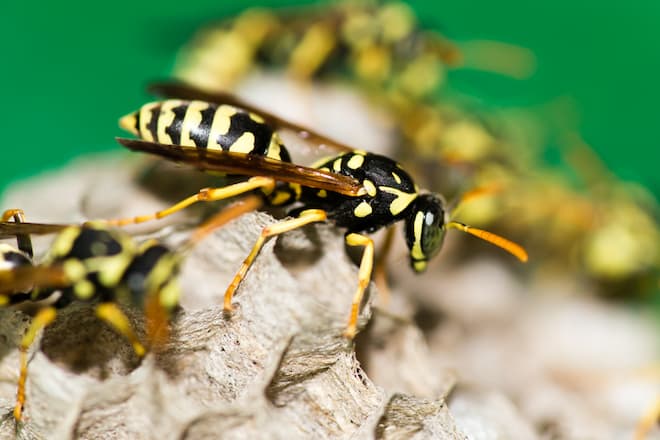
Many people confuse wasps and bees, which leads to misplaced fear or misidentification of the actual risk.
| Feature | Wasps | Honeybees | Bumblebees |
|---|---|---|---|
| Body shape | Slender, narrow waist | Rounder, hairier | Large, very hairy |
| Stinger | Smooth, reusable | Barbed, lost after sting | Smooth, reusable |
| Sting limit | Unlimited | Once | Unlimited but rare |
| Food interest | Protein + sugar | Nectar and pollen only | Nectar and pollen only |
| Nest defense | Aggressive | Moderate | Passive |
| Late-season behavior | Very aggressive | Moderate defensive | Calm |
| Scavenging human food | Yes (especially yellowjackets) | No | No |
The key practical difference: if an insect is hovering over your food or drink, it is almost certainly a wasp. Bees have very little interest in human food. They want flowers.
Frequently Asked Questions (FAQs)
Why are wasps so aggressive in late summer?
In late summer the colony stops producing larvae, cutting off the workers’ main food supply. Starving wasps turn to scavenging and become far more defensive and bold around food.
Do wasps sting for no reason?
No. Every sting is triggered by a perceived threat — to the nest, to themselves, or to a food source. What feels unprovoked to a human is usually a defensive response to movement, scent, or proximity.
Can wasps sting multiple times?
Yes. Unlike honeybees, wasps have a smooth stinger they can withdraw and reuse. A single wasp can sting you many times in one encounter.
Why do wasps follow me?
Wasps follow people because of scent cues — sweet perfume, sugary drinks, sweat, or food on clothing. They are investigating a potential food source, not targeting you personally.
What attracts wasps to my yard?
Uncovered food and drink, open garbage bins, fallen fruit, sweet-scented plants, and existing nests on the property are the most common attractants for wasps.
What should I do if I find a wasp nest?
Do not disturb it. Mark the area to warn others and stay well clear. Contact a licensed pest control professional for safe removal, especially for large or hidden nests.
Is a wasp sting dangerous?
For most people, a wasp sting causes local pain, swelling, and redness that resolves within hours. People with wasp venom allergies can experience anaphylaxis, which is life-threatening and requires emergency treatment.
Are yellowjackets the most aggressive wasp?
Yes. Yellowjackets are consistently rated as the most aggressive and most dangerous species for humans due to their large colonies, hidden ground nests, and tendency to scavenge food around people.
Do wasps serve any purpose in nature?
Yes. Wasps are important natural pest controllers, consuming large quantities of pest insects. They also pollinate some plants and play key roles in maintaining ecological balance.
How do I stop wasps from coming to my picnic?
Cover all food and drinks, use sealed containers, set wasp traps at the perimeter, dispose of waste quickly, avoid sweet-smelling perfumes, and wear neutral-colored clothing to reduce attracting foraging wasps.
Conclusion
Why are wasps so aggressive comes down to three core forces:
the hardwired drive to protect their colony, the desperate hunger that grips late-season workers when their larval food supply disappears, and the chemical alarm system that turns one defensive sting into a coordinated swarm.
None of this is random or malicious.
Wasps are reacting to what their biology tells them is a survival threat.
Knowing this changes how you respond. You stay calm instead of swatting.
You cover your food instead of leaving it open. You inspect your property in spring when nests are small and manageable. You call a professional when a nest is large, hidden, or in a high-traffic area.
The more you understand wasp behavior, the less power they have to ruin your outdoor time.
Respect their space, remove their attractants, and know how to respond when things go wrong — that is everything you need to stay safe around wasps in 2026 and beyond.
