

Start With Why book by Simon Sinek is one of the most powerful leadership and business books ever written.
Published in 2009, it has transformed how millions of leaders, entrepreneurs, and marketers think about purpose, communication, and long-term success.
The book’s central message is both simple and profound: great leaders and organizations do not start with what they do or how they do it — they start with why.
If you want to understand the real difference between companies that inspire loyalty and those that just make sales, this complete Start With Why book summary is your guide.
What Is the Start With Why Book About
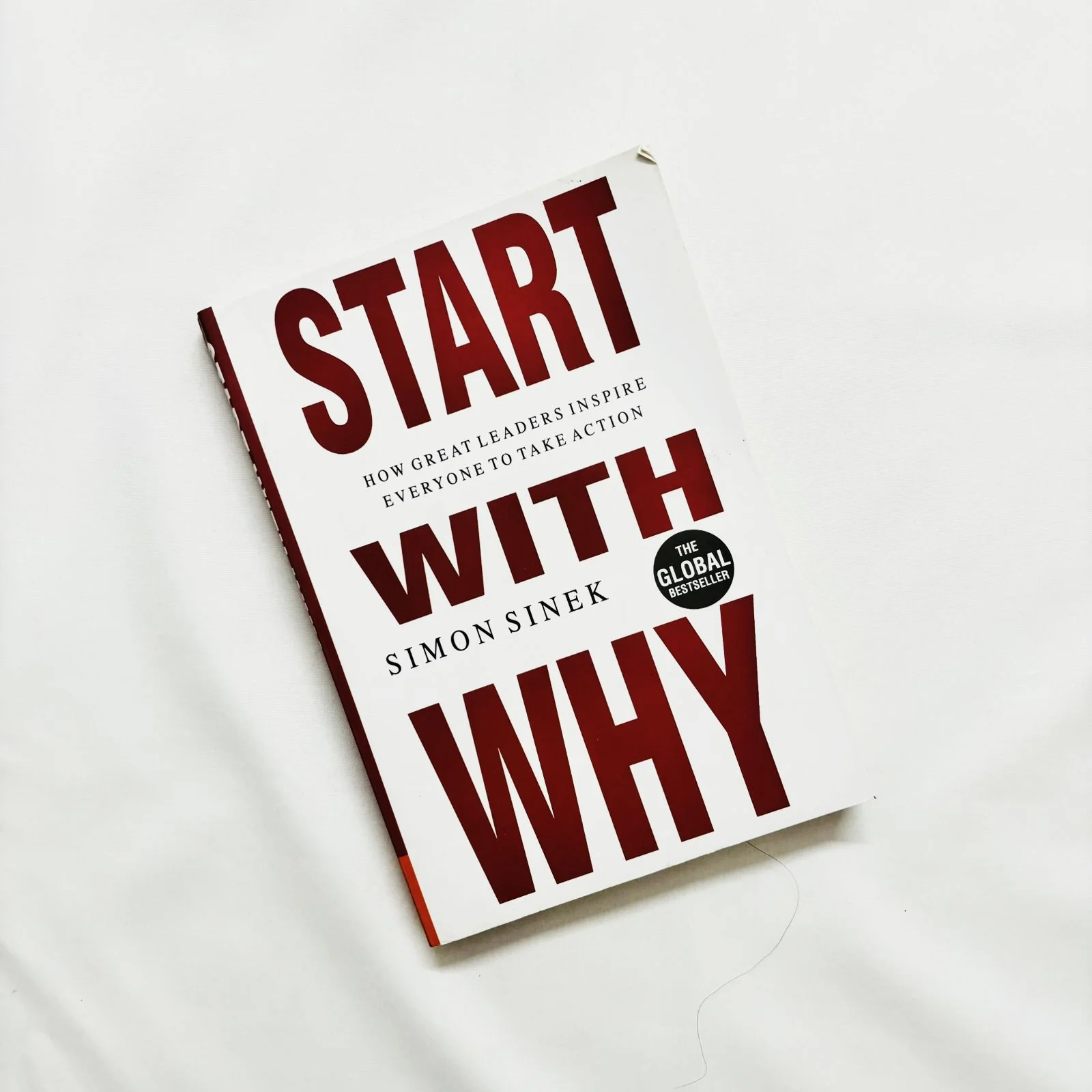
The Start With Why book asks one fundamental question: why do some leaders and organizations inspire while others do not?
Simon Sinek noticed that the most influential companies and leaders — Apple, Southwest Airlines, Martin Luther King Jr., the Wright Brothers — all think, act, and communicate the same way. They lead with purpose. Everyone else leads with product.
The answer Sinek discovered became the foundation of the book and a framework he calls The Golden Circle.
About Simon Sinek: The Author Behind the Book
Simon Sinek is a British-American author, motivational speaker, and organizational consultant.
He began his career in advertising before reaching a personal low point where he felt completely disconnected from his work. That experience pushed him to search for what drives human motivation at its deepest level.
His TEDx Talk, “How Great Leaders Inspire Action,” has been viewed over 60 million times and is one of the most-watched TED Talks in history. The Start With Why book is the expanded version of that talk.
| Book Detail | Information |
|---|---|
| Title | Start With Why: How Great Leaders Inspire Everyone to Take Action |
| Author | Simon Sinek |
| First Published | 2009 |
| Pages | 256 |
| Category | Leadership, Business, Personal Development |
| Best For | Entrepreneurs, Leaders, Managers, Marketers |
| TED Talk Views | 60+ Million |
The Golden Circle: The Core Framework of the Start With Why Book
The single most important idea in the Start With Why book is The Golden Circle.
Imagine three concentric rings, like a bullseye. The outermost ring is WHAT. The middle ring is HOW. The innermost ring is WHY.
What Is WHAT
Every single organization on earth knows what it does. This is the product or service they sell. It is the most visible and easiest layer to identify.
Most companies start and end their communication here. They describe features, specs, and results. But this alone does not inspire loyalty.
What Is HOW
Some organizations know how they do what they do. This might be their unique process, their proprietary method, or what makes them different from competitors.
HOW is often called the unique selling proposition. It explains the mechanism behind the product or service. But it still does not answer the deeper question.
What Is WHY
Very few organizations can clearly articulate why they do what they do. WHY is not about making money — that is a result, not a purpose.
WHY is your purpose, your cause, your belief. It answers: why does this organization exist? Why do you get out of bed every morning? Why should anyone care?
The Start With Why book argues that truly inspired leaders communicate from the inside out — starting with WHY, then HOW, then WHAT.
The Golden Circle and the Human Brain
One of the most fascinating parts of the Start With Why book is how the Golden Circle maps directly onto human brain biology.
The outer ring (WHAT) corresponds to the neocortex — the newest part of the brain responsible for rational thought, analysis, and language.
The inner rings (HOW and WHY) correspond to the limbic brain — the older, more primitive section responsible for feelings like trust, loyalty, and gut decisions. Crucially, the limbic brain has no capacity for language.
This is why people often say “I just love Apple” or “I just feel good about this brand” without being able to explain it rationally. The decision is made in the limbic brain. The rational mind then works backwards to justify it.
When you communicate starting with WHY, you talk directly to the decision-making part of the brain. Logic comes second. Emotion — and action — comes first.
Apple: The Most Famous Start With Why Book Example
Simon Sinek uses Apple as the primary example throughout the Start With Why book. It perfectly illustrates the power of leading with purpose.
How a Normal Company Communicates
A typical computer company would say: “We make great computers. They are beautifully designed and easy to use. Want to buy one?”
This starts with WHAT. It is rational. It is forgettable.
How Apple Communicates
Apple says: “Everything we do, we believe in challenging the status quo. We believe in thinking differently. The way we challenge the status quo is by making our products beautifully designed, simple to use, and user friendly. We just happen to make great computers. Want to buy one?”
This starts with WHY. It is emotional. It builds belief. It creates a tribe.
The product is the same. The sequence is different. The result is a customer who does not just buy a computer — they buy a belief system. They buy a sense of identity.
This is why Apple customers are fiercely loyal even when competitors offer technically superior products at lower prices.
Manipulation vs Inspiration: A Key Lesson from the Start With Why Book
The Start With Why book draws a sharp line between two ways to influence human behavior: manipulation and inspiration.
The Many Forms of Manipulation
Sinek identifies several common manipulation tactics used in business:
| Manipulation Tactic | Example |
|---|---|
| Price Reduction | “50% off today only” |
| Promotions | “Buy one, get one free” |
| Fear | “Don’t miss out or you’ll regret it” |
| Aspirational Messaging | “Lose 10 pounds in 30 days” |
| Peer Pressure | “9 out of 10 dentists recommend this” |
| Novelty | “New and improved formula” |
Manipulation works in the short term. It can drive a purchase or a click.
But it does not create loyalty. It creates transactions. The moment a competitor offers a better deal, a manipulated customer leaves.
The Power of Inspiration
Inspiration happens when people believe in your WHY. They do not just want your product — they want to be part of your purpose.
Inspired customers are loyal even when you make mistakes. Inspired employees are driven even without external incentives. The Start With Why book argues that inspiration — not manipulation — is the only sustainable path to long-term success.
The Wright Brothers vs Samuel Pierpont Langley
One of the most powerful case studies in the Start With Why book is the story of the Wright Brothers.
Samuel Pierpont Langley Had Every Advantage
Langley was a well-funded government-backed scientist racing to build the first airplane. He had a large team, significant resources, and strong connections. He was motivated primarily by a desire for fame and financial reward.
When his project failed, his team disbanded. He gave up entirely.
Orville and Wilbur Wright Had Almost Nothing
The Wright Brothers were two bicycle mechanics from Dayton, Ohio. They had no formal engineering education, no government funding, and no influential contacts.
What they had was a burning belief — a WHY. They believed that the airplane would change the world. They were on a mission that was bigger than fame or money.
When they failed, they got back up. Their team stayed loyal even without salaries. Their passion attracted early supporters who believed in the same dream.
On December 17, 1903, Orville and Wilbur Wright achieved powered flight. Langley quit just days after his latest failure.
The Start With Why book uses this example to prove that resources alone never determine success. Purpose does.
The Law of Diffusion of Innovation
The Start With Why book introduces the Law of Diffusion of Innovation — a concept from sociologist Everett Rogers — to explain how ideas and products achieve mass-market success.
The Five Adopter Groups
| Group | % of Market | Behavior |
|---|---|---|
| Innovators | 2.5% | Seek new ideas immediately |
| Early Adopters | 13.5% | Quickly see the potential |
| Early Majority | 34% | Need social proof before acting |
| Late Majority | 34% | Adopt only after it becomes common |
| Laggards | 16% | Last to adopt, often reluctantly |
The critical insight Sinek draws from this model is the tipping point.
To achieve mass-market adoption, a product or idea must reach approximately 15–18% of the market. Once early adopters join innovators, the early majority follows. The movement becomes self-sustaining.
Why This Matters for the Start With Why Book
People who share your WHY are your innovators and early adopters. They are not buying your product for rational reasons. They buy because they believe what you believe.
These true believers then spread your message to the early majority through social proof. You do not have to persuade the masses. You just have to inspire the few who will carry the message forward.
This is how Apple’s early fans became a movement. This is how Martin Luther King Jr.’s March on Washington became a defining moment in history.
Martin Luther King Jr. and the Power of WHY
Simon Sinek devotes significant attention in the Start With Why book to Martin Luther King Jr. as a leadership case study.
The “I Have a Dream” Speech
Hundreds of thousands of people traveled to Washington DC on August 28, 1963 for no personal gain. They came because they believed in a cause.
King did not announce what he planned to do. He did not offer an agenda. He declared, “I have a dream.” He painted a vision of WHY.
People showed up for themselves — because they believed in what he believed. They did not show up for King. They showed up for the movement.
Why Leaders Who Start With WHY Attract Movements
The Start With Why book points out that King was not the only great civil rights speaker of his time. Many others had equal eloquence and intelligence.
What made King different was his ability to communicate WHY in a way that made other people feel it was their own belief. That is the definition of authentic leadership.
How WHY Types and HOW Types Work Together
The Start With Why book introduces an important distinction between two kinds of people in any organization.
WHY Types
WHY types are visionaries. They see possibilities, dream of futures, and are driven by belief and purpose. They are optimists. They often lack the discipline or practicality to execute their vision alone.
Steve Jobs was a WHY type. Bill Gates is a WHY type. Martin Luther King Jr. was a WHY type.
HOW Types
HOW types are the builders. They understand how to get things done. They turn vision into reality through systems, processes, and discipline. They are the essential operational force behind any great movement or company.
Steve Wozniak was Jobs’ HOW type. The partnership was unstoppable because of this combination.
The Start With Why book argues that neither type succeeds alone. WHY without HOW is just a dream. HOW without WHY is just a job.
The Celery Test: Filtering Decisions Through Your WHY
Sinek introduces a memorable concept in the Start With Why book called the Celery Test.
Imagine you are at a party and multiple people give you different advice. Someone says take gluten. Someone says take sugar. Someone says take celery. Someone says take Oreos.
If you go to the store and buy all of it, you spend too much money, confuse your customer, and have no clear identity.
But if your WHY is health, you buy only celery. You ignore all other advice — no matter how good it sounds — because it does not align with your purpose.
The Celery Test is Sinek’s framework for making consistent decisions. Every company decision should pass through the filter of WHY. If it does not serve the purpose, it does not get done.
Trust, Loyalty, and the Inside-Out Organization
The Start With Why book makes a compelling case that trust — both from employees and customers — is built from the inside out.
Employees Who Believe in the WHY
Employees who understand and believe in the company’s WHY are more engaged, more creative, and more loyal. They are not working for a paycheck alone. They are working for a cause.
This leads to higher quality work, better customer service, and stronger retention. The company culture becomes self-reinforcing.
Customers Who Believe in the WHY
Customers who buy into the WHY do not just make purchases. They become advocates. They recommend the brand without incentive. They defend it when competitors attack.
The Start With Why book shows that this organic loyalty is far more valuable than any marketing campaign. It is the result of authentic communication that starts with purpose.
The Danger of Losing Your WHY
Sinek warns in the Start With Why book about what happens when organizations lose sight of their WHY.
The Walmart Example
Sam Walton built Walmart around the WHY of serving small-town American communities with low prices. He was frugal in his personal life, drove an old pickup truck, and never forgot his roots.
After his death, Walmart kept the WHAT and HOW but lost the WHY. The company became focused on profit over purpose. Employee morale declined and public perception shifted.
The Apple Example
When Steve Jobs was pushed out of Apple in the 1980s, the company quickly drifted. Without its WHY type at the helm, Apple lost direction. Products lost clarity. Market share suffered.
When Jobs returned, he immediately reconnected Apple to its WHY — challenging the status quo — and the company’s legendary second act began.
The lesson is clear: a leader’s WHY must be institutionalized into the DNA of the organization before it becomes dependent on any single individual.
The School Bus Test
Sinek asks a powerful question in the Start With Why book: if the founder got hit by a bus tomorrow, would the organization survive?
The challenge for every leader is to write down and embed the WHY so deeply into the culture that no single person’s absence can destroy it. The WHY must outlast any individual.
The Split Between WHY and WHAT: The Danger Zone
Sinek describes a common trap in the Start With Why book. As companies grow and succeed, they begin to focus almost entirely on WHAT — the products, the revenue, the market share.
The WHY slowly becomes background noise. Eventually it fades entirely.
When this happens, companies begin to rely on manipulation to drive behavior. Prices get cut. Promotions multiply. Fear-based marketing increases.
The result is a slow erosion of trust, loyalty, and differentiation. The company becomes just another option — competing on price rather than purpose.
How to Find Your WHY: Personal Application
The Start With Why book is not just for corporations. It applies equally to individuals building careers and personal lives.
Questions to Discover Your Personal WHY
Sinek suggests looking backward to move forward. Your WHY is almost always rooted in a formative experience — something that shaped your deepest values and beliefs.
Ask yourself: What makes you feel most alive? What cause would you work for without pay? What change do you want to see in the world? What do people consistently thank you for?
Your WHY is not what you want to achieve. It is why you want to achieve it.
Applying the Start With Why Book to Career Decisions
When your work aligns with your WHY, you do not just show up — you show up inspired. The Start With Why book argues that this is not a luxury. It is the foundation of sustainable performance and genuine fulfillment.
Every job decision, every partnership, every client choice should be filtered through your WHY. Does this serve my purpose? Or does it only serve my bank account?
Key Quotes from the Start With Why Book
The Start With Why book contains some of the most cited lines in modern business writing.
| Quote | Core Idea |
|---|---|
| “People don’t buy what you do; they buy why you do it.” | Purpose drives loyalty |
| “Knowing WHY is essential for lasting success.” | Purpose is the foundation |
| “The goal is not to do business with everyone who needs what you have. It’s to do business with people who believe what you believe.” | Shared beliefs build tribes |
| “Great leaders are those who trust their gut, their beliefs, their values.” | Emotional conviction over rational calculation |
| “When WHY goes fuzzy, growth becomes very difficult.” | Clarity of purpose is a survival need |
Start With Why Book vs Other Leadership Books
| Book | Author | Core Idea | Best For |
|---|---|---|---|
| Start With Why | Simon Sinek | Lead with purpose and belief | Leaders, marketers, entrepreneurs |
| Leaders Eat Last | Simon Sinek | Build safety and trust in teams | Managers and team leads |
| The 7 Habits of Highly Effective People | Stephen Covey | Personal effectiveness principles | Anyone seeking life structure |
| Good to Great | Jim Collins | What makes companies leap to greatness | CEOs and executives |
| Drive | Daniel Pink | Intrinsic motivation at work | HR leaders and managers |
The Start With Why book stands out for its singular, crystal-clear framework. It does not offer dozens of principles. It offers one profound idea applied consistently across many real-world examples.
Who Should Read the Start With Why Book
The Start With Why book is essential reading for anyone who leads or communicates for a living.
Entrepreneurs building a brand from scratch will find the Golden Circle framework immediately applicable. It shapes everything from the mission statement to the first marketing campaign.
Managers trying to motivate teams will find the WHY vs HOW types distinction invaluable. Understanding what drives different people allows for better roles, better communication, and better results.
Marketers struggling with brand differentiation will discover that the problem is almost never the product. The problem is usually the failure to communicate purpose before process.
Individuals at a career crossroads will find the personal WHY discovery process deeply clarifying. The Start With Why book gives language to something most people feel but cannot articulate.
Why the Start With Why Book Still Matters in 2026
In 2026, markets are noisier, attention spans are shorter, and consumers are more skeptical than ever. The tactics that worked ten years ago — discounts, viral stunts, influencer promotions — are increasingly ineffective at building real loyalty.
Purpose-led brands continue to outperform commodity brands across almost every industry. Employees increasingly choose employers based on values alignment, not just salary. Customers are drawn to brands that stand for something real.
The Start With Why book was ahead of its time when published in 2009. In 2026, its central argument has only become more urgently relevant. Leaders who cannot articulate their WHY will struggle to attract the best talent, retain loyal customers, and build something that lasts.
Frequently Asked Questions (FAQs)
What is the Start With Why book about?
The Start With Why book by Simon Sinek argues that great leaders inspire action by communicating their purpose first. It introduces the Golden Circle framework — WHY, HOW, and WHAT — as the key to lasting leadership and brand loyalty.
Who wrote the Start With Why book?
Simon Sinek wrote Start With Why, published in 2009. He is a British-American author, speaker, and leadership consultant best known for his viral TED Talk on the same topic.
What is the Golden Circle in the Start With Why book?
The Golden Circle is a three-ring model with WHY at the center, HOW in the middle, and WHAT on the outside. Sinek argues that inspired leaders communicate from the inside out, starting with WHY.
What does “people don’t buy what you do they buy why you do it” mean?
It means consumers are drawn to a brand’s purpose and belief system, not just its product. When your WHY resonates, customers become loyal advocates who feel personally connected to your mission.
What is the best example in the Start With Why book?
Apple is the primary example. Sinek shows how Apple communicates from its WHY — challenging the status quo — rather than listing product features, which builds deep emotional loyalty far beyond what competitors can match.
How does the Start With Why book relate to neuroscience?
The Golden Circle maps onto the brain’s structure. WHY and HOW connect with the limbic brain, which controls emotions and decisions. WHAT connects with the neocortex, which handles rational thought. Starting with WHY speaks to where decisions are actually made.
What is the Law of Diffusion of Innovation in the Start With Why book?
It is Everett Rogers’ theory that shows how ideas spread through society in five groups: innovators, early adopters, early majority, late majority, and laggards. Sinek uses it to show why inspiring true believers first creates mass-market movements.
Can the Start With Why book be applied to personal life?
Yes. Sinek explicitly encourages individuals to find their personal WHY — the core belief that drives their choices and gives their work meaning. Aligning your career with your WHY leads to sustained motivation and fulfillment.
What is the difference between manipulation and inspiration in the Start With Why book?
Manipulation uses tactics like discounts, fear, and novelty to drive short-term behavior. Inspiration comes from shared belief in a WHY and creates long-term loyalty. Sinek argues that only inspiration builds sustainable success.
Is the Start With Why book still relevant in 2026?
Absolutely. In 2026, consumers and employees demand authenticity and purpose more than ever before. The Start With Why book’s core framework is more applicable today than when it was first published in 2009.
Conclusion
The Start With Why book by Simon Sinek is not just a business book — it is a philosophy for anyone who wants to lead, build, or inspire with lasting impact.
The Golden Circle framework gives leaders a clear, science-backed structure to communicate purpose before process and belief before product.
The most powerful organizations in history — from Apple to Southwest Airlines to social movements led by figures like Martin Luther King Jr. — all shared this same inside-out approach.
They started with WHY, they stayed consistent in their HOW, and they let their WHAT prove that they meant it.
In 2026, where noise is everywhere and trust is scarce, the leaders and brands who know their WHY will always stand apart from those who do not. Read this book, find your WHY, and build something that truly matters.
