

Why does my car shake when I accelerate? This is one of the most common and most searched car problems in 2026.
That unsettling vibration through your steering wheel, floorboard, or seat is your vehicle sending a clear warning signal.
It can start small and grow into a serious safety risk if ignored. The good news is that most causes are diagnosable without special tools, and many fixes are affordable when caught early.
What Does It Mean When a Car Shakes During Acceleration?
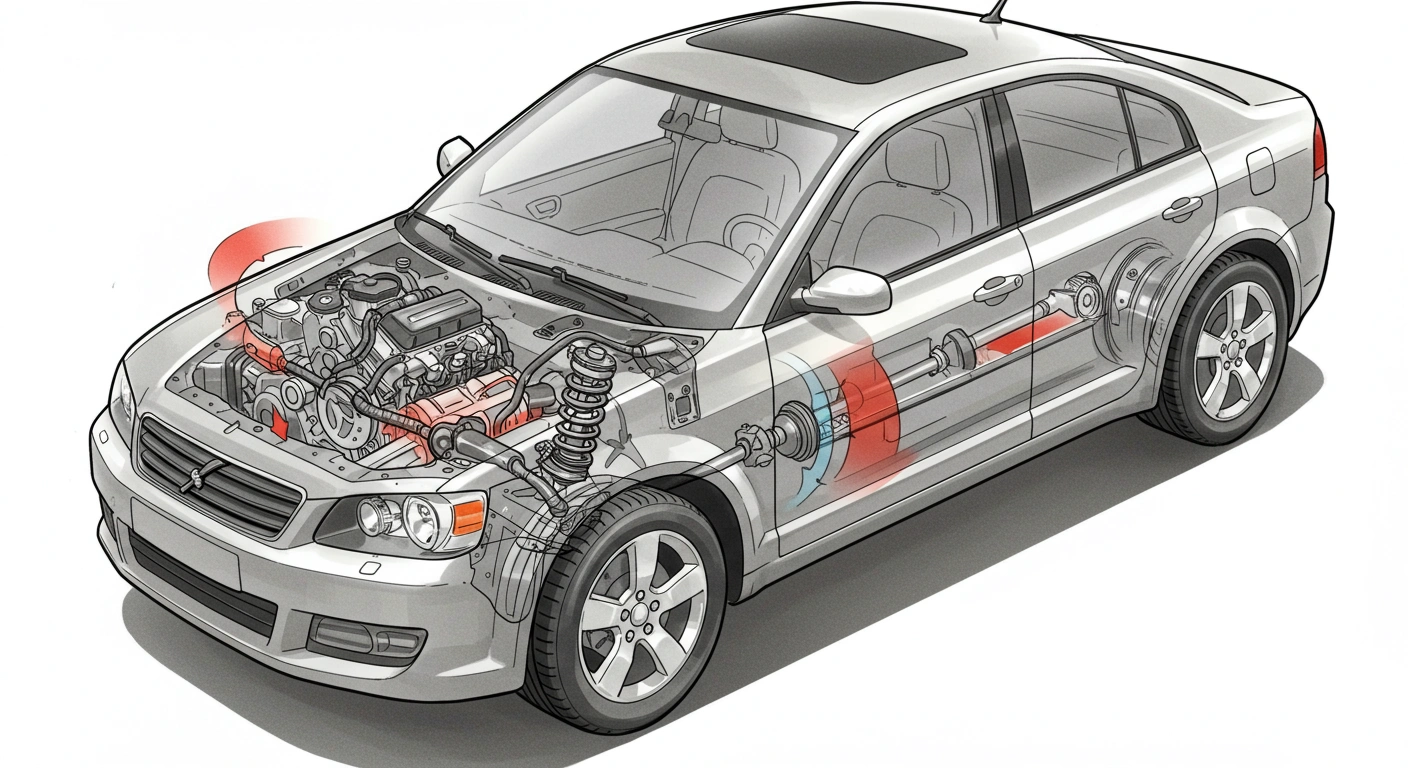
When you press the gas pedal, your engine, drivetrain, tires, and suspension all work together under increased load. Any weak link in that chain produces vibration.
Shaking during acceleration is different from shaking while idling or braking. It means the problem gets worse when the system is under stress — that is an important clue. Understanding exactly when and where the shaking happens is the fastest way to narrow down the cause.
A small amount of vibration on rough roads is normal. But if the shake is consistent, worsens over time, or is felt at highway speeds, it is a red flag that needs attention.
First: Ask Yourself These Two Diagnostic Questions
Before looking at individual causes, answer these two questions. They immediately narrow the list.
Question 1: Does the shaking happen only when pressing the gas, or also when coasting at the same speed?
If the shaking disappears when you lift off the gas at the same speed, the cause is drivetrain-related — CV joint, motor mounts, or axle. If it continues while coasting, tires or a bent wheel are more likely.
Question 2: Where do you feel the vibration — steering wheel, seat, or entire car?
Steering wheel vibration usually points to front-end problems: front tires, front CV axle, ball joints, or tie rod ends. Vibration felt through the seat or floor but not the steering wheel often points to rear tires or rear drivetrain components.
All Causes of Car Shaking During Acceleration
Here is a complete overview before we dive into each one in detail.
| Cause | Most Common In | Urgency Level | Typical Fix Cost |
|---|---|---|---|
| Unbalanced or worn tires | All vehicles | Low-Medium | $20–$80 (balance) |
| Bent wheel or rim | All vehicles | Medium | $75–$200 (repair/replace) |
| Worn CV joints | FWD / AWD vehicles | High | $200–$500 per axle |
| Damaged driveshaft or U-joints | RWD / 4WD vehicles | High | $300–$900 |
| Broken or worn motor mounts | All vehicles | Medium-High | $150–$500 |
| Engine misfire | All vehicles | High | $50–$400 |
| Loose or worn wheel bearing | All vehicles | High | $150–$400 per wheel |
| Stuck brake caliper | All vehicles | High | $220–$380 per corner |
| Worn suspension components | All vehicles | Medium-High | $150–$600 |
| Fuel delivery problems | All vehicles | Medium | $50–$300 |
| Transmission issues | All vehicles | High | $300–$2,500+ |
| Loose lug nuts | All vehicles | Very High | $0 (tighten immediately) |
| Wheel misalignment | All vehicles | Medium | $75–$150 |
Cause 1: Unbalanced or Worn Tires
Tires are the most common cause of car shaking during acceleration. This is always the first thing to check.
When tires are unbalanced, weight is unevenly distributed around the wheel. This creates a wobble that gets worse as speed increases. You may feel it start around 45–65 mph and intensify from there.
Tire balance can be disrupted after hitting a pothole, following a tire repair, or when wheel weights fall off. Even an imbalance of less than one ounce can cause noticeable vibration at highway speeds.
Other tire issues that cause shaking:
Uneven tread wear causes irregular contact with the road. Tires with flat spots — common after a vehicle sits unused for months — create a rhythmic thumping shake. A tire with internal damage, a bulge, or a separated belt will cause violent shaking that gets worse fast.
Fix: Have your tires balanced at any tire shop. It is cheap, fast, and often solves the problem immediately. Rotate tires every 5,000–7,500 miles. Check tire pressure monthly — low or uneven pressure alone can create a rough ride. Replace tires showing uneven wear, bulges, or visible damage.
Cause 2: Bent Wheel or Rim
A bent wheel causes vibration that mimics tire imbalance. Standard balancing will not fix it.
Hitting a large pothole, curb, or road debris can bend a wheel just enough to cause problems. The damage is sometimes invisible to the naked eye. A visual inspection or runout test at a tire shop can confirm it.
Fix: Depending on the severity, a bent alloy wheel can sometimes be straightened. Steel wheels are more easily repaired. In many cases, replacing the damaged wheel is the best long-term solution. Do not ignore this — a bent wheel causes accelerated tire wear on top of the vibration.
Cause 3: Worn CV Joints (Constant Velocity Joints)
CV joints are one of the most common causes of shaking specifically during acceleration, especially in front-wheel-drive and all-wheel-drive vehicles.
CV joints transfer power from the transmission to the drive wheels through a flexible connection. When they wear out, crack, or lose their grease through a torn boot, they produce a distinct vibration under acceleration. A clicking or popping noise when turning is a classic sign of a failing outer CV joint.
A damaged inner CV joint causes shaking when you press the gas hard. If the vehicle carries weight or climbs a hill, the shaking can become very strong.
Fix: Inspect CV joint boots for tears or grease leakage. A torn boot allows dirt and moisture in, which accelerates joint failure. Replace the CV axle shaft as a complete unit — this is the standard repair. Do not delay, as a completely failed CV joint can leave you stranded or cause a loss of vehicle control.
Cause 4: Damaged Driveshaft or U-Joints
In rear-wheel-drive and four-wheel-drive vehicles, the driveshaft transmits power from the transmission to the rear axle. If it is bent or damaged, it causes the entire vehicle to shake during acceleration.
Universal joints — called U-joints — connect sections of the driveshaft and allow it to flex as the suspension moves. Worn U-joints cause a clunking noise and vibration that worsens with speed.
A bent driveshaft is often caused by hitting a large road obstacle or off-road impact. Look under the vehicle for dents on the driveshaft or greasy spots near the U-joints that indicate a failing seal.
Fix: Have a professional inspect the driveshaft and U-joints. Worn U-joints can often be replaced individually. A bent driveshaft usually needs to be replaced entirely. This is a moderate-to-high cost repair but essential for safe driving.
Cause 5: Broken or Worn Motor Mounts
Motor mounts secure the engine to the vehicle frame and absorb engine vibration. When they wear out, crack, or break, the engine moves more than it should under acceleration.
You will feel this as a noticeable shake through the floorboard or steering wheel, especially when accelerating from a stop or shifting gears. In severe cases, you may hear a clunk or thud when engaging the throttle or shifting into drive or reverse.
One broken mount causes other mounts to wear faster because they take on extra stress. Fan blades or other engine components can contact surrounding parts if the engine shifts too far.
Fix: Have a mechanic inspect all motor mounts. The vehicle needs to be on a lift for a proper inspection. Replacing worn mounts is a moderate repair — typically $150 to $500 depending on how many mounts need replacement. The improvement in ride quality is immediate.
Cause 6: Engine Misfire
An engine misfire happens when one or more cylinders fail to fire properly. This breaks the engine’s rhythm and causes a jerking or shuddering sensation, especially under acceleration.
Common misfire causes include worn spark plugs, faulty ignition coils, bad fuel injectors, or a vacuum leak. When a cylinder misfires, the power stroke is skipped. You feel this as a brief hesitation followed by a shudder, particularly when pressing the gas from a stop or at low RPM.
A check engine light almost always appears alongside misfires. Scan the OBD-II code — P0300 through P0308 indicates which cylinder is misfiring.
Fix: Check for diagnostic trouble codes with an OBD-II scanner ($25–$50 tool or free at most auto parts stores). Replace spark plugs if fouled or worn — they should be replaced every 30,000–100,000 miles depending on type. Test ignition coils individually and replace failing ones. Clean or replace dirty fuel injectors. Fix any vacuum leaks first, as they affect the air-fuel ratio for all cylinders.
| Misfire OBD-II Code | Meaning |
|---|---|
| P0300 | Random/Multiple cylinder misfire |
| P0301 | Cylinder 1 misfire |
| P0302 | Cylinder 2 misfire |
| P0303 | Cylinder 3 misfire |
| P0304 | Cylinder 4 misfire |
| P0305-P0308 | Cylinders 5–8 misfire |
Cause 7: Worn or Failing Wheel Bearing
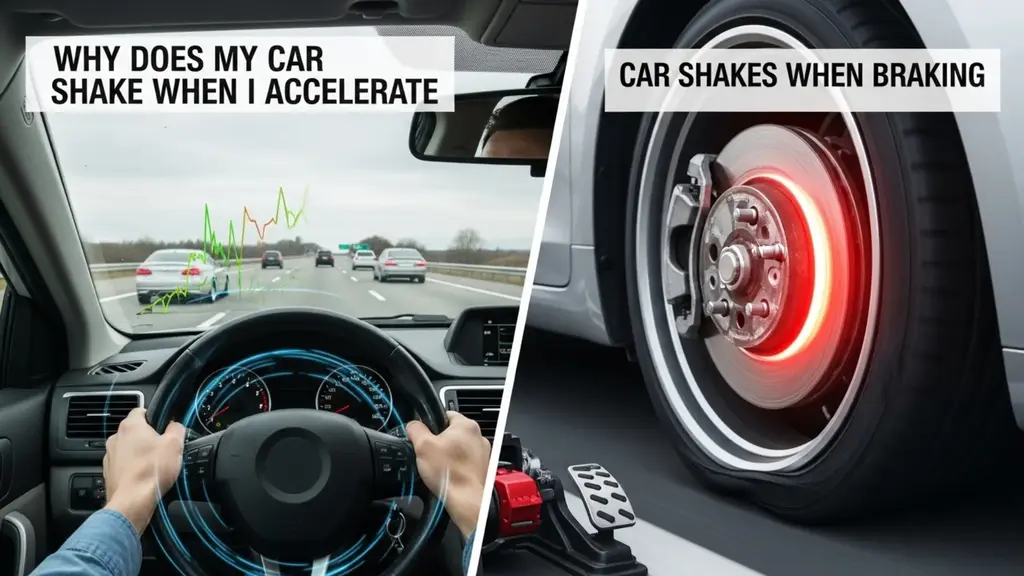
Wheel bearings allow the wheels to spin freely while supporting the vehicle’s weight. When they wear out, they produce a humming or grinding noise along with vibration.
The vibration often changes intensity when you steer left or right. If turning one direction makes the noise go away and turning the other makes it louder, a wheel bearing is likely the cause. A failing wheel bearing can also cause the wheel to feel loose if you jack up the car and try to wiggle the wheel with your hands.
A worn wheel bearing does not just create vibration — it is a safety issue. Severe bearing failure can cause a wheel to seize while driving.
Fix: A wheel bearing replacement typically costs $150–$400 per wheel including labor. Do not delay this repair. On most modern vehicles, the hub and bearing are replaced as a single assembly.
Cause 8: Stuck or Seized Brake Caliper
A stuck brake caliper creates constant friction on one wheel even when you are not pressing the brake pedal. This drag causes shaking that is often felt most intensely between 40 and 55 mph during acceleration.
The wheel with the stuck caliper will be noticeably hotter than the others after driving. You may also smell a burning odor or notice the car pulling to one side during acceleration or braking.
This is not the most common cause of acceleration shaking, but it is dangerous. A stuck caliper can cause brake fade, accelerated rotor and pad wear, and overheating.
Fix: Have the brake system inspected. Replace warped rotors and ensure calipers are sliding freely on their guide pins. A stuck caliper replacement runs $220–$380 per corner depending on the vehicle. Do not ignore this one.
Cause 9: Worn Suspension Components
Worn suspension parts cause vibration that gets worse at highway speeds and under acceleration load. The main suspects are ball joints, tie rod ends, control arm bushings, and struts or shock absorbers.
These components form the connection between your wheels and the rest of the vehicle. When they develop play or excessive wear, the wheels no longer track perfectly — and you feel it as a shake through the steering wheel or entire body of the car.
Bad ball joints and tie rod ends are especially concerning because they directly affect your ability to steer. Do not ignore steering vibrations.
Fix: A front-end inspection by a mechanic will identify worn suspension parts. Look for signs like uneven tire wear, a wandering steering wheel, clunking over bumps, or vibration that appears on one side. Replace worn components promptly.
| Component | Symptom | Typical Cost to Replace |
|---|---|---|
| Ball joints | Clunk over bumps, loose steering | $150–$400 |
| Tie rod ends | Steering shimmy, uneven tire wear | $100–$300 |
| Control arm bushings | Vibration, clunking, pulling | $150–$400 |
| Shocks / struts | Bouncing, instability at speed | $250–$700 per axle |
| Wheel bearings | Humming, wheel play | $150–$400 |
Cause 10: Fuel Delivery Problems
A clogged fuel filter, failing fuel pump, or dirty fuel injectors can starve the engine of an even fuel supply. The engine stumbles as it tries to maintain power under load, and you feel it as a shudder or shake — especially on hills or during hard acceleration.
The fuel system delivers a precise mixture of fuel and air to each cylinder. If that delivery is uneven or interrupted, combustion becomes uneven and the engine shakes.
Symptoms often include hesitation when pressing the gas, poor fuel economy, reduced power, and rough acceleration. The shake may come and go depending on throttle position and load.
Fix: Replace the fuel filter on schedule (every 20,000–40,000 miles on many vehicles). Test fuel pressure if a pump failure is suspected. Have fuel injectors professionally cleaned or replaced if dirty. These are moderate-cost repairs that have a big impact on smooth power delivery.
Cause 11: Transmission or Torque Converter Problems
Transmission issues are often overlooked but can cause significant shaking during acceleration, especially when shifting gears or when the torque converter engages.
A worn torque converter, damaged transmission mount, low transmission fluid, or dirty fluid can all create shuddering when the vehicle is under load. You may notice the shake is most intense during gear changes or when accelerating from a stop.
Fix: Check transmission fluid level and condition first. Dark, burnt-smelling fluid needs to be changed. A fluid service is inexpensive and sometimes solves the problem completely. If the shuddering persists, have a transmission specialist diagnose the torque converter and internal components.
Cause 12: Loose Lug Nuts
Loose lug nuts are a dangerous and easy-to-miss cause of shaking. They allow the wheel to wobble on the hub during acceleration and braking.
This is especially common after recent tire work, as improperly torqued lug nuts can loosen over time or after the first drive. A wheel that has become loose will shake and can eventually separate from the vehicle.
Fix: Check lug nut torque immediately if you notice shaking after recent tire service. Lug nuts should be torqued to the vehicle manufacturer’s specification — usually 80–120 ft-lbs for most passenger cars. A torque wrench is the correct tool for this job.
How to Diagnose the Cause by When and Where the Shaking Happens
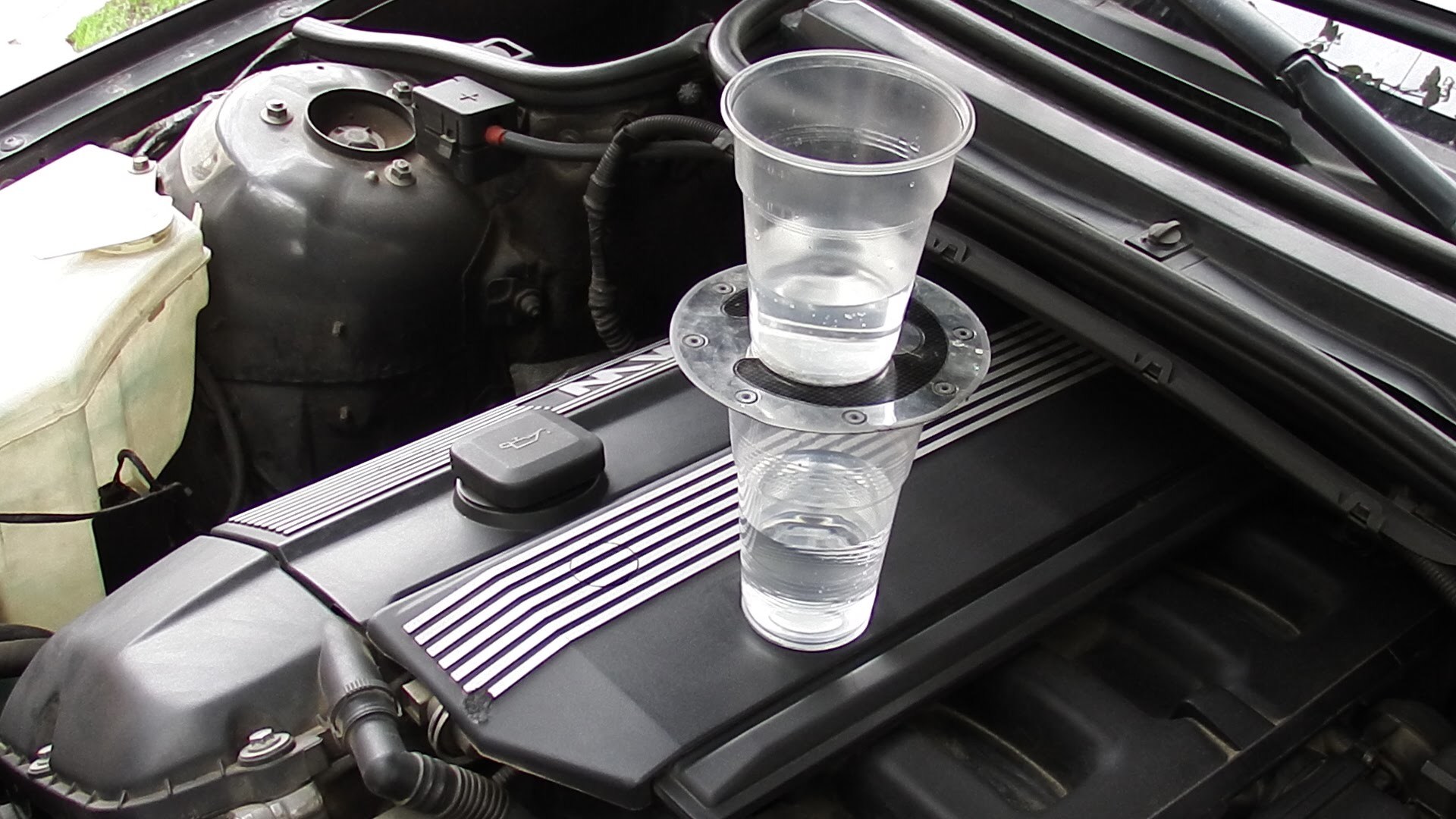
This diagnostic table is the fastest way to narrow down your problem before going to a mechanic.
| When Does It Shake? | Where Do You Feel It? | Most Likely Cause |
|---|---|---|
| Only when pressing gas | Steering wheel | Front CV joint, front wheel balance |
| Only when pressing gas | Seat / floorboard | Motor mount, rear CV joint, driveshaft |
| At 45–65 mph, gas on or off | Entire car | Unbalanced tires, bent wheel |
| From a stop under hard acceleration | Anywhere | CV joint, motor mount, engine misfire |
| On hills or climbs only | Anywhere | Engine misfire, fuel delivery, weak axle |
| After lifting off gas — goes away | Steering wheel | CV axle (drivetrain confirmed) |
| After lifting off gas — stays | Anywhere | Tires or bent wheel |
| With clunking noise | Anywhere | U-joint, CV joint, ball joint |
| With burning smell | Anywhere | Stuck brake caliper |
| With check engine light | Anywhere | Engine misfire — scan OBD-II codes |
| After tire service | Anywhere | Loose lug nuts, improper balance |
Warning Signs You Should Never Ignore
Some shaking symptoms mean stop driving and get the car inspected immediately.
Do not keep driving if you notice:
Vibration that suddenly becomes violent or gets dramatically worse in a short time. A clunking or grinding noise that comes with the shaking. The car pulling hard to one side while accelerating. A burning smell from any wheel. The steering wheel becoming loose, wandering, or unresponsive. A wheel that feels like it is wobbling visibly.
These are signs of a component that may be close to complete failure. Driving on a failing CV joint, loose lug nuts, or a seized caliper can cause loss of vehicle control.
Estimated Repair Costs at a Glance
Use this as a reference before you visit a shop. Costs vary by vehicle make, model, and location.
| Repair | DIY Cost | Shop Cost (Parts + Labor) |
|---|---|---|
| Tire balance | $0 (requires machine) | $20–$80 all four |
| Tire replacement (each) | — | $80–$300 each |
| Wheel alignment | $0 (requires equipment) | $75–$150 |
| Spark plug replacement | $15–$50 (parts) | $100–$300 |
| CV axle shaft replacement | $80–$150 (parts) | $200–$500 per side |
| Motor mount replacement | $20–$80 (parts each) | $150–$500 |
| Wheel bearing replacement | $40–$100 (parts) | $150–$400 per wheel |
| Brake caliper replacement | $30–$80 (parts) | $220–$380 per corner |
| Driveshaft / U-joint | $50–$150 (U-joint) | $300–$900 |
| Fuel injector cleaning | $10–$20 (DIY cleaner) | $100–$300 |
| Transmission fluid service | $15–$30 (fluid) | $80–$200 |
| Suspension (ball joint, tie rod) | $20–$80 (parts) | $150–$600 |
How to Prevent Your Car From Shaking in the Future
Prevention is always cheaper than repair. These habits keep vibrations away.
Rotate and balance tires every 5,000 to 7,500 miles. Check tire pressure monthly — use the door sticker spec, not the number on the tire sidewall. Get a wheel alignment every 12,000 miles or after any significant impact like a pothole. Replace spark plugs on schedule per your owner’s manual. Change transmission fluid every 30,000–60,000 miles depending on the manufacturer. Have suspension and steering components inspected annually. Always use a torque wrench after any tire service. Address any new vibration immediately — small issues become expensive ones fast.
When to See a Mechanic vs. DIY
Some issues are easy to handle yourself. Others require a lift, specialized tools, or diagnostic equipment.
You can DIY safely: Checking tire pressure, tightening lug nuts, replacing spark plugs on accessible engines, adding or changing transmission fluid, using an OBD-II scanner to read fault codes, and visually inspecting for torn CV boots or obvious damage.
See a mechanic for: Tire balancing and alignment, CV axle or driveshaft replacement, motor mount replacement, wheel bearing replacement, brake caliper repair, and any suspension component replacement. These jobs require lifts, torque specs, and alignment equipment to do safely and correctly.
Frequently Asked Questions (FAQs)
Q1. Why does my car shake when I accelerate from a stop?
Shaking from a stop most often points to worn CV joints, broken motor mounts, or an engine misfire. These components are under the most stress when starting from rest.
Q2. Why does my car shake at 60 mph but not at lower speeds?
Speed-specific vibration that appears around 45–70 mph almost always means unbalanced tires, a bent wheel, or worn driveshaft components. A tire balance is the cheapest first step to rule it out.
Q3. Is it safe to drive when my car shakes?
It depends on the cause. A mild vibration from unbalanced tires is less urgent. Shaking from loose lug nuts, a failing CV joint, a stuck caliper, or worn ball joints is dangerous and should be addressed immediately.
Q4. Why does my steering wheel shake when I accelerate but not my whole car?
Steering wheel vibration that happens only during acceleration points to front-end issues — specifically a front CV axle, front wheel out of balance, a worn front ball joint, or a failing tie rod end.
Q5. Can low tire pressure cause my car to shake when accelerating?
Yes. Uneven or low tire pressure changes how the tire contacts the road and can cause a rough or shaky ride. Always check pressure with a gauge, not by visual inspection.
Q6. Why does my car shake only when accelerating uphill?
Hills put more load on the engine and drivetrain. Shaking that only appears on hills points to engine misfires, weak fuel delivery, worn CV joints, or a transmission that is struggling under load.
Q7. Can a dirty fuel injector cause my car to shake?
Yes. Dirty or clogged fuel injectors deliver uneven amounts of fuel to each cylinder. This creates an imbalanced combustion cycle that causes the engine to shudder under acceleration.
Q8. Will my check engine light come on if the shaking is from an engine misfire?
Almost always yes. A misfire severe enough to cause shaking will trigger a check engine light and store a diagnostic code between P0300 and P0308. Scan the codes before replacing any parts.
Q9. How do I know if my CV joint is causing the shake?
The classic CV joint symptom is a clicking or popping noise when turning. Under hard acceleration with no turning, a vibration through the steering wheel or floor that disappears when you release the gas strongly suggests a CV joint or axle issue.
Q10. How much does it cost to fix a car that shakes when accelerating?
Cost depends on the cause. Tire balancing runs $20–$80. Spark plugs cost $50–$300. CV axle replacement runs $200–$500. Motor mounts cost $150–$500. Transmission repairs are the most expensive at $300–$2,500 or more. Diagnosing early always saves money.
Conclusion
Why does my car shake when I accelerate — now you have the complete 2026 answer. From unbalanced tires and worn CV joints to engine misfires, stuck calipers, and damaged driveshafts, the causes range from a $20 tire balance to a $2,500 transmission repair.
The key to saving money and staying safe is the same: diagnose early, fix promptly, and never ignore a shaking car.
Pay attention to when the shake happens, where you feel it, and what sounds or smells come with it. Use the diagnostic table in this guide to narrow down the most likely cause before you visit a shop.
Small vibrations are your car talking to you — listen before they turn into expensive breakdowns or dangerous failures.
Regular tire rotations, timely tune-ups, and annual suspension checks prevent most of these issues entirely. A smooth ride in 2026 starts with staying ahead of the problem, not reacting to it.
