

Why is cashmere so expensive? Because every single step — from the goat to the garment — is rare, slow, and labor-intensive.
Cashmere fibers come from a specific undercoat of cashmere goats living in extreme climates.
Each goat yields barely enough fiber in a year to fill a coffee mug.
Add in hand-harvesting, multi-stage processing, strict quality grading, and global luxury demand, and you get the most coveted natural fiber on earth.
Why Is Cashmere So Expensive?
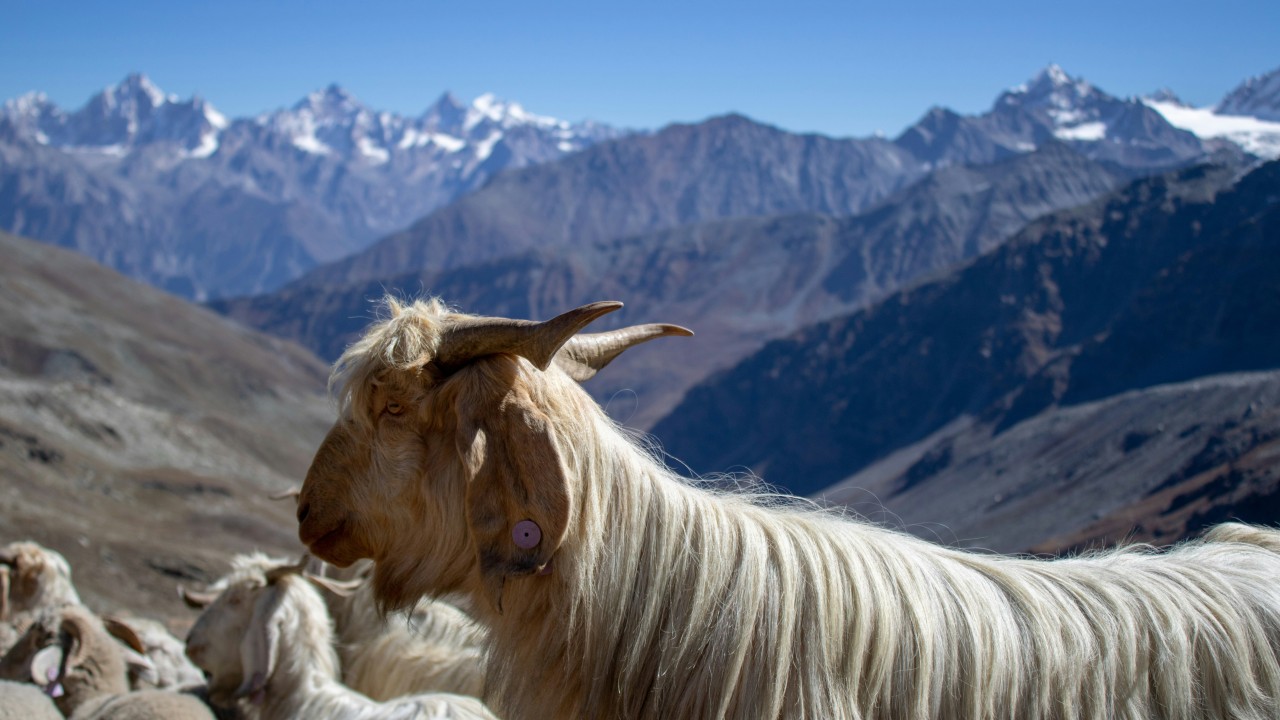
Cashmere is not wool in the traditional sense. It is the ultra-fine undercoat hair that cashmere goats grow to survive brutal winters in places like the Gobi Desert and the Himalayas.
The outer coat of the goat is coarse and useless for fabric. The soft inner layer — the cashmere — measures just 14 to 19 microns in diameter. Human hair, by comparison, is about 70 microns thick.
That extreme fineness is what gives cashmere its legendary softness, lightweight warmth, and buttery drape. It is physically impossible to replicate with synthetic fibers.
Why Is Cashmere So Expensive?
Cashmere goats only grow their finest undercoats in response to harsh cold. That limits where quality cashmere can be produced in the world.
Top cashmere-producing regions:
| Region | Share of Global Supply | Known For |
|---|---|---|
| Mongolia | 60–70% | Finest fiber, Gobi Desert goats |
| China (Inner Mongolia) | ~20% | Highest volume production |
| Iran & Afghanistan | ~5–8% | Long-staple specialty fiber |
| Nepal & India (Himalayas) | ~5% | Ultra-fine pashmina-grade |
Mongolia dominates because the Gobi Desert’s temperature swings — from -40°F in winter to over 100°F in summer — force goats to grow extraordinarily dense, fine undercoats.
The Tiny Yield Problem
This is the single biggest driver of cashmere’s price. The numbers are staggering.
A sheep produces 2 to 5 kilograms of wool per year. A cashmere goat produces only 150 to 250 grams of raw fiber — and after processing, only 75 to 100 grams of pure usable cashmere remains.
What that means in real terms:
| Garment | Goats Required |
|---|---|
| Pair of gloves | 1 goat |
| Lightweight sweater | 2–4 goats |
| Full cashmere coat | 5–6 goats |
| Thick cable-knit sweater | 4–6 goats |
You are not buying one sweater. You are buying the annual yield of multiple animals, all living in remote mountain regions.
Harvesting Is Done by Hand Once a Year
Cashmere can only be collected during a narrow spring window when the goats naturally shed. Miss it and you wait another year.
The most prized cashmere is hand-combed, not sheared. Herders gently comb each goat individually, separating the soft undercoat from the coarse outer guard hair.
Hand-combing takes days per animal and preserves the longest, finest fibers. Machine shearing is faster but damages the fiber, reduces length, and lowers quality — and therefore price.
That harvest window cannot be extended, automated at scale, or relocated. It is a hard biological and geographical constraint baked into every cashmere price tag.
The Processing Chain Adds Cost at Every Step
Raw fiber collected from goats cannot go straight into a sweater. It passes through multiple expensive stages.
Step-by-step processing costs:
Dehairing — Raw fiber contains guard hairs, debris, and grease. Machines and skilled workers separate pure cashmere from the rest. After this stage, raw weight often drops by 40 to 50%.
Grading — Fiber is sorted by micron count, length, color, and purity. Each batch is graded A, B, or C. This is done by experienced specialists who can tell Grade A from Grade B by touch.
Spinning — Cashmere fibers are extremely fine and break easily. Spinning must be done slowly and carefully. Two-ply or four-ply yarns twist multiple strands together for strength without sacrificing softness.
Dyeing — Cashmere accepts dye beautifully but requires gentle, low-temperature processes. Harsh dyeing degrades the fiber structure and shortens garment life.
Knitting or Weaving — Luxury garments are often fully fashioned, meaning each piece is shaped on the needle rather than cut from a flat sheet of fabric. This wastes almost no material and creates a superior fit.
Each stage requires skill, time, and equipment. Together they multiply the raw fiber cost many times over before a single garment reaches a shelf.
Cashmere Quality Grades Explained
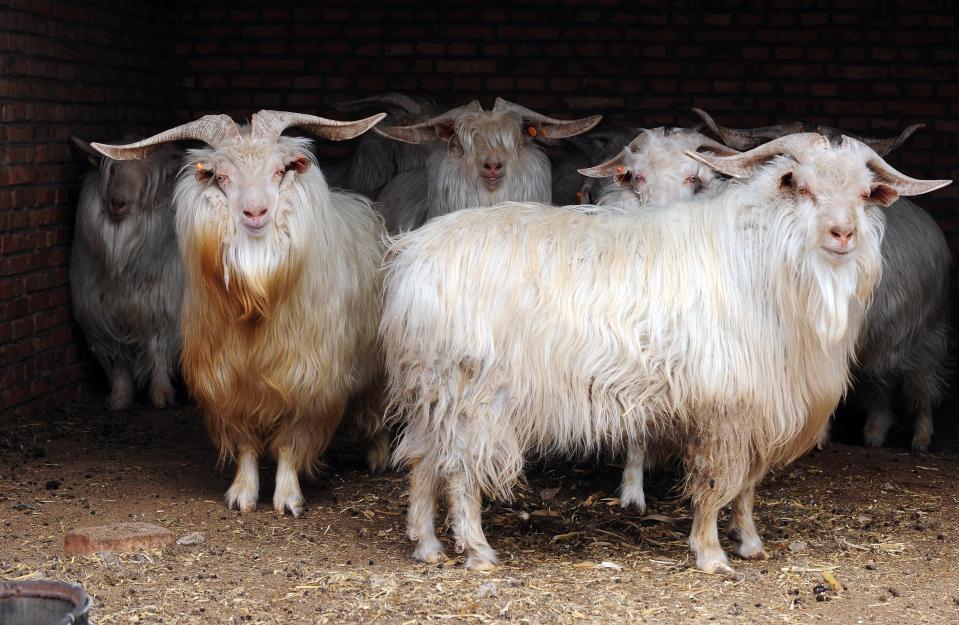
Not all cashmere is the same. The grading system explains why one “cashmere sweater” costs $80 and another costs $800.
| Grade | Fiber Diameter | Fiber Length | Feel | Price Premium |
|---|---|---|---|---|
| Grade A | 14–15.5 microns | 34mm+ | Ultra-soft, barely any pilling | 3–5x Grade C |
| Grade B | 16–18 microns | 28–34mm | Soft, good quality | Mid-range |
| Grade C | 19+ microns | Under 28mm | Softer than wool, some pilling | Lowest tier |
Grade A represents only about 30% of total cashmere production. Its fibers are thinner, longer, and more lustrous. They pill less, last longer, and feel dramatically softer than lower grades.
Brands are not required to label the grade on the garment. That is why price and brand reputation still matter even when the tag says “100% cashmere.”
Supply vs. Demand: A Market Under Pressure
Global cashmere production is tiny compared to other luxury textiles. Only about 6,500 tons of pure cashmere reach the market each year, compared to over 1 million tons of sheep wool annually.
At the same time, the global cashmere market was valued at approximately $1.79 billion in 2024 and is projected to reach $3.28 billion by 2035. That is roughly a 6.4% compound annual growth rate.
Rising middle classes in Asia, growing demand for sustainable luxury, and the premiumization of fashion brands are all pushing demand up. Supply cannot keep pace. Prices hold firm.
Climate Change Is Shrinking Supply
Here is a factor most people overlook: the climate crisis is actively making cashmere more expensive.
Overgrazing in Mongolia — driven by the cashmere boom — has degraded millions of hectares of pastureland. More goats on less healthy land produces less fiber per animal, not more.
Warming winters mean goats do not need to grow as thick an undercoat, which reduces both yield and fiber fineness. Every 1,000 meters of altitude reduces average fiber diameter by roughly 0.7 microns — but climate shifts are pushing herding patterns lower.
Dzud events (severe Mongolian winters followed by droughts) have killed millions of goats in recent years, causing sudden supply shocks that spike prices globally.
This is not a short-term problem. Cashmere supply faces structural long-term pressure from environmental change.
The Role of Brand, Origin, and Craftsmanship
Raw fiber is only part of the cost equation. Where it is made and by whom matters enormously.
Scotland (Hawick region) — Legendary mills like Johnstons of Elgin and Pringle of Scotland have centuries of expertise. Their cashmere commands the highest premiums in the world.
Italy — Brands like Loro Piana source the finest raw fiber globally and use Italian artisans for weaving. A Loro Piana sweater can cost $1,000 to $3,000.
Mongolia & Nepal — Handcrafted pieces from source regions can offer excellent quality at lower prices because the supply chain is shorter.
Fast fashion “cashmere” — Budget retailers use Grade C fiber, shorter staple lengths, and machine processing. The result is a garment that pills within weeks, stretches out, and loses its shape. It is still technically cashmere — but at the lowest possible tier.
Cashmere vs. Other Luxury Fibers
How does cashmere compare to its rivals?
| Fiber | Softness | Warmth vs Weight | Durability | Typical Price Range |
|---|---|---|---|---|
| Cashmere | Exceptional | 8x warmer than wool | Moderate (if cared for) | $150–$1,500+ |
| Merino Wool | Very soft | Good | High | $50–$300 |
| Alpaca | Soft, hypoallergenic | Very warm | High | $80–$400 |
| Vicuña | Softer than cashmere | Excellent | Low | $2,000–$10,000+ |
| Qiviut (Musk Ox) | Extremely soft | 8x warmer than wool | Moderate | $500–$2,000+ |
Cashmere sits at the intersection of softness, warmth, lightness, and wearability. Vicuña and qiviut are finer, but production is microscopic. Cashmere remains the dominant luxury fiber at scale.
Why Does a Cashmere Sweater Cost What It Does?
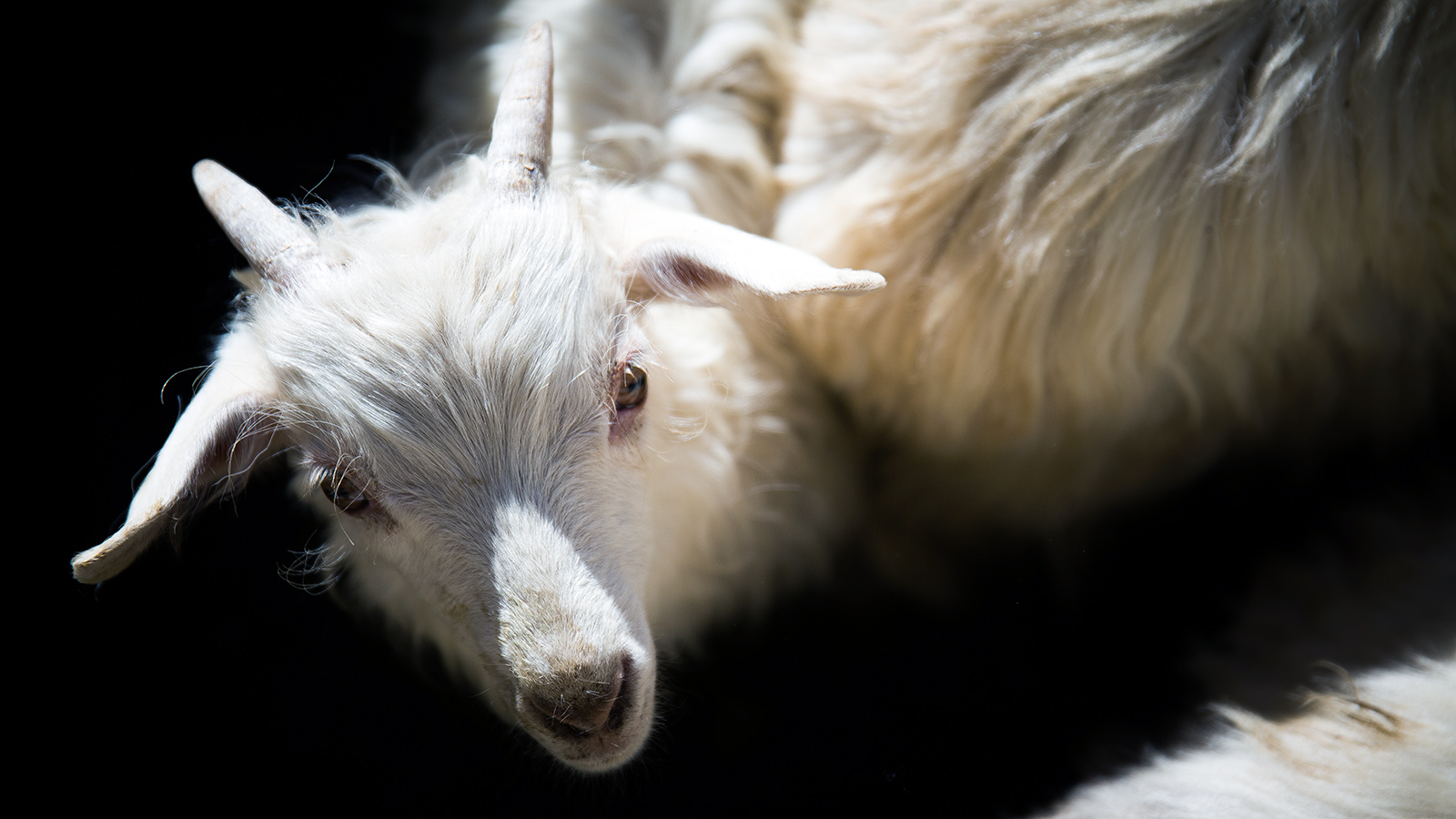
Let’s break down a realistic price structure for a quality cashmere sweater retailing at $350.
| Cost Component | Approximate Share |
|---|---|
| Raw cashmere fiber | 20–30% |
| Dehairing & processing | 10–15% |
| Spinning & dyeing | 10–12% |
| Knitting / weaving labor | 15–20% |
| Brand, design, logistics | 15–25% |
| Retail margin | 20–30% |
Every layer adds legitimate cost. A $350 sweater is not overpriced — it is priced correctly for what it takes to make it. A $60 “cashmere” sweater, on the other hand, has corners cut at almost every single stage.
How to Tell If Cashmere Is Real Quality
Not every label that says “100% cashmere” delivers the same experience. Here is what to look for.
Micron count — Lower is better. Under 16 microns is Grade A territory. Brands that publish micron counts are usually confident in their quality.
Ply count — Two-ply or higher means more fibers twisted together. More durable, better shape retention, less pilling over time.
Country of processing — Scottish and Italian processing typically indicates high standards. Chinese-processed cashmere ranges from excellent to poor.
Price — Anything under $100 for a full sweater should raise questions. The math on fiber cost alone makes it nearly impossible to produce genuinely high-grade cashmere at that price point.
Burn test — Pure cashmere burns slowly, smells like burnt hair, and leaves a crushable ash. Synthetic blends melt, smell like plastic, and leave hard beads.
Is Cashmere Worth the Price?
For anyone who buys it once and cares for it properly, the answer is almost always yes.
A high-quality cashmere sweater, washed gently and stored correctly, lasts 10 to 20 years. The cost per wear drops dramatically over time compared to fast fashion alternatives that last one or two seasons.
Cashmere also gets softer with age when properly maintained. The fiber structure relaxes gradually, making a 10-year-old well-cared-for cashmere piece often feel more luxurious than a brand new one.
The environmental case is also relevant. One long-lasting cashmere garment replaces dozens of lower-quality items over a lifetime, reducing total textile waste.
How to Care for Cashmere to Protect Your Investment
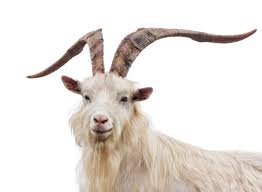
Washing — Hand wash in cool water with a gentle wool detergent. Never wring or twist. Press water out gently and dry flat on a towel.
Storage — Fold, never hang. Hanging stretches the fiber under its own weight over time. Store in a breathable bag or box with cedar to deter moths.
Pilling — Light pilling in early wears is normal. Use a cashmere comb or fabric shaver to remove pills gently. It does not mean the garment is low quality.
Frequency — You do not need to wash cashmere after every wear. Air it out between wears and wash only when genuinely soiled. Over-washing accelerates fiber wear.
Frequently Asked Questions (FAQs)
Why is cashmere so much more expensive than regular wool?
Cashmere goats yield only 150–250g of usable fiber per year versus 2–5kg from a sheep, and the harvest window is just weeks long. This extreme scarcity, combined with hand-processing, drives the price far above standard wool.
How many goats does it take to make a cashmere sweater?
It takes the annual fiber yield of 2 to 4 goats to make one standard cashmere sweater, and up to 6 goats for a heavier coat or thick cable-knit style.
Is cheap cashmere real cashmere?
Yes, but it is Grade C — coarser fibers, shorter staple length, and machine-processed. It pills quickly, loses shape fast, and feels noticeably rougher than Grade A. The label is technically correct but the quality is vastly different.
What is the difference between Grade A, B, and C cashmere?
Grade A has fibers under 15.5 microns and is ultra-premium. Grade B runs 16–18 microns with good quality. Grade C is 19+ microns — still cashmere, but the roughest and cheapest tier, costing 3–5x less than Grade A.
Which country produces the best cashmere?
Mongolia, especially from Gobi Desert herders, is widely regarded as the world’s finest source. The extreme climate forces goats to grow exceptionally fine, dense undercoats that produce superior fiber.
Is cashmere warmer than wool?
Yes. Cashmere is approximately 8 times warmer than sheep wool by weight due to its finer, hollow fiber structure that traps more warm air while remaining significantly lighter.
Why does cashmere pill and is that normal?
Light pilling during the first few wears is completely normal. It is loose fibers working their way to the surface. It does not indicate poor quality — use a cashmere comb to remove it. Excessive pilling after minimal use usually signals low-grade fiber.
How long does a cashmere sweater last?
A high-quality cashmere garment, properly cared for, easily lasts 10 to 20 years. It actually gets softer with age. Budget cashmere may pill and lose shape within one or two seasons.
Is cashmere sustainable or ethical?
It depends on the source. Overgrazing in Mongolia has caused real environmental damage. Responsible brands source from herders who practice sustainable grazing and pay fair prices. Certifications like the Sustainable Fibre Alliance (SFA) are worth looking for.
How can I verify that my cashmere is genuine?
Check the label for “100% cashmere,” feel for softness without slipperiness, do a burn test (smells like hair, leaves crushable ash), and be skeptical of prices under $80 for a full sweater. Reputable brands disclose their sourcing region.
Conclusion
Cashmere is expensive because nature made it that way.
Every element of its supply chain — the specific goat breeds, the extreme climates, the once-a-year harvest, the hand-processing, the quality grading, the skilled craftsmanship — resists industrialization and scaling.
You cannot factory-farm your way to premium cashmere. The price you pay reflects genuine rarity, real labor, and centuries of accumulated expertise.
When you invest in a quality cashmere piece and care for it properly, you are buying something that will outlast dozens of cheaper alternatives.
In 2026, with cashmere demand rising and supply under environmental pressure, understanding the true cost breakdown is more relevant than ever.
Buy less, buy better, and the math on cashmere starts to make a lot of sense.
