

Why do I cough at night — asthma or acid reflux? If you are losing sleep over a persistent nighttime cough, you are not alone.
Millions of people deal with this exact problem every year, and in most cases, the cause is one of two very common conditions: asthma or acid reflux (GERD). Both can trigger a chronic cough that worsens the moment you lie down.
Figuring out which one is behind your symptoms is the first step to getting real relief. This complete 2026 guide breaks down every cause, symptom, and solution you need to know.
What Is a Nighttime Cough? Why Do I Cough at Night?

A nighttime cough is a cough that starts or gets noticeably worse after you lie down to sleep. It can be dry and hacking, wet and mucusy, or somewhere in between.
A cough lasting more than eight weeks in adults is classified as a chronic cough. In children, four weeks is the threshold. Chronic nighttime coughing is one of the most common reasons people visit their doctor.
The three most frequent causes of chronic cough are asthma, postnasal drip, and acid reflux (GERD). Understanding all three is essential for finding the right treatment.
Why Does Lying Down Make Coughing Worse?
When you are upright during the day, gravity helps your body manage both stomach acid and mucus. Things stay where they belong.
The moment you lie flat, gravity stops working in your favor. Stomach acid can flow back into the esophagus more easily. Mucus pools at the back of your throat instead of draining normally.
Both situations directly irritate the throat and airways — triggering the cough reflex. This is why your cough feels so much worse at night even if you feel relatively fine during the day.
Asthma as a Cause of Nighttime Cough
Asthma is the single most common cause of chronic cough. It is a chronic condition that inflames and narrows the airways, making breathing difficult.
Classic asthma symptoms include wheezing, chest tightness, and shortness of breath. But not all asthma looks the same.
Coughing — especially at night — is a core feature of asthma. The cough is typically dry and does not produce mucus.
What Is Cough-Variant Asthma?
Cough-variant asthma (CVA) is a form of asthma where chronic coughing is the only symptom. There is no wheezing, no chest tightness, and no obvious shortness of breath.
This makes it much harder to diagnose. Many people with CVA are misdiagnosed for months or years — treated for allergies, postnasal drip, or GERD when asthma is the real issue.
The cough from CVA tends to persist for months and worsens significantly at night or after exercise.
Why Asthma Cough Gets Worse at Night
Several factors explain why asthma-related coughing spikes at night. The body’s natural circadian rhythm changes the levels of hormones that regulate airway inflammation.
Airway cooling is another factor. Nighttime air tends to be cooler and drier, and cold air is a well-known asthma trigger. Breathing in cool air through the mouth while sleeping can cause the airways to contract and produce coughing.
Lying flat also changes how the lungs function and makes mucus harder to clear, further aggravating the cough.
Common Asthma Triggers That Worsen Nighttime Cough
| Trigger | How It Causes Nighttime Cough |
|---|---|
| Cold or dry air | Causes airway constriction and irritation |
| Dust mites in bedding | Direct allergen exposure during sleep |
| Pet dander in bedroom | Continuous allergen contact overnight |
| Mold or pollen | Seasonal worsening of airway inflammation |
| Strong fragrances | Irritates sensitive bronchial tubes |
| Respiratory infections | Inflames already sensitive airways |
| Exercise before bed | Triggers post-exertional bronchospasm |
Acid Reflux and GERD as a Cause of Nighttime Cough
Gastroesophageal reflux disease (GERD) is another leading cause of nighttime coughing. It happens when the lower esophageal sphincter — the muscle between the stomach and esophagus — weakens and allows stomach acid to flow back up.
Studies suggest that GERD may be responsible for up to 25% of all chronic cough cases. What surprises many people is that the cough can occur without any heartburn at all.
GERD-related cough is typically dry and hacking. It produces no mucus and can be easily mistaken for asthma or a lingering cold.
Why GERD Makes Your Cough Worse at Night
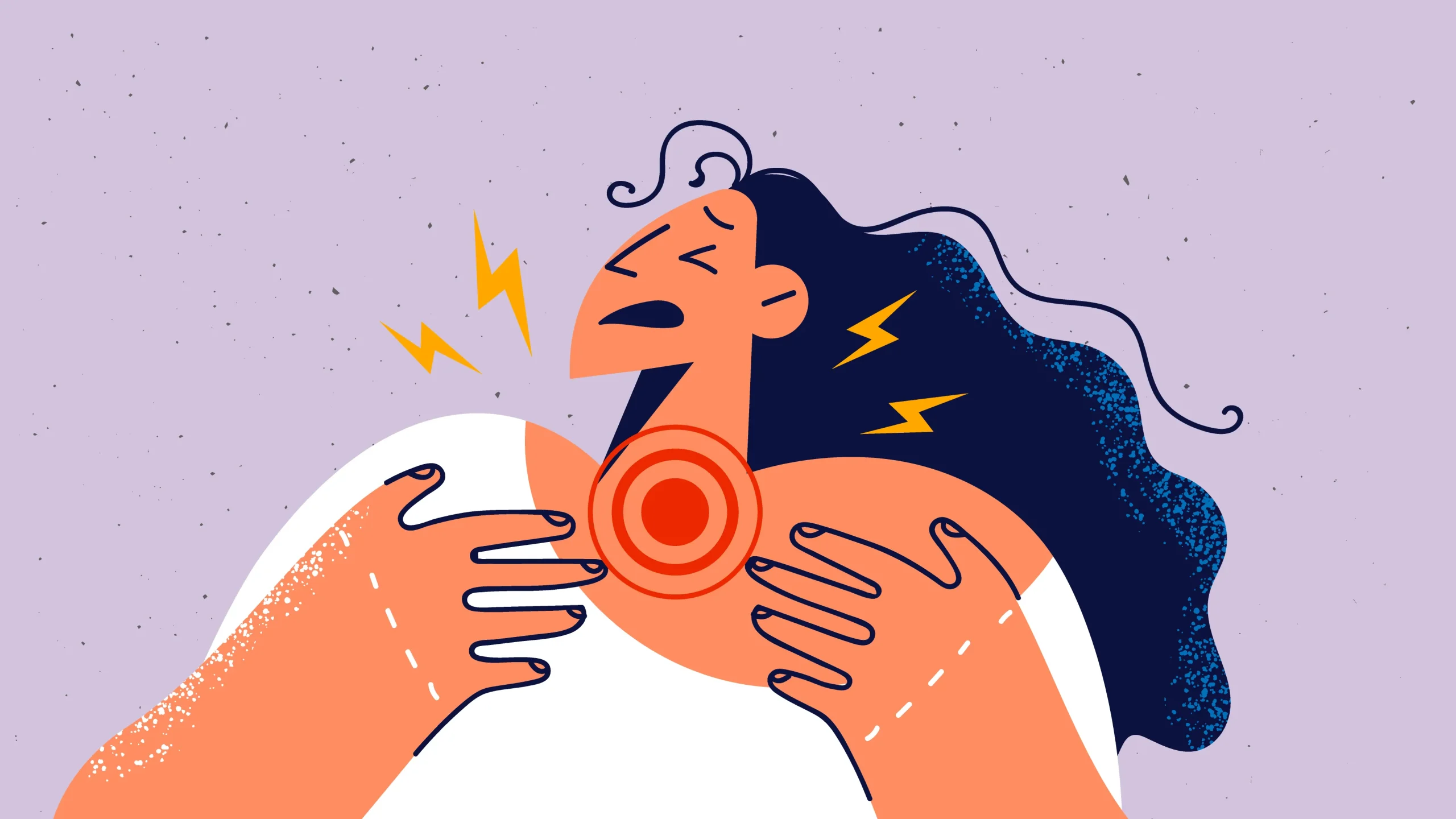
When you lie down, stomach acid no longer faces the resistance of gravity. It can reflux upward much more easily and reach the esophagus, throat, and even the vocal cords.
When acid touches the vocal cords, it directly triggers a cough reflex. In more severe cases, tiny droplets of acid can be inhaled into the windpipe and airways, causing further irritation and coughing.
GERD is also linked to nighttime sleep disturbances, and the irritation from chronic acid exposure can keep the cough reflex sensitized even when acid levels are low.
The GERD-Asthma Connection
GERD and asthma are closely intertwined — and this is where things get complicated. Research shows that more than half of all asthma patients also have GERD.
Acid reflux can trigger asthma-like symptoms in people who do not even have asthma. Tiny acid particles entering the airways irritate the bronchial tubes and cause them to contract, producing coughing and breathing difficulties.
At the same time, asthma symptoms like coughing and wheezing change the pressure between the chest and abdomen in a way that actively encourages reflux. This creates a cycle where each condition makes the other worse.
GERD should be considered in asthma patients who first develop the condition as adults, who do not improve with standard bronchodilator therapy, or whose asthma symptoms worsen after eating a large meal or drinking alcohol.
Postnasal Drip: The Third Major Cause
While this guide focuses on asthma and acid reflux, it is important to understand postnasal drip because it is the most common cause of chronic cough overall and frequently overlaps with both asthma and GERD.
Postnasal drip happens when the sinuses produce excess mucus that drips down the back of the throat. During the day, you mostly swallow it without noticing. At night, it collects and pools in the throat.
When mucus reaches the vocal cords or is inhaled into the lungs, it triggers a wet cough that often produces phlegm. The cough typically feels tickly or scratchy.
Asthma vs. Acid Reflux Cough: How to Tell the Difference
| Feature | Asthma Cough | GERD/Acid Reflux Cough |
|---|---|---|
| Type of cough | Dry, persistent | Dry, hacking |
| Mucus produced | Rarely | Rarely |
| Worst time | Night, early morning | Night, after meals |
| Associated symptoms | Wheezing, chest tightness | Heartburn, sour taste, regurgitation |
| Main triggers | Cold air, allergens, exercise | Lying down, eating, alcohol |
| Relief from | Inhalers, bronchodilators | Antacids, PPIs, positioning |
| Worsened by | Seasonal change, infections | Fatty or spicy food, late meals |
| Diagnosis tool | Spirometry, methacholine test | pH monitoring, endoscopy |
Key Symptoms of an Asthma-Related Nighttime Cough

Asthma-related nighttime cough tends to follow certain patterns. Being aware of these clues can help you identify the cause before seeing your doctor.
The cough starts or gets noticeably worse after a respiratory infection, during seasonal changes, or when exposed to cold air, smoke, or strong chemicals. It is typically dry with no phlegm produced.
You may also experience a faint whistling sound when breathing (wheezing), a feeling of tightness across your chest, or a sensation that it is difficult to take a full breath — though with cough-variant asthma, these may be absent entirely.
Key Symptoms of a GERD-Related Nighttime Cough
GERD-related cough has its own distinct set of clues. The cough tends to be worse at night when lying flat, or after eating — particularly large, fatty, or spicy meals.
You may notice a sour or bitter taste in your mouth upon waking. Some people feel a burning sensation in the chest or upper abdomen, but many with GERD cough have no heartburn at all — this is called silent reflux.
Waking up with a hoarse voice, a sore throat, or the feeling of a lump in the throat are all additional signs that acid is reaching the upper airways overnight.
Other Conditions That Cause Nighttime Coughing
While asthma and acid reflux are the two most common culprits, several other conditions are worth knowing about.
ACE Inhibitor Medications: Drugs used to treat high blood pressure, such as lisinopril and enalapril, commonly cause a persistent dry cough as a side effect. This cough tends to be worse at night and disappears within weeks of stopping the medication.
Heart Failure: A gradual decline in the heart’s ability to pump blood can cause fluid to accumulate in the lungs, triggering a wet cough that worsens when lying down.
Sleep Apnea: The repeated airway obstructions of sleep apnea can cause throat irritation and a nighttime cough. It is often accompanied by loud snoring and daytime fatigue.
Laryngopharyngeal Reflux (LPR): Sometimes called silent reflux, LPR occurs when acid reaches the throat and voice box without typical heartburn symptoms. Nighttime cough and hoarseness are hallmarks.
Chronic Obstructive Pulmonary Disease (COPD): A long-term lung condition — most commonly caused by smoking — that produces a persistent cough with mucus production, typically worse in the mornings.
How Doctors Diagnose the Cause of Your Nighttime Cough
Getting the right diagnosis takes a careful, stepwise approach. There is no single test that identifies the cause of every nighttime cough.
Your doctor will begin with a detailed medical history. Key questions include: Do you have heartburn? Do you smoke? Are you on any blood pressure medications? Does the cough change with the seasons? Does it get worse after eating?
Tests Used to Diagnose Asthma
Spirometry measures how much air you can breathe out and how fast. It is the most commonly used lung function test for diagnosing asthma.
A methacholine challenge test measures how sensitive your airways are to a substance that causes them to narrow. A negative result effectively rules out cough-variant asthma.
Exhaled nitric oxide (FeNO) testing can detect airway inflammation that is typical of asthma.
Tests Used to Diagnose GERD
A 24-hour pH probe study is placed in the esophagus to monitor acid levels over a full day and night. It is one of the most accurate tests for confirming acid reflux.
An upper endoscopy allows doctors to view the esophagus and stomach lining directly. It can detect damage caused by chronic acid exposure.
Proton pump inhibitor (PPI) therapy is sometimes used as a diagnostic trial. If your cough improves after three months on PPIs, it strongly suggests GERD was the underlying cause.
Treatment for Asthma-Related Nighttime Cough

Treating asthma-related nighttime cough involves both medication and lifestyle management. The goal is to reduce airway inflammation and avoid known triggers.
Inhaled Corticosteroids (ICS): These are the first-line treatment for persistent asthma. They reduce inflammation in the airways and are particularly effective for cough-variant asthma. Most people see significant improvement within a few weeks.
Short-Acting Bronchodilators (SABAs): Rescue inhalers like albuterol provide fast relief by relaxing the muscles around the airways. They are used for acute coughing episodes.
Long-Acting Bronchodilators (LABAs): Used alongside corticosteroids for better long-term control, especially in moderate-to-severe asthma.
Leukotriene Modifiers: Medications like montelukast reduce airway inflammation and are particularly useful for asthma linked to allergies.
Lifestyle Changes for Asthma-Related Night Cough
Keep your bedroom as allergen-free as possible. Use allergen-proof covers on pillows and mattresses, wash bedding weekly in hot water, and keep pets out of the sleeping area.
Run a bedroom air purifier with a HEPA filter to remove dust, mold, pollen, and dander from the air. Avoid aerosol sprays, strong perfumes, and scented candles in the bedroom.
Keep your bedroom temperature moderate and use a humidifier to add moisture to dry air. Aim for indoor humidity between 40% and 50% — neither too dry nor too damp.
Treatment for GERD-Related Nighttime Cough
Managing GERD-related nighttime cough starts with treating the reflux itself. Medication and lifestyle changes work together for the best outcomes.
Proton Pump Inhibitors (PPIs): Medications like omeprazole (Prilosec) and pantoprazole are the most effective treatment for GERD. They significantly reduce stomach acid production. A three-month course is typically recommended before evaluating results.
H2 Blockers: Medications like famotidine (Pepcid) reduce acid production and are useful for milder cases. They are available over the counter.
Antacids: Fast-acting options like Tums or Mylanta neutralize existing stomach acid. They provide quick relief but do not treat the underlying condition.
Prokinetic Agents: These medications help the stomach empty faster and strengthen the lower esophageal sphincter, reducing the chance of acid backflow.
Lifestyle Changes for GERD-Related Night Cough
Elevate the head of your bed by 4 to 6 inches. A slight incline is enough to let gravity keep stomach acid from traveling upward during sleep. Use bed risers or a wedge pillow — simply stacking regular pillows is not as effective.
Avoid eating within two to three hours of bedtime. Late-night meals leave stomach acid active and increase the chance of nighttime reflux.
Identify and avoid your personal food triggers. Common culprits include fried and fatty foods, spicy dishes, citrus, chocolate, caffeine, carbonated drinks, and alcohol.
Sleep on your left side. Research suggests that lying on the left side reduces acid reflux compared to lying on the right side or flat on your back.
Practical Home Remedies for Nighttime Cough

Regardless of the underlying cause, several practical strategies can help reduce nighttime coughing.
Use a humidifier: Dry air irritates the throat and airways. Keeping bedroom humidity at 40–50% helps thin mucus and soothe an irritated throat.
Try honey: A teaspoon of honey — or honey stirred into warm decaffeinated tea — can soothe an irritated throat and suppress the cough reflex. It is a well-supported natural remedy particularly useful for nighttime cough.
Keep cough drops nearby: If you wake up coughing, sit up and let a cough drop dissolve slowly. This coats the throat and calms irritation.
Stay hydrated: Drinking enough water throughout the day keeps mucus thin and easier to clear. Dehydration thickens secretions, making the cough worse.
Saline nasal rinse: If postnasal drip is a contributing factor, a daily saline nasal rinse clears excess mucus from the sinuses before bedtime, reducing the chance of nighttime drip.
Foods That Help Reduce GERD-Related Nighttime Cough
Diet plays a major role in managing GERD. Choosing the right foods in the evening can make a significant difference in how well you sleep.
| Foods That Help | Foods to Avoid |
|---|---|
| Bananas | Fried and fatty foods |
| Brown rice | Spicy dishes |
| Sweet potatoes | Citrus fruits and juice |
| Broccoli and leafy greens | Tomatoes and tomato sauce |
| Lean proteins (chicken, fish) | Chocolate |
| Watermelon and cucumber | Caffeine (coffee, tea, soda) |
| Brothy soups | Alcohol |
| High-fiber foods | Carbonated beverages |
| Oatmeal | Peppermint |
When to See a Doctor for Your Nighttime Cough
Most nighttime coughs respond well to home care and over-the-counter treatment. However, some symptoms require prompt medical attention.
See a doctor if your cough has lasted more than eight weeks without an obvious cause, if you are coughing up blood, or if you experience unexplained weight loss, night sweats, or persistent fever. These can be signs of a more serious condition.
Also seek care if your cough is accompanied by significant wheezing or shortness of breath that does not improve with a rescue inhaler, or if heartburn or reflux symptoms are interfering with your daily life despite over-the-counter medication.
Specialists who treat chronic nighttime cough include pulmonologists (lung specialists), gastroenterologists (digestive disease specialists), allergists, and ear, nose, and throat (ENT) specialists.
Can Asthma and GERD Occur Together?
Yes — and this combination is more common than most people realize. Research estimates that over half of all asthma patients also have GERD.
When both conditions exist at the same time, they feed each other. Acid reflux can worsen asthma by irritating the airways. Asthma medications like theophylline can relax the lower esophageal sphincter and make reflux worse.
Managing both conditions simultaneously is essential for breaking this cycle. Your doctor may prescribe both acid-reducing medications and asthma inhalers as part of a combined treatment plan.
Impact of Nighttime Cough on Sleep and Quality of Life
A nighttime cough is not just an inconvenience — it has real consequences for your health and wellbeing. Disrupted sleep leads to daytime fatigue, difficulty concentrating, and irritability.
Research has shown that people with chronic cough score significantly lower on quality-of-life measures than those without it. The impact is especially pronounced in women over 65.
Chronic sleep disruption is also linked to a higher risk of anxiety, depression, and impaired daily functioning. Treating the underlying cause of the cough is therefore not just about silencing a symptom — it is about protecting your overall health.
The Role of Circadian Rhythm in Nighttime Cough
The body’s internal clock — the circadian rhythm — influences how the airways behave overnight. Hormone levels, immune activity, and airway tone all fluctuate during the sleep cycle.
For asthma patients, these natural overnight changes can lower the threshold at which the airways react to triggers. This is one reason why asthma attacks and coughing episodes are most common in the early morning hours between 2 AM and 6 AM.
Understanding this rhythm helps explain why asthma medication timing can matter. Some doctors recommend taking certain long-acting asthma medications in the evening so that peak effectiveness coincides with the most vulnerable overnight hours.
Summary: Key Differences Between Asthma and Acid Reflux Cough
Both asthma and GERD cause persistent nighttime coughing that worsens when you lie down. The type of cough is similar in both cases — typically dry and non-productive.
The key differences lie in the associated symptoms. Asthma is more likely to involve wheezing, chest tightness, and responses to seasonal or environmental triggers. GERD is more likely to involve heartburn, a sour taste in the mouth, hoarseness on waking, and coughing after meals.
If you are unsure which condition is causing your cough — or if you suspect both — a visit to your doctor for proper testing is the fastest path to lasting relief. Do not try to self-diagnose a chronic cough that has been present for more than eight weeks.
Frequently Asked Questions (FAQs)
Why do I only cough at night and not during the day?
Lying down removes the effect of gravity that normally controls both acid reflux and mucus drainage, allowing both to reach and irritate the throat and airways. Body temperature and airway tone also change at night due to circadian rhythm, making the airways more reactive.
How do I know if my nighttime cough is asthma or acid reflux?
Asthma cough is more likely tied to allergens, cold air, and seasonal changes, while GERD cough typically worsens after meals, when lying flat, or with a sour taste or hoarseness on waking. A doctor can confirm the cause with breathing tests or pH monitoring.
Can acid reflux cause a cough without heartburn?
Yes. Many people with GERD — sometimes called silent reflux — never experience classic heartburn yet still develop a chronic dry cough. The acid irritates the throat and airways without causing the burning chest sensation most people associate with reflux.
What type of cough does asthma cause at night?
Asthma typically causes a dry, persistent, non-mucus-producing cough that worsens at night or in the early morning. It is triggered by allergens, cold air, exercise, or respiratory infections and does not produce phlegm.
What is the fastest way to stop a nighttime cough?
Sit upright, sip warm water or honey-sweetened tea, and let a cough drop dissolve to soothe the throat. For GERD, an antacid can help quickly. For asthma, a rescue inhaler provides the fastest relief. Address the underlying cause for long-term results.
Can GERD make asthma worse?
Yes. Acid that enters the airways can irritate the bronchial tubes and cause them to contract, worsening asthma symptoms. More than half of all asthma patients are estimated to also have GERD, and treating the reflux often improves asthma control.
What foods should I avoid to reduce my nighttime cough from acid reflux?
Avoid fatty and fried foods, spicy dishes, citrus fruits, tomatoes, chocolate, caffeine, alcohol, and carbonated drinks — especially in the evening. Eating at least two to three hours before bedtime also significantly reduces nighttime reflux.
Is a nighttime cough a sign of something serious?
Most nighttime coughs are caused by asthma, GERD, or postnasal drip and are treatable. However, coughing up blood, unexplained weight loss, night sweats, or a cough that lasts more than eight weeks with no clear cause are red flags that require prompt medical evaluation.
Can sleeping position affect my nighttime cough?
Yes. Sleeping on your left side reduces acid reflux compared to lying on your right side or back. For GERD-related cough, elevating the head of your bed by 4 to 6 inches with risers or a wedge pillow is one of the most effective positioning strategies.
When should I see a doctor for a nighttime cough?
See a doctor if your cough has lasted more than eight weeks, is accompanied by blood, significant wheezing, shortness of breath, or unexplained weight loss, or if it is severely disrupting your sleep and daily life despite home treatment.
Conclusion
Why do I cough at night — asthma or acid reflux? In 2026, the answer for most people comes down to one or both of these two very common and very treatable conditions.
Asthma inflames the airways and triggers dry nighttime coughing, especially in response to cold air, allergens, and seasonal changes.
Acid reflux lets stomach acid escape upward when you lie flat, directly irritating the throat and triggering the cough reflex.
What makes this challenging is that the two conditions often coexist and can mimic each other closely. The good news is that both respond well to proper diagnosis and targeted treatment — whether that means inhalers and allergen control for asthma, or PPIs, dietary changes, and elevation strategies for GERD.
Do not accept a chronic nighttime cough as something you simply have to live with. Track your symptoms, note your triggers, and work with a doctor to find the right answer. Better sleep and easier breathing are entirely within reach.
