

Why do bulls have nose rings is one of the most searched animal behavior questions — and the answer is far more fascinating than most people expect.
Bull nose rings are not decorative. They are practical safety tools built on thousands of years of animal husbandry, nerve biology, and handler protection.
From ancient Mesopotamia to modern cattle shows across the United States, this small metal ring has remained one of the most effective livestock control devices ever developed.
Why Do Bulls Have Nose Rings: The Core Reason
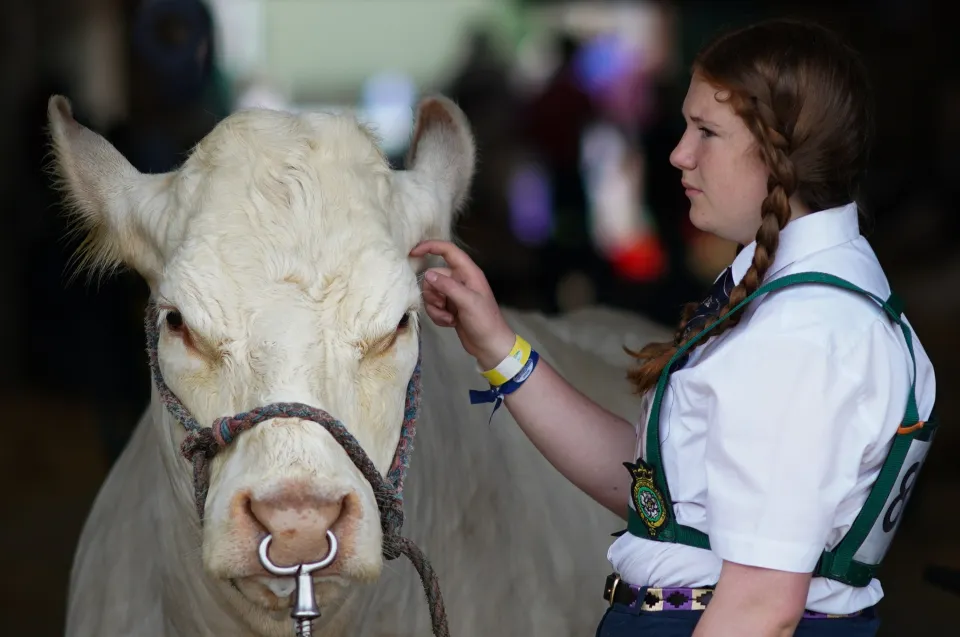
The primary reason bulls have nose rings is handler safety and behavioral control.
A fully grown bull can weigh over 500 kg — more than 1,100 lbs. No human can physically overpower an animal of that size using strength alone.
The nose ring gives handlers a reliable, low-force control point that works because of the bull’s own nerve biology. It requires no brute force — just leverage and pressure.
The Science Behind It: How the Nose Ring Actually Works
The nasal septum of a bull is packed with dense nerve endings, making it one of the most sensitive areas on the animal’s entire body.
Even a small amount of pressure applied through a nose ring sends an immediate, powerful signal to the bull’s brain.
The animal responds instinctively — moving away from the pressure source rather than pushing through it. This biological response is called nociception: the nervous system’s process of detecting and reacting to potentially harmful stimuli.
Handlers use this reflex to redirect thousands of pounds of moving animal with nothing more than a gentle tug on a lead rope.
The head controls the body. When the head turns, the shoulders, hips, and legs follow. A nose ring at the tip of the nose gives the handler a lever arm that can steer the entire animal from the front.
History of Bull Nose Rings: 4,000 Years of Animal Control
Why do bulls have nose rings is not a modern question. The practice dates back approximately 3,000 to 4,000 years.
Ancient civilizations such as Sumer in Mesopotamia used nose rings on both bovines and equines. Evidence of this practice appears on the Standard of Ur, one of the oldest surviving artifacts of early human civilization.
Civilizations of the Indian subcontinent also adopted the practice independently. From there it spread across Africa, Asia, South America, and Central America as agricultural communities developed.
The Old Testament references nose rings as a control metaphor in 2 Kings and Isaiah, dating to around 700 B.C. — confirming the practice was already deeply established by that era.
The bull nose ring reached the New World with the bulls themselves, as no pre-Columbian indigenous peoples had domestic animals large enough to require such control.
| Era | Region | Use |
|---|---|---|
| 3,000–4,000 years ago | Mesopotamia (Sumer) | Bovines and equines |
| Ancient India | Indian subcontinent | Domestic cattle |
| 700 B.C. | Middle East | Referenced in Old Testament |
| Medieval period | Europe | Spread via Crusaders to England |
| Post-Columbus | The Americas | Arrived with imported cattle |
| Modern era | Global | Standardized veterinary practice |
Bull Temperament: Why Control Is Essential
Understanding bull temperament explains why nose rings became such a universal solution across cultures and centuries.
Bulls are territorial, powerful, and capable of sudden aggression with little warning. Even bulls that appear calm and familiar can become dangerous in an instant — particularly during breeding season or when threatened.
Studies and farm safety agencies consistently identify bulls as one of the most dangerous animals in agricultural settings. A bull can charge, gore, or crush a handler within seconds.
The nose ring does not make a bull safe on its own. But it gives handlers a critical intervention point — a way to redirect the animal before a dangerous situation escalates.
What Is the Bull’s Nasal Septum?
The nasal septum is the thin wall of soft tissue that divides the two nostrils of the bull’s nose.
Unlike cartilage or bone, the septum is soft, highly vascularized, and densely packed with nociceptors — the nerve receptors responsible for pain and pressure signals.
This is why pressure applied to the septum through a nose ring is so immediately effective. The signal travels fast and directly to the brain, overriding the bull’s momentum or aggressive intent.
The septum is also the location specifically chosen for nose ring placement because it is the most sensitive point that can also safely support a permanent ring without causing structural damage.
When Are Bulls Given Nose Rings?
Bulls are typically ringed between 9 and 12 months of age.
At this stage, they are large enough that handling is becoming physically challenging — but young enough that the procedure is less stressful and recovery is faster.
Some show bulls may receive their ring as early as 9 months old. In breeding programs such as Norwegian Red cattle, formal guidelines state that bulls are ringed between 10 and 12 months under veterinary supervision.
Waiting too long increases risk — both for the handler performing the procedure and for the bull, as an older animal is harder to restrain safely.
| Age Stage | Recommendation |
|---|---|
| Under 9 months | Too young — septum not fully developed |
| 9–12 months | Standard recommended window |
| 12–18 months | Acceptable with veterinary care |
| Over 2 years | Higher risk, harder procedure |
| Show bulls | Can be ringed from 9 months |
The Nose Ring Procedure: What Actually Happens
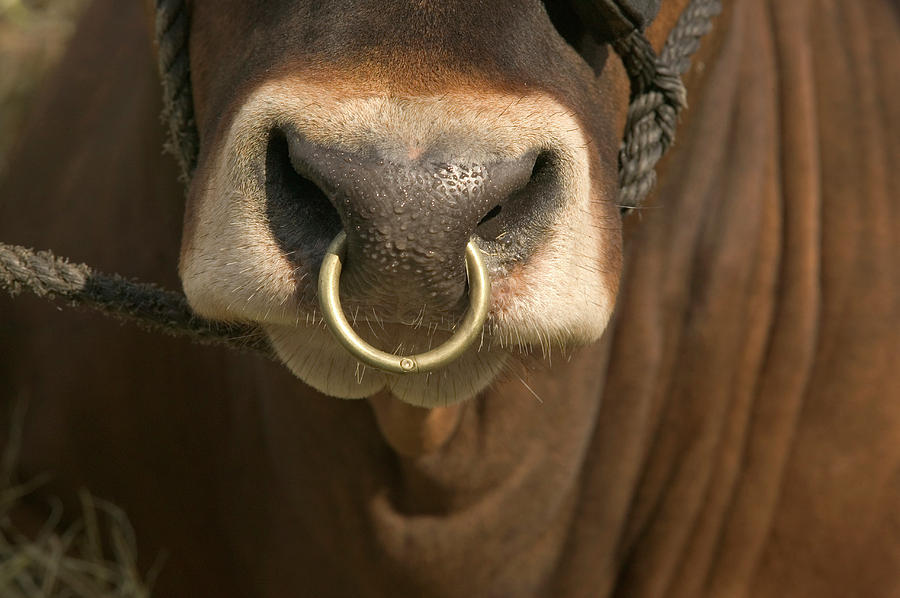
The procedure is performed by a veterinarian or trained stockperson under sterile conditions.
The bull receives sedation and local anesthesia to minimize discomfort. The septum is pierced with a scalpel or specialized punch tool.
The ring is inserted through the fresh piercing and locked in place — often using two hinged semicircles held closed by a small brass bolt whose head is broken off after installation to prevent easy removal.
The entire procedure typically takes less than 10 minutes in a modern veterinary setting when proper sedation is used.
Once healed, the ring does not cause ongoing pain or interfere with the bull’s ability to eat, drink, or breathe normally. Most bulls adapt quickly and show no behavioral change once the ring is fully healed.
Norwegian Red, one of the world’s leading cattle breeding organizations, formally confirmed that their bulls receive nose rings with sedation and pain relief, with the ring placed only in soft tissue.
Types of Bull Nose Rings
Not all bull nose rings are the same. Different types serve different functions depending on the animal’s age, temperament, and the purpose of the ring.
| Type | Description | Use Case |
|---|---|---|
| Permanent ring (hinged) | Two semicircles locked with a brass bolt | Standard adult bulls |
| Self-piercing ring | Sharp ends pressed through the septum | Installed by vets |
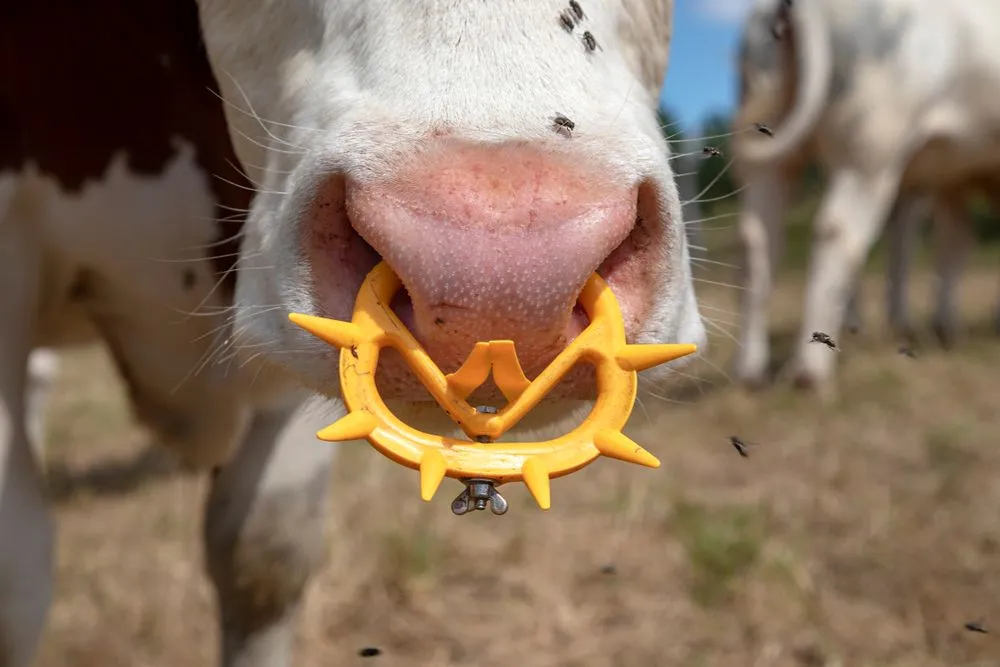
| Temporary plastic ring | Clipped on without piercing | Cattle shows, short-term use |
| Split ring | Opens and closes manually | When non-hinged design preferred |
| Nose tong (non-piercing) | Clamps the septum temporarily | Veterinary exams, short procedures |
| Spiked weaning ring | Spikes face outward to deter suckling | Calf weaning process |
Permanent rings are the most common for working bulls. Temporary rings are accepted at many cattle shows and are made from plastic, clipped to the nose without any piercing.
Nose tongs — also called bulldogs, bull tongs, or nose clamps — are a non-piercing alternative used for short-term restraint during veterinary treatment or examination.
Materials Used in Bull Nose Rings
The material of a bull nose ring directly affects its durability, safety, and long-term comfort.
Permanent bull rings are most commonly made from stainless steel, aluminum, or copper. These metals are non-reactive, corrosion-resistant, and strong enough to withstand the demands of a working farm environment.
Brass is also used, particularly in traditional settings. Old-fashioned rings were made from iron or brass. Modern rings are almost always steel for greater durability.
| Material | Properties | Common Use |
|---|---|---|
| Stainless steel | Strong, non-reactive, corrosion-resistant | Modern standard |
| Aluminum | Lightweight, non-reactive | Common permanent rings |
| Copper | Durable, traditional | Older farming traditions |
| Brass | Classic, functional | Traditional settings |
| Plastic | Lightweight, temporary | Cattle shows, weaning |
Standard bull ring dimensions range from 8 to 13 centimeters in diameter — approximately 3 to 5 inches — depending on the breed and size of the bull.
Bull Staff and Bull Pole: The Nose Ring’s Partner Tool
The nose ring works best as part of a two-tool system — combined with either a halter or a bull staff.
A bull staff (also called a bull pole) is a wooden or metal pole with a special hook on the end that snaps onto the nose ring.
The pole keeps a safe physical distance between the handler and the bull — allowing the handler to guide or push the animal without being within striking or goring range.
The James Safety First Bull Staff, introduced in 1919, was a five-foot steel tube with a lock hook that could be operated from the handler’s end of the pole.
Good handlers balance the halter and the nose lead together — sharing pressure between both tools and releasing it immediately when the bull follows. This shared pressure keeps the bull’s head level and its steps calm.
Even experienced farmers are warned never to trust the nose ring alone. A bull that becomes angry enough can rip a ring from its nose entirely.
The Weaning Function: Nose Rings for Calves
Bull nose rings are not only used for control. They also serve an important function in the calf weaning process.
Young calves often wear a special type of nose ring with plastic spikes that face outward toward the cow’s udder.
When the calf attempts to suckle, the spikes press against the cow’s udder — causing mild discomfort that encourages the cow to reject the calf’s attempts.
This method separates the weaning process into two stages: first the calf stops suckling (while still staying near its mother for comfort), and then physical separation occurs later. Research confirms this staged approach reduces stress significantly for both the calf and the cow.
A 2005 study found that the clip-on nose ring was a gentler weaning method compared to abrupt separation.
Nose Rings at Cattle Shows
Nose rings play an important role in the competitive livestock world.
Many cattle show societies in the United States and internationally require bulls over 10 months old to wear nose rings when participating in public exhibitions.
Some show requirements specify that bulls must be accompanied by two people, wear both a halter and nose lead, and be led with a rope attached to the nose ring.
Show bulls that compete regularly may even have their rings polished for competition — the ring becoming both a safety tool and a presentation detail in the competitive livestock world.
Temporary plastic rings are accepted at many shows for bulls that are not permanently ringed, though many experienced handlers prefer permanent rings for their greater reliability and stability.
Do All Bulls Need Nose Rings?
Not every bull is required by law to have a nose ring.
There is no federal law in the United States mandating nose rings for all bulls. The decision is left to the individual farmer or keeper.
However, many cattle show organizations require rings for bulls in public settings. Agricultural safety agencies and extension programs strongly recommend ringing for any bull that is regularly handled by humans.
Free-range bulls — such as the Spanish fighting bull — are typically not ringed because they have minimal contact with handlers.
Bulls kept in close quarters who show aggression or territoriality are almost always ringed before reaching full adult size.
Some experienced farmers with exceptional stockmanship skills and purpose-built facilities choose not to ring their bulls — relying instead on behavioral training and facility design. This is viable for skilled professionals but is not the recommended approach for most farm settings.
Animal Welfare Considerations
Animal welfare organizations have examined bull nose rings carefully.
The majority of professional livestock welfare bodies conclude that properly placed and managed nose rings are acceptable when used correctly.
Key welfare standards include veterinary placement with sedation and pain relief, correct ring sizing for the animal’s breed and age, regular inspection for wear, damage, or infection, and use of the ring as a communication tool rather than a punishment device.
The welfare concern arises when rings are improperly placed, too small, damaged, infected, or used to inflict pain beyond brief and targeted pressure cues. These misuse cases are the source of animal welfare criticism — not the practice itself when carried out correctly.
Norwegian Red’s published welfare guidelines state that the ring does not affect the bull’s ability to eat or drink, nor cause discomfort in daily life once healed.
Nose Rings in Other Animals
Bulls are not the only animals that wear nose rings. The practice extends to several other species for different purposes.
| Animal | Purpose | Notes |
|---|---|---|
| Cows | Control and handling | Less common than in bulls |
| Pigs | Discourage rooting behavior | Controversial — rooting is natural |
| Calves | Weaning (spiked rings) | Temporary, clip-on only |
| Oxen | Leading and driving | Used when being led by reins |
| Sheep / Goats | Weaning lambs and kids | Temporary nose flaps used |
Pig nose rings are the most controversial form. Unlike bull rings used for safety, pig rings are designed to make rooting painful — targeting a natural and essential behavior. Animal welfare groups have pushed for bans in several regions, and some localities have complied.
Sheep and goat herders use temporary nose flaps on young animals during the weaning period — these clamp the septum rather than piercing it and are removed once weaning is complete.
Lesser-Known Facts About Bull Nose Rings
Bull rings are usually 8 to 13 centimeters in diameter and must be resized as the bull grows. A ring fitted on a 9-month-old calf will need replacing by full adult size.
Some bulls become so accustomed to their rings that they show no behavioral change once the ring has fully healed. The ring simply becomes part of their daily experience.
A bull that is angry enough can rip its own nose ring out — which is why a bull staff is always recommended alongside the ring for any serious handling situation.
A dangling chain or rope is sometimes left attached loosely to the ring of an aggressive bull. When the bull ducks its head to charge, it steps on the chain and stops itself — an old but still effective deterrent.
The practice of nose ringing may have traveled from the Middle East to Europe via the Crusaders, as it is depicted in artwork associated with an ancient pub in Nottingham, England — reputedly the oldest in the country.
Alternatives to Nose Rings
A small number of innovations have emerged as alternatives to permanent nose rings in certain contexts.
Remote-controlled training systems that use sound or vibration signals to guide bulls are being developed and tested. These offer a less invasive method of management.
Purpose-built handling facilities with hydraulic crushes, squeeze chutes, and curved race systems can reduce the need for direct nose-ring-based control during veterinary procedures.
Behavioral training methods that work with the bull’s natural flight zone and pressure responses can reduce reliance on physical restraint.
However, as of 2026, the nose ring remains the most widely used, most proven, and most practically effective control tool for bulls across the global agricultural industry.
Summary: Why Do Bulls Have Nose Rings
| Reason | Detail |
|---|---|
| Safety | Prevents injury to handlers from 500+ kg animals |
| Control | Leverages nasal nerve sensitivity for low-force guidance |
| Behavioral management | Redirects aggression and charging instincts |
| Show requirements | Many cattle shows mandate nose rings for competing bulls |
| Weaning assistance | Spiked calf rings reduce stress during the weaning process |
| Historical continuity | 4,000-year-old practice validated across every culture that farmed cattle |
Frequently Asked Questions (FAQs)
Why do bulls have nose rings?
Bulls have nose rings primarily for handler safety and behavioral control. The nasal septum is highly sensitive, allowing a small amount of pressure to redirect a 1,100-pound animal with minimal force.
At what age are bulls given nose rings?
Bulls are typically ringed between 9 and 12 months of age. This is when handling becomes physically challenging but the procedure is still relatively straightforward for a veterinarian.
Do nose rings hurt bulls?
There is temporary discomfort during the procedure, which is minimized with sedation and local anesthesia. Once healed, the ring does not cause ongoing pain or interfere with eating, drinking, or breathing.
What are bull nose rings made of?
Permanent bull nose rings are most commonly made from stainless steel, aluminum, or copper. Plastic rings are available for temporary use at cattle shows.
Are bull nose rings required by law?
No federal law in the United States requires nose rings on all bulls. However, many cattle show organizations and state agricultural fair systems require them for bulls in public exhibitions.
What is a bull staff and how does it work?
A bull staff is a long pole with a hook that clips onto the nose ring, allowing handlers to guide a bull while maintaining a safe physical distance. It is strongly recommended alongside a nose ring.
Can bulls remove their own nose rings?
Yes — an angry bull can rip a nose ring out. This is why handlers are warned never to rely on the nose ring alone, and to always use a bull staff for serious handling situations.
Do cows also wear nose rings?
Yes, some cows also wear nose rings for control and handling, though it is far more common in bulls. Calves wear temporary spiked rings during the weaning process.
How big are bull nose rings?
Standard bull nose rings range from 8 to 13 centimeters (3 to 5 inches) in diameter. The correct size depends on the breed and physical size of the bull.
Is nose ringing cruel?
When performed correctly by a veterinarian with proper sedation and pain relief, nose ringing is considered an acceptable practice by the majority of professional livestock welfare organizations. Misuse — improper sizing, infection, or use as punishment — is where the welfare concern lies.
Conclusion
Why do bulls have nose rings comes down to one fundamental truth: it is the most effective low-force control method ever developed for one of the most powerful animals on a farm.
Rooted in 4,000 years of agricultural history and backed by the science of nociception and nerve sensitivity, the bull nose ring has survived because it works.
A properly fitted ring, installed by a trained veterinarian between 9 and 12 months of age, gives handlers a critical safety advantage without causing the animal ongoing discomfort.
From ancient Mesopotamian farms to modern competitive cattle shows, this small metal ring has protected handlers and guided bulls with remarkable consistency.
Understanding why bulls have nose rings — the biology, the history, the welfare standards, and the practical mechanics — gives you a complete picture of one of farming’s most enduring and important traditions.
