

Hunters pattern their shotguns to know exactly where their pellets land at any given distance.
Without patterning, you are guessing — and guessing costs you birds and wastes your ethical responsibility in the field. S
hotgun patterning is the process of testing your gun, choke, and ammunition together on paper so you understand your effective range, pellet density, and point of impact before the season opens.
Whether you hunt turkeys, ducks, or upland birds.
Why Do Hunters Pattern Their Shotguns?
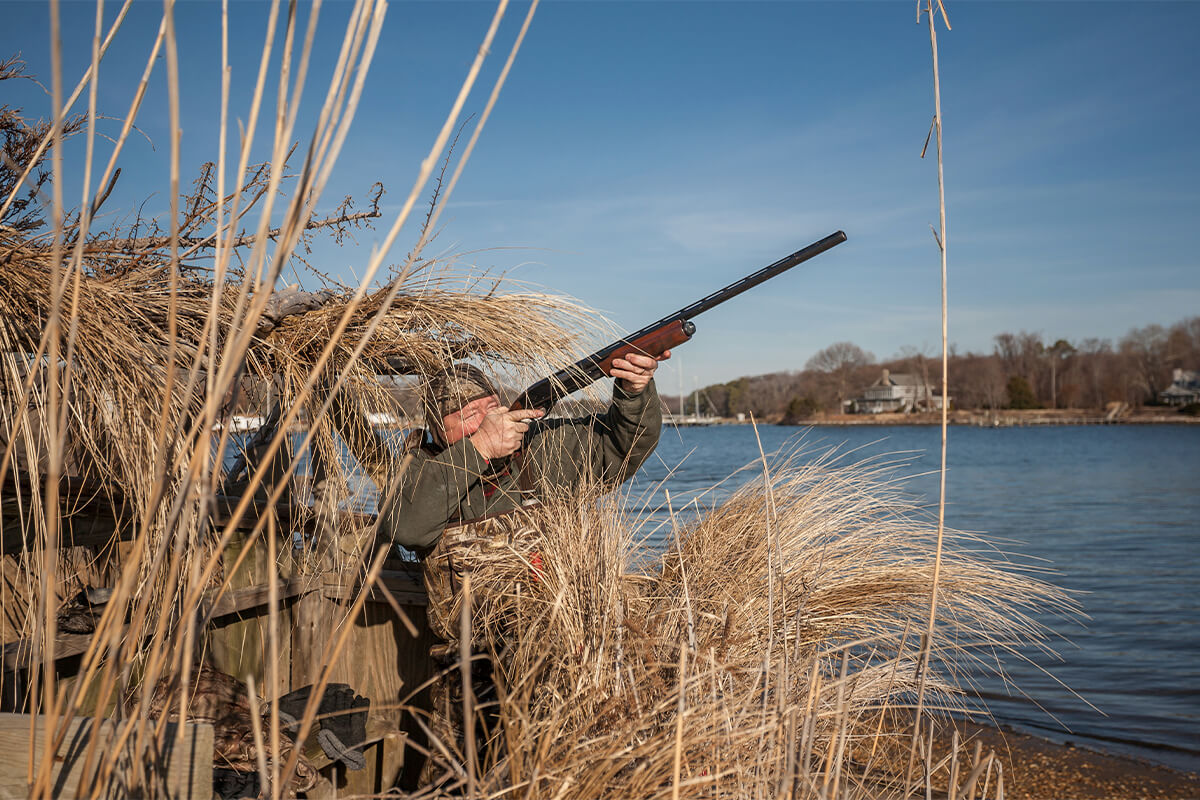
Patterning a shotgun means firing your gun at a paper target and studying where the pellets land. You are looking at how the shot spreads, how dense the pattern is, and whether the center of the pattern matches your point of aim.
It is not a complicated process. You shoot, walk to the target, draw a circle around the densest area of hits, count the pellets, and repeat with different chokes or ammo until you find the best combination.
Why Do Hunters Pattern Their Shotguns?
Many new hunters confuse patterning with sighting in a rifle. They are related but not the same thing.
Sighting in a rifle means adjusting your optics so a single bullet hits exactly where you aim. Patterning a shotgun means understanding how hundreds of pellets spread at various distances — which choke tightens them, which ammo holds the pattern best, and where the densest cluster lands relative to your aim point.
A shotgun shooting a bad pattern at 40 yards will miss birds even if your aim is perfect.
The Core Reasons Hunters Pattern Their Shotguns
It Tells You Your True Effective Range
Your shotgun can physically fire a shell at 60 yards. That does not mean 60 yards is an ethical shot. Patterning shows you where your pellets become too sparse to guarantee a clean kill.
For turkey hunting, you need a minimum of 100 pellets within a 10-inch circle to consider a distance ethical. Patterning reveals the yard marker where your setup drops below that threshold — and that distance becomes your hard limit in the field.
It Reveals Whether Your Point of Aim Matches Your Point of Impact
Not every shotgun shoots where it looks. Some guns pattern high, low, left, or right. Manufacturers like Benelli are known to pattern slightly high by design so the shooter can see the bird while aiming.
But your specific gun might behave differently. Patterning shows you if a misalignment exists and gives you the chance to adjust your mount, add a different sight, or compensate before you are standing in a field with a gobbler at 35 yards.
It Shows How Choke and Ammo Work Together in Your Specific Gun
Two shooters can use the same choke and the same ammo in different guns and get completely different patterns. Barrel length, bore diameter, and even minor manufacturing differences affect pellet behavior.
Aftermarket chokes do not automatically outperform factory chokes. Cheap ammo does not always pattern worse than premium loads. You simply do not know until you test your specific combination on paper.
It Builds Hunting Confidence
Doubt is one of the biggest reasons hunters miss or hesitate on shots. When you know your setup puts 120 pellets in a 10-inch circle at 40 yards, you mount the gun and pull the trigger without second-guessing.
Hunters who skip patterning often flinch, rush shots, or push birds beyond effective range because they are uncertain. Patterning removes that uncertainty completely.
It Protects Against Wounding Animals
Missing a bird cleanly is far better than hitting one and losing it. A poor pattern with holes in the spread can wound a turkey or duck without delivering enough energy for a clean kill.
Patterning is an ethical practice as much as a practical one. Understanding exactly what your shotgun does at each distance is your obligation as a responsible hunter.
How Choke Tubes Control Your Pattern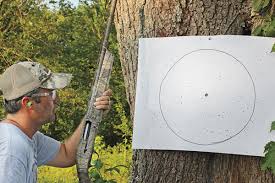
The choke is the constriction at the muzzle of your barrel that squeezes pellets together before they exit. A tighter choke keeps pellets close longer, producing a denser pattern at longer ranges. A more open choke lets pellets spread wider, which works better for close-range shooting.
| Choke Type | Constriction | Best Use | Pattern at 40 Yards |
|---|---|---|---|
| Cylinder | None | Defensive, very close birds | 25–35% in 30″ circle |
| Improved Cylinder | Slight | Upland birds, pheasant, quail | 45–50% in 30″ circle |
| Modified | Medium | Duck hunting, general use | 60% in 30″ circle |
| Improved Modified | Tighter | Longer range ducks, geese | 65% in 30″ circle |
| Full | Tight | Turkey, long-range waterfowl | 70% in 30″ circle |
| Extra Full | Very tight | Turkey at extended ranges | 70%+ in 30″ circle |
Matching the right choke to your hunting style is one of the main reasons patterning matters. A full choke in a turkey gun can be too tight for close shots, causing the pattern to be too concentrated to hit reliably.
How Ammunition Affects Your Pattern
Shot size, shot material, and shell velocity all change how your pattern performs. Switching from one brand to another — even the same shot size — can shift your pattern density significantly.
Lead vs. Steel vs. Tungsten Super Shot (TSS)
Lead is the traditional standard for upland and turkey hunting. It patterns well and carries energy effectively inside 40 yards. Steel is required for waterfowl hunting by federal law but is less dense than lead, requiring larger shot sizes to achieve similar downrange energy. TSS (Tungsten Super Shot) is far denser than lead, allowing smaller shot sizes that produce more pellets and tighter patterns — extending ethical range for turkey hunters beyond 50 yards when the gun and choke combination is properly patterned.
Shot Size Comparison for Common Hunting Applications
| Game | Recommended Shot Size | Shot Material | Typical Range |
|---|---|---|---|
| Turkey | #4, #5, #6 (lead) or #7, #8, #9 (TSS) | Lead or TSS | 20–40 yards |
| Ducks | #2, #3, #4 (steel) | Steel | 20–40 yards |
| Geese | BB, #1, #2 (steel) | Steel | 30–50 yards |
| Pheasant | #4, #5, #6 (lead) | Lead | 20–35 yards |
| Quail/Dove | #7.5, #8 (lead) | Lead | 15–30 yards |
Always pattern with the exact shot size and brand you plan to hunt with. Switching brands on opening day without re-patterning is a common mistake that costs hunters birds every season.
How to Pattern Your Shotgun Step by Step
Step 1 — Gather Your Equipment
You need your shotgun, the chokes you plan to test, the ammo you plan to hunt with, a large paper target (at least 30 inches to 48 inches square), a marker, a measuring tape, and a safe backstop. Eye and ear protection are mandatory.
Step 2 — Set Up Your Target at Hunting Distance
Set your target at the distance you realistically expect to shoot in the field. Turkey hunters typically start at 20 yards and work out to 40 yards. Waterfowl and upland hunters typically pattern between 25 and 40 yards.
Mark a clear aiming point in the center — a bullseye, a dot, or a turkey head silhouette for turkey hunters.
Step 3 — Shoot One Shot Per Target
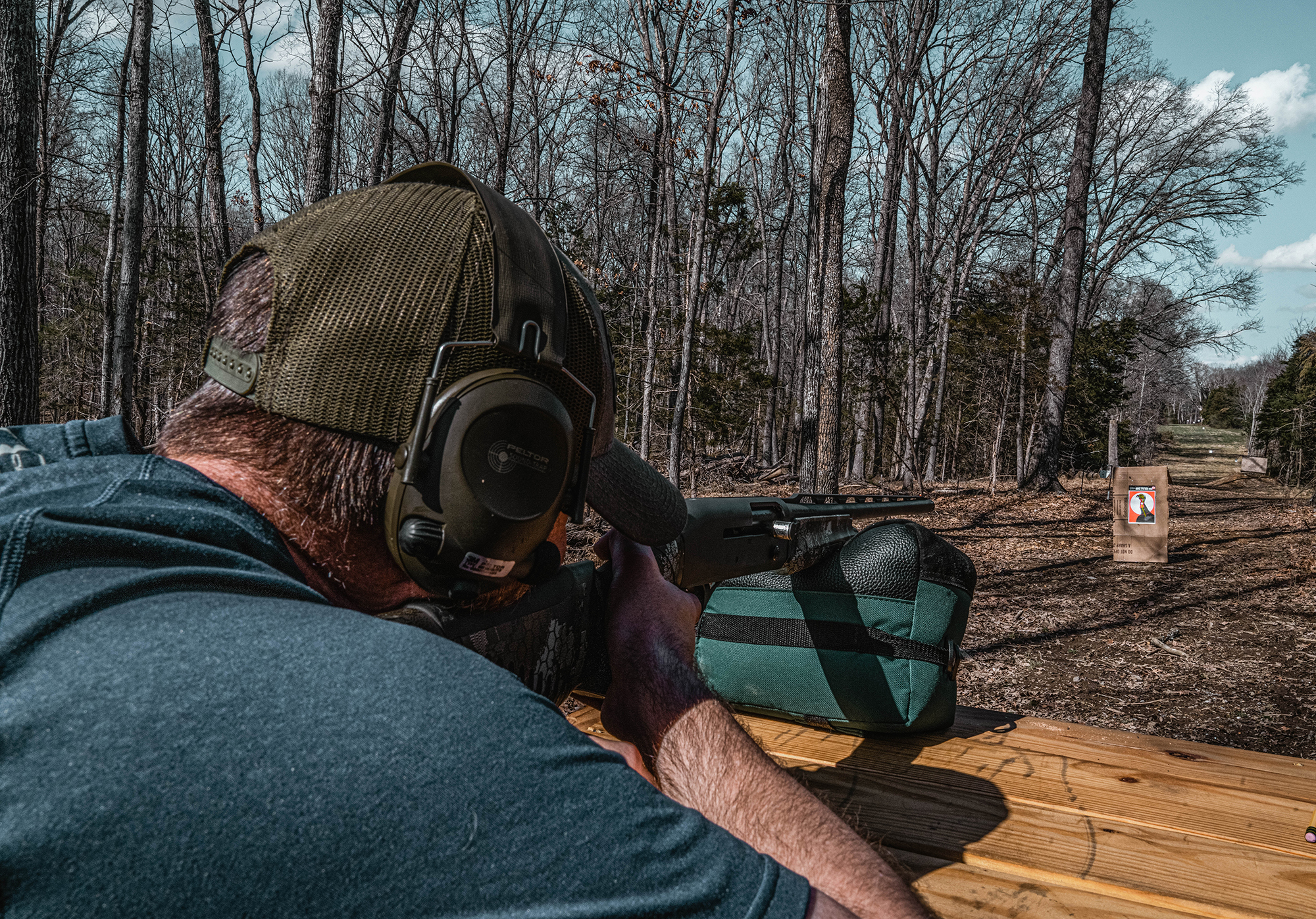
Fire one carefully aimed shot from a stable position. Use a shooting bench if possible for consistency. Do not rush. Your goal is to see a clean, accurate representation of the pattern — not a cluster of overlapping shots that are hard to analyze.
Change paper between every shot. Each pattern should be on its own fresh target.
Step 4 — Shoot at Least 3 Targets Per Combination
No two shotgun patterns are identical. Pellet behavior varies slightly from shell to shell. Shoot a minimum of 3 targets per choke-and-ammo combination at each distance. Five patterns is better; ten gives you the most reliable average.
Step 5 — Analyze Your Results
Walk to the target and draw a 30-inch circle around the densest part of the pattern. Count the pellet holes inside the circle. For turkey hunting, draw a 10-inch circle around the densest area instead.
What you are looking for:
- Is the densest area of the pattern centered over your aiming point?
- Are there large gaps or holes where a bird’s vital area could slip through?
- Does the pattern percentage meet the threshold for your target animal?
Step 6 — Compare Combinations and Keep Notes
Write down every combination you test — choke type, ammo brand, shot size, distance, and how the pattern looked. These notes save hours of re-testing next season.
Try switching chokes or ammo brands if your first combination does not perform. A tighter choke helps at longer distances. An open choke helps for close birds in thick cover.
A simple tracking sheet:
| Test # | Choke | Ammo Brand | Shot Size | Distance | Pellets in Circle | Pattern Notes |
|---|---|---|---|---|---|---|
| 1 | Full | Federal TSS | #9 | 40 yds | 145 | Centered, dense |
| 2 | Extra Full | Federal TSS | #9 | 40 yds | 162 | Slightly high |
| 3 | Modified | Winchester | #5 lead | 30 yds | 88 | Good spread |
| 4 | IC | Winchester | #5 lead | 25 yds | 74 | Wide, even |
Understanding a Good Pattern vs. a Bad Pattern
What a Good Pattern Looks Like
A good pattern has even, consistent pellet distribution across the circle with no large gaps in the center. The densest portion of the pattern should be at or very close to your aiming point.
For turkey hunting at 40 yards, 100 or more pellets in a 10-inch circle is the widely accepted minimum for an ethical shot. For waterfowl, a 70 to 80 percent pattern in a 30-inch circle at your shooting distance is the goal.
What a Bad Pattern Looks Like
A bad pattern has large holes where no pellets landed, a heavy cluster that is noticeably off-center, or extremely sparse coverage that could not reliably deliver lethal energy to vital organs.
If you see your pattern printing high and left at 40 yards, every shot in the field will miss high and left. Patterning catches that before it costs you the hunt.
Common Reasons for a Poor Pattern
- Wrong choke for the shot size or material
- Steel shot through a full or extra-full choke (dangerous and illegal in some jurisdictions)
- Using steel through chokes not rated for steel
- Poor-quality or deformed shot
- Loose choke tube not fully seated
- Dirty or fouled barrel
Patterning for Different Types of Hunting
Turkey Hunting
Turkey hunting demands the tightest, densest patterns of any shotgun hunting application. You are aiming at the head and neck of a bird — a target roughly 3 inches wide at distances out to 40 yards and beyond.
Full and extra-full chokes with premium turkey loads are the standard. TSS loads allow smaller pellets and more of them per shell, increasing pattern density. Pattern at 20, 30, and 40 yards. Know exactly where your pattern becomes inadequate and never shoot beyond that distance.
Waterfowl Hunting
Duck and goose hunters must use non-toxic shot — steel, bismuth, or tungsten. Steel is less dense than lead, so it requires larger shot sizes and typically more open chokes than lead loads.
A modified choke is often the maximum constriction recommended for steel shot. Tighter chokes can damage the barrel and produce worse patterns. Pattern your waterfowl setup specifically for steel at the distances you will shoot over decoys.
Upland Bird Hunting
Pheasant, quail, dove, and grouse hunters typically shoot at flushing or flying birds at 20 to 35 yards. Improved cylinder or modified chokes with standard lead loads work well for most upland situations.
Upland hunters move constantly through cover, so fast target acquisition matters more than extreme range. A wider pattern at moderate distance is often preferable to a tight pattern that demands perfect aim on a fast-moving bird.
Patterning and Shotgun Fit
Even a perfect choke and ammo combination cannot fix a gun that does not fit you. If the stock is too long, too short, or the comb height is wrong, you will consistently aim one direction while your eyes point another.
Pattern your shotgun from a relaxed, natural shooting position — not bent awkwardly over a bench. If your pattern consistently lands several inches off your aim point despite trying multiple chokes and loads, the issue is likely gun fit rather than equipment.
A qualified gun fitter can adjust stock dimensions to correct chronic misalignment. This matters especially for wingshooters who rely on instinctive pointing rather than deliberate aiming.
How Often Should You Pattern Your Shotgun?
Most experienced hunters pattern at least once per season for each type of hunting they plan to do. A good schedule looks like this:
- Late winter or early spring — Pattern your turkey setup before gobbler season opens
- Late summer or early fall — Pattern your duck and upland setup before waterfowl and pheasant seasons open
- Any time you change chokes, ammo, or add an optic — Re-pattern immediately
You do not need to re-pattern if nothing changes. A well-documented setup from last season is still valid if you are using identical choke, ammo, and gun configuration.
Common Patterning Mistakes to Avoid
Shooting multiple rounds at the same target. Overlapping holes make it impossible to accurately count pellets or see the true pattern shape. Use fresh paper for every shot.
Patterning at the wrong distance. Pattern at your realistic hunting distance, not a standard distance that does not match your actual shooting scenarios.
Testing only one combination. Shoot at least three different choke and ammo combinations before deciding. The first combination you try is rarely the best.
Using steel shot through tight chokes. Steel does not compress like lead and can crack or bulge a full choke not rated for steel. Always check your choke tube’s rating before shooting non-toxic shot through it.
Ignoring point of impact. A dense pattern that lands six inches above your aim point is as problematic as a sparse pattern. Check both density and alignment.
Not keeping records. Without notes, you repeat the same tests every season and never build on what you already learned.
Quick Summary: Why Hunters Pattern Their Shotguns
| Reason | What It Solves |
|---|---|
| Find effective range | Prevents shots beyond ethical distance |
| Confirm point of impact | Fixes aim vs. impact misalignment |
| Match choke to ammo | Finds the best combination for your gun |
| Verify pellet density | Ensures enough pellets for a clean kill |
| Build confidence | Removes doubt and hesitation in the field |
| Ethical responsibility | Reduces wounded and lost game |
Frequently Asked Questions (FAQs)
Why do hunters pattern their shotguns before turkey season?
Turkey hunting requires precise, dense patterns at 20 to 40 yards. Patterning confirms that your choke and ammo combination delivers enough pellets on the vital head and neck area to guarantee a clean, ethical kill.
What is a good shotgun pattern for turkey hunting?
A minimum of 100 pellets inside a 10-inch circle at 40 yards is the widely accepted standard. More pellets per circle means more margin for error and a more reliable lethal impact.
How far should you stand when patterning a shotgun?
Set your target at the maximum distance you expect to shoot in the field. Turkey hunters typically pattern at 40 yards. Waterfowl and upland hunters commonly use 25 to 35 yards based on their specific hunting scenarios.
How many shots should you fire when patterning?
Fire at least 3 shots per choke and ammo combination at each distance. Five shots is better, and ten is ideal for a thorough statistical average. Use a fresh paper target for every single shot.
Does choke brand matter when patterning a shotgun?
Yes, aftermarket chokes often produce different results than factory chokes, but neither is automatically better. Only testing your specific gun with your specific ammo will reveal which choke brand produces the best pattern.
Can you use the same choke for turkey and waterfowl hunting?
No. Turkey chokes are designed for lead shot and are typically too tight for steel waterfowl loads. Using steel shot through a tight turkey choke can damage the barrel and creates unsafe pressure. Use a modified or steel-rated choke for waterfowl.
Does the shotgun gauge affect patterning?
Yes. A 12-gauge carries more shot than a 20-gauge, producing more pellets in the pattern at any given distance. A 20-gauge can still be effective for turkeys with premium TSS loads, but it requires thorough patterning to confirm adequate pellet density.
What does it mean if my pattern is off-center?
An off-center pattern means your point of aim does not match your point of impact. This could be caused by gun fit issues, choke alignment, or how you mount the gun. A consistent off-center pattern is usually a stock fit problem, not an ammo or choke issue.
Should you pattern a shotgun every season?
Yes. Pattern your turkey setup in late winter or early spring and your waterfowl or upland setup in late summer or early fall. Re-pattern immediately any time you change your choke, ammo, optic, or gun stock.
Is patterning a shotgun only for turkey hunters?
No. Duck hunters, goose hunters, pheasant hunters, and all shotgun hunters benefit from patterning. Any time you need to know whether your pellets will deliver consistent, lethal energy at a specific distance, patterning gives you that answer.
Conclusion
Patterning your shotgun is one of the most practical and ethical things you can do before any hunting season.
It costs you nothing but a couple of hours and a box of shells.
What you gain is a clear understanding of your maximum effective range, your choke and ammo combination’s real-world performance, and the confidence to pull the trigger cleanly when a bird steps into range.
Most hunters who skip patterning do so because they assume their gun shoots where it looks and that their ammo will perform as advertised. Sometimes that assumption holds.
Often it does not, and the result is missed birds, wounded game, and lost harvests. Patterning removes the guesswork entirely.
Whether you are chasing spring gobblers, setting up in a duck blind, or walking fields for pheasants, a patterned shotgun makes you a better, more accurate, and more ethical hunter.
Spend the time before the season opens. Get on paper. Know your setup. Then hunt with confidence.
