

Why is diversity important is a question every organization, school, and community must answer honestly in 2026.
Diversity is no longer just a moral talking point — it is a measurable driver of innovation, profitability, employee retention, and social progress.
The data is clear, consistent, and growing stronger every year. Whether you lead a business, manage a team, teach a classroom, or simply want to understand the world better, knowing why diversity matters gives you a real competitive and human advantage.
What Is Diversity? A Clear Definition for 2026
Diversity means the presence of meaningful differences within any group, organization, or community.
It goes far beyond race and gender. Diversity includes age, religion, nationality, socioeconomic background, physical ability, sexual orientation, cognitive style, educational background, and life experience.
True diversity is not just about numbers on a spreadsheet. It is about building environments where every type of person has genuine influence, opportunity, and belonging — not just a seat at the table.
The Three Pillars: Diversity, Equity, and Inclusion
These three terms are often used together but they mean very different things:
| Term | What It Means | What It Looks Like |
|---|---|---|
| Diversity | Who is present in the room | A team with varied backgrounds, genders, ages |
| Equity | Who gets a fair path forward | Equal access to promotions and resources |
| Inclusion | Who has real influence and voice | Every person’s ideas are genuinely considered |
| Belonging | Who feels safe being themselves | Employees bring their full selves to work |
You can have diversity without inclusion — that is called tokenism. Real progress requires all four working together.
Types of Diversity That Matter
Understanding the different forms of diversity helps organizations build more complete strategies.
Surface-Level Diversity refers to visible characteristics like race, gender, age, and ethnicity. These differences are immediately observable and often shape first impressions and group dynamics.
Deep-Level Diversity covers values, beliefs, cognitive styles, educational backgrounds, and life experiences. This type of diversity is less visible but has a greater impact on how teams solve problems and generate ideas.
Cognitive Diversity specifically refers to differences in how people think, process information, and approach challenges. Teams with high cognitive diversity are significantly better at complex problem-solving.
Neurodiversity — recognizing conditions like autism, ADHD, and dyslexia as different cognitive profiles rather than deficits — is becoming a central pillar of workplace inclusion in 2026.
Why Is Diversity Important in the Workplace
The workplace is where the impact of diversity is most measurable, most studied, and most consequential.
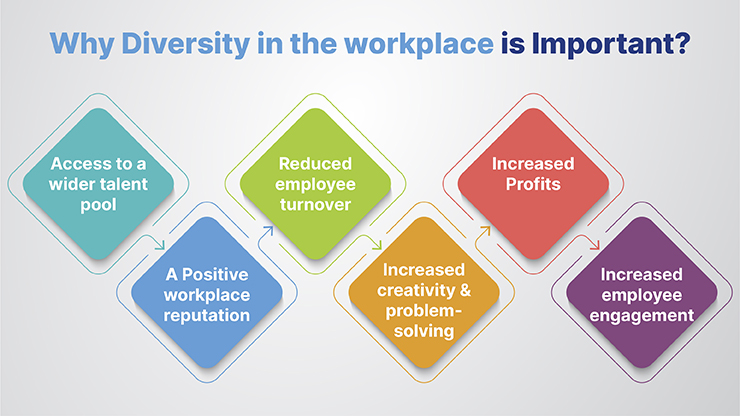
1. Diversity Drives Profitability
The financial case for diversity is overwhelming and backed by decades of research.
A 2023 McKinsey study of more than 1,000 companies across 23 countries found that organizations in the top quartile for ethnic and racial diversity were 39% more profitable than those with less diversity. Gender-diverse companies showed the same 39% profitability advantage.
This is not a coincidence or a soft correlation. Diverse teams generate better decisions, fewer blind spots, and stronger innovation pipelines — all of which translate directly into revenue.
2. Diversity Boosts Innovation and Creativity
Homogeneous teams are vulnerable to groupthink — the tendency for everyone to think similarly and settle on familiar, safe solutions.
Diverse teams break that pattern. When people from different backgrounds, cultures, and cognitive styles collaborate, they challenge each other’s assumptions and generate ideas that no single perspective could produce alone.
Inclusive teams are 1.7 times more likely to be innovation leaders in their markets, according to Deloitte research. That is not a marginal advantage — it is a structural competitive edge.
3. Diversity Improves Decision-Making
Having multiple viewpoints in a decision-making room reduces blind spots and leads to fewer costly mistakes.
Gender-diverse teams outperform all-male teams 73% versus 58% of the time in decision quality, according to research cited by Great Place To Work. The more perspectives at the table, the more angles a problem gets examined from before a choice is made.
Better decisions compound over time. Organizations that consistently decide better than competitors end up significantly ahead within three to five years.
4. Diversity Increases Employee Engagement
Employees who feel seen, respected, and valued are more engaged — and more engaged employees are more productive.
Multiple case studies support the link between diverse workplaces and higher employee engagement. When workers are respected regardless of their personal characteristics, they develop trust and loyalty that directly increases output and quality of work.
Great Place To Work research shows that employees in inclusive environments are 9.8 times more likely to look forward to going to work. That single statistic captures everything about what inclusive culture does for human performance.
5. Diversity Reduces Employee Turnover
High turnover is expensive. Replacing a single employee can cost anywhere from 50% to 200% of their annual salary when you factor in recruiting, onboarding, and lost productivity.
A 2025 SHRM study found that fair treatment in hiring and workplace culture is among the top five elements of retaining talent. Inclusive companies create environments where people can see themselves growing for years — reducing the desire to leave.
In the UK fashion sector, companies prioritizing DEI saw a 50% reduction in turnover alongside a 56% increase in job performance. The numbers make the case on their own.
6. Diversity Expands the Talent Pool
Organizations that only recruit from narrow demographic groups miss out on exceptional talent that exists everywhere.
Diverse hiring practices open access to candidates from every background, community, and life path. In a tight labor market, that access is a direct competitive advantage.
By 2026, 56% of Gen Z say they would not accept a job at an organization without diverse leadership. Gen Z is now the largest generation in the global workforce. Companies that fail to demonstrate genuine diversity are already losing the talent race.
7. Diversity Improves Customer Understanding
A workforce that reflects the full diversity of its customer base understands that customer base far better.
Diverse teams can identify product opportunities, communication gaps, and cultural nuances that homogeneous teams will consistently miss. This leads to better products, better marketing, and stronger customer loyalty.
In a global marketplace where consumers are more diverse than ever before, this understanding is not optional — it is essential for long-term market relevance.
8. Diversity Supports Employee Mental Health
Inclusive workplaces directly improve the mental health and wellbeing of employees.
When people feel they belong, stress decreases, job satisfaction increases, and burnout rates fall. The effect is biological, not just psychological — belonging triggers neurological responses that reduce the chronic stress that causes long-term health damage.
Organizations that invest in genuine belonging reduce absenteeism and build more resilient teams. Psychological safety is not a soft benefit. It is a measurable driver of performance and retention.
Key Workplace Diversity Statistics for 2026
| Statistic | Source |
|---|---|
| Top quartile diverse companies are 39% more profitable | McKinsey 2023 |
| Inclusive teams are 1.7x more likely to be innovation leaders | Deloitte |
| Employees in inclusive environments are 9.8x more likely to look forward to work | Great Place To Work |
| 56% of Gen Z would not accept a job without diverse leadership | Manpower 2025 |
| DEI-focused companies saw 50% less turnover and 56% higher performance | UK Fashion Industry Study |
| 65% of U.S. companies maintained or increased DEI budgets in 2025 | SHRM 2025 |
| Inclusive teams make better decisions 87% of the time | Deloitte Research |
Why Is Diversity Important in Education
The benefits of diversity extend far beyond the workplace. Schools and universities that embrace diversity produce better-educated, more capable, and more civically engaged graduates.
Better Critical Thinking
Students in diverse learning environments consistently demonstrate higher levels of critical thinking than those in homogeneous settings. Exposure to different perspectives challenges assumptions and forces deeper analysis of every topic.
Research from the American Psychological Association confirms that diverse classroom experiences lead to positive changes in students’ attitudes, values, and academic outcomes — benefiting both minority and majority group members equally.
Preparation for a Multicultural World
The global economy is diverse. The global workforce is diverse. The global customer base is diverse. Students who learn in diverse environments are better prepared to navigate all three.
Cross-cultural dialogue in schools and universities builds intercultural effectiveness, empathy, and communication skills that no single-culture environment can provide. These are among the most in-demand skills in the modern workplace.
Leadership Development
A longitudinal study found that students with diverse educational experiences showed greater gains in leadership skills, psychological wellbeing, intellectual engagement, and intercultural effectiveness than those without such exposure.
Effective leadership in 2026 requires the ability to understand, motivate, and collaborate with people who are fundamentally different from you. That skill is built in diverse classrooms.
Community and Civic Engagement
Students in diverse schools develop stronger civic attitudes and greater willingness to participate in community activities. Exposure to different lived experiences builds empathy that translates into more engaged, more cooperative citizens.
Research shows that positive diversity experiences in education increase students’ interest in improving the lives of people in their communities. That is not just good for individuals — it is good for democracy itself.
Why Is Diversity Important in Society and Communities
Diversity is not just a workplace or education issue. It shapes the health, fairness, and strength of entire communities and societies.
Economic Resilience: Communities with diverse populations and economies are more resilient to shocks. When one sector or demographic is hit hard, a diverse community has more structural support to absorb and recover.
Cultural Innovation: The greatest cultural and artistic innovations in human history have come from societies where different peoples, ideas, and traditions meet and mix. Diversity is the engine of cultural evolution.
Reduced Inequality: Research from the World Economic Forum shows that inclusive policy-making and sustained diversity programs reduce systematic gaps in economic outcomes for underrepresented groups. Diversity is a structural tool for building a more equal society.
Stronger Democracy: Societies where all voices are heard and represented make better collective decisions. Political systems that exclude large portions of the population are vulnerable to instability, resentment, and polarization.
Why Is Diversity Important in Healthcare
Healthcare is a critical but often overlooked area where diversity has life-or-death consequences.
Better Patient Outcomes: Diverse healthcare teams deliver more culturally competent care. Patients who are treated by professionals who understand their cultural background report higher satisfaction and better adherence to medical advice.
Addressing Health Disparities: Systemic health disparities — where certain racial and ethnic groups experience significantly worse outcomes — are directly linked to a lack of diversity in medical research, clinical trial participation, and healthcare leadership.
Mental Health: Black workers are less likely to experience health problems when they have more diverse coworkers, according to peer-reviewed research. The health benefits of belonging and inclusion are real and measurable.
Medical Innovation: Diverse research teams study a broader range of conditions, populations, and treatment approaches. A homogeneous research community produces a narrower body of medical knowledge that serves fewer people effectively.
Diversity vs Inclusion vs Belonging: Why All Three Matter

Many organizations achieve diversity on paper but fail at inclusion and belonging in practice.
Diversity without inclusion means bringing different people into a room but only listening to the same voices as before. It creates resentment, disengagement, and high turnover among the very people hired to diversify the organization.
Inclusion without belonging means people participate in meetings and processes but never feel safe enough to be fully themselves. Performance suffers because people spend energy managing their identity rather than doing their best work.
All three together create the conditions where every person can contribute their full capability. That is when diversity stops being a policy and starts being a genuine performance multiplier.
Common Diversity Mistakes Organizations Make
Even well-intentioned organizations regularly make these errors:
Treating diversity as a PR effort. When diversity is managed as a public relations or compliance exercise rather than a business strategy, it stays disconnected from the real levers of growth and innovation.
Stopping at headcount. Hiring a diverse team but keeping leadership uniform is not diversity — it is a pipeline that stalls in the middle. Real diversity requires representation at every level, especially leadership.
Ignoring pay equity. According to WTW’s 2025 pay transparency survey, 76% of UK companies plan to share pay ranges with employees regardless of legal requirements. Pay equity is increasingly treated as a baseline requirement, not a bonus policy.
One-off initiatives. Diversity training days and awareness campaigns without structural change produce no lasting results. Sustainable diversity requires embedding inclusion into hiring, promotion, leadership development, and performance evaluation.
Not measuring outcomes. What gets measured gets managed. Organizations that do not track diversity data, promotion rates, pay gaps, and retention by demographic cannot identify where their systems are failing.
How to Build a Genuinely Diverse and Inclusive Organization
In 2026, the most competitive organizations treat diversity as a core business strategy, not a side initiative.
Start with leadership commitment. Diversity initiatives fail without genuine buy-in at the executive level. Leaders must model inclusive behavior, sponsor diverse talent, and hold managers accountable for inclusion outcomes.
Audit your hiring process. Review job descriptions, interview panels, and selection criteria for unconscious bias. Structured interviews and blind resume screening consistently reduce bias in hiring decisions.
Build diverse leadership pipelines. Focus on promotion rates, access to high-visibility projects, and mentorship for underrepresented employees. The goal is not just diverse entry-level hiring — it is diverse leadership over time.
Create psychological safety. Employees must feel safe raising concerns, sharing unconventional ideas, and being themselves at work. Regular surveys, anonymous feedback channels, and responsive leadership all build psychological safety.
Embed accountability. Set SMART diversity goals. Track progress quarterly. Share data internally and externally. Connect diversity outcomes to leadership performance reviews. Accountability turns intent into result.
Address pay equity. Conduct regular pay audits. Publish pay ranges. Close identified gaps. Pay equity is both a moral requirement and a powerful retention and recruitment tool.
Generational Diversity: A Growing Priority for 2026
For the first time in history, five generations are working side by side in many organizations: Traditionalists, Baby Boomers, Generation X, Millennials, and Generation Z.
Each generation brings different work styles, communication preferences, technological fluency, and expectations of leadership. Managing this range effectively is one of the most complex diversity challenges organizations face in 2026.
Reverse mentorship programs — where younger employees teach older ones, particularly about technology and digital culture — are proving highly effective at bridging generational gaps while giving younger workers influence and visibility.
Organizations that leverage generational diversity retain institutional knowledge from experienced workers while capturing the innovation energy of newer ones. Both are essential for long-term resilience.
Neurodiversity: The Competitive Advantage Most Organizations Miss
Neurodiversity — the recognition that conditions like autism, ADHD, and dyslexia represent different cognitive profiles rather than deficits — is rapidly becoming a strategic priority.
Neurodiverse employees consistently demonstrate exceptional abilities in pattern recognition, deep focus, systematic thinking, and creative problem-solving. Many of the most innovative thinkers in technology, science, and the arts are neurodiverse.
In 2025 and 2026, leading companies are investing in tailored support systems, sensory-friendly environments, flexible work arrangements, and manager training to unlock the full potential of neurodiverse team members.
Universal design principles — building workplaces that work for everyone — end up benefiting the entire workforce, not just neurodiverse employees. Flexibility, clear communication, and reduced sensory overload improve productivity across the board.
The Role of AI in Diversity: A 2026 Challenge
Artificial intelligence is now deeply embedded in hiring, promotion, and performance evaluation. This creates significant new risks for diversity.
AI systems trained on historical data inherit and amplify historical biases. If past hiring favored certain demographics, AI tools will systematically reproduce those preferences — often invisibly and at scale.
A recent Deloitte survey found that only 35% of chief DEI officers agreed their boards were actively involving DEI teams in conversations about AI’s impact on the workforce. That gap represents a major risk.
In 2026, leading organizations are ensuring that DEI professionals have a direct role in designing, auditing, and governing AI tools used in people management. Diversity in AI governance is not just good ethics — it is essential risk management.
Why Is Diversity Important for Business Competitiveness
The competitive landscape in 2026 makes diversity a survival issue, not just a values issue.
Market reach: Diverse teams understand diverse markets. As global demographics shift, organizations that reflect their customers will outperform those that do not.
Talent acquisition: The best talent is distributed across every demographic group. Limiting your search to any subset of the population means consistently hiring from a smaller and less competitive pool.
Risk management: Diverse leadership teams catch more risks, challenge more assumptions, and make fewer catastrophic errors. Homogeneous leadership is a structural vulnerability.
Reputation: In 2026, employees, customers, investors, and regulators all scrutinize diversity performance. Organizations with strong, genuine diversity records attract better talent, more loyal customers, and more favorable regulatory relationships.
Frequently Asked Questions (FAQs)
Why is diversity important in the workplace?
Diverse workplaces are more innovative, more profitable, and retain talent longer. Research shows diverse companies are 39% more profitable and employees in inclusive environments are 9.8 times more likely to look forward to work.
What is the difference between diversity, equity, and inclusion?
Diversity is who is present, equity is who has a fair path forward, and inclusion is who has real influence. All three must work together to produce genuine results — having one without the others leads to tokenism or stalled progress.
How does diversity benefit a business financially?
McKinsey research across 1,000-plus companies found that ethnically and gender-diverse organizations in the top quartile are 39% more profitable than less diverse peers. Better decisions, broader talent, and stronger innovation all drive that financial gap.
Why is diversity important in education?
Diverse classrooms improve critical thinking, build cross-cultural communication skills, and prepare students for a multicultural workforce. Research confirms students in diverse learning environments show higher academic achievement and stronger civic engagement than those in homogeneous settings.
What is cognitive diversity and why does it matter?
Cognitive diversity refers to differences in how people think, process information, and solve problems. Teams with high cognitive diversity make better decisions, generate more creative ideas, and avoid groupthink far more effectively than teams that think alike.
Why do diverse companies have lower employee turnover?
When employees feel valued, respected, and able to grow regardless of their background, they stay. A 2025 SHRM study found fair and inclusive treatment is among the top five factors in talent retention, and DEI-focused companies have seen up to 50% reductions in turnover.
Why is diversity important for innovation?
Diverse teams challenge assumptions, bring different reference points, and combine ideas in ways homogeneous teams cannot. Deloitte research shows inclusive teams are 1.7 times more likely to be innovation leaders and 87% better at decision-making than non-inclusive teams.
How does diversity affect company culture?
A genuinely diverse and inclusive culture builds psychological safety — an environment where people can be themselves, speak up, and take risks. That safety is the foundation of trust, engagement, and the kind of honest collaboration that drives performance.
What is neurodiversity and why is it important at work?
Neurodiversity recognizes that conditions like autism and ADHD represent different cognitive strengths. Neurodiverse employees often excel in pattern recognition, focused analysis, and creative thinking — capabilities that are highly valuable and frequently underutilized in traditional workplaces.
How can organizations measure the success of diversity initiatives?
Track hiring rates, promotion rates, pay gaps, retention rates, and employee engagement scores by demographic group. Set SMART goals, review progress quarterly, and connect diversity outcomes to leadership performance metrics to ensure accountability drives real change.
Conclusion
Why is diversity important in 2026 comes down to one simple truth: diverse environments produce better outcomes for everyone.
Businesses with genuine diversity outperform competitors, retain more talent, and innovate more consistently. Schools that embrace diversity produce more capable, empathetic, and civically engaged graduates.
Communities that reflect the full range of human experience are more resilient, more creative, and more just. The evidence across workplace research, education studies, healthcare data, and economic analysis all points in the same direction.
Diversity is not a trend to wait out or a box to check — it is a fundamental driver of human progress. Organizations and individuals that embrace it in 2026 are not just doing the right thing. They are building a lasting competitive and human advantage that only grows stronger over time.
