

Why is my dryer not spinning is one of the most common laundry room questions people search for, usually right after loading in a wet batch of clothes.
The good news is that a dryer drum that won’t turn is often fixable without calling a technician right away.
In most cases, the cause comes down to a handful of parts: the drive belt, drum rollers, idler pulley, blower wheel, motor, or a safety switch.
Quick Answer: Most Likely Causes
Before diving into details, here’s a fast overview. Most dryer spinning problems trace back to one of six parts, and each one has a distinct symptom that helps narrow things down quickly.
| Likely Cause | Common Symptom | DIY Difficulty |
|---|---|---|
| Broken or worn drive belt | Motor hums, drum spins freely by hand | Moderate |
| Worn drum rollers or idler pulley | Loud rumbling, scraping noise | Moderate |
| Jammed blower wheel | Drum hard to turn, burning smell | Moderate |
| Failing drive motor | No hum, no spin, lights on | Advanced |
| Faulty door switch | Dryer won’t start at all | Easy |
| Blown thermal fuse | Dryer won’t start, no heat either | Easy |
Step 1: Confirm the Dryer Is Actually Getting Power
Before touching any internal parts, make sure the dryer is receiving power at all. This sounds obvious, but it’s the fastest thing to rule out first.
Check that the unit is fully plugged in and that the outlet itself is working. A quick way to test the outlet is plugging in another small appliance.
Next, check your home’s circuit breaker or fuse box. A tripped breaker can cause partial power, where lights turn on but the motor never engages.
If power looks fine and why is my dryer not spinning is still the question, it’s time to look at the door switch and internal components.
It’s also worth noting that GFCI outlets, sometimes used in laundry rooms, can trip independently of your main breaker panel. Check for a small reset button on the outlet itself.
Extension cords are not recommended for dryers, since they can cause voltage drops that lead to intermittent power issues mimicking a spinning problem.
If you recently moved the dryer or had an outlet replaced, double-check the connection is fully seated, since a loose plug can cause the exact same symptoms.
Step 2: Test the Door Switch
The door switch is a small, often overlooked part that tells the dryer it’s safe to run. If it fails, the drum won’t spin even though everything else seems normal.
Open the dryer door and press the switch directly with your finger. You should hear a distinct click if the switch is functioning correctly.
If there’s no click, or the sound feels weak and inconsistent, the switch itself is likely worn out and needs replacement. This is a low-cost, beginner-friendly fix.
Door switches are inexpensive and widely available for most major brands, making this one of the easiest reasons behind why is my dryer not spinning to resolve.
Step 3: Check the Drive Belt
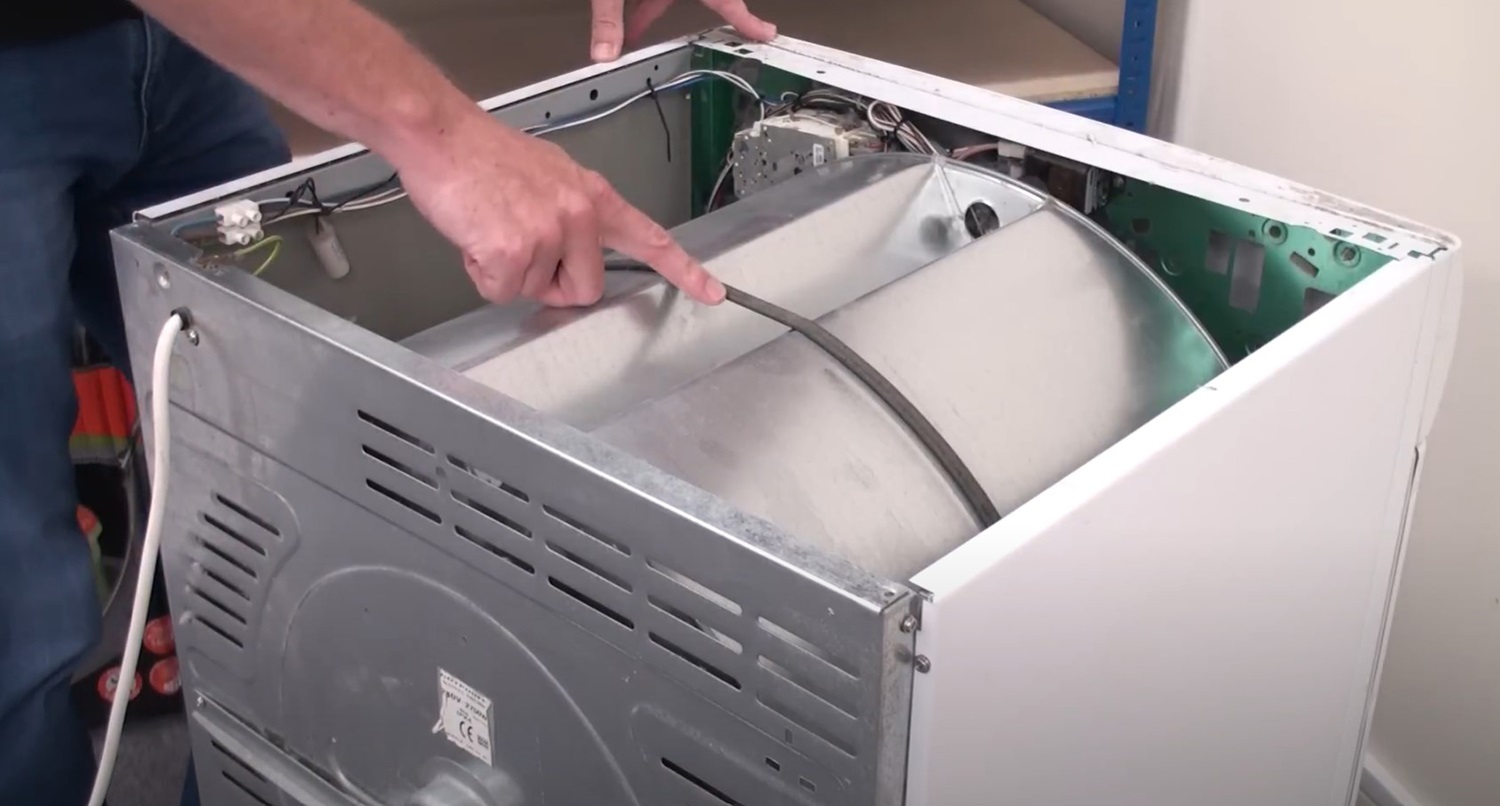
The drive belt is the single most common reason a dryer won’t spin. It wraps around the drum and connects to the motor pulley to keep everything turning.
Unplug the dryer first, then open the front or top panel depending on your model. Look for a visible thin belt wrapped around the drum.
| Belt Condition | What It Means |
|---|---|
| Snapped or missing | Belt has broken completely |
| Loose and stretched | Belt has worn out over time |
| Frayed edges | Belt is close to failing |
| Tight and intact | Belt is likely not the issue |
A clear sign of a broken belt is a motor that hums normally while the drum spins very easily by hand with almost no resistance at all.
Step 4: Inspect the Drum Rollers and Idler Pulley
If the belt looks fine, the next parts to check are the drum support rollers and idler pulley. These small wheels support the drum as it rotates.
Over years of use, rollers can develop flat spots or worn bearings, causing loud thumping, rumbling, or squealing sounds during operation.
A dryer with worn rollers often still tries to spin but strains heavily, sometimes stalling partway through a cycle before stopping altogether.
Replacing rollers is usually done as a set, since if one has worn down, the others are typically close behind in the same condition.
Step 5: Look for a Jammed Blower Wheel
The blower wheel pulls air through the dryer to remove moisture, and it sits close to the motor and drum drive system. A jam here can stop the drum from spinning.
Small items like socks, coins, or loose buttons can slip past the lint screen and get lodged in the blower wheel over time.
A jammed blower usually makes the drum very hard to turn by hand, unlike a broken belt, which makes the drum spin unusually easily.
If you notice a burning smell along with a stuck drum, this is a strong signal the blower wheel needs to be checked immediately.
Step 6: Test the Drive Motor
If the belt, rollers, and blower all check out fine, the motor itself may be the problem. This is a more advanced repair, but it’s worth understanding the symptoms.
A failing motor may hum without turning at all, overheat quickly, or simply stay silent even though the display panel lights up normally.
| Motor Symptom | Likely Meaning |
|---|---|
| Humming, no rotation | Motor is stalling under load |
| Complete silence, lights on | Motor may be dead |
| Runs then stops repeatedly | Overheating or protection tripping |
| Burning smell near motor | Motor windings may be damaged |
Motor replacement typically requires more disassembly and electrical familiarity, so this is often the point where calling a technician makes sense.
Step 7: Check the Thermal Fuse
The thermal fuse is a safety component that shuts the dryer down if it overheats. Once blown, it usually needs to be replaced before the dryer will run again.
A blown thermal fuse often prevents the dryer from starting at all, rather than allowing it to run without spinning, but it’s still worth checking.
This part is inexpensive and relatively easy to access on most models, making it a reasonable DIY fix for confident beginners.
If the thermal fuse keeps blowing repeatedly, check your dryer vent for lint blockages, since restricted airflow is the most common underlying cause.
Step 8: Rule Out an Overloaded Drum
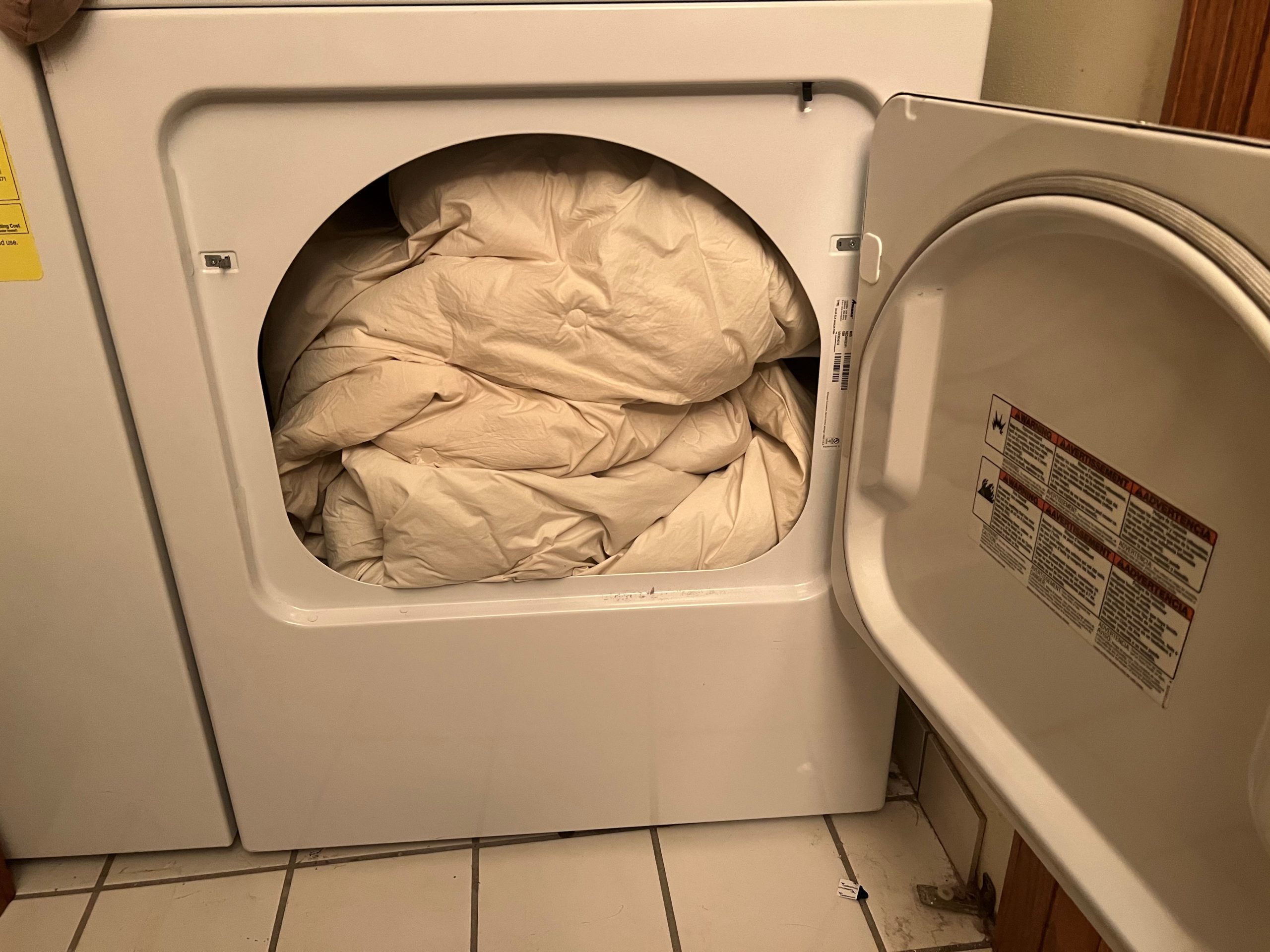
Sometimes the answer to why is my dryer not spinning isn’t a broken part at all — it’s simply too much weight inside the drum for the motor to move.
Overloading strains the motor and belt system, and in some cases can trip an internal safety mechanism designed specifically to protect the machine.
Try running a smaller load, or even an empty test cycle, to see if the drum spins normally without a full load inside it.
If the dryer spins fine when empty or lightly loaded, reducing load size going forward may prevent the issue from returning.
Safety Notes Before You Start
Always unplug the dryer completely before opening any panel or reaching inside the drum area. Never attempt repairs while the unit is connected to power.
Gas dryers add an extra layer of caution, since they involve a gas line in addition to electrical components. When in doubt, call a licensed technician.
If you smell gas at any point during troubleshooting, stop immediately, leave the area, and contact your gas provider or a licensed technician right away.
If you ever smell burning, notice scorch marks, or see visible smoke, stop using the dryer immediately and unplug it as a safety precaution.
DIY vs. Calling a Professional
Not every dryer repair is beginner-friendly. Here’s a simple breakdown to help decide whether to tackle the fix yourself or bring in a technician.
| Repair | Recommended For |
|---|---|
| Door switch replacement | DIY beginners |
| Thermal fuse replacement | DIY beginners |
| Drive belt replacement | Intermediate DIYers |
| Drum roller replacement | Intermediate DIYers |
| Blower wheel clearing | Intermediate DIYers |
| Motor or control board replacement | Professional recommended |
If your dryer is still under warranty, it’s usually smarter to schedule an authorized repair rather than attempting parts replacement yourself.
Preventing This Problem in the Future
A few simple habits go a long way toward preventing why is my dryer not spinning from becoming a recurring question in your household.
Clean the lint screen before every single load, since built-up lint restricts airflow and adds strain to the motor and belt system over time.
Avoid overloading the dryer with heavy items like comforters or bulky jackets that exceed the manufacturer’s recommended capacity for a single cycle.
Check pockets for coins, keys, and small objects before drying, since these are common culprits behind jammed blower wheels and damaged drums.
Schedule a professional inspection every year or two, especially for dryers over five years old, to catch worn rollers or belts before they fail completely.
Keeping the exhaust vent clean is just as important as the lint screen itself, since a blocked vent forces the motor and blower to work much harder than intended.
Common Symptoms and What They Usually Mean
To make diagnosis even easier, here’s a quick-reference table connecting specific symptoms to their most likely underlying cause.
| Symptom | Likely Cause |
|---|---|
| Drum spins very easily by hand | Broken or slipped drive belt |
| Drum is hard to turn by hand | Seized rollers or jammed blower |
| Motor hums but drum stays still | Belt failure or motor issue |
| Loud rumbling or squealing noise | Worn drum rollers |
| No sound at all, lights on | Door switch or thermal fuse issue |
| Burning smell near the unit | Blower jam or motor overheating |
Brand-Specific Notes Worth Knowing
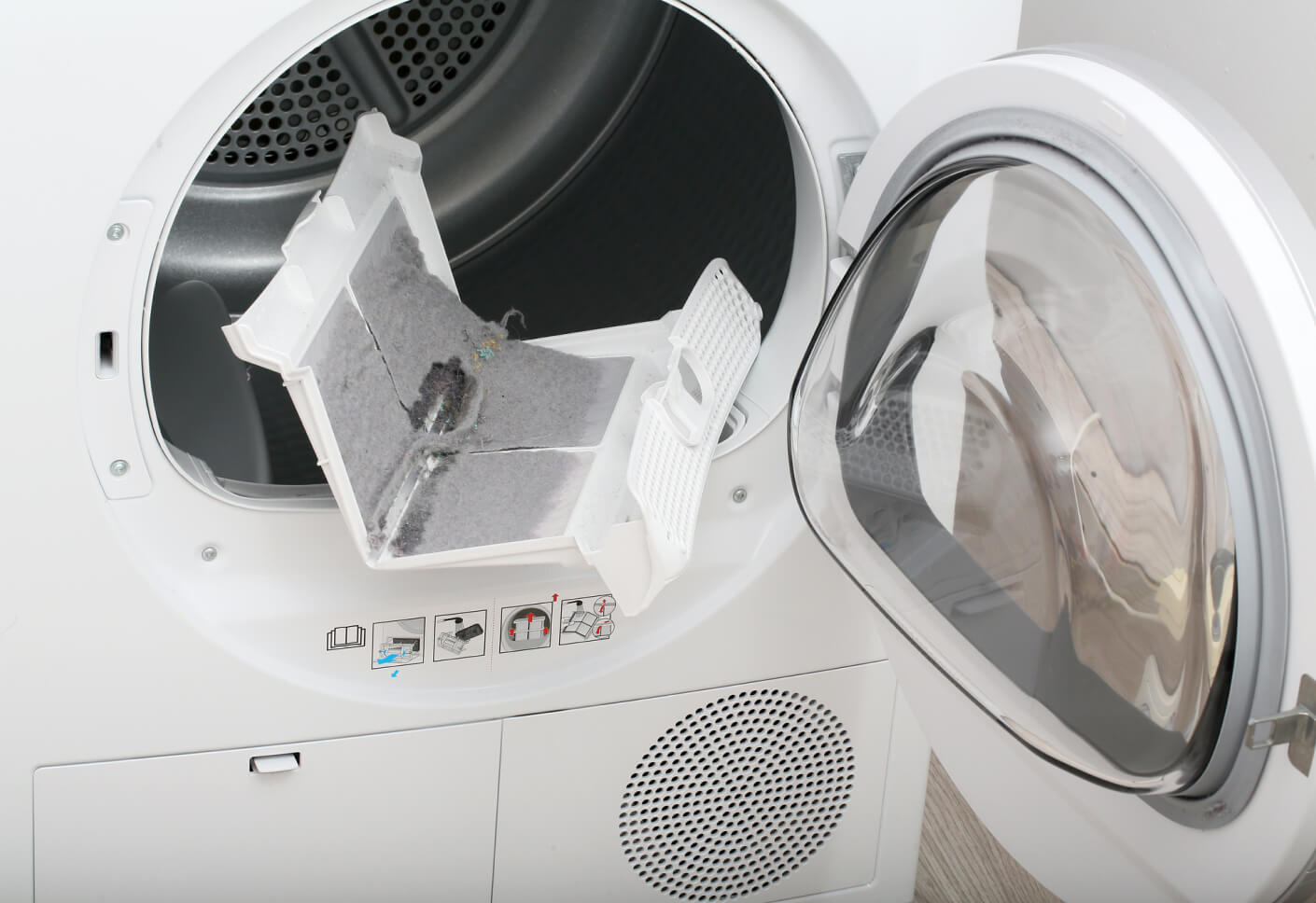
While the core causes are similar across brands, a few models have quirks worth knowing before you start troubleshooting. This can save time during diagnosis.
| Brand | Common Quirk |
|---|---|
| Whirlpool / Maytag | Belt switch may prevent startup entirely if belt is broken |
| GE | Motor failure often shows no hum and no drum movement at all |
| LG / Samsung | Error codes on the display can point directly to the failed part |
| Older analog models | Fewer safety interlocks; belt issues are more common overall |
If your dryer displays an error code, checking the manufacturer’s manual or website first can save a step in the diagnostic process outlined above.
Tools You’ll Likely Need
Most of the fixes covered here require only basic household tools, which makes this a reasonable weekend project for many homeowners.
- A Phillips or flathead screwdriver, depending on your dryer’s panel screws
- A flashlight or phone light for looking inside the drum area
- Work gloves to protect your hands around sharp edges
- A replacement part matched to your exact model number
Always look up your dryer’s model number before ordering a belt, roller, or switch, since these parts are rarely universal across brands or generations.
How Long Does This Kind of Repair Usually Take?
For simple fixes like a door switch or thermal fuse, most people finish in under 30 minutes once the dryer panel is open.
Belt and roller replacements take longer, often between 45 minutes and 90 minutes, depending on how easily the panels come apart on your specific model.
Motor or control board repairs can take several hours and often require ordering a specific part number, which adds waiting time before the repair can be completed.
Knowing this timeline in advance helps set realistic expectations before starting, especially if you’re squeezing the repair into a single afternoon.
Cost Comparison: DIY vs. Professional Repair
Budget is often a deciding factor when choosing between fixing the dryer yourself or calling in a technician. Here’s a general comparison to help with that decision.
| Repair Type | DIY Parts Cost | Professional Service Cost |
|---|---|---|
| Door switch | Low | Moderate (includes labor) |
| Thermal fuse | Low | Moderate (includes labor) |
| Drive belt | Low to moderate | Moderate to higher |
| Drum rollers (set) | Moderate | Higher (includes labor) |
| Motor replacement | Higher | Significantly higher |
Professional repair costs typically include a diagnostic fee plus labor, which is why simple part swaps often make the most sense to attempt yourself first.
Understanding the Belt Switch on Newer Models
Many newer dryers include a belt switch, a small safety feature that prevents the dryer from starting at all when the belt is broken or missing.
On these models, the answer to why is my dryer not spinning might actually be a dryer that won’t power on in the first place, rather than one that hums uselessly.
This is different from older models, which often kept running and humming even after the belt snapped, since they lacked this safety interlock feature.
If your dryer refuses to start entirely, and everything else electrical checks out fine, a broken belt paired with a belt switch is worth investigating early.
A Simple Diagnostic Checklist
Before opening any panels, it helps to walk through a short mental checklist. This keeps troubleshooting organized and avoids missing an easy fix.
- Confirm the outlet and breaker are supplying power correctly
- Press the door switch and listen for a clear click
- Try spinning the drum by hand while unplugged
- Note whether the drum feels loose or unusually stiff
- Listen for humming, silence, or unusual noises during a test cycle
- Check for burning smells or visible smoke around the unit
Working through this list in order usually points toward one or two likely causes before you even remove a single screw from the panel.
Why the Drum Test Matters So Much
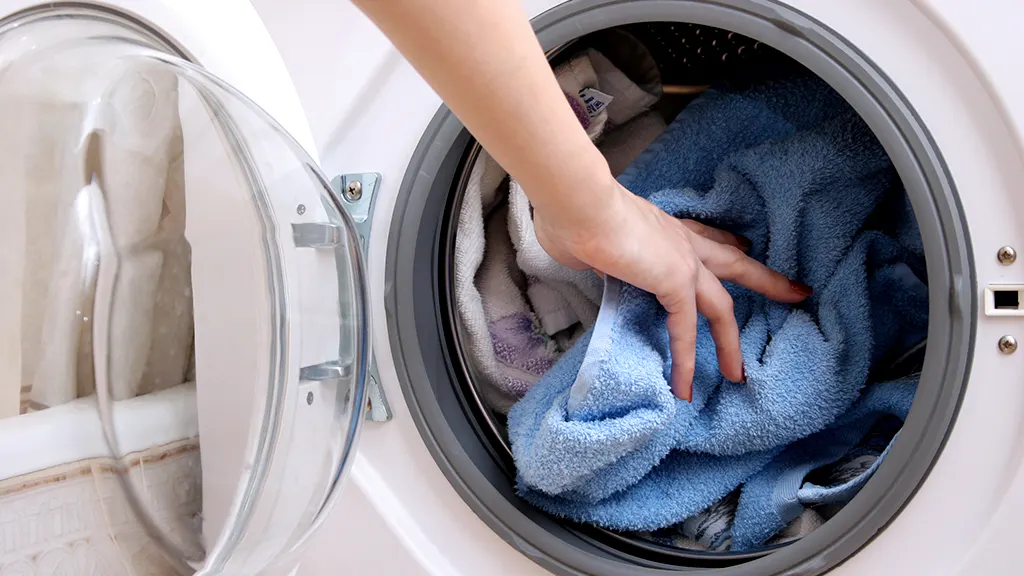
Spinning the drum by hand while the dryer is unplugged is genuinely one of the most useful diagnostic steps in this entire process.
It immediately separates two very different problem categories: things that make the drum too loose, and things that make the drum too stiff to turn.
A drum that spins with almost no resistance points toward the belt and pulley system, since nothing is left connecting the motor to the drum anymore.
A drum that resists turning points toward physical obstructions or worn bearings, which is a completely different repair path than a belt replacement.
Frequently Asked Questions (FAQs)
1. Why is my dryer not spinning but still running?
This usually means the motor is working but a broken belt has disconnected from the drum, letting the motor run without moving the drum.
2. Can a dryer run with a broken belt?
Yes, many dryers will still power on and hum with a broken belt, but the drum itself will remain completely still.
3. Why does my dryer drum feel hard to turn by hand?
A stiff drum usually points to worn rollers, a jammed blower wheel, or an object caught somewhere inside the drum path.
4. Is it safe to keep using a dryer that won’t spin?
No, continued use can overheat the motor, damage the belt system, and create a fire risk, especially with clothes left inside.
5. How much does it cost to fix a dryer that won’t spin?
Costs vary widely, but belt or switch replacements are usually inexpensive, while motor or control board repairs cost significantly more.
6. Can I replace a dryer belt myself?
Yes, many homeowners replace drive belts themselves with basic tools, though it does require removing panels and some care during reassembly.
7. Why does my dryer hum but not spin at all?
Humming without movement typically points to a broken belt, a seized motor, or serious drum drag from worn rollers.
8. How do I know if it’s the motor or the belt?
Try spinning the drum by hand while unplugged. Very easy movement suggests a belt issue; heavy resistance suggests motor or roller trouble.
9. Why is my dryer not spinning after just turning on?
This often points to a door switch that isn’t registering correctly, preventing the drive system from ever engaging in the first place.
10. When should I call a professional instead of DIY fixing it?
Call a professional for motor replacement, control board issues, or gas dryer repairs, since these involve higher risk and more complexity.
Conclusion
Why is my dryer not spinning almost always comes down to one of a handful of parts: the drive belt, drum rollers, idler pulley, blower wheel, motor, or a safety switch.
Working through these checks in order — starting with power and the door switch, then moving to the belt and rollers — helps you pinpoint the cause quickly and safely.
Many of these fixes, like replacing a belt or door switch, are well within reach for a confident DIYer with basic tools and a little patience.
Others, like motor or control board repairs, are better left to a licensed technician. Either way, don’t keep running a dryer with a drum that won’t turn, since it risks further damage and unnecessary safety hazards. With the right diagnosis, most dryers are back to tumbling normally within a single afternoon.
