

Why Is My Cat Losing Hair on Her Belly and Legs? Hair loss on a cat’s belly and legs is almost always caused by one of two things: the cat is licking the hair off herself (from allergies, stress, pain, or parasites), or the hair is falling out on its own (from an infection, hormonal imbalance, or rarely, an autoimmune condition).
The location — belly and legs — is a classic “self-groomable zone,” which is exactly why it’s the area most often affected.
Why Is My Cat Losing Hair on Her Belly and Legs? Is It Overgrooming or True Hair Loss?
Before diving into causes, do this simple test — it’s the single most useful clue for narrowing things down.
Gently part the fur at the edge of a bald patch and look closely, or try to pluck a few hairs.
| Sign | Likely Overgrooming (self-induced) | Likely True Alopecia (hair falling out on its own) |
|---|---|---|
| Hair texture at the edge | Short, stubbly, “peach fuzz” — feels like sandpaper | Hair pulls out easily and completely, or skin is fully smooth and bald |
| Skin underneath | Usually normal-looking, sometimes pink | May be normal, scaly, crusty, or have visible bumps/scabs |
| Pattern | Symmetrical, on both sides, in tongue-reachable spots | Can be symmetrical (hormonal) or patchy/irregular (fungal, mites) |
| You’ve seen the behavior | Yes, or a lot of hairballs/vomiting hair | Not necessarily |
This isn’t a substitute for a vet exam, but it’s exactly what a veterinarian checks first — under a microscope, it’s called a trichogram, and broken, blunt-tipped hair shafts confirm overgrooming, while smooth-tipped or absent hairs point toward a different cause.
The Most Common Causes of Belly and Leg Hair Loss in Cats
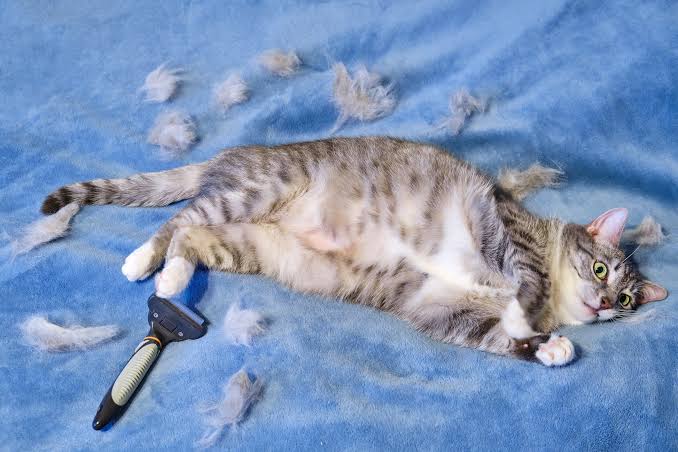
1. Fleas and Flea Allergy Dermatitis
This is the single most common cause of hair loss in cats, even in cats who never go outside — a flea can hitch a ride in on your shoes or another pet. Some cats are so sensitive to flea saliva that a single bite triggers intense itching for days, leading to frantic licking and chewing along the belly, inner thighs, and lower back.
What to look for: Small black specks (“flea dirt”) in the fur, especially near the tail base and belly; visible fleas; small scabby bumps (miliary dermatitis).
Why it hits the belly and legs: These are the easiest spots for a cat to reach and chew, so even a mild flea problem concentrates damage there.
2. Environmental or Food Allergies (Feline Atopic Skin Syndrome)
Cats can be allergic to pollen, dust mites, mold, certain proteins in food, or even cleaning products. The itch drives the same overgrooming pattern as flea allergy, often on the belly, inner legs, paws, and face.
What to look for: Seasonal flare-ups (environmental allergy) or year-round symptoms (food allergy), plus ear scratching, sneezing, or vomiting in some cases.
3. Psychogenic (Stress-Induced) Alopecia
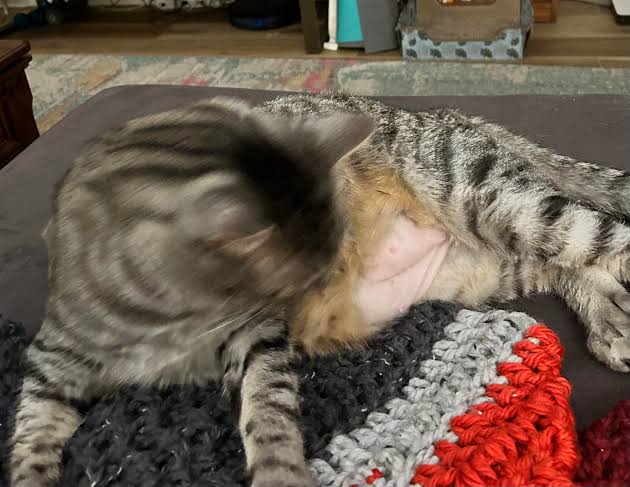
When a cat is anxious, bored, or coping with a change in routine, excessive grooming becomes a self-soothing behavior — similar to nail-biting in people. Veterinarians call this psychogenic alopecia, and it typically affects the belly, inner thighs, flanks, and sometimes the front legs — anywhere the tongue can reach comfortably.
Common triggers: Moving homes, a new pet or baby, boredom, changes in the litter box or feeding routine, or conflict with another cat in the household. It’s more frequently reported in high-strung breeds like Siamese and Abyssinian cats.
Important nuance: Vets increasingly treat this as a “diagnosis of exclusion” — meaning allergies, pain, and parasites should be ruled out first, since true stress-only overgrooming is less common than owners assume, and many “stress” cases turn out to be an unrecognized itch.
4. Pain-Referred Overgrooming
This is one of the most overlooked causes. Cats in pain will often lick the area that hurts — even if the pain source isn’t visible from the outside. A bald belly is a classic sign of bladder pain (cystitis) or abdominal discomfort, while overgrooming on one specific leg or paw can point to joint pain or arthritis.
Why owners miss this: The skin often looks completely normal, so it’s mistaken for stress. If your cat is also straining to urinate, drinking more, hiding, or limping, pain should be at the top of the list — not the bottom.
5. Mites
Certain mites, particularly Demodex gatoi, live in the surface layers of skin and cause intense itching concentrated on the belly. Ear mites can occasionally cause a similar pattern if the irritation spreads.
What to look for: Intense itching with only mild visible skin changes; often diagnosed via skin scraping or tape prep under a microscope, since these mites aren’t always visible to the naked eye.
6. Ringworm (Dermatophytosis)
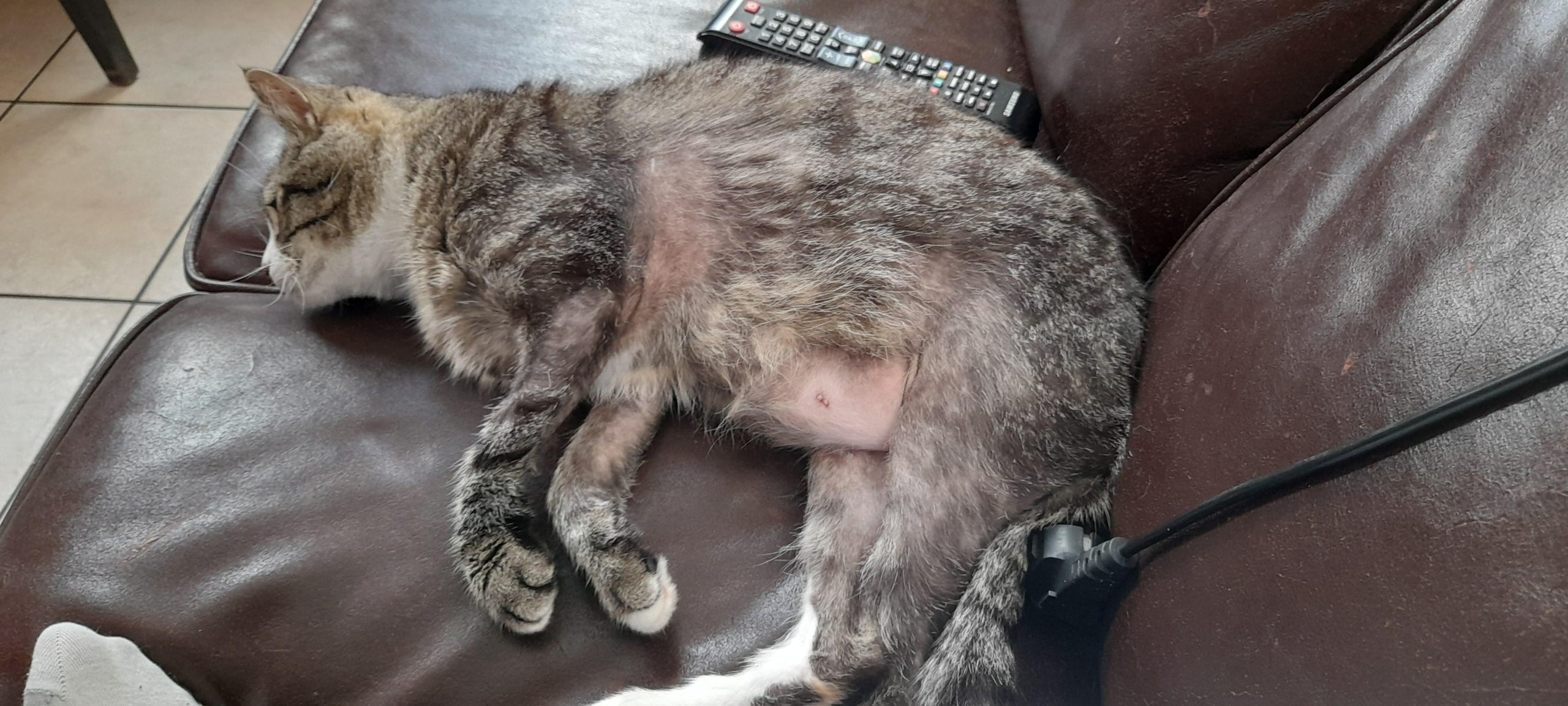
Despite the name, this is a fungal infection, not a worm. It classically causes circular, patchy areas of hair loss with scaling — and unlike overgrooming, it often occurs without itching.
What to look for: Roughly circular bald patches, scaly or crusty skin, and (importantly) similar lesions on other pets or people in the household, since ringworm is contagious.
7. Hormonal (Endocrine) Causes
Hormonal imbalances such as hyperthyroidism or, less commonly in cats, Cushing’s syndrome, can disrupt the hair growth cycle and cause thinning that is symmetrical on both sides of the body. This is now formally called feline acquired symmetric alopecia, and vets note the single most common underlying trigger, even in these cases, is still flea allergy — true hormonal alopecia in cats is rarer than in dogs.
What to look for: Hair loss paired with other signs like weight loss despite a good appetite, increased thirst/urination, or a change in energy level — these point toward bloodwork being the next step.
8. Pregnancy and Nursing
Some female cats temporarily lose belly fur during or after pregnancy, partly from hormonal shifts and partly from the physical wear of nursing kittens. This usually regrows on its own once hormones stabilize.
Comparing the Main Causes at a Glance
| Cause | Itchy? | Typical Pattern | Skin Appearance | Diagnosed By |
|---|---|---|---|---|
| Fleas / flea allergy | Very itchy | Belly, lower back, inner thighs | Small scabs, redness | Flea combing, visual exam |
| Environmental/food allergy | Itchy | Belly, legs, paws, face | Redness, sometimes ear inflammation | Elimination diet, allergy testing |
| Psychogenic alopecia | Variable | Belly, inner thighs, flanks | Usually normal | Trichogram + ruling out other causes |
| Pain-referred licking | Not itch-driven | Belly (bladder pain) or one leg (joint pain) | Normal | Physical exam, imaging, bloodwork |
| Mites (Demodex gatoi) | Very itchy | Belly-focused | Mild scale, redness | Skin scrape / tape prep |
| Ringworm | Usually not itchy | Patchy, circular | Scaly, crusty | Fungal culture, Wood’s lamp |
| Hormonal (endocrine) | Not itchy | Symmetrical, both sides | Normal, sometimes thin skin | Bloodwork (thyroid, cortisol) |
When to See a Vet Right Away
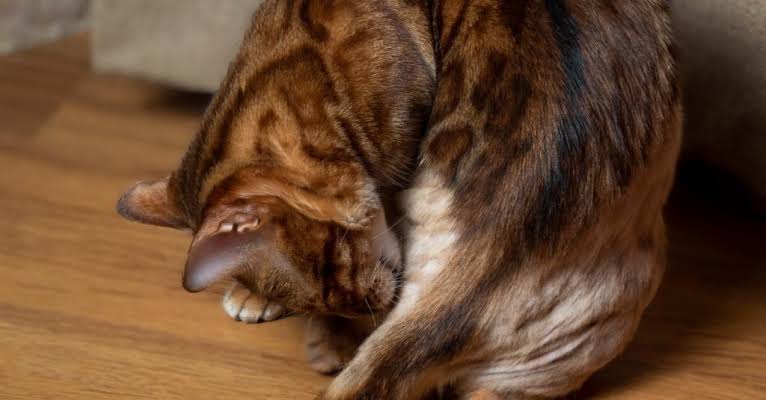
Most causes of belly and leg hair loss aren’t emergencies, but book a vet visit promptly if you notice:
- Open sores, scabs, or bleeding skin
- Hair loss that appeared suddenly or is spreading fast
- Signs of pain: straining to urinate, hiding, limping, aggression when touched
- Weight loss, increased thirst, or changes in appetite alongside the hair loss
- Other pets or people in the home developing similar bald, scaly patches (possible ringworm)
If none of these apply, it’s still worth scheduling a routine visit — waiting rarely helps and the underlying cause won’t resolve on its own in most cases.
What Happens at the Vet Visit
A veterinarian typically works through these steps to pinpoint the cause:
- History and physical exam — When did it start? Any recent changes at home? Full body check for fleas, lesions, or asymmetry.
- Flea combing — Checking for fleas or flea dirt even if you haven’t seen any.
- Trichogram — Plucking a few hairs to examine under a microscope; broken, blunt tips confirm overgrooming.
- Skin scraping and tape prep — Rules out mites like Demodex gatoi.
- Wood’s lamp and fungal culture — Screens for ringworm.
- Bloodwork — Checks thyroid levels and general organ function if an endocrine cause is suspected.
- Elimination diet trial — An 8+ week trial on a novel or hydrolyzed protein diet if food allergy is suspected; this must be strict, since even small treats can reset the trial.
- Imaging or urinalysis — If pain-related overgrooming (like bladder pain) is suspected.
Treatment Options by Cause
- Fleas: Year-round veterinary-recommended flea prevention for every pet in the household, plus treating the home environment.
- Allergies: Depending on the trigger — a prescription hypoallergenic diet, antihistamines, steroids, or newer anti-itch medications your vet may prescribe.
- Stress-related overgrooming: Environmental enrichment (climbing space, puzzle feeders, predictable routine), pheromone diffusers, and in persistent cases, vet-prescribed anti-anxiety medication.
- Pain-related licking: Treating the underlying pain source directly — this alone often resolves the licking.
- Mites and ringworm: Prescription anti-parasitic or antifungal treatment, often for several weeks, with follow-up rechecks.
- Hormonal causes: Medication to manage the specific endocrine condition once bloodwork confirms it.
Preventing Future Hair Loss
- Keep flea prevention consistent year-round, even for indoor-only cats.
- Provide environmental enrichment to reduce boredom and stress.
- Introduce new pets, people, or routine changes gradually.
- Schedule annual (or twice-yearly for senior cats) wellness exams to catch hormonal changes early.
- Avoid switching cat foods frequently, which can complicate diagnosing food allergies later.
Frequently Asked Questions (FAQs)
Is my cat losing hair on her belly normal shedding?
Normal shedding is even and doesn’t create bald patches. If you can see skin or the fur looks noticeably thinner in one area, it’s not typical seasonal shedding.
Will my cat’s fur grow back?
In most cases, yes — once the underlying cause is treated, hair typically regrows within a few weeks to a few months.
Can stress alone cause a cat to go bald?
Yes, but vets now treat this as a diagnosis of exclusion, since many “stress” cases turn out to involve an underlying itch or pain source that was missed.
Why does my indoor-only cat have fleas?
Fleas can be carried inside on clothing, shoes, or other pets, so indoor cats aren’t automatically protected.
Is hair loss on the belly a sign of a bladder problem?
It can be. Overgrooming the belly with no visible skin irritation is a recognized sign of bladder pain (cystitis) in cats.
How can I tell if it’s ringworm?
Ringworm typically causes roughly circular, scaly bald patches with little to no itching, and may also appear on other household pets or people.
Should I change my cat’s food if she’s losing hair?
Only under veterinary guidance, using a proper elimination diet trial — random food switching can make it harder to identify a true food allergy later.
Can hair loss be a sign of cancer?
It’s uncommon but possible in rare cases; this is one reason a proper veterinary diagnosis matters rather than guessing at home.
What does overgrooming actually look like versus true baldness?
Overgrooming leaves short, stubbly “peach fuzz” hair rather than fully bald, smooth skin — a vet can confirm this with a simple hair-pluck exam.
Is bald skin on a cat’s belly dangerous?
Not on its own, but it can lead to skin irritation or secondary infection if scratching continues, so it’s worth addressing rather than ignoring.
Can allergies come on suddenly in adult cats?
Yes, allergies can develop or worsen at any age, even in cats that never had symptoms before.
Do certain cat breeds lose belly hair more easily?
Breeds like Siamese and Abyssinian are more frequently reported with stress-related overgrooming, though any breed can be affected by the other causes.
What’s the difference between mange and ringworm in cats?
Mange is caused by mites and is usually very itchy; ringworm is a fungal infection and is often not itchy at all — a vet distinguishes them with skin tests.
Can a change in litter or detergent cause hair loss?
Yes, contact allergies from new litter, cleaning products, or fabric can trigger localized itching and overgrooming.
How long does an elimination diet trial take?
Typically at least 8 weeks on a strict novel-protein or hydrolyzed diet, with zero treats or table food outside the trial.
Why does my cat lose hair only on her back legs?
This pattern often points to overgrooming from lower-body pain (like joint pain) or an area the cat can most easily reach and fixate on.
Can pregnancy cause a cat to lose belly hair?
Yes, hormonal shifts and nursing wear can cause temporary belly hair thinning that usually resolves after weaning.
Is it okay to wait and see if the hair loss resolves on its own?
A short observation period is reasonable if your cat seems otherwise healthy, but persistent or worsening hair loss should be evaluated rather than left untreated.
What tests will my vet run first?
Most vets start with a flea check and trichogram, since fleas remain the most common trigger even when none are visible.
Can hyperthyroidism cause hair loss without other symptoms?
It’s uncommon for hair loss to be the only sign; hyperthyroidism usually comes with weight loss, increased appetite, or increased thirst as well.
