

Why Did Cain Kill Abel in the Bible? The Bible’s first murder happens just four chapters after creation itself, between two brothers, over an offering. It’s a short story — barely sixteen verses — but it’s asked more questions than almost any other passage in Genesis.
According to Genesis 4, Cain killed his brother Abel out of jealousy and anger after God accepted Abel’s offering but rejected Cain’s.
Genesis doesn’t spell out exactly why God preferred Abel’s sacrifice, but it does show Cain’s response clearly: he grew furious, ignored God’s warning that “sin is crouching at your door,” and killed Abel in a field.
Key Takeaways
- Cain and Abel were the first two sons of Adam and Eve, described in Genesis 4:1–16.
- Cain was a farmer, offering crops; Abel was a shepherd, offering the firstborn of his flock.
- God accepted Abel’s offering but not Cain’s — Genesis never explains the exact criteria.
- Cain’s anger, not the rejection itself, is what the text blames for the murder; God warns him directly beforehand.
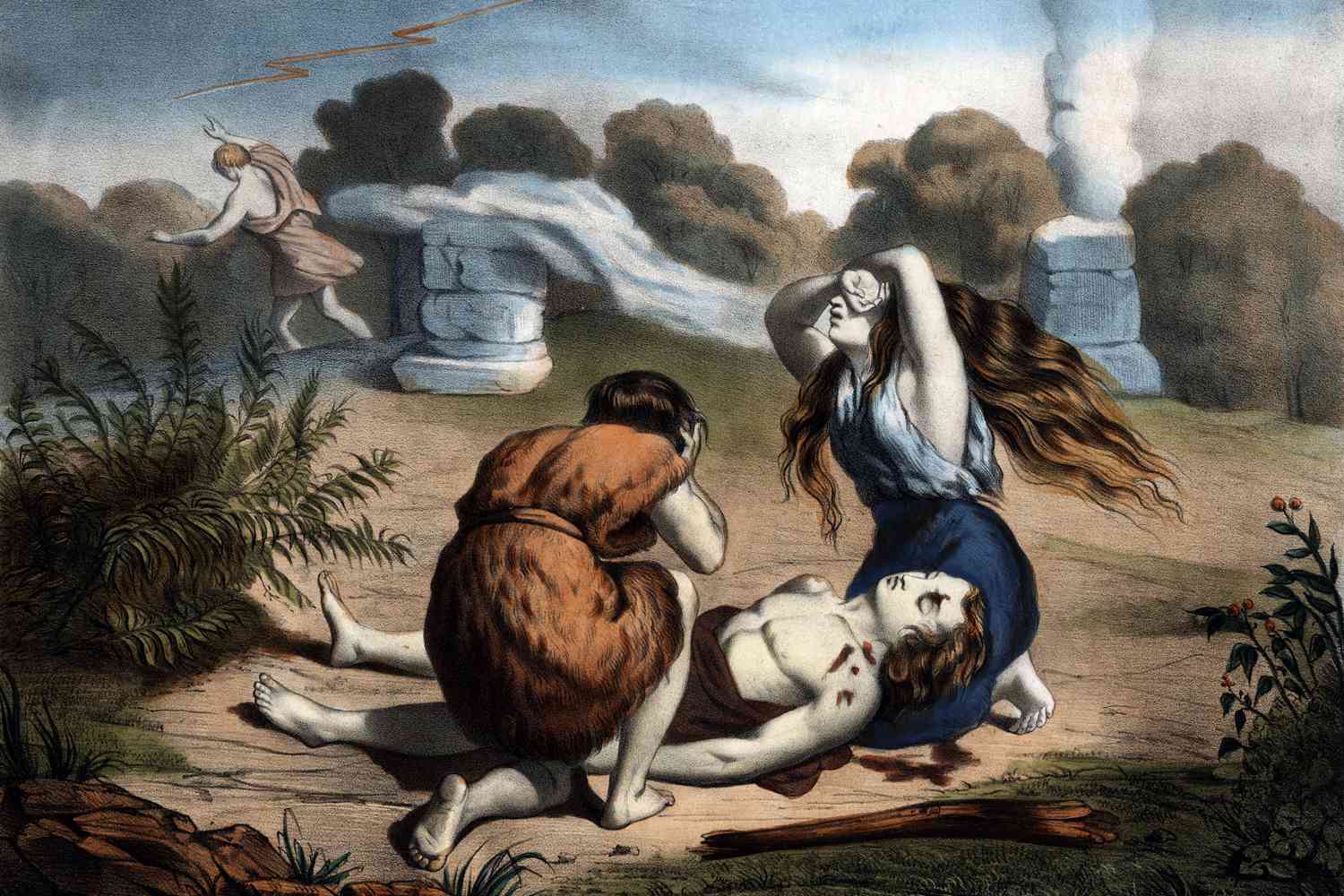
- After the murder, God curses Cain, exiles him, but also protects him with a mark so no one kills him in revenge.
- The New Testament later says Abel offered his sacrifice “by faith” (Hebrews 11:4) and that Cain acted out of evil, not mere jealousy (1 John 3:12).
The Genesis 4 Account, Step by Step
Two Brothers, Two Offerings
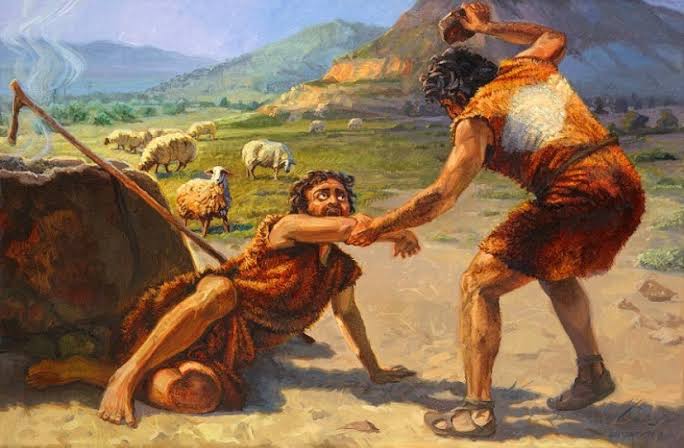
Genesis 4:2 introduces the two brothers by their work: Abel became “a keeper of sheep,” while Cain “was a tiller of the ground.” Their occupations aren’t incidental — they directly shape what each brother brings to God.
In time, both brothers bring an offering to the Lord. Cain brings “of the fruit of the ground,” while Abel brings “of the firstlings of his flock and of their fat portions” (Genesis 4:3–4). This detail matters: Abel gives the best part of his flock — the firstborn animals and the choicest fat — while the text simply says Cain brought “of the fruit of the ground,” without the same emphasis on quality.
God’s Response to the Two Sacrifices
Genesis 4:4–5 states plainly: “And the LORD had regard for Abel and his offering, but for Cain and his offering he had no regard.” The text doesn’t explain the theological mechanics behind that judgment — it simply reports the outcome and Cain’s reaction.
Why was Abel’s offering accepted and Cain’s rejected? Scholars and theologians differ on the exact reason, but the leading explanations fall into three groups:
| Explanation | Core Idea | Where It Comes From |
|---|---|---|
| Quality of the offering | Abel gave his best (firstborn, fat portions); Cain’s offering isn’t described as first or best | Close reading of Genesis 4:3–4 |
| Heart and faith | Abel offered in genuine faith and devotion; Cain’s heart wasn’t right, regardless of the gift | Hebrews 11:4, later Christian theology |
| Type of offering | Some ancient interpreters (like Josephus) argued animal sacrifice was inherently preferred over produce | Jewish historical tradition, not stated in Genesis itself |
Genesis itself never states which of these is correct — a point most modern commentators openly acknowledge rather than resolve.
Cain’s Anger and God’s Warning
Cain’s reaction is immediate: “So Cain was very angry, and his face fell” (Genesis 4:5). God then speaks directly to Cain, asking why he’s angry and offering him a way back: “If you do well, will you not be accepted? And if you do not do well, sin is crouching at the door. Its desire is contrary to you, but you must rule over it” (Genesis 4:6–7).
This verse is one of the most debated in Genesis. It personifies sin as something waiting to overtake Cain, while also making clear that Cain still has a choice — he is not destined to kill his brother. The murder that follows is presented as Cain’s decision, not an inevitability.
The Murder in the Field
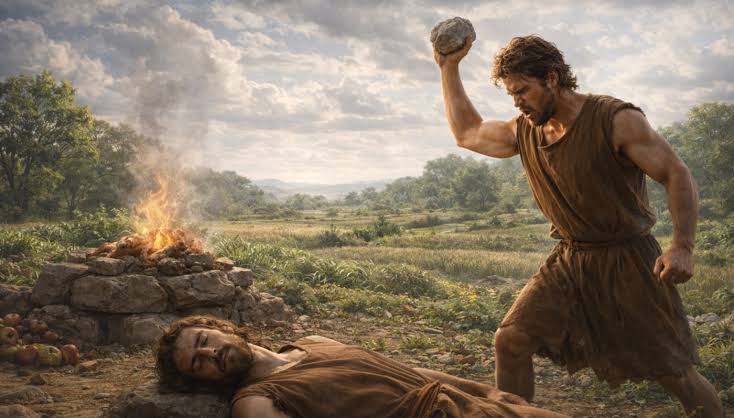
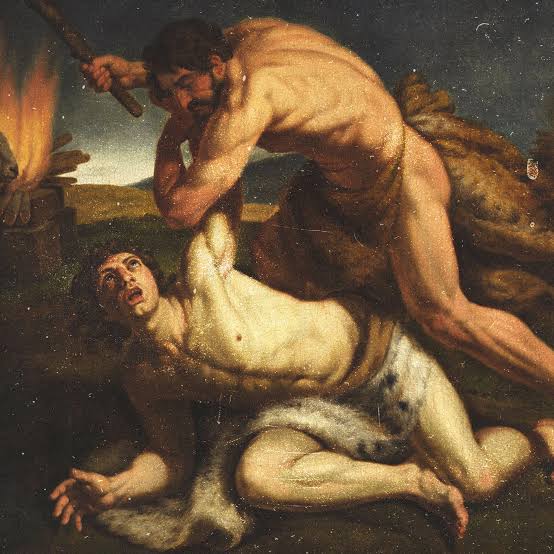
Genesis 4:8 is stark: “Cain spoke to Abel his brother. And when they were in the field, Cain rose up against his brother Abel and killed him.” Some translations note that the Hebrew text is unusually terse here — it’s unclear exactly what Cain “said” to Abel before the attack, which is why some versions add “Let us go out to the field” to smooth the transition.
This is presented in the Bible as the first act of murder in human history, and the first time one human being deliberately takes another’s life.
God’s Confrontation and Cain’s Curse
God asks Cain, “Where is Abel your brother?” and Cain answers with the now-famous line: “I do not know; am I my brother’s keeper?” (Genesis 4:9). God responds that Abel’s blood “is crying to me from the ground,” and pronounces judgment: Cain is cursed from the ground he worked, the soil will no longer yield its strength to him, and he will become “a fugitive and a wanderer on the earth” (Genesis 4:10–12).
Cain protests that his punishment is “greater than I can bear,” fearing that anyone who finds him will kill him in return (Genesis 4:13–14). God’s response is a striking mix of justice and mercy: He declares that anyone who kills Cain will suffer sevenfold vengeance, and places a protective mark on Cain so no one will kill him on sight (Genesis 4:15). Cain then settles in the land of Nod, “east of Eden” (Genesis 4:16).
Why Was Cain’s Sacrifice Rejected? Three Views Compared
| View | Summary | Supporting Reference |
|---|---|---|
| Effort/quality view | Cain’s offering lacked the care and “firstfruits” standard Abel’s had | Genesis 4:3–4 (Abel gives “firstlings” and “fat portions”; Cain gives unspecified produce) |
| Faith/heart view | The offering’s outward form mattered less than the giver’s inward faith and devotion | Hebrews 11:4 — “By faith Abel offered God a more acceptable sacrifice than Cain” |
| Moral character view | Cain was already inclined toward wrongdoing, which is why his worship — and later his actions — went wrong | 1 John 3:12 — Cain “was of the evil one” |
Most contemporary Bible teachers lean toward a combination of the first two: Abel gave generously and in faith, while Cain’s offering and heart both fell short.
What the Rest of the Bible Says About Cain
The Cain and Abel story doesn’t stay contained to Genesis — later biblical writers return to it as a moral example.
- Hebrews 11:4 holds Abel up as a model of faith, saying his sacrifice was “more acceptable” and that “through his faith, though he died, he still speaks.”
- 1 John 3:11–12 uses Cain as a warning against hatred, stating that Cain “was of the evil one and murdered his brother,” explaining that “his own deeds were evil and his brother’s righteous.”
- Jude 1:11 condemns false teachers by comparing them to those who have “walked in the way of Cain,” associating Cain with self-interest and corrupted worship.
These references shift the emphasis from a single bad moment to a pattern: Scripture treats Cain’s murder as the fruit of an already-compromised character, not a one-time lapse.
Jewish and Historical Interpretations
Ancient Jewish interpreters filled in gaps the biblical text leaves open.
The first-century historian Josephus described Cain as calculating and self-interested, framing his choice of farming — and by extension his offering — as motivated by personal gain rather than devotion, which he argued explains why God found Cain’s sacrifice unacceptable.
Rabbinic and other ancient commentators offered a range of additional theories, including a dispute between the brothers over land, over Abel’s future wife, or simply escalating resentment following the rejected offering — Genesis itself doesn’t specify a triggering argument, so ancient readers proposed several possibilities.
Cain and Abel in the Quran
The story also appears in Islamic tradition, where the brothers are known as Qabil (Cain) and Habil (Abel).
The Quran’s account closely parallels Genesis: both brothers offer a sacrifice, God accepts one and not the other, and the rejected brother kills the accepted one out of jealousy — an event the Quran describes as the first murder committed on Earth.
The core moral lesson — that unchecked jealousy over divine favor leads to violence — is shared across both traditions, even though the surrounding details differ.
The Meaning of the “Mark of Cain”
One of the most misunderstood details in this story is the mark God places on Cain. Genesis 4:15 describes it as a protective sign, not a punishment layered on top of the curse — its stated purpose is to prevent others from killing Cain in retaliation.
The Hebrew word used, ‘oth, is the same word used elsewhere in Genesis for signs like the stars (Genesis 1:14) and the rainbow (Genesis 9:12), meaning it functioned as a marker or sign rather than a specific physical description; the Bible never says what the mark actually looked like.
Common Misconceptions About the Story
- “The mark of Cain was a skin color or racial marking.” Genesis never describes the mark’s appearance — this interpretation isn’t supported by the text and has been widely rejected by biblical scholars.
- “God arbitrarily preferred Abel for no reason.” The text emphasizes that Abel gave his best offering; God’s later words to Cain (“if you do well, will you not be accepted”) suggest the outcome was tied to Cain’s actions, not random favoritism.
- “Cain killed Abel purely out of jealousy over the sacrifice.” Genesis frames it as anger following the rejection, but 1 John 3:12 suggests a deeper moral pattern was already present in Cain before that moment.
- “Cain was cursed to wander forever with no protection.” God explicitly protects Cain from being killed, even while exiling him — a detail people often miss.
What This Story Teaches, According to Faith Traditions
Across Jewish, Christian, and Islamic teaching, the Cain and Abel narrative is consistently read as a moral lesson about the danger of unmanaged anger and envy.
Genesis 4:7’s image of sin “crouching at the door” is frequently cited as one of the Bible’s clearest statements that temptation can be resisted — Cain is warned and given a real choice before he acts.
Later New Testament teaching, including Jesus’s statement in Matthew 5:21–22 linking anger toward others to the seriousness of murder, is often connected back to this story as its earliest scriptural example.
Frequently Asked Questions (FAQs)
Why did Cain kill Abel in the Bible?
Genesis 4 shows Cain killing Abel out of anger and jealousy after God accepted Abel’s offering but rejected Cain’s, despite God’s direct warning to Cain beforehand.
Why did God reject Cain’s offering?
Genesis doesn’t state an explicit reason. The text notes Abel gave the firstborn and fat portions of his flock, while Cain’s offering isn’t described the same way, which many read as a difference in quality or devotion.
What does “sin is crouching at the door” mean?
It’s God’s warning to Cain in Genesis 4:7 that sin is like a waiting threat he can still choose to resist or master, rather than an inevitable outcome.
Were Cain and Abel the first humans born?
No. They were the first children of Adam and Eve, described as the first generation born rather than created directly by God.
What was Cain’s profession, and what was Abel’s?
Cain was a farmer who worked the ground; Abel was a shepherd who kept flocks (Genesis 4:2).
Did Cain plan the murder or act in a sudden rage?
The Hebrew text is brief and doesn’t fully specify, but Cain’s act follows God’s direct warning, which most interpreters read as showing deliberate choice rather than a purely uncontrollable impulse.
What did God say to Cain after the murder?
God asked Cain where Abel was, then pronounced a curse: Cain would no longer be able to farm the land successfully and would become a wanderer (Genesis 4:9–12).
What is the “mark of Cain”?
A protective sign God placed on Cain so that others wouldn’t kill him during his exile — Genesis never describes its physical appearance.
Did God punish Cain with death?
No. God cursed and exiled Cain but explicitly protected his life, promising sevenfold vengeance on anyone who killed him.
What does the New Testament say about Cain?
Hebrews 11:4 praises Abel’s faith; 1 John 3:12 says Cain “was of the evil one”; Jude 1:11 uses “the way of Cain” as a warning against corrupted, self-interested behavior.
Is the Cain and Abel story in the Quran?
Yes. It appears with the brothers named Qabil and Habil, following a very similar structure: a rejected sacrifice, jealousy, and murder, described as the first killing on Earth.
Where is the “land of Nod”?
Genesis 4:16 places it “east of Eden.” Its exact geographic location isn’t identified; the Hebrew word “Nod” is related to wandering, fitting Cain’s punishment.
Did Cain and Abel have other siblings?
Genesis 4:25 mentions a third son, Seth, born after Abel’s death, and later chapters reference additional unnamed sons and daughters of Adam and Eve.
What lesson does the Cain and Abel story teach?
It’s widely read as a warning about how unmanaged jealousy and anger can escalate into violence, and about the moral responsibility to resist that impulse.
Why is Abel called righteous in the Bible?
Hebrews 11:4 credits Abel’s righteousness to his faith in offering his sacrifice, and Jesus refers to “righteous Abel” in Matthew 23:35 as an example of innocent bloodshed.
How old were Cain and Abel when the murder happened?
Genesis doesn’t state their ages at the time of the murder.
Is this considered the first murder in the Bible?
Yes, it’s widely regarded as the first act of murder recorded in the biblical narrative.
What happened to Cain after he was exiled?
Genesis 4:17 says Cain settled in the land of Nod, had a wife and a son named Enoch, and built a city, which he named after his son.
Conclusion
Genesis 4 tells a short but layered story: two brothers, two offerings, one accepted and one rejected, and a warning about sin that goes unheeded.
The Bible is candid about what happened and why Cain acted — anger and jealousy — while leaving the deeper question of why God favored Abel’s offering open to reflection.
That ambiguity is part of why the story has been studied, retold, and debated by Jewish, Christian, and Islamic tradition for thousands of years.
