

Why does my tooth hurt at night more than during the day? This is one of the most common questions dentists hear from patients who feel fine at work but wake up with throbbing pain the moment they lie down.
The truth is, your tooth isn’t getting worse just because it’s dark outside. Changes in blood flow, fewer distractions, and habits like teeth grinding all combine to make nighttime tooth pain feel far more intense.
Why Does My Tooth Hurt at Night? What Happens to Your Body When You Lie Down
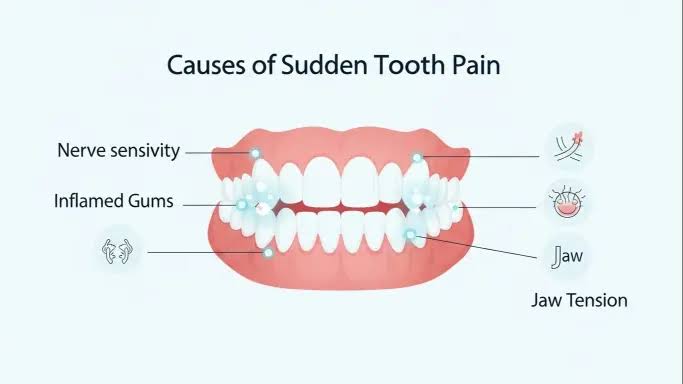
When you go from sitting or standing to lying flat, blood flow to your head increases almost immediately. This extra circulation raises pressure inside an already inflamed or infected tooth.
Because the nerve inside a tooth sits in a rigid, enclosed space, even a small increase in pressure has nowhere to escape. That trapped pressure is what causes the sharp, throbbing sensation many people feel only at bedtime.
Fewer Distractions Make Pain Feel Stronger
During the day, work, conversations, and daily tasks keep your brain busy. Your mind simply has less bandwidth to focus on a dull ache in your tooth.
At night, when the house goes quiet and there’s nothing left to distract you, your brain devotes more attention to every signal it receives, including tooth pain. This is a real, well-documented phenomenon known as pain perception amplification.
Common Causes of Tooth Pain at Night
Nighttime tooth pain almost always has an underlying dental cause. Below are the most frequent reasons dentists see in patients complaining of pain that flares up after dark.
1. Tooth Decay and Cavities
Cavities expose the sensitive inner layers of a tooth, allowing temperature changes and pressure to trigger sharp pain. Saliva flow drops while you sleep, which lets bacteria multiply faster and worsen the discomfort overnight.
2. Gum Disease
Gingivitis and periodontal disease cause inflamed, swollen gum tissue. Lying down increases blood flow to this tissue, making the throbbing and sensitivity noticeably worse at night.
3. Bruxism (Teeth Grinding or Clenching)
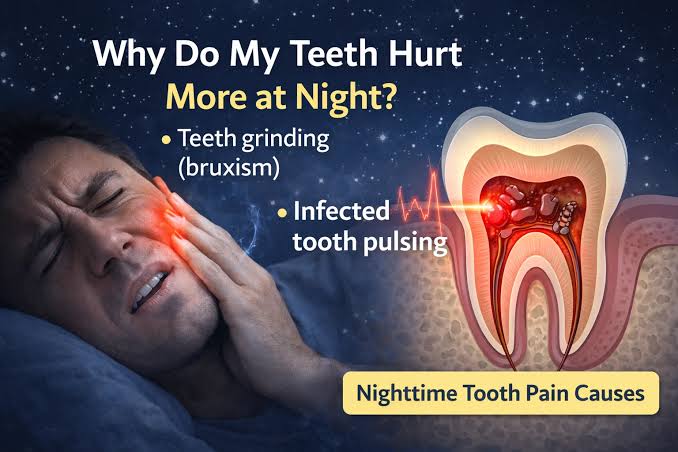
Many people grind or clench their teeth in their sleep without realizing it. This puts intense pressure on the teeth and jaw joints, often leading to morning soreness, headaches, and worsening pain in an already weak tooth.
4. Dental Abscess or Infection
An abscess is a pocket of pus caused by a bacterial infection at the tooth’s root. It places direct pressure on nerves, and that pressure intensifies significantly once you lie flat.
5. Pulpitis (Inflamed Nerve Tissue)
Pulpitis refers to inflammation of the pulp, the nerve-rich core of the tooth. According to dental research, lying down raises blood pressure to the head, which increases pressure inside the pulp chamber and heightens nerve sensitivity.
6. Sinus Infection or Congestion
Sometimes tooth pain has nothing to do with your teeth at all. Sinus pressure from a cold or infection can radiate into the upper back teeth, and this pressure often builds further when you’re lying down.
7. Cracked or Fractured Tooth
A hairline crack may not bother you much while chewing during the day. But at night, pressure changes and jaw clenching can aggravate the crack, sending sharp pain through the nerve.
8. Exposed Tooth Root
Receding gums can expose the sensitive root surface of a tooth. This area reacts strongly to temperature and pressure, and nighttime blood flow changes make that sensitivity harder to ignore.
9. Trapped Food Particles
Small food particles wedged between teeth can irritate the gums and nerve endings. Because people rarely floss again right before bed, this trapped debris keeps working against the tooth all night.
10. Recently Lost Filling or Crown
If a filling or crown has come loose, the underlying nerve becomes exposed to air, temperature, and pressure. This exposure often causes pain that intensifies once you lie down to sleep.
Table: Common Causes and What They Usually Mean
| Cause | Typical Feeling | Usually Needs |
|---|---|---|
| Tooth decay | Sharp pain with hot or cold foods | Filling or restorative treatment |
| Gum disease | Dull ache, swollen or bleeding gums | Deep cleaning, improved hygiene |
| Bruxism | Soreness, jaw ache in the morning | Night guard, stress management |
| Abscess | Throbbing pain, possible swelling or fever | Urgent dental or emergency care |
| Pulpitis | Deep, throbbing pain that worsens lying down | Root canal treatment |
| Sinus issues | Pressure across upper teeth, worse when congested | Sinus treatment, decongestants |
| Cracked tooth | Sudden sharp pain when biting or clenching | Bonding, crown, or extraction |
| Exposed root | Sensitivity to cold air and touch | Desensitizing treatment, gum graft |
Why Nighttime Tooth Pain Feels So Different
It isn’t your imagination. Several physical changes happen in your body specifically at night that make existing dental problems feel far more severe.
Increased Blood Flow While Lying Flat
Gravity no longer helps drain blood away from your head once you’re horizontal. Blood pools more easily around an inflamed tooth, amplifying pressure and throbbing sensations.
Lower Cortisol Levels
Cortisol is a natural anti-inflammatory hormone that your body produces less of at night. With lower cortisol circulating, your body has less natural pain control while you’re trying to fall asleep.
Reduced Saliva Production
Saliva helps wash away bacteria and neutralize acids throughout the day. Production drops significantly during sleep, giving bacteria more opportunity to irritate a vulnerable tooth.
Unconscious Jaw Clenching
Even people who don’t normally grind their teeth may clench slightly during deep sleep stages. This added pressure can turn a mild ache into a sharp, noticeable pain by morning.
How to Stop Tooth Pain Fast at Night
While these remedies won’t fix the underlying problem, they can help you get through the night more comfortably until you can see a dentist.
Take an Over-the-Counter Pain Reliever
Ibuprofen and acetaminophen are commonly recommended because they also reduce inflammation. Always follow the dosage instructions on the label and avoid exceeding the recommended amount.
Apply a Cold Compress
Wrap ice or a cold pack in a thin towel and hold it against your cheek for 15 to 20 minutes. This constricts blood vessels near the painful area and numbs the sensation temporarily.
Rinse With Warm Salt Water
Dissolve half a teaspoon of salt in a cup of warm water and swish it around your mouth for 30 seconds. This natural disinfectant reduces inflammation and helps clear bacteria near the sore tooth.
Try Clove Oil
Clove oil contains eugenol, a natural numbing compound used for centuries to ease toothaches. Dab a small amount onto a cotton ball and apply it directly to the sore tooth and surrounding gum.
Use an Oral Numbing Gel
Over-the-counter gels containing benzocaine can dull pain long enough to fall asleep. These should not be used on infants or children under two years old.
Elevate Your Head
Prop your head up with two or three pillows before bed. This keeps blood from pooling around the painful tooth and can meaningfully reduce throbbing.
Avoid Trigger Foods Before Bed
Skip anything hot, cold, sugary, or acidic for at least an hour before sleeping. These foods irritate an already sensitive nerve and can intensify pain once you lie down.
Try a Peppermint Tea Bag
Steep a tea bag in hot water, let it cool slightly, then place it against the painful tooth. Peppermint has mild numbing properties that can offer short-term comfort.
Table: Home Remedies and How Long Relief Typically Lasts
| Remedy | How It Works | Approximate Relief Time |
|---|---|---|
| Ibuprofen or acetaminophen | Reduces inflammation and blocks pain signals | 4 to 6 hours |
| Cold compress | Numbs area and constricts blood vessels | 15 to 20 minutes per application |
| Salt water rinse | Disinfects and reduces swelling | 1 to 2 hours |
| Clove oil | Natural anesthetic (eugenol) numbs nerve endings | 1 to 3 hours |
| Head elevation | Reduces blood pooling around the tooth | Ongoing while maintained |
| Numbing gel | Blocks surface nerve signals | 1 to 2 hours |
Foods and Drinks to Avoid Before Bed
What you eat in the evening can directly affect how much your tooth hurts once you lie down. Certain foods irritate exposed nerves and trigger sharper pain right when you’re trying to fall asleep.
Table: Foods That Can Worsen Nighttime Tooth Pain
| Food or Drink Type | Why It Hurts | Better Alternative |
|---|---|---|
| Ice cream or cold drinks | Cold triggers sharp nerve sensitivity | Room-temperature water |
| Hot tea or soup | Heat can aggravate an inflamed nerve | Lukewarm broth |
| Candy or sugary snacks | Sugar feeds bacteria near decayed areas | Plain yogurt or cheese |
| Citrus fruits or juice | Acidity irritates exposed dentin | Bananas or soft cooked vegetables |
| Hard or crunchy snacks | Chewing pressure aggravates cracks or cavities | Mashed or soft foods |
Sticking to bland, room-temperature foods in the hours before bed can meaningfully reduce how much a sensitive tooth flares up overnight.
Best Sleeping Position for Tooth Pain
Your sleeping posture can make a real difference in how much pain you feel overnight. Small adjustments often provide noticeable relief without any medication at all.
Sleep on the Opposite Side
If one specific tooth hurts, avoid lying on that side of your face. Sleeping on the opposite side prevents direct pressure from building on the sore area.
Keep Your Head Elevated
Use two or more pillows so your head stays higher than the rest of your body. This reduces the amount of blood that pools around the painful tooth while you rest.
Avoid Sleeping Flat on Your Back
Lying completely flat allows fluid to build up evenly around the jaw and face. A slightly reclined position, rather than fully flat, tends to feel more comfortable for most people.
Ice or Heat: Which Works Better for Nighttime Tooth Pain
People often wonder whether cold or warmth brings faster relief for a throbbing tooth. The answer depends on whether swelling or muscle tension is the main issue.
Table: Ice vs Heat for Tooth Pain
| Method | Best For | Avoid If |
|---|---|---|
| Cold compress | Swelling, inflammation, active throbbing | No swelling, mainly jaw muscle tightness |
| Warm compress | Jaw muscle tension, tightness from clenching | Visible swelling or suspected abscess |
In general, cold works better for inflammation and infection-related pain, while gentle warmth helps more with muscle soreness from clenching or grinding.
Acupressure and Relaxation Techniques
Some patients find that calming the body helps reduce how intensely tooth pain is perceived, especially late at night. These techniques won’t cure a dental problem, but they can make waiting for treatment more bearable.
The Hegu Pressure Point
The Hegu point sits in the webbing between your thumb and index finger. Applying firm pressure to this spot for a minute or two is a traditional method some people use to ease facial pain.
Deep Breathing Exercises
Slow, controlled breathing can lower stress and reduce how sharply you notice pain signals. Try inhaling for four counts, holding for two, then exhaling gently for six counts, repeating several times.
Progressive Muscle Relaxation
This technique involves gently tensing and releasing each muscle group, starting from your toes and working up to your jaw. Releasing built-up tension in the face and jaw can ease some of the pressure contributing to your toothache.
Difference Between Tooth Pain and Jaw Pain at Night
It’s easy to confuse a toothache with jaw joint pain since both can flare up once you lie down. Knowing the difference helps you describe your symptoms accurately to a dentist.
Tooth pain is usually localized to one specific tooth and often reacts strongly to hot, cold, or sweet triggers. Jaw pain, on the other hand, tends to feel like a dull ache across the whole jaw joint, especially near the ear, and is more closely linked to clenching or TMJ disorders.
Nighttime Tooth Pain in Children
Children can experience nighttime toothaches just as adults do, and the causes are often slightly different. Teething, early cavities, and trapped food are the most common culprits in younger patients.
Parents should watch for signs like a child rubbing their cheek, refusing food, or crying more than usual at bedtime. A pediatric dentist can identify whether the pain stems from teething, decay, or another cause, and recommend safe, age-appropriate relief options.
Tooth Pain at Night During Pregnancy
Pregnancy hormones can increase gum sensitivity, making nighttime tooth and gum pain more common during this time. Treatment options need extra care to keep both mother and baby safe.
Acetaminophen is generally considered safer than ibuprofen during pregnancy, especially in the second and third trimesters. Always confirm any medication or remedy with your doctor or dentist before using it while pregnant.
When Nighttime Tooth Pain Is a Dental Emergency
Not all tooth pain can wait until your next scheduled appointment. Some symptoms indicate a more serious infection or damage that needs prompt professional attention.
Table: Warning Signs You Should Not Ignore
| Symptom | Possible Meaning |
|---|---|
| Fever or chills | Spreading infection or abscess |
| Facial or jaw swelling | Dental abscess requiring urgent care |
| Pain lasting more than two days | Untreated decay, infection, or nerve damage |
| Difficulty swallowing or breathing | Serious infection needing emergency treatment |
| Bad taste or pus near the tooth | Active dental abscess |
| Pain that spreads to ear or neck | Possible deep infection or nerve involvement |
If you notice any of these signs, contact an emergency dentist right away rather than relying on home remedies alone. Waiting can allow an infection to spread beyond the tooth itself.
How to Prevent Tooth Pain From Returning at Night
Long-term relief comes from addressing the root cause rather than only managing symptoms. A few consistent habits can dramatically lower your risk of nighttime toothaches.
Maintain a Solid Oral Hygiene Routine
Brush twice daily and floss every evening before bed to remove trapped food particles. Consistent hygiene prevents the bacterial buildup that often leads to nighttime pain.
Wear a Night Guard for Grinding
If you grind or clench your teeth, a custom night guard from your dentist can protect your enamel and reduce jaw strain. This single step resolves bruxism-related pain for many patients.
Schedule Regular Dental Checkups
Routine visits allow your dentist to catch cavities, cracks, or gum issues before they progress into painful, nighttime-worsening problems. Early treatment is almost always simpler and less expensive.
Address Daytime Discomfort Immediately
Don’t wait for mild daytime pain to become an unbearable nighttime toothache. Treating small issues early prevents them from escalating into emergencies later.
Frequently Asked Questions (FAQs)
Why does my tooth only hurt at night and not during the day?
Lying down increases blood flow and pressure around the tooth while fewer distractions make pain more noticeable. This combination is why nighttime pain feels far worse than daytime discomfort.
Does tooth pain at night always mean infection?
Not always, since decay, grinding, or sensitivity can also cause nighttime pain. However, throbbing pain with swelling or fever often does indicate an infection.
What is the fastest way to stop a toothache at night?
Taking an OTC pain reliever, applying a cold compress, and elevating your head usually provides the quickest relief. These combined methods work faster than any single remedy alone.
Can sinus problems cause tooth pain at night?
Yes, sinus pressure can radiate into the upper back teeth and worsen when you lie flat. This type of pain typically improves once the sinus infection clears.
Should I sleep with my head elevated if my tooth hurts?
Yes, elevating your head reduces blood pooling around the painful tooth. Most people find this simple adjustment noticeably reduces throbbing overnight.
Is it normal for a toothache to keep me awake?
It’s common but not something to ignore for more than a day or two. Persistent pain that disrupts sleep usually signals an underlying issue that needs treatment.
Can teeth grinding really cause nighttime tooth pain?
Yes, bruxism places significant pressure on teeth and jaw joints during sleep. This often worsens existing tooth sensitivity or damage, leading to morning soreness.
When should I see an emergency dentist for tooth pain at night?
See an emergency dentist if you have swelling, fever, or pain lasting more than two days. These symptoms often point to an infection that needs urgent treatment.
Can clove oil actually help with tooth pain?
Yes, clove oil contains eugenol, a natural compound with numbing properties. Applied directly to the sore tooth, it can provide temporary relief for one to three hours.
Will my tooth pain go away on its own?
Mild sensitivity might fade, but pain from decay, infection, or cracks usually will not resolve without treatment. Ignoring it typically allows the underlying problem to worsen over time.
Conclusion
Tooth pain that worsens at night is rarely random, and it almost always points to a real dental issue like decay, gum disease, grinding, or infection.
Changes in blood flow, lower cortisol levels, and fewer daytime distractions all combine to make existing pain feel far more intense once you lie down.
Simple steps like taking a pain reliever, applying a cold compress, rinsing with salt water, and elevating your head can help you get through the night more comfortably.
These remedies only manage symptoms, though, and they don’t treat the underlying cause. If your pain lasts more than a day or two, or comes with swelling, fever, or a bad taste, don’t wait it out at home.
Book an appointment with your dentist so the real problem can be diagnosed and treated before it leads to a bigger, more painful emergency.
