

Why do cats sleep on your chest is one of the most searched cat behaviour questions among pet owners worldwide, and the answer is far more meaningful than you might expect.
If your cat regularly curls up on your chest while you sleep, you are witnessing one of the most affectionate things a feline can do.
From warmth-seeking instincts to deep emotional bonding, purring comfort, and territorial marking, there are multiple fascinating reasons behind this beloved habit.
What Does It Mean When a Cat Sleeps on Your Chest
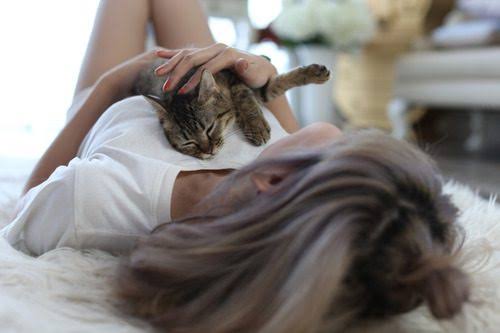
When a cat chooses to sleep on your chest, it is communicating something deeply positive. Cats are highly selective about where they sleep because sleep is a vulnerable state for them.
Choosing your chest specifically means your cat trusts you completely. They are placing themselves in a physically exposed position right on top of you, which signals that they feel entirely safe in your presence.
This behaviour reflects affection, emotional bonding, and a need for security. It is one of the clearest signs a cat can give that you are their favourite person and that they consider you part of their social family group.
How Common Is This Behaviour in Cats
Cats sleeping on their owner’s chest is an extremely common behaviour reported by pet owners across the world. It is particularly common in cats that have a strong bond with one specific person in the household.
Cats that were well socialised as kittens and grew up around humans tend to display this behaviour more frequently. However, even cats that initially seemed independent can develop the habit over time as the bond with their owner deepens.
The behaviour can begin at any age and in any breed. It is not limited to clingy or overly dependent cats. Even confident, self-sufficient cats often choose their favourite human’s chest as a preferred sleeping spot.
| Factor | Details |
|---|---|
| Most common in | Strongly bonded cats with one primary owner |
| Can begin at | Any age, but often develops as bond strengthens |
| Breeds most likely | All breeds, more common in social or lap-oriented breeds |
| Time of day | Most frequent at night but can happen during daytime naps |
| Accompanied by | Purring, kneading, slow blinking, or head bunting |
Reason 1: Warmth and Body Heat
One of the most straightforward reasons cats sleep on your chest is warmth. Cats have a naturally higher resting body temperature than humans, sitting between 99 and 102.5 degrees Fahrenheit, and they are instinctive warmth-seekers.
Your chest radiates a consistent and reliable source of body heat. It is one of the warmest spots on the human body during sleep, making it naturally attractive to a cat looking for the cosiest place to rest.
This behaviour has roots in wild cat ancestry. Cats in the wild sleep in groups to share body heat and conserve energy during vulnerable rest periods. When your domestic cat chooses your chest, they are following this same ancient instinct.
Senior cats and cats that are unwell tend to seek out warmth even more actively. If an older cat suddenly starts sleeping on your chest more than usual, it may be their way of supplementing their reduced ability to self-regulate body temperature.
Reason 2: Trust and Emotional Bonding
Trust is at the core of why cats sleep on your chest. Sleep is the most vulnerable state for any animal. A cat that chooses to sleep directly on top of you is demonstrating total confidence in your safety.
Cats form genuine emotional attachments to their caregivers. Research published in the Current Biology Journal found that some cats develop strong emotional bonds with their owners similar to the attachments that dogs and even human infants form with their caregivers.
Sleeping on your chest is a physical expression of this bond. The cat is not just near you; they are directly on you, choosing maximum closeness at their most defenceless moment. This is the highest form of feline trust.
If your cat regularly sleeps on your chest, you are likely their primary attachment figure. This level of closeness means they feel secure, loved, and completely at ease in your presence.
Reason 3: The Comfort of Your Heartbeat
The rhythmic sound and sensation of your heartbeat is one of the most powerful draws for a cat sleeping on your chest. Cats can clearly hear and feel the steady beat of your heart when they rest in this position.
As kittens, cats sleep pressed against their mother and siblings. The sound of the mother cat’s heartbeat is one of the first sounds they experience in life and it becomes deeply associated with safety, nourishment, and comfort.
When your cat rests on your chest and hears your heartbeat, it may trigger the same emotional memory. It reconnects them with the feeling of being safe, warm, and cared for just as they were as newborn kittens with their mother.
This heartbeat effect is similar to why some newborn human babies are soothed by white noise machines that mimic the sound of a heartbeat. It is a primal comfort response that crosses species boundaries.
Reason 4: Your Breathing Rhythm
Beyond the heartbeat, the rhythmic rise and fall of your chest as you breathe provides an additional layer of comfort and sensory soothing for your cat.
The gentle, predictable movement of your breathing creates a rocking sensation that many cats find deeply calming. It is consistent, slow, and predictable, which gives the cat’s nervous system strong cues that everything is safe and still.
Your breathing rhythm also reassures your cat that you are present and alive. Cats are highly sensitive to the physical presence of those they bond with. Feeling your chest move in the pattern of relaxed sleep tells them all is well.
This is also why cats often choose to sleep on your chest specifically during periods when you are unwell or under stress. They can detect changes in your breathing patterns and may position themselves there instinctively in response to subtle physical cues.
Reason 5: Scent and Familiarity
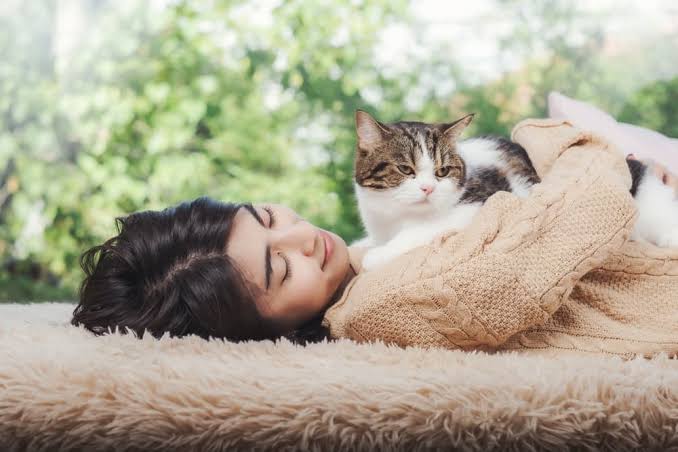
Cats have an extraordinarily well-developed sense of smell. Your personal scent is one of the most powerful identifiers your cat has for you, and your chest is very close to your neck, underarms, and skin, making it a scent-rich area.
Your unique scent is deeply associated in your cat’s mind with security, feeding, comfort, and positive interaction. Sleeping surrounded by your scent reinforces their emotional sense of safety and belonging.
Cats also use scent as a way to mark their social group. When your cat sleeps on your chest, they are not just enjoying your scent; they are also depositing their own scent onto you through their fur, paws, and facial glands.
This scent exchange is a form of social bonding in cats. By mingling their scent with yours, your cat is declaring you part of their group. It is a subtle but deeply meaningful form of feline communication and affection.
Reason 6: Territorial Marking
Cats are territorial by nature. They mark the people, objects, and spaces they feel connected to using scent glands located on their cheeks, paws, and body.
When your cat sleeps on your chest repeatedly, they are also engaging in a form of territorial marking. You become identified as belonging to them within their sensory world. This is not aggressive or possessive; it is social bonding expressed through the natural feline language of scent.
You may also notice your cat rubbing their cheek against you, headbutting you, or kneading on your chest before settling. All of these behaviours involve scent gland activation and are part of the same territorial bonding process.
Being marked by your cat is actually a compliment. It means you are important enough to them that they want to identify you as part of their inner circle.
Reason 7: Seeking Attention and Affection
Sometimes the reason cats sleep on your chest is straightforward: they want your attention. Cats are social creatures and they know that positioning themselves on your chest makes it nearly impossible for you to ignore them.
This is especially common in the morning when you are waking up. Your cat may settle on your chest as their way of gently waking you, signalling it is time to get up, feed them, or simply spend time together.
Cats learn quickly what behaviours get a response from their owners. If cuddling on your chest has historically resulted in petting, talking to them, or staying in bed longer, they will repeat the behaviour because it gets results.
If your cat seems to specifically choose chest sleeping when you are reading, watching television, or using your phone, attention-seeking is very likely a factor. They are redirecting your focus directly back to them.
Reason 8: Stress Relief and Anxiety
Cats sometimes seek out their owner’s chest when they are feeling anxious, stressed, or unsettled. Physical closeness to a trusted person provides immediate emotional reassurance for a cat experiencing discomfort.
If this behaviour appears suddenly after a change in your home environment, such as a new pet, a new baby, moving house, or changes to the daily routine, stress is a likely driver. The cat is seeking comfort from the person they trust most.
Cats in distress show this in two distinct ways. Some become withdrawn and hide. Others seek constant contact and reassurance. Chest sleeping in a suddenly clingy cat is the second pattern and should be observed alongside other signs of stress.
If your cat’s sudden urge to sleep on your chest is accompanied by other changes such as reduced appetite, excessive grooming, hiding at other times, or vocalising more than usual, a veterinary check-up is worth scheduling.
Reason 9: Kitten Memory and Maternal Bond
The connection between chest sleeping and kittenhood is a deeply rooted one. As newborns, kittens sleep pressed against their mother and littermates for warmth, feeding access, and physical safety.
The sensations of your chest, including the warmth, the heartbeat, the breathing rhythm, and the scent, collectively create an experience that mirrors the comfort of kittenhood. Your cat is not consciously aware of this connection but their body remembers it at a deep instinctive level.
Cats that were separated from their mothers too early or that had limited socialisation as kittens sometimes seek out this type of close physical contact even more intensely as adults. It fills a need for warmth and closeness that was not fully established in kittenhood.
Understanding this maternal connection helps explain why chest sleeping feels so profoundly comfortable to your cat. You have become their safe base, just as their mother once was.
Reason 10: Cats Can Sense Your Emotions
Cats are far more emotionally perceptive than they are often given credit for. Research suggests that cats can detect changes in their owner’s emotional state through subtle shifts in scent, body temperature, breathing, and behaviour.
Some cats are particularly attuned to human stress and sadness. They may choose to sleep on your chest more frequently on days when you are upset, anxious, unwell, or emotionally drained, almost as if offering their physical presence as comfort.
This is not coincidental. Cats register your emotional and physical signals and often respond by positioning themselves close to you. Their purring, warmth, and weight provide genuine comfort, and many cat owners report feeling significantly calmer after a chest snuggle session.
Whether or not cats intentionally seek to comfort their owners is still debated by researchers. But the consistent pattern of cats gravitating toward their people during times of distress suggests a meaningful level of emotional responsiveness.
What Does the Purring Mean When Your Cat Sleeps on Your Chest
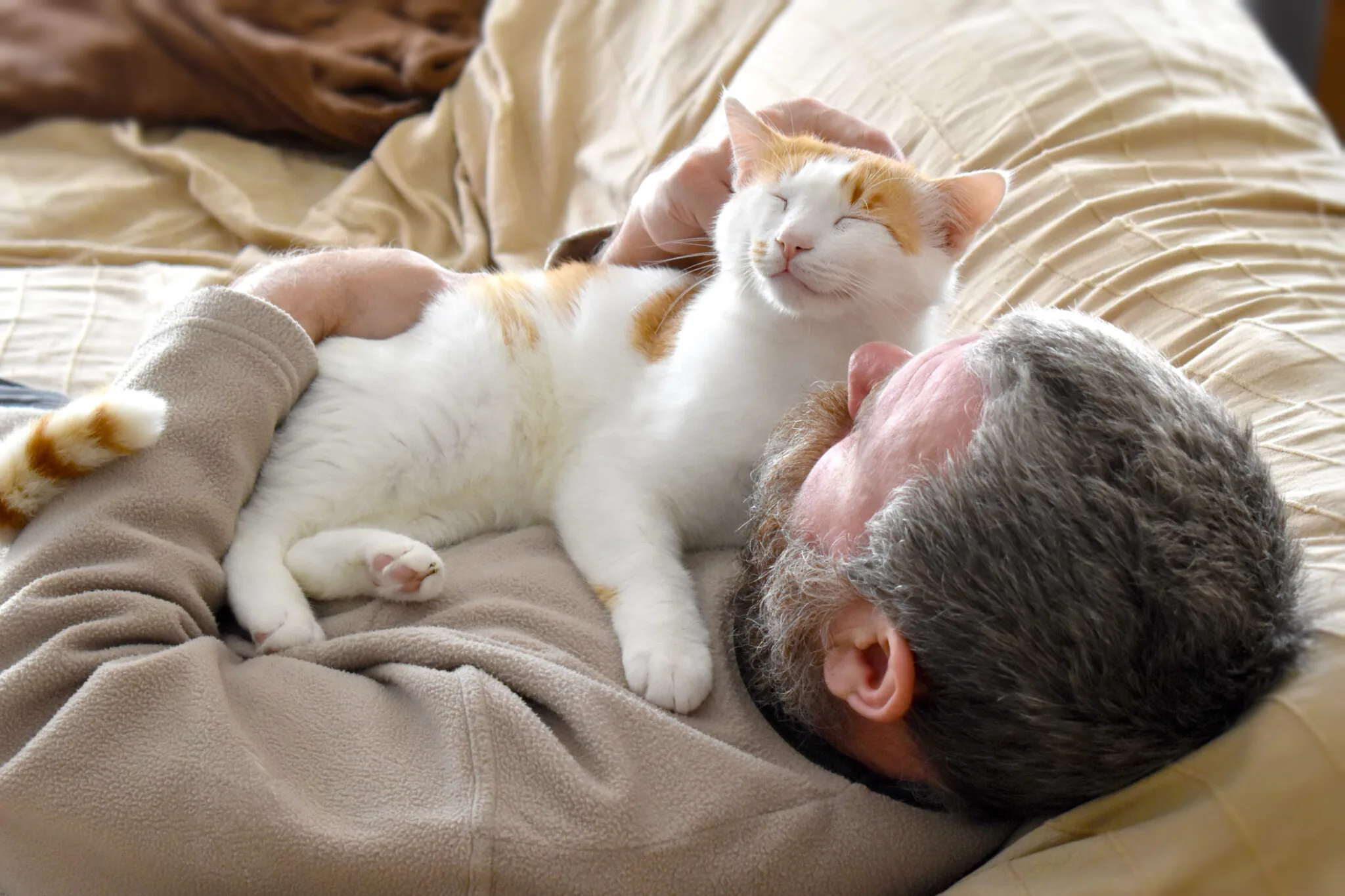
When your cat purrs while sleeping on your chest, it is one of the most positive signals in the feline communication repertoire. Purring is their expression of happiness, contentment, and relaxation.
A purring cat on your chest is telling you they are completely comfortable, safe, and happy right where they are. The purr is their version of a contented sigh.
Purring is also used by cats to self-soothe during mild stress, so context matters. A relaxed purr during sleep is pure contentment. A tense posture combined with purring may indicate mild anxiety being self-regulated.
| Purring Context | What It Likely Means |
|---|---|
| Relaxed body, soft purring during sleep | Pure contentment and comfort |
| Kneading combined with purring | Deep comfort, often linked to kittenhood memory |
| Loud persistent purring while staring at you | Seeking attention or communication |
| Purring with tense body posture | Mild stress or self-soothing |
| Purring during illness or vet visits | Pain or anxiety self-regulation |
The Science Behind the Purr and Its Health Benefits for You
Cat purring operates at a vibrational frequency of 20 to 140 Hz. Research has shown that vibrations within this range have measurable therapeutic effects on the human body.
Regular exposure to purring vibrations has been linked to reduced blood pressure, lower cortisol levels, reduced risk of heart attack, and improved cardiovascular health. The calming effect of a purring cat on your chest during sleep is both felt and measurable.
Purring vibrations within the 25 to 50 Hz range have been shown in studies to promote bone density and facilitate healing of muscles, tendons, ligaments, and even infections. This means your cat’s purring while resting on your chest may actively support your physical health.
Beyond the physical, the presence of a purring cat triggers the release of oxytocin in humans. This bonding hormone reduces feelings of loneliness, anxiety, and depression and promotes an overall sense of emotional wellbeing.
Health Benefits of Letting Your Cat Sleep on Your Chest
There are several documented and proposed health benefits that come from allowing your cat to sleep on your chest.
The warmth and gentle weight of your cat activates the parasympathetic nervous system. This slows your heart rate, lowers your blood pressure, and puts your body into a deeper state of relaxation, making it easier to fall and stay asleep.
The release of oxytocin triggered by close physical contact with your cat reduces feelings of stress, loneliness, and anxiety. Pet owners consistently report lower levels of depression and higher overall emotional wellbeing compared to people without pets.
The routine of your cat sleeping on your chest also creates a predictable bedtime ritual. Cats thrive on routine and so do humans. This shared sleep habit can strengthen your emotional bond with your cat and improve your own sense of calm and security at bedtime.
| Health Benefit | Mechanism |
|---|---|
| Reduced blood pressure | Calming effect of purring and physical warmth |
| Lower stress levels | Oxytocin release from physical closeness |
| Improved sleep quality | Parasympathetic nervous system activation |
| Reduced anxiety and loneliness | Emotional bonding and companionship |
| Potential bone and tissue healing | Purring vibrations at 25 to 50 Hz |
| Cardiovascular health support | Stress reduction and lower cortisol |
When Should You Be Concerned About This Behaviour
In most cases, a cat sleeping on your chest is entirely harmless and positive. However, there are a few situations where it warrants closer attention.
If your cat suddenly starts sleeping on your chest for the first time after months or years of not doing so, this change in behaviour could indicate stress, illness, or pain. Cats seek comfort from their trusted humans when something feels physically or emotionally wrong.
Watch for accompanying signs such as changes in appetite, increased vocalisation, excessive grooming, hiding at other times, or unusual lethargy. If the new chest-sleeping behaviour comes alongside any of these signs, a vet visit is recommended.
If your cat becomes aggressive or anxious when you try to move them off your chest, this level of possessiveness or clinginess can itself be a sign of underlying stress or anxiety that may benefit from professional assessment.
Is It Safe to Let Your Cat Sleep on Your Chest
For most healthy adults, allowing a cat to sleep on their chest is safe and comes with real benefits. However, there are a few practical considerations worth keeping in mind.
Allergy sufferers should be mindful that close physical contact with cat fur and dander directly under the face can worsen allergy symptoms significantly. If you are allergic but love having your cat close, regular washing of bedding and a HEPA air filter in the bedroom can help reduce exposure.
People with respiratory conditions such as asthma may find that close proximity to cat fur during sleep triggers breathing difficulties. In these cases, keeping the cat nearby but not directly on the chest is a sensible compromise.
The weight of a cat should not pose a problem for most adults, but for very young children, the very elderly, or anyone with certain health conditions, having a cat rest directly on the chest overnight may not be appropriate.
Why Does My Cat Only Sleep on My Chest and Not Anyone Else’s
If your cat selects your chest specifically and ignores other members of the household, it is a clear sign that you are their primary attachment figure. You are the person they trust and feel most bonded with above all others.
This preference is built over time through consistent care, feeding, play, and gentle interaction. The person who most regularly provides these things tends to become the cat’s chosen person.
Your unique scent also plays a significant role. Your cat has mapped your personal scent as safe, familiar, and comforting. Other people in the house may have pleasant scents too, but yours is the one most deeply associated with safety and positive experience.
What to Do If Your Cat’s Chest Sleeping Disrupts Your Sleep
While the behaviour is adorable and meaningful, it can sometimes interfere with your own sleep quality. There are gentle ways to manage this without damaging your bond.
Place a warm, soft blanket or cat bed on the mattress right beside you. Your scent will transfer to it quickly, making it an appealing alternative to your chest. A heated cat bed can be particularly effective at luring warmth-seekers away.
Engage your cat in an active play session before bedtime to expend energy and reduce their desire to seek stimulation during the night. A tired cat is more likely to settle into their own spot and stay there.
Establish a consistent pre-sleep routine that includes specific time for petting and bonding before you actually go to sleep. Meeting your cat’s need for closeness before lights-out often reduces their urge to climb onto your chest later.
Avoid pushing your cat away abruptly or making the situation stressful. Redirect calmly and reward them with treats when they choose the alternative sleeping spot to reinforce the new behaviour positively.
Cats Sleeping on Your Chest vs. Other Body Parts
Cats do not always choose the chest. Different sleeping positions on different parts of your body can carry slightly different meanings.
| Sleeping Position | Common Meaning |
|---|---|
| On your chest | Deep bonding, heartbeat comfort, maximum trust |
| On your head or pillow | Warmth from the head, minimal movement, closeness to voice |
| On your feet or legs | Protectiveness, territory marking, lighter bond |
| Beside you but not touching | Trust with independence, comfortable proximity |
| On your stomach | Warmth, comfort, generally similar to chest sleeping |
| Across your neck | Extreme closeness, very high bonding |
How This Behaviour Changes Over Time
A cat’s tendency to sleep on your chest can intensify or ease off as the seasons, their health, and your lifestyle evolve. Many owners notice more chest sleeping in winter months when temperatures drop and warmth-seeking instincts are at their peak.
As cats age, they often seek more physical closeness with their trusted person. Senior cats who previously slept independently may start choosing your chest more frequently as age reduces their ability to stay warm and as their desire for companionship deepens.
Changes in your own routine, such as working from home, spending more time in bed, or recovering from illness, can also trigger increased chest sleeping because you are simply more available for your cat to access.
Frequently Asked Questions (FAQs)
Why do cats sleep on your chest?
Cats sleep on your chest because of warmth, trust, the sound of your heartbeat, your familiar scent, and the emotional bond they have with you. It is one of the strongest signs of affection and security a cat can show.
Is it a sign of love when a cat sleeps on your chest?
Yes, it is one of the clearest signs of love and trust in cat behaviour. A cat only places itself in a vulnerable sleeping position on a person they feel completely safe with and emotionally bonded to.
Why does my cat purr while sleeping on my chest?
Purring while sleeping on your chest signals that your cat is deeply content, comfortable, and happy. It is their way of expressing complete relaxation and satisfaction with where they are and who they are with.
Should I let my cat sleep on my chest?
For most healthy adults, it is completely safe and comes with health benefits including stress reduction, lower blood pressure, and oxytocin release. Consider allergies or respiratory conditions before allowing it regularly.
Why has my cat suddenly started sleeping on my chest?
A sudden change in behaviour can indicate stress, environmental change, illness, or deepening of your bond. If accompanied by other behavioural changes like reduced appetite or hiding, a vet check is recommended.
Do cats sleep on your chest because they sense illness?
Cats are highly perceptive and may detect changes in your body heat, breathing, or scent that signal you are unwell. Many owners report their cats gravitating to their chest more frequently during illness or periods of high stress.
What does it mean when a cat kneads and sleeps on your chest?
Kneading combined with sleeping on your chest is rooted in kittenhood. It is a deeply comforting behaviour that reconnects them with the feeling of nursing from their mother. It is a sign of extreme trust and contentment.
Why does my cat prefer my chest over my partner’s?
Cats typically bond most strongly to the person who provides the most consistent care, feeding, and interaction. Your unique scent, voice, and routine have made you their primary attachment figure and preferred sleeping companion.
Can a cat sleeping on your chest improve your health?
Yes, research supports multiple health benefits. A purring cat’s vibrations lower blood pressure, reduce cortisol, trigger oxytocin release, and activate the parasympathetic nervous system, all of which support better sleep and cardiovascular health.
How do I stop my cat from sleeping on my chest without hurting the bond?
Place a warm blanket with your scent beside you as an alternative. Engage in play before bed to tire them out. Never push them away harshly. Redirect calmly and reward them with treats when they use their designated spot.
Conclusion
Why do cats sleep on your chest is a question with a beautifully layered answer rooted in trust, warmth, instinct, emotional bonding, and sensory comfort.
When your cat chooses your chest as their sleeping spot, they are telling you through action rather than words that you are their safest person, their chosen family member, and the one they trust completely.
The warmth of your body, the rhythm of your heartbeat, the rise and fall of your breathing, and the familiarity of your scent all work together to create the perfect feline sanctuary right on top of you.
Beyond the meaning for your cat, this behaviour delivers real health benefits for you too, from lower blood pressure and reduced stress to better sleep and stronger emotional wellbeing.
Whether you welcome your cat onto your chest every night or gently redirect them to a nearby spot, understanding why they do it deepens the remarkable bond you share with your feline companion in 2026 and beyond.
