

Why Does My Cat Lay on My Feet? You shift your legs under the blanket and feel that familiar, unmovable weight — your cat, once again, camped out right on your feet. It happens every night, or every time you sit still long enough.
So what’s actually going on in that fuzzy little head?
Why Does My Cat Lay on My Feet?
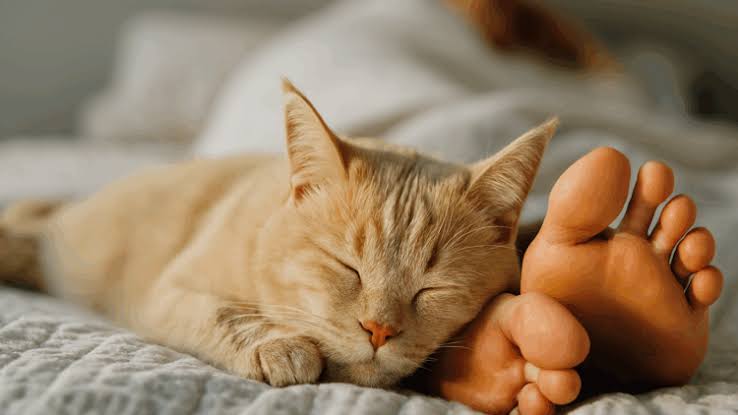
Cats lay on your feet mainly for warmth, safety, and bonding. Your feet radiate steady body heat, sit at a comfortable distance that doesn’t feel too confining, and let your cat mark you with their scent while staying close enough to feel your presence and protection.
Key takeaways:
- Warmth, safety instincts, scent marking, and routine are the main drivers behind feet-sleeping.
- Cats often choose feet over laps because it’s close contact without full confinement.
- The behavior is almost always a sign of trust and comfort, not a problem.
- A sudden, dramatic change in the behavior is worth noting, since shifts in a cat’s habits can sometimes coincide with stress or illness.
The Real Reasons Cats Sleep on Your Feet
Warmth and Thermoregulation
Cats run warmer than humans and are highly motivated to seek out heat sources. Your body gives off heat, and the end of the bed provides a cozy, stable spot where your cat can conserve body heat without being disturbed. Feet tucked under a blanket are especially appealing since they offer steady, low-key warmth all night long.
Safety From an Ancestral Predator-Prey Instinct
It’s easy to forget that cats are hunters and hunted at the same time. Cats are also prey for other species like raptors, coyotes, and foxes, which is why sleep — a genuinely vulnerable state — comes with built-in caution. By positioning themselves at your feet, cats have a clear vantage point while still feeling secure enough to rest, blending your protection with their own instinct to stay alert.
An Easy Escape Route

Feet aren’t just warm — they’re strategically located. Because the foot of a bed, couch, or chair offers a quick path away from potential disturbances, this position gives cats the reassurance of an easy escape if they suddenly feel the need to move. It’s a compromise: close enough for comfort, open enough for a fast exit if something startles them.
Scent Marking and Bonding
Cats communicate largely through scent, and your feet are a favorite target for it. Cats have scent glands on their cheeks that release pheromones when they rub their face against things, and similar glands sit on their body and paws. Sniffing your feet and then rubbing against them isn’t just about marking you as theirs — it’s also about transferring their familiar scent to make them feel safe. When your cat curls up on your feet, they’re often reinforcing that same familiar, reassuring scent bond.
Habit and Routine
Cats are creatures of habit, and comfort choices tend to stick. Once a cat finds a sleeping spot they like, they tend to stay with it — so if your cat tried sleeping at your feet once and enjoyed it, that spot becomes their go-to. It’s less a nightly decision and more a settled routine.
Why Feet Specifically — Not Your Lap or Chest?
Not every cat wants full-body contact, and that’s exactly the appeal of feet. Sleeping near or on your feet lets a cat stay close to you without feeling confined or crowded, unlike a lap, which limits their movement, or a chest, which puts them directly in your breathing and heartbeat zone. Feet offer a middle ground: real physical contact, real warmth, and real closeness — with room to shift, stretch, or bolt if needed.
Some cats also simply prefer a bit more independence. Sleeping at your feet offers a way for cats to be close without feeling confined, reflecting their need for autonomy while still valuing your presence.
What Cat Sleeping Positions Mean
| Sleeping Spot | What It Usually Means |
|---|---|
| At your feet | Warmth, safety, bonding, with an easy escape route and a bit of independence |
| Between your legs | Deep trust — cats seek out the safest place to sleep, and being between your legs signals you are considered that safe place |
| On your lap | Direct affection and a desire for close contact and attention |
| On your chest | High trust and comfort with your heartbeat, breathing, and scent |
| Curled near the door | Alertness or a desire to monitor household activity, sometimes seen in more independent or anxious cats |
| Stretched out, belly exposed | Deep relaxation and a strong sense of safety in the environment |
Is It OK to Let Your Cat Sleep on Your Feet?

For most healthy cats and owners, yes — it’s a normal, affectionate behavior with real benefits for your cat’s sense of security and sleep quality. Cats have strong survival instincts even indoors, and sleeping at your feet is one way they stay alert while feeling protected, which supports the kind of deep, restorative sleep cats need.
The only practical downside is for you: a cat pinning your feet down can occasionally disrupt your own movement or sleep. That’s a comfort trade-off, not a behavioral red flag.
When This Behavior Might Be Worth Watching
Because feet-sleeping is instinct-driven and routine-based, most cats do it consistently once they settle into the habit. A few situations are worth a closer look, without jumping to conclusions:
- A cat that suddenly starts sleeping at your feet after never doing it before, especially alongside other new behaviors like hiding or reduced appetite.
- A cat that becomes unusually clingy or won’t leave your side at all, which can sometimes accompany stress, a household change, or discomfort.
- Excessive rubbing or marking far beyond normal affection, which occasionally relates to skin irritation or anxiety rather than simple bonding.
None of these mean something is definitely wrong — cats’ routines shift for all kinds of ordinary reasons, including weather, age, or a change in furniture. But a real, sustained change in behavior is a reasonable prompt to mention it at your cat’s next veterinary visit.
What to Do If It’s Disrupting Your Sleep
You don’t have to choose between good sleep and a happy cat. A few gentle options:
- Add a heated cat bed or blanket near your feet so your cat gets similar warmth without sitting directly on you.
- Keep a consistent bedtime routine — cats settle into new comfort spots more easily when the schedule around them stays predictable.
- Gently reposition, don’t remove — sliding your cat a few inches over usually works better than picking them up and relocating them entirely.
- Use calming pheromone products if your cat seems anxious rather than simply cozy; these can reduce clinginess tied to stress specifically.
- Be patient with the transition — since this is a habit, expect it to take a few nights of gentle, consistent redirection.

Frequently Asked Questions (FAQs)
Why does my cat lay on my feet?
Mainly for warmth, safety, and bonding. Your feet offer steady body heat, a manageable amount of closeness, and a spot where your cat can pick up your scent while staying alert.
What does it mean when my cat sleeps on my feet?
It typically signals trust and comfort. Your cat feels safe enough near you to enter a deep, vulnerable sleep state while still keeping an easy escape route available.
Why does my cat sit on my feet instead of my lap?
Feet offer closeness without full confinement, which suits cats that want contact but also value some independence and freedom of movement.
Why does my cat only sleep on my feet at night?
Nighttime is when cats are naturally more active and alert to their surroundings, so feet-sleeping combines warmth and vigilance during the hours they’re most instinctively cautious.
Is it bad for a cat to sleep on your feet?
No — it’s a normal, healthy behavior for most cats. The only downside is potential disruption to your own sleep or movement, not any risk to the cat.
Why do cats like feet so much?
Feet carry a strong, familiar scent from you, offer steady warmth, and sit at a comfortable distance that lets cats bond without feeling trapped.
Why does my cat lay between my legs instead of on my feet?
Sleeping between your legs is an even closer trust signal, often chosen by cats that feel especially secure with a particular person.
Why does my cat guard my feet when I’m standing still?
Standing still gives your cat a reliable, stationary source of warmth and contact, and some cats treat that stillness as an invitation to settle in.
Why does my cat attack my feet under the blanket?
This is usually playful predatory behavior — moving shapes under a blanket mimic prey, triggering your cat’s natural pounce instinct.
Does my cat sleeping on my feet mean they love me?
It’s one of several strong affection signals, alongside purring, slow blinking, and seeking out physical contact throughout the day.
Can a cat sleeping on my feet affect my circulation?
For most adults, a cat’s weight isn’t enough to meaningfully affect circulation, though repositioning gently is fine if your feet feel numb or uncomfortable.
Why does my cat suddenly start sleeping on my feet after not doing it before?
New habits often follow small changes — a colder season, a new blanket, or simply discovering they like the spot. Sudden changes paired with other new behaviors are worth monitoring.
How can I get my cat to sleep somewhere other than my feet?
Offer a warm, comfortable alternative nearby, like a heated cat bed, and gently redirect your cat there consistently rather than removing them abruptly.
Do kittens sleep on feet the same way adult cats do?
Kittens can show the same warmth-seeking and bonding behaviors early on, though their sleeping preferences often shift as they mature and settle into routines.
Is excessive rubbing on my feet ever a sign of a medical issue?
Occasionally — persistent, intense rubbing well beyond typical affection can sometimes relate to skin irritation or stress, and is worth mentioning to a veterinarian if it seems unusual for your cat.
Key Takeaways
Your cat laying on your feet is instinct and affection working together — warmth-seeking, ancestral safety behavior, scent bonding, and simple habit all rolled into one cozy (if occasionally foot-numbing) routine.
For the vast majority of cats, it’s one of the clearest, quietest ways they say they trust you. Unless the behavior changes suddenly and dramatically, there’s no reason to see it as anything other than your cat choosing you as their safest, warmest spot in the house.
