

Stand on the right step outside the Colorado State Capitol, and you’re exactly one mile above the ocean.
Why Is Denver Called the Mile High City? That single fact gave Denver one of the most recognizable city nicknames in America. But the full story is stranger, older, and more contested than most people realize.
Denver didn’t always go by “Mile High City.” For decades, it went by other names entirely. The elevation marker that now anchors the nickname has also been moved twice, argued over by surveyors, and stolen more than once. Here’s what’s actually true, what’s civic legend, and where the exact mile-high line sits today.
Why Is Denver Called the Mile High City?
Denver is called the Mile High City because its official elevation, measured at the Colorado State Capitol, is 5,280 feet above sea level — exactly one mile. The nickname took hold in the early 20th century as city boosters looked for a distinctive slogan, and it was cemented by a series of brass and granite markers placed on the Capitol’s west steps starting in 1909.
How High Is Denver, Exactly?
5,280 Feet Above Sea Level
A mile equals 5,280 feet, and Denver’s benchmark elevation lands on that number almost precisely. It’s a tidy coincidence that turned into a full civic identity: Denver sits at an altitude of 5,280 feet (1,609 meters) above sea level, making it one of the highest major cities in the United States.
That height isn’t accidental geography — it’s the product of millions of years of tectonic uplift along the Rocky Mountain Front Range, which pushed the plains at Denver’s location dramatically higher than the rest of the Great Plains to the east.
Elevation Varies Across the Metro Area
Denver’s “exactly one mile” claim is really a Capitol-specific measurement, not a citywide constant. Elevation across the metro area actually ranges from about 5,130 to 5,690 feet, giving different neighborhoods slightly different altitudes. The Capitol itself sits a bit higher than much of downtown because the adjacent Capitol Hill district sits on a slightly higher knoll than most of downtown Denver.
The History Behind the “Mile High” Nickname
Before Mile High: Denver’s Earlier Nicknames
“Mile High City” is a relatively late addition to Denver’s identity. Long before it caught on, Denver’s most common nickname in the mid-to-late 1800s was “Queen City of the Plains,” rooted in the city’s growing role as a hub for High Plains agriculture.
That wasn’t the only name city leaders floated. Local historian Phil Goodstein’s research on the Robert Speer era documents a whole parade of rejected slogans: a downtown business group wanted to drop “Queen City” in favor of “City of Hospitality,” a local newspaper pushed “City of Homes,” and boosters at various points tried out “Garden City of the Plains,” “City Beautiful,” “Foot of the Rockies,” “City of Sunshine,” and “Top of the World.” None of them stuck.
Denver had also been calling itself “mile high” in scattered, informal ways well before the nickname was official. A 19th-century cable car company inscribed “one mile above sea level” on its powerhouse cornerstone at Colfax and Broadway in 1888 — only for engineers to later find the elevation had been misjudged. For decades, “mile high” was just one civic boast among many, not yet Denver’s defining brand.
How Denver Became “The Mile High City” After WWI
According to Goodstein’s account, none of the competing slogans achieved lasting traction, and shortly after World War I, Denver settled into its identity as “the Mile High City.” The timing lines up with the city’s push to formalize its elevation claim: the state placed its first official marker on the Capitol steps in 1909, giving the emerging nickname a physical, visitable landmark to anchor it.
By the mid-20th century, the name had become inseparable from the city’s brand. Denver was officially recognized as the “Mile High City” by the United States Postal Service in the 1950s, with the nickname used to promote the city’s high altitude as a tourist draw.
The Colorado State Capitol’s Famous Mile-High Steps
The nickname’s most literal proof point is a set of markers on the west side of the Colorado State Capitol. There are, in fact, three markers embedded in the white granite steps on the building’s western side — and they don’t all agree with each other.
The First Marker (1909)
The 15th step is engraved with the words “One Mile Above Sea Level.” It held this distinction from 1909 to 1969. Sources differ on exactly which students conducted the original 1909 survey — some accounts credit the University of Denver, others point to later resurveys by Colorado State University or Community College of Denver engineering students. What’s consistent across sources is that the original marker was repeatedly stolen; after vandals stole the fourth medallion from the Capitol steps in 1947, the building’s longtime superintendent had workers engrave the step itself so the marker couldn’t be carried off again.
The Resurvey and New Marker (1969)
In 1969, a new brass benchmark was placed on the 18th step after engineering students resurveyed the elevation and concluded the original marker had been placed three steps too low. Improved surveying equipment from the U.S. Coast and Geodetic Survey had shown the 1909 measurement wasn’t quite right — the true mile mark was three steps higher up the staircase.
The Modern Marker (2003)
Elevation science kept improving, and so did the disagreement. In 2003, updated measurements determined the 1969 marker had actually been placed 3.03 feet too high, and on September 29, then-Governor Bill Owens presided over a ceremony installing a new brass benchmark — this time on the 13th step. The discrepancy traces back to a technical shift: the difference between the 15th and 18th step readings relates to an update in the North American Vertical Datum (NAVD), the standard used to define orthometric height in the United States.
Timeline of Denver’s Mile-High Markers
| Year | Step | What Happened |
|---|---|---|
| 1888 | N/A (Tramway powerhouse) | Cable car company cornerstone reads “one mile above sea level” — later found inaccurate |
| 1909 | 15th step | First official Capitol marker installed; repeatedly stolen over the decades |
| 1947 | 15th step | Superintendent has the step itself engraved after the fourth medallion is stolen |
| 1969 | 18th step | Student resurvey finds the true mile mark three steps higher; new brass marker installed |
| 2003 | 13th step | Updated NAVD88 measurements move the official marker again; ceremony led by Gov. Bill Owens |
Is All of Denver Really a Mile High?
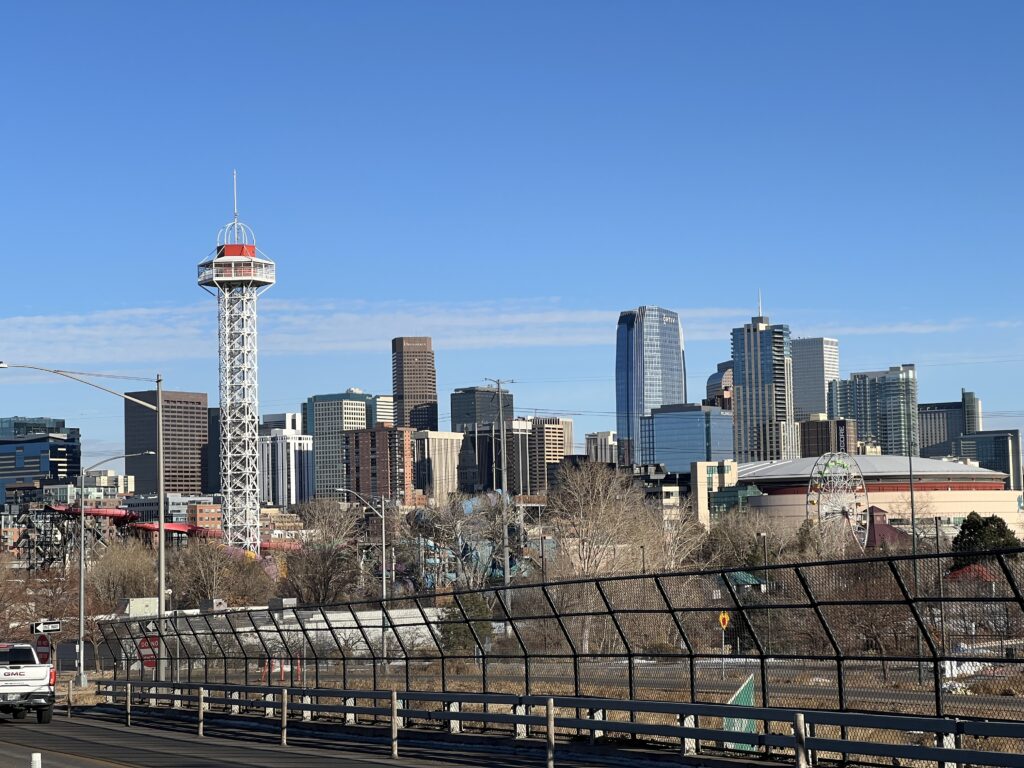
Not exactly — and that’s part of what makes the story interesting rather than just a trivia fact. The “one mile” claim is a precise, defensible measurement at one specific spot: the Capitol steps. The rest of the city sits close to that figure but isn’t uniform, with metro-area elevation ranging from roughly 5,130 to 5,690 feet depending on the neighborhood. Even the definition of “sea level” itself has been revised over the decades, which is part of why the marker has had to move.
That nuance doesn’t diminish the nickname — if anything, it shows how seriously Denver has taken the claim. Few cities have re-surveyed and physically relocated a landmark marker multiple times just to keep a nickname technically accurate.
How Denver’s Elevation Shapes the City
Sports and the Thin Air Advantage
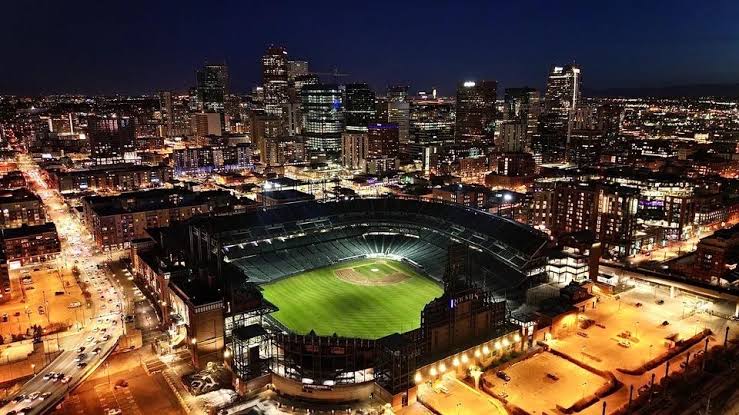
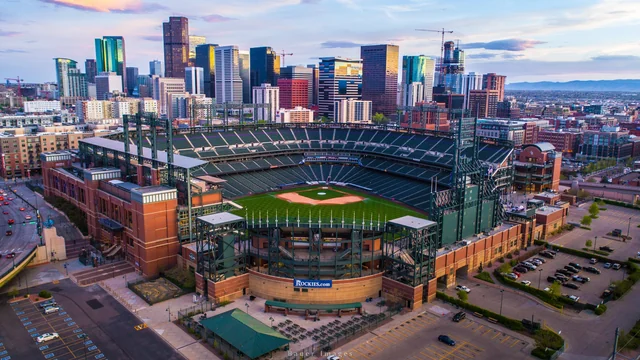
Denver’s altitude isn’t just a branding footnote — it changes how games are played. At Coors Field, home of the Colorado Rockies, a row of purple seats marks the exact one-mile elevation line, a nod fans notice every home game. The thinner air at altitude reduces aerodynamic drag, which is part of why baseballs and golf balls travel measurably farther in Denver than they do at sea level.
The city’s NFL team leaned into the identity early: the Denver Broncos have played home games at stadiums carrying the “Mile High” name for decades, most recently Empower Field at Mile High, keeping the nickname visible to national broadcast audiences every football season.
Weather, Sunshine, and Climate
Altitude also shapes Denver’s climate. Thinner air holds less moisture and offers less atmospheric filtering, which contributes to the city’s reputation for abundant sunshine and rapid temperature swings between day and night. It’s part of why the same “mile high” elevation that inspired the nickname also shapes practical daily life — from stronger UV exposure to faster dehydration outdoors.
What Visitors Should Know About Altitude
First-time visitors sometimes notice mild effects from the elevation change: shortness of breath during activity, quicker dehydration, and increased sensitivity to alcohol and sun exposure. None of this is dangerous for most healthy travelers, but a little preparation helps:
- Drink more water than usual in the first day or two.
- Ease into strenuous activity rather than starting with a hard hike.
- Use sunscreen even on cool or cloudy days — UV exposure is stronger at altitude.
- Go easy on alcohol until you’ve acclimated, since its effects can feel stronger at elevation.
Other Nicknames Denver Has Had
“Mile High City” eventually overtook every rival nickname, but Denver’s naming history is richer than one phrase:
| Nickname | Era | Origin |
|---|---|---|
| Queen City of the Plains | 1880s–early 1900s | Denver’s role as a commercial and agricultural trading hub for the High Plains |
| Wall Street of the West | 20th century | Denver’s rise as a regional banking and finance center |
| Cowtown | 19th–20th century | Ties to ranching, cattle trading, and the National Western Stock Show |
| Foot of the Rockies | Early 1900s | Promotional phrase highlighting Denver’s mountain-gateway location |
| Mile High City | Post–WWI to present | Denver’s precise elevation and the Capitol’s mile-high markers |
How Denver Compares to Other High-Altitude Cities
| City | Elevation | Notes |
|---|---|---|
| Denver, CO | 5,280 ft (1,609 m) | Highest major US city; “Mile High City” |
| Leadville, CO | 10,430 ft (3,180 m) | Highest incorporated city in the US, but much smaller |
| Colorado Springs, CO | ~6,035 ft (1,839 m) | Higher than Denver, but not a nationally branded “mile high” claim |
| Mexico City, Mexico | ~7,350 ft (2,240 m) | One of the highest major capital cities in the world |
| Salt Lake City, UT | ~4,226 ft (1,288 m) | Notable Mountain West elevation, below Denver’s mile mark |
Frequently Asked Questions (FAQs)
Why is Denver called the Mile High City?
Because its official elevation, measured at the Colorado State Capitol, is 5,280 feet — exactly one mile above sea level. The nickname became Denver’s dominant civic identity after World War I.
How high above sea level is Denver, Colorado?
Denver’s benchmark elevation is 5,280 feet (1,609 meters), though elevation across the wider metro area ranges from roughly 5,130 to 5,690 feet depending on the neighborhood.
Is Denver exactly one mile above sea level?
At the Colorado State Capitol’s marked step, yes — that’s the specific point the nickname refers to. The rest of the city sits close to, but not always precisely at, that elevation.
Which step at the Colorado State Capitol marks one mile high?
As of the most recent 2003 resurvey, the 13th step carries the official brass benchmark, though the earlier 15th and 18th step markers remain in place as historical artifacts.
When did Denver start being called the Mile High City?
The name took hold in the years following World War I, after earlier proposed nicknames failed to stick and the city had already installed its first elevation marker in 1909.
Who gave Denver the nickname “Mile High City”?
No single person coined it. It emerged gradually through local boosterism, civic branding efforts, and the visibility of the Capitol’s elevation markers in the early 20th century.
Was Denver called something else before “Mile High City”?
Yes. Denver’s most common earlier nickname was “Queen City of the Plains,” alongside short-lived proposals like “City of Hospitality,” “Foot of the Rockies,” and “City Beautiful.”
Why did Denver’s capitol step marker move over the years?
Surveying technology improved. The original 1909 marker was found to be inaccurate in 1969, and a 1988 update to national elevation standards prompted another correction in 2003.
How many mile-high markers are at the Colorado State Capitol?
Three separate markers exist on the west steps, dated 1909, 1969, and 2003, reflecting successive resurveys.
Does all of Denver sit exactly one mile high?
No. The “one mile” claim applies specifically to the Capitol’s marked step; citywide elevation ranges from about 5,130 to 5,690 feet.
Why do golf balls and baseballs travel farther in Denver?
Thinner air at altitude creates less aerodynamic drag, allowing batted and struck balls to travel measurably farther than they would at sea level.
Does Denver’s altitude affect visitors’ health?
Mild effects like shortness of breath, faster dehydration, and stronger reactions to alcohol and sun are common for first-time visitors, though rarely serious for healthy adults.
Is Denver the highest major city in the United States?
Yes, among cities of comparable population size, though smaller Colorado cities like Leadville and Colorado Springs sit at higher elevations.
Why is Denver’s NFL stadium named “Mile High”?
The Denver Broncos’ stadiums have carried the “Mile High” name for decades specifically to tie the team’s identity to the city’s signature nickname.
Is “Mile High City” an official nickname?
It functions as Denver’s most widely recognized unofficial nickname; it was notably recognized by the U.S. Postal Service in the 1950s as a promotional tagline for the city.
Conclusion
Denver earned its “Mile High City” nickname from a genuinely precise fact — 5,280 feet, one mile, measured at the Colorado State Capitol — but the full story is really about branding, surveying, and civic identity evolving together over more than a century.
The marker has moved three times, the nickname replaced several rivals, and the elevation itself varies slightly across the city.
That combination of hard geography and human history is exactly what makes “Mile High City” more than just a slogan on a welcome sign.
