

Why Does Cocoa Beach Glow at Night? Cocoa Beach glows at night because of bioluminescence — a chemical reaction inside tiny living organisms in the surrounding lagoon waters.
In summer, the glow comes mainly from microscopic plankton called dinoflagellates; in cooler months, glowing comb jellies take over.
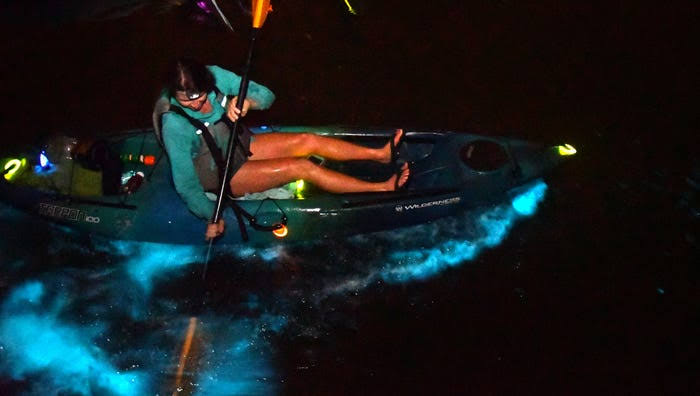
When the water is disturbed by a paddle, fish, or swimmer, these organisms flash a bright blue-green light.
What Is Bioluminescence, Exactly?
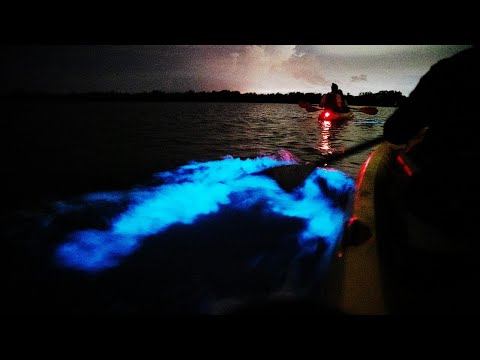
Bioluminescence is the natural production of light by a living organism, created through a chemical reaction inside its own body rather than by reflecting light from another source. It shows up across nature — in fireflies, deep-sea fish, and certain fungi — but along Florida’s Space Coast, it’s the marine version that draws visitors after dark.
Unlike a glow stick or an underwater light, this glow is biological. According to NOAA’s National Ocean Service, bioluminescence occurs throughout marine habitats, from the deep seafloor to shallow coastal waters like the lagoons around Cocoa Beach.
The Two Creatures Behind Cocoa Beach’s Glow
Cocoa Beach’s glow doesn’t come from one single organism — it comes from two, and which one you’re seeing depends on the time of year.
Dinoflagellates (Summer Glow)
Dinoflagellates are microscopic, single-celled plankton that live throughout the Indian River Lagoon and Banana River. When the water around them is disturbed, they flash a bright blue-green light almost instantly. This is the classic “glowing water” effect most visitors come to see, and it’s strongest during the warm summer months.
Comb Jellies (Winter Glow)
As water temperatures cool, comb jellies (scientifically called ctenophores) become the dominant source of the glow. These gelatinous creatures are roughly four inches long, harmless to touch, and considered some of the oldest animal species on Earth. Their light shows up as individual glowing pulses rather than the sweeping glow dinoflagellates create.
Dinoflagellates vs. Comb Jellies
| Feature | Dinoflagellates | Comb Jellies (Ctenophores) |
|---|---|---|
| Size | Microscopic (invisible individually) | About 4 inches long |
| Peak season | Summer (roughly July–October) | Cooler months (roughly November onward) |
| Glow style | Sweeping trails, sparkling clouds | Individual glowing pulses |
| Trigger | Movement/pressure on the water | Physical disturbance or contact |
| Safe to touch? | Yes, generally harmless | Yes, generally harmless |
| Best viewed via | Paddle strokes, swimming, boat wake | Close-up viewing near the water’s surface |
The Science: How Luciferin Creates Light
The glow itself comes down to one core chemical reaction. Inside these organisms is a light-producing compound called luciferin. When the organism’s cell wall is disturbed — by pressure, movement, or a predator brushing past — luciferin reacts with oxygen, triggered by an enzyme called luciferase, and releases energy as visible light.
This reaction happens almost instantly, which is why a single paddle stroke can create a glowing streak that fades within seconds. For the organisms themselves, this flash isn’t just decorative — scientists believe it startles or confuses predators, buying the tiny creature a split-second chance to escape, and may also play a role in attracting prey or communicating.
Best Time and Conditions to See the Glow
Seeing a strong, memorable display comes down to a few overlapping factors. Getting even two or three of these right dramatically improves your chances.
Best Season
Dinoflagellate season peaks from roughly July through October, when warm water temperatures support the largest plankton populations. Comb jellies tend to take over starting around November, offering a different — but still striking — version of the glow through the cooler months.
Moon Phase Matters
The darker the sky, the brighter the glow appears. Tour operators consistently recommend booking during the days surrounding a new moon, when there’s little to no moonlight competing with the bioluminescence. A full moon doesn’t stop the glow from happening, but it does make it noticeably harder to see.
Weather and Water Conditions
- Clear, calm nights work best — heavy rain or cloud cover can reduce visibility (though light rain sometimes stirs up more glow).
- Warm water temperatures support denser plankton populations.
- Still, undisturbed water makes each paddle stroke or fish movement stand out more clearly against the darkness.
Best-conditions checklist:
- ✅ New moon week (or a few days before/after)
- ✅ Summer months for dinoflagellates; November onward for comb jellies
- ✅ Clear skies, minimal cloud cover
- ✅ Warm water temperatures
- ✅ Calm, still water
Where to See Bioluminescence Near Cocoa Beach
Several waterways in the area support reliable bioluminescent displays, each with a slightly different access experience.
Banana River
Located right alongside Cocoa Beach, the Banana River is one of the most convenient and frequently used spots for guided night tours.
Indian River Lagoon
One of the most biologically diverse estuaries in North America, the Indian River Lagoon offers some of the most consistent bioluminescence sightings in the region, alongside wildlife like manatees and dolphins.
Merritt Island National Wildlife Refuge
A short drive north of Cocoa Beach, Merritt Island offers self-guided kayak access points, including the Biolab Boat Ramp and Beacon 42 Boat Ramp, for visitors who want to explore independently.
Mosquito Lagoon / Canaveral National Seashore
Further north near Titusville, Mosquito Lagoon within the Canaveral National Seashore has multiple launch sites, including Eddy Creek and Haulover Canal, and is a popular alternative when Cocoa Beach tours are sold out.
Guided Tour vs. DIY Kayaking: Which Is Right for You?
Both options can get you to the glow — the right one depends on your comfort level, budget, and how hands-off you want the experience to be.
| Factor | Guided Tour | DIY / Self-Guided Kayaking |
|---|---|---|
| Best for | First-timers, families, out-of-town visitors | Experienced kayakers, locals, budget-conscious travelers |
| Cost | Paid (typically ranges by operator and tour length) | Just gear rental or your own kayak |
| Convenience | Guide handles logistics, timing, and location | You research moon phase, launch points, and timing yourself |
| Equipment | Kayak, paddle, life jacket usually included | You provide or rent your own gear |
| Local knowledge | Guides know current hotspots and conditions | Requires your own research |
| Clear kayak option | Often available for enhanced viewing | Rare unless you rent one separately |
Expert tip: If it’s your first time seeing bioluminescence, a guided tour — especially a clear-bottom kayak tour — removes the guesswork around timing and location, since operators actively track moon phases and recent glow conditions.
Is It Safe to Touch or Swim in Glowing Water?
Yes — both dinoflagellates and comb jellies found around Cocoa Beach are generally considered harmless to touch and swim near.
The glow itself is not a sign of pollution or danger; it’s simply a natural light-producing reaction. That said, always follow your tour guide’s safety instructions, wear a life jacket, and avoid swimming alone at night in unfamiliar water regardless of bioluminescence.
Worth noting: bioluminescence is different from red tide, which is a separate, sometimes harmful algal bloom. Standard Cocoa Beach bioluminescence is not related to red tide events.
How Bioluminescence Compares to Other Glowing Bays Worldwide
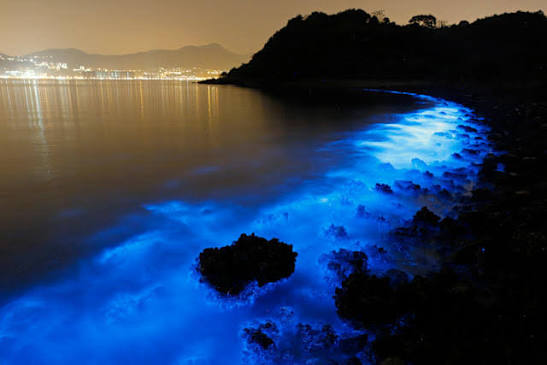
Florida’s Space Coast isn’t the only place with this phenomenon, but it’s one of the most consistent displays in the continental United States.
Puerto Rico’s Mosquito Bay in Vieques is often considered the brightest bioluminescent bay in the world, thanks to its unusually dense, isolated dinoflagellate population.
Cocoa Beach’s advantage is accessibility — it’s a short trip from Orlando, making it one of the easiest ways for U.S. travelers to see genuine bioluminescence without an international flight.
Tips for Photographing Bioluminescence
- Use a camera capable of long-exposure or low-light shooting; most smartphones alone will struggle to capture it well.
- A tripod or stabilized surface helps significantly, since exposures may need to be several seconds long.
- Avoid using flash — it washes out the glow entirely.
- Manage expectations: photos rarely capture the glow as vividly as it appears to the naked eye in person.
Frequently Asked Questions (FAQs)
Why does Cocoa Beach glow at night?
The glow comes from bioluminescent organisms — mainly dinoflagellates in summer and comb jellies in cooler months — that emit light when the water around them is disturbed.
Is Cocoa Beach bioluminescence real or exaggerated?
It’s a real, well-documented natural phenomenon, not a myth or marketing trick, though its intensity varies night to night.
What is the difference between dinoflagellates and comb jellies?
Dinoflagellates are microscopic plankton that create sweeping glowing trails, while comb jellies are larger, gelatinous creatures that glow with individual pulses of light.
When is the best time of year to see bioluminescence in Cocoa Beach?
Roughly July through October is peak dinoflagellate season, while comb jellies become more prominent starting around November.
Does the moon phase affect bioluminescence visibility?
Yes — the darker the sky, the more visible the glow. New moon nights offer the best viewing conditions.
Can you see bioluminescence during a full moon?
The organisms still glow, but bright moonlight makes the effect much harder to see clearly.
Is bioluminescence in Cocoa Beach visible year-round?
Some level of bioluminescence is often present year-round, but the most vivid summer displays are seasonal.
Where exactly can you see bioluminescence near Cocoa Beach?
Popular spots include the Banana River, the Indian River Lagoon, Merritt Island National Wildlife Refuge, and Mosquito Lagoon near Titusville.
Do I need a guided tour to see the glow?
Not necessarily — self-guided kayaking is possible at spots like Merritt Island, but a guided tour offers local knowledge and often better-timed viewing.
How long do bioluminescence kayak tours typically last?
Most tours run about 1.5 to 2 hours, though this varies by operator.
Is it safe to touch or swim in glowing water?
Yes, the organisms responsible for Cocoa Beach’s glow are generally considered harmless to touch and swim near.
Are comb jellies dangerous to touch?
No, comb jellies found in this region are considered safe and harmless to handle gently.
Does bioluminescence harm the water or wildlife?
No — it’s a natural biological process and not an indicator of pollution or ecosystem harm.
Can rain or clouds affect bioluminescence visibility?
Heavy cloud cover and rain can reduce visibility, though very light rain sometimes stirs the water and adds extra glow.
Why does disturbing the water make it glow?
Movement or pressure against the organism’s cell wall triggers a chemical reaction between luciferin and oxygen, releasing visible light.
What is luciferin and luciferase?
Luciferin is the light-producing compound inside the organism, and luciferase is the enzyme that helps trigger the reaction with oxygen to produce light.
Do fish and dolphins also create glowing trails?
Yes — any movement through water containing dinoflagellates, including fish, dolphins, and manatees, can trigger a glowing trail.
Is Cocoa Beach bioluminescence similar to Puerto Rico’s bio bay?
It’s the same general phenomenon, though Puerto Rico’s Mosquito Bay is typically brighter due to its unusually concentrated, isolated dinoflagellate population.
Can kids join a bioluminescence kayak tour?
Many tours are family-friendly, though weight and age requirements vary by operator, so it’s worth checking in advance.
Do bioluminescence tours get cancelled for weather?
Yes, tours are sometimes cancelled or rescheduled for storms or unsafe conditions, and most operators offer rebooking or refund policies.
How far in advance should I book a bioluminescence tour?
Booking early is strongly recommended, especially for new moon weekends during peak summer season, since tours commonly sell out.
Key Takeaways
- Cocoa Beach glows because of bioluminescence — a natural chemical light reaction inside dinoflagellates (summer) and comb jellies (cooler months).
- The glow is triggered when the water is disturbed by a paddle, fish, or swimmer.
- New moon nights during peak summer season (roughly July–October) offer the best viewing conditions.
- The Banana River, Indian River Lagoon, Merritt Island, and Mosquito Lagoon are the primary viewing areas.
- Both guided tours and self-guided kayaking are safe, viable ways to experience it, and the organisms themselves are generally harmless to touch.
