

Why Is My Car Shaking When I Stop? You ease up to a red light, come to a stop, and suddenly the whole car starts trembling — steering wheel, seat, maybe even the dashboard.
Then the light turns green, you accelerate, and it disappears like nothing happened. It’s unsettling, and it’s one of the most common reasons drivers search for answers before calling a shop.
The good news: shaking when you stop almost always falls into one of two clear categories, and figuring out which one you’re dealing with narrows the cause fast.
Why Is My Car Shaking When I Stop?

Shaking when you stop is usually caused by one of two things: an engine or idle-related issue (worn engine mounts, spark plugs, a vacuum leak, or dirty fuel injectors) or a braking-related issue (warped brake rotors, worn pads, or a sticking caliper). The key clue is when the shake happens — at idle in general, or specifically when your foot is on the brake.
Key takeaways:
- If the car shakes anytime it’s stopped and idling — brake pedal or not — the cause is almost always engine or drivetrain-related.
- If it only shakes when you press the brake pedal to slow down or stop, the cause is almost always brake-related.
- Shaking that disappears the moment you shift into Park often points to engine or transmission mounts.
- Brake-related shaking is a safety issue and deserves prompt attention; engine-related idle shake is usually fine to schedule normally unless paired with warning lights or stalling.
First, Figure Out When the Shaking Happens
Before diagnosing a specific part, narrow down the pattern. This single step does more to identify the cause than almost anything else.
Shaking at Idle or Stoplights (Engine Running, Foot Off the Brake)
If your car shakes simply from sitting still with the engine running — regardless of whether your foot is on the brake — the issue is almost always engine-related, since at idle the engine runs at low speed, the fuel mixture must stay precise, and any imbalance in those systems shows up as noticeable vibration. This type of shake often eases or disappears once you start moving, because the forward motion of the car can mask the vibration, which is why the problem seems to fade once you’re driving.
Shaking Specifically When You Apply the Brakes
If the car is smooth while simply idling but starts shaking the moment you press the brake pedal to slow down, a shaking or pulsating sensation when applying the brake pedal almost always indicates excessive rotor runout or a variation in rotor thickness — commonly (if imprecisely) called “warped rotors.” One useful clarifying rule: if the vehicle vibrates while sitting completely still at a light with your foot on the brake and the wheels aren’t turning, the rotors are not the cause, since a rotor can only cause vibration while it’s actually spinning.
Quick Self-Diagnostic Checklist
Run through these questions before your appointment — the answers will help a mechanic (or you) narrow things down fast:
- Does it shake in Park as well as in Drive? If it stops in Park, suspect engine or transmission mounts.
- Does it only shake while your foot is actively braking and the car is slowing down? Suspect rotors, pads, or a caliper.
- Does turning on the AC make it noticeably worse? The AC compressor engages and places additional load on the engine, and that extra load can amplify existing issues like weak engine mounts.
- Is there a check engine light, stalling, or rough acceleration alongside the shake? That points toward the fuel/ignition system rather than mounts or brakes.
- Does the steering wheel shake specifically, or does the whole car/seat shake? Steering-wheel-specific shaking during braking usually points to the front brakes.
Common Causes of Shaking When Idling or Stopped
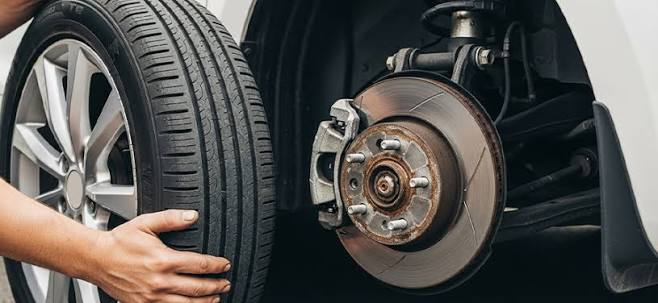
Worn or Broken Engine Mounts
Engine mounts hold the engine in place and absorb its natural vibration before it reaches the cabin. Over time, mounts can crack or weaken, and when that happens, the engine still runs, but its movement transfers directly into the vehicle. A simple test many mechanics recommend: shift into neutral — if the shaking noticeably lessens, broken or worn mounts are a likely cause.
Dirty or Worn Spark Plugs
Spark plugs ignite the fuel-air mixture in each cylinder. A weak or misfiring plug can disrupt the engine’s rhythm, causing shaking while idling or a steering wheel that gently vibrates when the vehicle is stopped. This is one of the most common and least expensive causes to rule out first.
Vacuum Leaks
Your car’s vacuum hoses help manage exhaust gases and airflow, and when a hose cracks, loosens, or disconnects, the air-fuel mixture is thrown off, which can cause the car to shake, stall, or have trouble starting. A hissing sound near the engine bay is a common accompanying clue.
Clogged Air or Fuel Filters
A clogged air filter restricts the airflow needed for proper combustion, which can cause the vehicle to run “rich” and result in rough idling. Fuel filters cause a similar imbalance from the opposite direction — restricted fuel delivery rather than restricted air.
Dirty Fuel Injectors
If fuel injectors become fouled by dirt or debris, they deliver uneven amounts of fuel with each engine cycle, causing a high-frequency shudder or shake. Injector cleaning or replacement typically resolves this.
Idle Air Control and Sensor Issues
Modern engines rely on sensors — including the idle air control valve and oxygen sensor — to fine-tune the fuel-air mix in real time. When these misread or fail, the engine’s computer can’t maintain a steady idle, producing the same kind of rough, shaky idle as a mechanical fuel or ignition problem.
Common Causes of Shaking When Braking to a Stop
Warped or Worn Brake Rotors
This is by far the most common braking-related cause. Rotors don’t literally warp the way a metal plate warps under heat — they develop lateral runout, where the disc wobbles slightly side to side as it spins, and disc thickness variation (DTV), where the rotor isn’t uniformly thick around its circumference. Both issues prevent the brake pad from gripping evenly, which is what you feel as pulsation.
Worn or Uneven Brake Pads
Brake pads wear down gradually, and when they get too thin or wear unevenly from side to side, they can’t make smooth, consistent contact with the rotor, producing vibration along with the more familiar squealing or grinding sounds.
Sticking Brake Caliper
A caliper that doesn’t release properly can overheat one rotor unevenly, creating hot spots that lead to vibration and, often, a noticeable pull to one side while braking along with a burning smell near that wheel.
Tire or Wheel Balance Issues
Tire and wheel problems can mimic warped-rotor symptoms, since braking shifts weight forward and any existing tire or wheel issue becomes more noticeable under that load. This is why some braking-related shakes turn out to be a tire issue rather than a true brake-component problem.
Symptom-to-Cause Comparison Table
| When You Feel It | Where You Feel It | Most Likely Cause | Urgency |
|---|---|---|---|
| Anytime stopped, engine running | Whole car, seat, dashboard | Worn/broken engine mounts | Schedule soon |
| Anytime stopped, worse with AC on | Whole car | Engine mounts + added AC load | Schedule soon |
| At idle, with rough running or stalling | Whole car, engine bay | Spark plugs, vacuum leak, injectors | Schedule soon |
| Only shakes in Drive/Reverse, not Park | Whole car | Engine or transmission mounts | Schedule soon |
| Only when pressing the brake pedal | Steering wheel (front) or pedal (rear) | Warped/worn rotors | Get inspected promptly |
| When braking, plus pulling to one side | Steering wheel, plus a pull | Sticking caliper or uneven pad wear | Get inspected promptly |
| When braking, at low speeds specifically | Pedal | Glazed brake pads | Get inspected promptly |
| At all speeds, not just when stopping | Steering wheel, worsens with speed | Tire/wheel balance or alignment | Schedule soon |
Is It Safe to Keep Driving?

This depends heavily on which category you’re dealing with. A mild engine-mount or idle-related shake is generally safe to drive on for a short period while you schedule a repair, as long as there’s no stalling, warning lights, or loss of power.
Brake-related shaking deserves faster attention. A pulsating or shaking brake pedal can compromise braking performance, and while you may be able to drive short distances with brake vibrations, it isn’t safe for extended driving. If you notice grinding, a burning smell, a brake warning light, or the pedal feels soft or sinks lower than usual, treat it as urgent and get the vehicle inspected before continuing to drive normally.
How Much Does It Cost to Fix?
Exact pricing varies by vehicle, region, and shop, but typical ranges reported across repair shops and parts retailers generally fall into these bands:
| Repair | Typical Cost Range |
|---|---|
| Spark plug replacement (full set) | $100–$300 |
| Engine mount replacement (per mount) | $200–$700 |
| Vacuum hose repair | $75–$250 |
| Fuel injector cleaning | $50–$150 |
| Brake rotor resurfacing | $30–$75 per rotor |
| Brake rotor replacement (pair) | $150–$400 |
| Brake pad replacement (per axle) | $150–$300 |
Always confirm current pricing with a local shop, since parts costs and labor rates shift over time and by region.
How a Mechanic Diagnoses the Cause
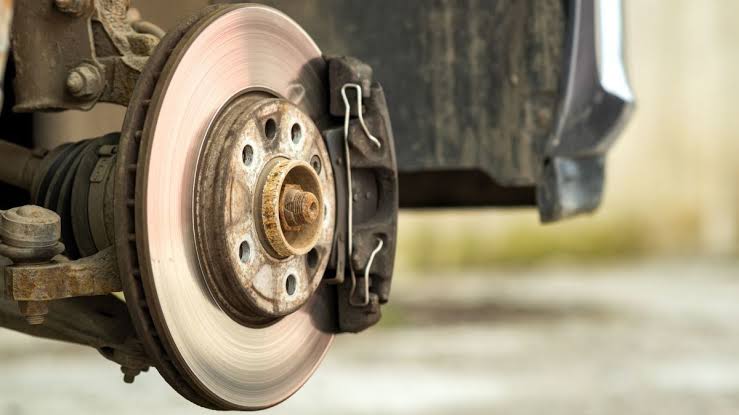
A thorough diagnostic typically follows the same logic outlined above, just with professional tools layered in:
- Symptom interview — when, where, and under what conditions the shake occurs.
- Visual inspection — engine mounts, vacuum hoses, rotor surface condition, and pad thickness.
- OBD-II diagnostic scan — checks for stored fault codes related to misfires, sensor readings, or fuel trim issues.
- Rotor measurement — using a dial indicator to measure actual runout and thickness variation rather than relying on guesswork.
- Road or lift test — confirming whether the shake reproduces under braking, idling, or gear changes as described.
Frequently Asked Questions (FAQs)
Why is my car shaking when I stop?
It’s almost always either an engine/idle issue (worn mounts, spark plugs, vacuum leaks) or a brake issue (warped rotors, worn pads). When and where you feel the shake usually reveals which one it is.
Why does my car shake when idling but not while driving?
Forward motion at speed can mask engine or mount-related vibration, which is why idle-related shaking often becomes far less noticeable — or disappears entirely — once you’re moving.
Why does my car shake when I brake but not when I’m driving normally?
This points strongly to the brake system, most commonly rotor runout or thickness variation, since the vibration only appears when the brake pads are actively gripping the rotor.
Is it safe to drive a car that shakes when stopped?
Mild idle-related shaking is usually safe short-term. Shaking during braking should be treated more urgently, since it can indicate reduced and inconsistent stopping power.
Why does my car shake more when the AC is on?
The AC compressor adds extra load to the engine at idle, which can make an existing weak-mount or rough-idle issue more noticeable.
Why does my car shake in Drive but not in Park?
This pattern strongly suggests engine or transmission mounts, since shifting into Park removes the load and torque that expose weak or broken mounts.
What does it mean if my steering wheel shakes when I brake?
Steering wheel vibration during braking typically points to a front brake issue, most often a warped or unevenly worn rotor.
What does it mean if the whole car shakes when stopped?
Whole-car shaking while simply idling (not braking) usually points to engine mounts or an engine performance issue rather than the brakes.
Why does my brake pedal pulse when I stop?
Pedal pulsation specifically during braking is a classic sign of rotor thickness variation or runout, sometimes involving the rear brakes if the pedal itself pulses.
How can I tell if my brake rotors are warped?
The clearest sign is vibration that appears only while actively braking and gets worse as you brake harder, especially noticeable at highway speeds before slowing.
Can bad spark plugs cause my car to shake when stopped?
Yes — worn or misfiring spark plugs disrupt combustion evenly across cylinders, which is felt as a rough, shaky idle, especially when the engine is under low load while stopped.
Can a vacuum leak cause rough idle shaking?
Yes. A vacuum leak throws off the air-fuel ratio the engine needs to run smoothly, often producing a shaky idle along with a hissing sound and sometimes a check engine light.
How much does it cost to replace engine mounts?
Typically $200–$700 per mount depending on the vehicle and labor rates, though costs vary by make, model, and shop.
How much does it cost to fix warped brake rotors?
Resurfacing runs roughly $30–$75 per rotor, while full replacement typically runs $150–$400 for a pair, depending on the vehicle.
Why does my car shake worse in cold weather?
Cold starts can temporarily worsen rough-idle symptoms tied to spark plugs or vacuum issues, since the engine runs less efficiently until it reaches normal operating temperature.
Should I worry if my check engine light is also on?
Yes — a check engine light alongside shaking usually points to a fuel, ignition, or sensor-related cause and is worth having scanned for diagnostic codes soon.
Key Takeaways
Shaking when you stop almost always sorts into one of two clear buckets: something in the engine or mount system disrupting a smooth idle, or something in the brake system creating uneven contact with the rotor.
Pay attention to exactly when and where you feel it — that single detail does most of the diagnostic work. Idle-related shaking is usually fine to schedule normally, but brake-related shaking is a safety matter that deserves prompt professional inspection rather than a wait-and-see approach.
