

Why should college athletes be paid? This question has sparked fierce debate for decades — and in 2026, it is more relevant than ever.
College athletes generate billions of dollars in revenue for their universities, yet historically they walked away with nothing but a scholarship. The landscape is shifting fast. With the House v.
NCAA settlement now in effect and revenue sharing officially launched in 2025, the argument for paying college athletes is no longer just moral — it is legal, financial, and deeply human.
Why Should College Athletes Be Paid?
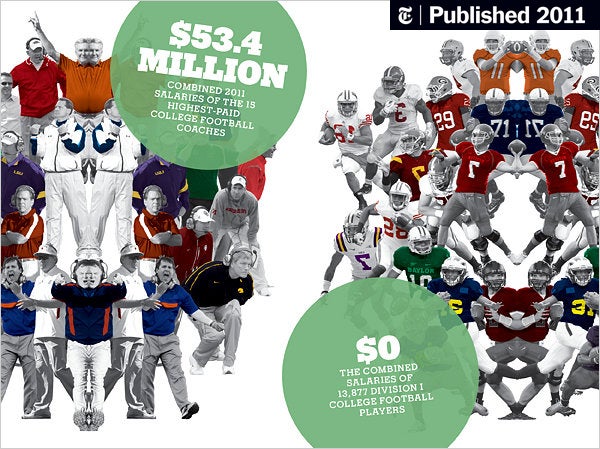
College sports is not a small-time hobby. It is a massive commercial enterprise that rivals professional leagues in scale and intensity.
The NCAA reported nearly $19 billion in total Division I revenues in 2023. Television networks pay hundreds of millions for broadcast rights. Stadiums sell out. Merchandise flies off shelves.
Yet for most of history, the athletes at the center of all this revenue received no direct share of it.
What Has Changed: The House v. NCAA Settlement
In June 2025, federal judge Claudia Wilken approved the landmark House v. NCAA settlement, allowing schools to directly pay college athletes for the first time in NCAA history.
Under the new revenue-sharing model, Division I schools can now distribute up to $20.5 million per year to their athletes. Power-conference programs are required to participate, while other D-I schools can opt in.
As of the 2025-26 season, 310 schools opted into the revenue-sharing terms. This marks the beginning of a new era — one where the question shifts from “should college athletes be paid?” to “how much and how fairly?”
How Much Money Is Actually Flowing to College Athletes Now?
The numbers in 2025 are staggering compared to just a few years ago.
| Year | Total Player Earnings (College Football) |
|---|---|
| 2021 | ~$393 million (NIL only) |
| 2024 | ~$1 billion (NIL + collectives) |
| 2025 | ~$1.9 billion (NIL + collectives + revenue sharing) |
| 2026 (projected) | ~$2.4 billion |
| 2027 (projected) | ~$2.6 billion |
College football players alone are projected to earn $1.9 billion in 2025, nearly doubling the $1 billion they earned in 2024. Revenue sharing accounts for $1.4 billion of that figure.
The NIL Era: A Game-Changer That Exposed the Imbalance
NIL — Name, Image, and Likeness — rights were granted to college athletes in 2021. Before that, an athlete could not even be paid for signing an autograph or appearing in a commercial.
The Texas football team disclosed $20.8 million in NIL deals from July 2021 to July 2024. LSU football disclosed $8.7 million over the same period.
But here is the uncomfortable truth the NIL era revealed: only 1% of athletes earned more than $50,000, and 41% of all NIL deals went to football players. Most athletes — especially those in non-revenue sports — earned very little.
Why Should College Athletes Be Paid: The Core Arguments
They Work Full-Time Hours — Without Full-Time Pay
College athletes do not just practice a few hours a week. The commitment is enormous.
NCAA research shows football players in major college programs spend an average of 44.8 hours per week on athletic activities. A Pac-12 study found athletes averaging 50 hours per week on athletics during the season.
Add 38–40 hours of academic work on top of that, and many Division I athletes are effectively putting in 60–70 hour weeks — more than most full-time employees. Yet they are not classified as employees and have traditionally received no wage.
Scholarships Are Not Enough Compensation
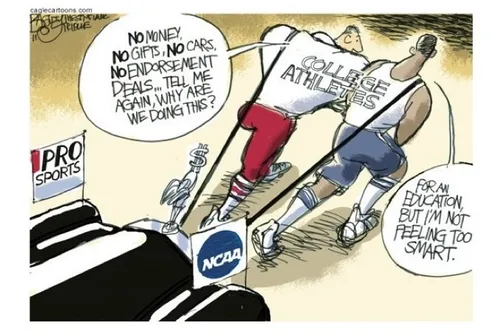
Scholarships are valuable — no one disputes that. But they do not cover everything, and they come with strings attached.
A 2011 National College Players Association study found that a large number of athletes on full athletic scholarships still lived below the federal poverty line after accounting for all expenses not covered by the scholarship.
Cost-of-living gaps, travel costs, and basic personal expenses all pile up. A scholarship covers tuition and room and board — not the rest of life.
The Universities Are Making Enormous Profits
Here is where the fairness argument hits hardest.
In 2024, Kirby Smart, the head football coach of the University of Georgia, received a salary of more than $13 million. The 12 highest-paid coaches all earned at least $9 million each.
Meanwhile, the athletes those coaches were paid to train and develop were generating the revenue that funded those salaries — without receiving a proportional share.
When a university earns tens of millions from ticket sales, TV rights, and merchandise tied directly to the performance of its athletes, and those athletes see none of that money, it is a labor model that would be challenged in almost any other industry.
Injury Risk With No Guaranteed Income
 Why Should College Athletes Be Paid? Expert Insights 2026
College athletes put their bodies on the line every season. Injuries can end careers before they ever reach the professional level.
A torn ACL, a spinal injury, a concussion — these can have permanent consequences for an athlete’s health and future earnings potential. And because college athletes are not employees, they have historically had limited protections.
Beginning August 1, 2024, the NCAA created a two-year post-eligibility insurance program to support athletes who suffered injuries during their competitive years. That is progress — but it underscores how long athletes were competing without adequate protection.
Only a Small Fraction of College Athletes Go Pro
This is often used as an argument against paying athletes — “they should focus on education, not pro dreams.” But it actually argues the opposite.
If only 1–2% of college athletes make it professionally, that means the vast majority will never earn money from their sport after graduation. The window during which their athletic talent has market value is narrow and finite.
Paying them while they are in college — when their talent is generating real economic value — is simply fair. It ensures they benefit from something they poured years of their lives into, even if a professional career never materializes.
The Exploitation Argument: What Critics of the Old System Say
The language used by scholars studying this issue is direct.
David J. Berri, in his article “Paying NCAA Athletes,” wrote that college athletes are frequently exploited by the NCAA, and that outside of sports, it would be illegal for organizations to collectively limit employee compensation the way the NCAA did for decades.
The NCAA generated over $1 billion in revenues from broadcasting contracts alone while maintaining non-profit status. Athletes who generated that revenue were prohibited from sharing in it.
The House settlement began to correct this imbalance — but the debate over fair compensation is far from over.
Breaking Down the Revenue Sharing Model in 2026
The new system is not a salary — it is a revenue share. Here is how it works.
| Component | Detail |
|---|---|
| Annual school cap | Up to $20.5 million per school (2025-26) |
| Cap calculation | ~22% of ticket sales, sponsorships, media rights |
| Sports distribution | ~90% goes to football and men’s basketball at FBS schools |
| Scholarship awards | ~90% of new scholarship awards go to non-revenue sports |
| Growth | Cap increases annually |
Football and men’s basketball drive the most revenue, so they receive the largest share. But the model also creates new scholarship opportunities for athletes in women’s sports and other non-revenue programs.
Gender Equity and Paying College Athletes
One often-overlooked dimension of this debate is gender. The Ipsos poll conducted in February 2025 found that pluralities of Americans want to see more coverage of women’s sports and report seeing more brand deals and endorsements for female athletes.
NIL has opened doors for female athletes who previously had very little commercial opportunity. Gymnasts, swimmers, and volleyball players are now signing deals that would have been impossible before 2021.
Paying college athletes — through revenue sharing and NIL — is also one of the most direct ways to begin closing the visibility and earnings gap between men’s and women’s sports at the collegiate level.
What the American Public Actually Thinks
Support for paying college athletes is not a fringe position. It is the majority view.
A 2025 Ipsos poll found that 60% of Americans and 61% of sports fans say that allowing college athletes to earn money through NIL has a positive impact on college athletics. A majority also support direct revenue sharing.
At the same time, the poll notes that many Americans feel the commercialization of college sports has gone too far, and that some of the tradition and pageantry are being lost. This tension — between fair compensation and preserving the amateur spirit — defines the ongoing debate.
Arguments Against Paying College Athletes (And Why They Fall Short)
It is only fair to address the counterarguments seriously.
“It Will Hurt Smaller Schools”
This is a legitimate concern. In 2022, only 28 Division I athletic programs generated more revenues than expenses. Schools with smaller budgets cannot compete with programs spending $35–40 million on player compensation.
However, the revenue-sharing model includes protections. Schools with $50 million or less in revenue are shielded from requirements to disproportionately cut roster spots. The system is still evolving, but there are guardrails.
“Athletes Already Get Scholarships”
Scholarships are compensation, yes. But a scholarship and a fair wage are not the same thing. The average American worker would not accept “free training and housing” in place of a paycheck. The fact that athletes historically did accept this arrangement says more about the power imbalance than about fairness.
“It Will Hurt Academic Focus”
The concern that paid athletes will neglect academics is understandable, but the evidence does not strongly support it. Many professional leagues require athletes to maintain academic standing. The NCAA already enforces GPA minimums (2.3 minimum to compete). Payment and academic performance are not mutually exclusive.
The Future of Paying College Athletes: What Comes Next
The 2025-26 academic year is the first where schools directly share revenue with athletes. But this is just the beginning of a rapidly evolving landscape.
College football player earnings are projected to reach $2.4 billion in 2026 and $2.6 billion in 2027 according to Opendorse data. As that number climbs, questions about how to distribute it fairly — across sports, genders, and school sizes — will only intensify.
The White House has also weighed in. A July 2025 executive order titled “Saving College Sports” raised concerns about the bidding wars between universities and called for a more structured system. This signals that federal policy may play a larger role in shaping athlete compensation going forward.
Key Data Summary: Why College Athletes Deserve Pay
| Factor | Data Point |
|---|---|
| Weekly athletic hours (football) | 44.8 hours average |
| Weekly combined workload (sport + academics) | 60–70+ hours |
| NCAA Division I total revenue (2023) | ~$19 billion |
| Revenue-sharing cap per school (2025-26) | $20.5 million |
| College football player earnings (2025) | ~$1.9 billion projected |
| Americans supporting athlete pay | 60% (Ipsos 2025) |
| NIL deals earning over $50,000 | Only 1% of athletes |
| Schools with profitable athletic programs | 28 out of 350+ Division I programs |
Frequently Asked Questions (FAQs)
Why should college athletes be paid if they already get scholarships?
Scholarships cover tuition and housing — not all living expenses. Athletes working 40–70 hours a week generate billions in revenue, and a scholarship alone does not reflect that value.
Are college athletes being paid in 2025?
Yes. The House v. NCAA settlement, approved in June 2025, allows schools to directly share up to $20.5 million per year with athletes through revenue sharing.
What is NIL and how does it relate to paying college athletes?
NIL stands for Name, Image, and Likeness. Since 2021, athletes can earn money from endorsements, social media, and appearances — separate from any university payments.
How many hours a week do college athletes actually work?
NCAA research shows Division I football players average 44.8 hours per week on athletics alone, with total combined workloads (sport plus academics) reaching 60–70 hours weekly.
Do most college athletes make it to the professional level?
No. Only around 1–2% of college athletes are drafted or signed professionally. The majority never earn money from their sport after college graduation.
Which sports generate the most college revenue?
Football and men’s basketball are by far the biggest revenue generators. At most FBS schools, these two sports account for roughly 90% of revenue-sharing payments.
Does paying college athletes hurt smaller schools?
It can create imbalances. However, the current revenue-sharing model includes protections for smaller programs and is designed to gradually expand access across all Division I schools.
What did the House v. NCAA settlement change?
It allowed schools to directly pay athletes for the first time in NCAA history, beginning in the 2025-26 academic year, with a cap of $20.5 million per school annually.
Is paying college athletes fair to non-revenue sports?
The new system directs most revenue-sharing money to football and basketball but allocates new scholarship awards heavily toward non-revenue and women’s sports to balance it out.
What do most Americans think about paying college athletes?
A 2025 Ipsos poll found 60% of Americans support NIL compensation for college athletes, and a majority also favor direct revenue sharing from athletic department earnings.
Conclusion
Why should college athletes be paid? Because they already are the engine of a multi-billion dollar industry, and fairness demands they share in what they help create.
College athletes spend 40 to 70 hours a week on their sport and academics combined.
They generate billions in television contracts, ticket sales, and merchandise revenue.
They risk injury, sacrifice social lives, and give years of their physical prime — all while head coaches pocket salaries of $10 million or more.
The House v. NCAA settlement and the revenue-sharing era that began in 2025 represent real progress.
But the system still has gaps. Only 1% of athletes earn meaningful NIL income. Smaller schools struggle to compete.
Non-revenue sport athletes remain undercompensated. The conversation is not over — it has only just become honest.
Paying college athletes is not just an economic argument. It is a question of dignity, labor rights, and basic fairness.
In 2026, the answer to “why should college athletes be paid?” is simple: because they have always deserved it.
