

How do you say why in Spanish? The answer is ¿Por qué? — and it is the single most important question word every Spanish beginner must learn.
Pronounced “por keh,” this two-word phrase unlocks real conversations with native speakers.
But here is the thing: Spanish has four versions of “why/because” that look almost identical — por qué, porque, porqué, and por que. Each one means something different.
How Do You Say Why in Spanish?

¿Por qué? is the direct Spanish translation of “why.”
It is two separate words with an accent mark (´) over the letter e in qué. That accent mark is not decoration — it tells you this is a question word.
Pronunciation: por = “pohr” (rhymes with “door”) + qué = “keh”
Together: pohr-KEH
Quick example:
¿Por qué estás aquí? → Why are you here?
Always write it as two words when asking a question. Never write it as one word (porque) in a question — that is one of the most common beginner mistakes.
The 4 Versions of Why/Because in Spanish
This is where most learners get confused. Spanish has four words that all look and sound similar but work very differently.
| Word | Spelling | Meaning | Use |
|---|---|---|---|
| ¿Por qué? | Two words + accent | Why? | Asking a question |
| Porque | One word, no accent | Because | Answering a question |
| Porqué | One word + accent | The reason / motive | Noun (the “why”) |
| Por que | Two words, no accent | For which | Relative clause |
You will use the first two (por qué and porque) in 95% of your conversations. The last two are more advanced and mostly show up in formal writing.
How to Use ¿Por Qué? — Asking Why in Spanish
¿Por qué? is used to ask about the cause or reason behind something. It works exactly like “why” in English — just drop it into any question.
Direct questions:
¿Por qué no viniste? → Why didn’t you come?
¿Por qué lloras? → Why are you crying?
¿Por qué estudias español? → Why are you studying Spanish?
Indirect questions (inside a sentence):
No entiendo por qué hizo eso. → I don’t understand why he did that.
Dime por qué llegaste tarde. → Tell me why you arrived late.
Me pregunto por qué no comes. → I wonder why you don’t eat.
Notice that in indirect questions, ¿por qué? still keeps its accent mark and two-word spelling — even without a question mark at the end.
How to Use Porque — Saying Because in Spanish
Porque (one word, no accent) means “because.” It is the natural partner of ¿por qué? — when someone asks por qué, you almost always answer with porque.
¿Por qué no viniste? → Porque estaba enfermo. Why didn’t you come? → Because I was sick.
¿Por qué estudias tanto? → Porque quiero aprender. Why do you study so much? → Because I want to learn.
¿Por qué llegaste tarde? → Porque hubo mucho tráfico. Why were you late? → Because there was a lot of traffic.
The simple rule: question = por qué (two words + accent), answer = porque (one word, no accent).
How to Use Porqué — The Reason (Noun)
Porqué (one word + accent) is a noun meaning “the reason” or “the motive.” It always has an article in front of it: el porqué, un porqué, los porqués.
No comprendo el porqué de su actitud. → I don’t understand the reason for his attitude.
Necesito saber el porqué de tu decisión. → I need to know the reason behind your decision.
You will not use this form often as a beginner, but it is good to recognize it. If you see “el porqué” in a text, it simply means “the reason.”
How to Use Por Que — For Which (Relative Clause)
Por que (two words, no accent) is the rarest of the four forms. It means “for which” and appears in relative clauses. In modern Spanish, it usually has a definite article in the middle: por la que, por los que.
Esta es la razón por (la) que te llamé. → This is the reason for which I called you.
Los motivos por (los) que peleaban eran absurdos. → The reasons for which they were fighting were absurd.
As a beginner, you do not need to master this form right away. Focus on por qué and porque first.
Pronunciation Guide for ¿Por Qué?
Getting the pronunciation right makes a huge difference when speaking to native speakers.
| Part | Sound | Sounds Like |
|---|---|---|
| Por | /pɔɾ/ | “pohr” (like “pore”) |
| Qué | /ke/ | “keh” (like “keh”) |
| Full phrase | /pɔɾ ˈke/ | “pohr-KEH” |
Tips to pronounce it correctly:
The r in “por” is a soft, single tap — not the strong rolling r. Think of the “d” sound in the American English word “butter.”
The é in “qué” is a clean, short “eh” sound — no diphthong, no glide. Keep it crisp.
Stress falls on the second syllable: pohr-KEH.
Practice saying it out loud: ¿Por qué? ¿Por qué? ¿Por qué? Repeat it ten times and it will stick.
10 Other Ways to Say Why in Spanish
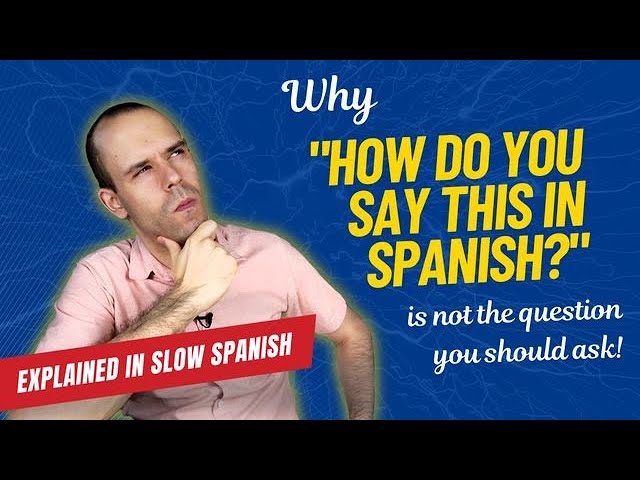
Once you go beyond basic ¿por qué?, Spanish gives you many other ways to ask “why” or explain a reason. Native speakers use these all the time.
Asking Why (Alternatives to ¿Por Qué?):
¿Para qué? — “What for?” / “For what purpose?”
This asks about the goal or intention behind an action, not the cause.
¿Para qué estudias tanto? → What are you studying so hard for?
¿Para qué sirve esto? → What is this for?
Use ¿para qué? when you want to know the purpose or result of something. Use ¿por qué? when you want to know the cause.
¿Cómo? / ¿Qué pasa? — Informal “why” / “what’s going on?”
These are casual expressions used among friends to express confusion or surprise.
¿Cómo? No lo puedo creer. → What? I can’t believe it.
¿Qué pasa? Llegas tarde. → What’s up? You’re late.
¿Acaso…? — Polite or formal “why/could it be that…?”
This is a more formal and polite way to question something. Use it with supervisors or in respectful situations.
¿Acaso no te avisaron? → Could it be that they didn’t tell you?
Explaining Why (Alternatives to Porque):
Por eso — “That’s why” / “For that reason”
No estudié, por eso no pasé el examen. → I didn’t study, that’s why I didn’t pass the exam.
Por esta razón — “For this reason”
Por esta razón, no le gusta viajar. → For this reason, he doesn’t like to travel.
Por lo cual — “Which is why” / “Therefore”
Había una sequía, por lo cual no hubo cosecha. → There was a drought, which is why there was no harvest.
Por ese motivo — “For that motive/reason”
No tenía llaves, por ese motivo no pude entrar. → I didn’t have keys, for that reason I couldn’t get in.
A fin de que — “In order that” / “So that”
Followed by the subjunctive. A bit more formal and literary.
Hice una lista a fin de que no olvidemos nada. → I made a list so that we don’t forget anything.
Con ese objetivo — “With that goal/objective”
Queremos comprar una casa. Con ese objetivo, ahorramos dinero. → We want to buy a house. With that goal, we’re saving money.
Para que — “So that”
Estudio para que puedas tener un mejor futuro. → I study so that you can have a better future.
¿Por Qué? vs ¿Para Qué? — The Difference Explained
This is one of the most common points of confusion for English speakers. Both translate loosely as “why” but they ask different things.
| Phrase | Focuses On | English Equivalent |
|---|---|---|
| ¿Por qué? | The cause / reason | Why? |
| ¿Para qué? | The purpose / goal | What for? / For what purpose? |
Example to see the difference:
¿Por qué corres? → Why are you running? (What is the reason?)
Possible answer: Porque el autobús se va. → Because the bus is leaving.
¿Para qué corres? → What are you running for? (What is the goal?)
Possible answer: Para llegar a tiempo. → In order to arrive on time.
Both questions look similar but they probe for different information. ¿Por qué? digs into the cause. ¿Para qué? digs into the intention or result.
Common Mistakes Beginners Make

Mistake 1: Writing porque in a question
Incorrect: ¿Porque no vienes?
Correct: ¿Por qué no vienes?
Remember: questions always use por qué (two words + accent).
Mistake 2: Writing por qué in an answer
Incorrect: No vine por qué estaba cansado.
Correct: No vine porque estaba cansado.
Remember: answers/reasons always use porque (one word, no accent).
Mistake 3: Dropping the accent mark
Incorrect: ¿Por que no puedes? (This reads as “for which you can’t” — a relative clause)
Correct: ¿Por qué no puedes? (This reads as “why can’t you?”)
The accent mark on qué is what turns it into a question word. Without it, the meaning changes completely.
Mistake 4: Using porque and por qué interchangeably
They sound similar but they are different grammatical tools. One is the question, the other is the answer. You cannot swap them.
Real-Life Conversation Examples
Here are some short dialogues using the vocabulary from this guide:
At school:
A: ¿Por qué no hiciste la tarea? B: Porque no entendí las instrucciones.
A: Why didn’t you do the homework? B: Because I didn’t understand the instructions.
With a friend:
A: ¿Por qué estás triste? B: Porque perdí mi teléfono.
A: Why are you sad? B: Because I lost my phone.
At work (formal):
A: ¿Por qué llegó tarde a la reunión? B: Porque hubo un problema técnico.
A: Why were you late to the meeting? B: Because there was a technical problem.
Expressing a reason:
No me gusta el frío. Por eso prefiero vivir en el sur. I don’t like the cold. That’s why I prefer to live in the south.
How to Say “Why Not” in Spanish
¿Por qué no? is the direct way to say “why not?”
¿Por qué no vienes con nosotros? → Why don’t you come with us?
¿Por qué no intentas? → Why don’t you try?
¿Por qué no los dos? → Why not both?
This phrase became famous through a popular internet meme and is widely understood by Spanish speakers of all ages.
How to Say “That’s Why” in Spanish
“That’s why” is a very useful connector phrase. Spanish has several options:
Por eso — most common and casual
Llegué tarde. Por eso me perdí el inicio. → I arrived late. That’s why I missed the beginning.
Por eso mismo — slightly more emphatic
Por eso mismo te lo dije antes. → That’s exactly why I told you before.
Por esa razón / Por ese motivo — more formal
Por esa razón, tomamos esta decisión. → For that reason, we made this decision.
Spanish Question Words: The Full Family
Knowing “why” is even more useful when you know all the other question words around it. Here is the full set:
| English | Spanish | Pronunciation |
|---|---|---|
| Who | ¿Quién? | kyen |
| What | ¿Qué? | keh |
| Where | ¿Dónde? | DON-deh |
| When | ¿Cuándo? | KWAN-doh |
| Why | ¿Por qué? | pohr-KEH |
| How | ¿Cómo? | KOH-moh |
| How much/many | ¿Cuánto/a? | KWAN-toh |
| Which | ¿Cuál? | kwal |
All of these question words carry accent marks in Spanish. That accent is what marks them as interrogative (question) words — a key grammar rule to remember.
Tips to Remember Por Qué vs Porque Forever
The question-answer pair trick:
Every time you see ¿por qué? there is a porque waiting in the answer. They are always a pair.
¿Por qué? → Porque…
Think of them as a lock and key. The question (por qué) opens the conversation. The answer (porque) closes it.
The accent = question trick:
If it has an accent on the é — it is a question word. ¿Por qué? / ¿Qué? / ¿Cuándo? / ¿Dónde?
No accent = conjunction or noun (because, for which, the reason).
The article trick for porqué:
If you see “el porqué” or “un porqué” — it is the noun form meaning “the reason.” The article gives it away.
Write it out:
Write five questions with ¿por qué? then write five answers with porque. Do this once and the pattern locks in.
How Spanish Speakers Actually Use These Words
In everyday spoken Spanish, native speakers move fast and blend words naturally. Here is what you actually hear:
In casual speech, ¿por qué? often gets clipped to a quick “¿pork-EH?” run together at normal speaking speed. Do not worry about sounding perfect — focus on the stress on the second syllable.
In Mexico and some Latin American countries, ¿para qué? is sometimes preferred over ¿por qué? when asking about purpose. You may hear: ¿Para qué lo quieres? (What do you want it for?) instead of ¿Por qué lo quieres?
In Spain, the vosotros form adds an extra layer: ¿Por qué no venís? (Spain) vs ¿Por qué no vienen? (Latin America). The question word itself stays exactly the same — just the verb form changes.
Across all Spanish-speaking countries, the distinction between ¿por qué? and porque is universal and consistent. This is one of the most stable grammar rules in the language.
Practice Sentences to Build Your Skills
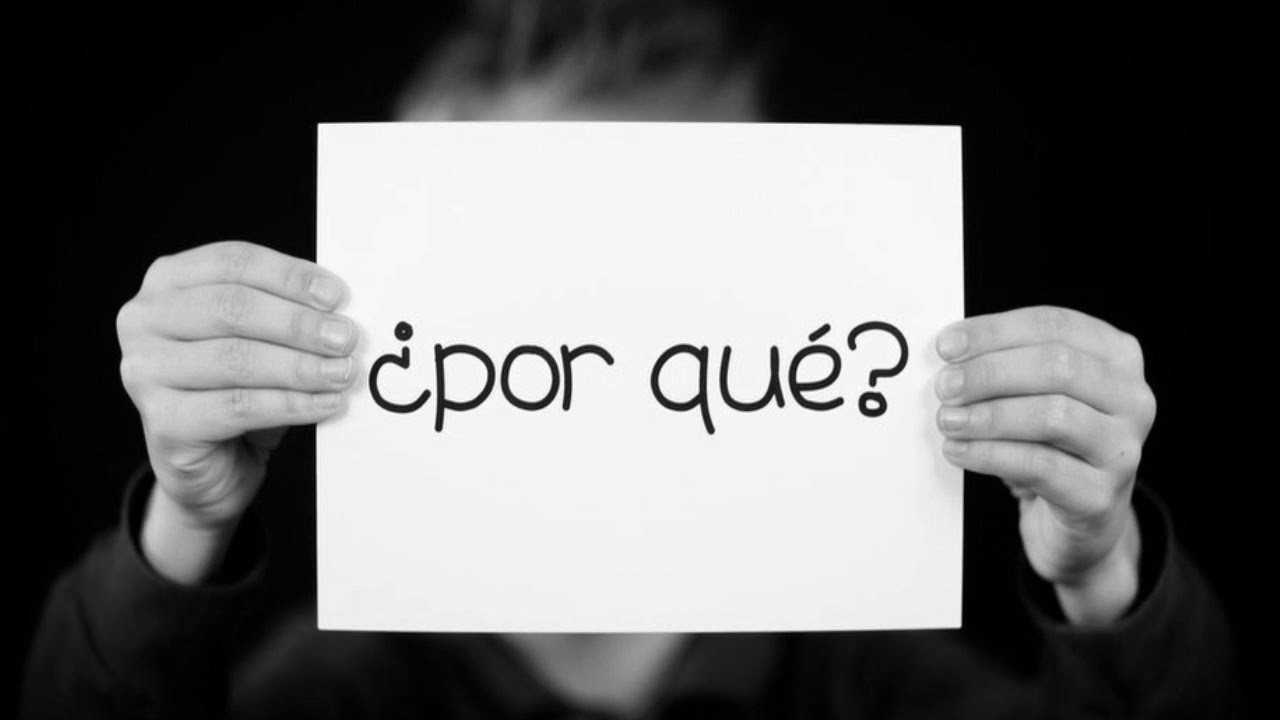
Use these sentences as writing and speaking practice:
Translate to Spanish (answers below):
- Why are you tired?
- Because I worked all day.
- Why don’t you eat meat?
- Because I am vegetarian.
- I don’t know why she left.
- That’s why I called you.
Answers:
- ¿Por qué estás cansado/a?
- Porque trabajé todo el día.
- ¿Por qué no comes carne?
- Porque soy vegetariano/a.
- No sé por qué se fue.
- Por eso te llamé.
Read each sentence out loud. Focus on the accent mark and two-word spacing of ¿por qué? versus the single-word porque.
Vocabulary Table: All the Ways to Express Why in Spanish
| Expression | Literal Meaning | English Equivalent | Register |
|---|---|---|---|
| ¿Por qué? | For what? | Why? | All levels |
| Porque | Because | Because | All levels |
| ¿Para qué? | For what (purpose)? | What for? | All levels |
| Por eso | For that | That’s why | Casual |
| Por esta razón | For this reason | For this reason | Formal |
| Por lo cual | For which | Which is why | Formal/Written |
| Por ese motivo | For that motive | For that reason | Formal |
| A fin de que | To the end that | In order that | Literary |
| Con ese objetivo | With that objective | With that goal | Formal |
| Para que | So that | So that | All levels |
| El porqué | The reason | The reason/motive | All levels |
Regional Variations Across Spanish-Speaking Countries
Spanish is spoken in over 20 countries and regional differences do exist — but ¿por qué? and porque stay the same everywhere.
Spain: Uses vosotros form — ¿Por qué no venís? The phrase itself is identical.
Mexico: ¿Para qué? is very common for purpose questions. Also frequently uses ¿Por qué? exactly as written here.
Argentina (Rioplatense Spanish): The melodic intonation makes questions sound different to the ear, but the words and spelling are the same.
Caribbean Spanish (Cuba, Dominican Republic, Puerto Rico): Faster speech pace, some vowel dropping, but ¿por qué? is always recognizable.
The core rule — accent + two words = question, no accent + one word = answer — is universal across all dialects.
How to Ask “Why” in Different Tenses
You can combine ¿por qué? with any Spanish tense:
Present: ¿Por qué no comes? → Why aren’t you eating?
Past (preterite): ¿Por qué no viniste? → Why didn’t you come?
Past (imperfect): ¿Por qué lloraba ella? → Why was she crying?
Future: ¿Por qué irás sola? → Why will you go alone?
Conditional: ¿Por qué harías eso? → Why would you do that?
Subjunctive (indirect): No entiendo por qué sea tan difícil. → I don’t understand why it is so difficult.
The question word ¿por qué? never changes form — only the verb after it changes based on tense.
Summary: The Golden Rules for Why in Spanish
Three rules cover 95% of what you need:
Rule 1: To ASK why → use ¿Por qué? (two words + accent)
Rule 2: To ANSWER with because → use Porque (one word, no accent)
Rule 3: To say “that’s why” → use Por eso (two words, no accent, no question mark)
Everything else in this guide builds on these three rules. Master them first, then layer in the alternatives as your Spanish grows.
Frequently Asked Questions (FAQs)
What is the Spanish word for why?
The Spanish word for why is ¿Por qué? Written as two separate words with an accent mark on the é. Pronounced “pohr-KEH” with stress on the second syllable.
What is the difference between por qué and porque?
¿Por qué? means “why” and is used to ask a question. Porque means “because” and is used to give a reason or answer. They always come in pairs — one asks, the other answers.
How do you pronounce ¿Por qué? correctly?
Pronounce it as “pohr-KEH.” The “por” sounds like the English word “pore” and “qué” sounds like “keh.” Stress falls on the second syllable. The r is a soft tap, not a strong roll.
Can I write ¿Porque? as one word in a question?
No. Writing “¿Porque?” as one word in a question is incorrect. In questions, it must always be two words with an accent: ¿Por qué? Using one word changes the meaning to “because.”
What does “por eso” mean in Spanish?
Por eso means “that’s why” or “for that reason.” It is used to explain a result or consequence: No dormí bien, por eso estoy cansado. (I didn’t sleep well, that’s why I’m tired.)
What is the difference between ¿Por qué? and ¿Para qué?
¿Por qué? asks about the cause or reason. ¿Para qué? asks about the purpose or goal. ¿Por qué estudias? = Why do you study? ¿Para qué estudias? = What are you studying for (what goal)?
What does porqué (one word with accent) mean?
Porqué is a masculine noun meaning “the reason” or “the motive.” It always appears with an article: el porqué, un porqué. Example: No entiendo el porqué de su decisión. (I don’t understand the reason for his decision.)
How do I say “why not” in Spanish?
Say ¿Por qué no? to mean “why not?” Example: ¿Por qué no vienes con nosotros? (Why don’t you come with us?) You can also say ¿Por qué no los dos? — the famous “why not both?” phrase.
Is ¿Por qué? the same in all Spanish-speaking countries?
Yes. The spelling, accent mark, and meaning of ¿por qué? and porque are universal across all Spanish-speaking countries. Regional accents affect pronunciation slightly, but the grammar rules are consistent everywhere.
What are other ways to ask why in Spanish?
Beyond ¿Por qué?, you can use ¿Para qué? (for what purpose), ¿Cómo? (informal — how/why), ¿Qué pasa? (what’s going on), and ¿Acaso…? (formal — could it be that…?). Each one has a slightly different nuance and context.
Conclusion
Now you know exactly how do you say why in Spanish — it is ¿Por qué? — and you know so much more beyond that quick answer.
You have learned the four versions of why and because (por qué, porque, porqué, por que), how to pronounce them correctly, when to use each one, and how to avoid the most common beginner mistakes.
You also picked up alternative phrases like por eso, por esta razón, and ¿para qué? that will make your Spanish sound natural and fluent.
The key takeaway is simple: two words with an accent asks the question, one word with no accent gives the answer.
Start using ¿Por qué? and porque in real sentences every day.
Build the habit of asking why in Spanish — because that curiosity is exactly what will push your language learning forward the fastest.
