

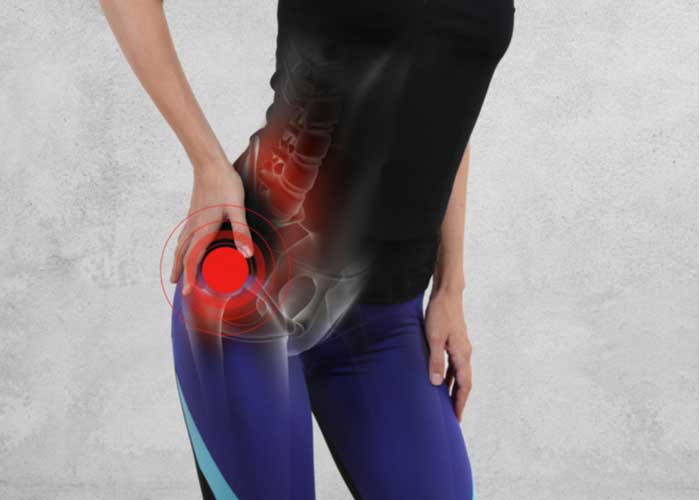
Hip pain is one of the most frustrating conditions because it simply refuses to go away with time. Once you are struck with it, your everyday life takes a turn for the worse – you find yourself unable to sit comfortably, walking for long becomes extremely exhausting, and even sleeping on your favourite side becomes painful.
As you reach this point, you’ll likely only have one question on your mind: how do you actually recover from this problem and take back control over your life? It would be great if it were simply a case of resting a little, but the truth is as complicated as our hip joint. So, keeping that in mind, let’s try to understand what recovery from hip pain really looks like and what you can do to speed it up.
Why can’t you recover from hip pain quickly?
A common misunderstanding people have about hip pain is that it can go away on its own with a bit of rest. For minor muscle strains, yes, resting up can absolutely do the job. The issue is: The hip is a ball-and-socket joint designed to support your entire body weight, all while allowing movement in multiple directions. It has many moving parts, and because of this complexity, hip pain rarely comes from a single source.
The worst part is that a lot of issues in this joint manifest in a similar kind of pain. Conditions like osteoarthritis, tendon irritation, bursitis, and small labral injuries all have very similar symptoms with only minor differences, making it difficult for any non-medical person to identify the true cause.
Let’s also not forget how tough recovery becomes because of the constant use of this joint. Unlike your wrist or shoulder, which you can temporarily rest, the hip will remain active at almost every moment that you’re upright. Even simple activities like walking and sitting involve the use of this joint. It means that any problematic part of this joint, depending on the issue, may require a specific treatment method for a longer period than just a few days.
Speaking of issues, you should also observe how long the pain has been present in your joint. If your hip pain has been developing for months, you should not expect it to disappear in a few days of rest. In a somewhat similar vein, if your hip pain is sudden and crippling, avoid any delays and rush to your nearest A&E to check for fractures or other serious injuries.
When should you seek help for your hip pain?
Before we talk about specific recovery tips, it is important to address a few situations that absolutely warrant a specialist’s assessment. Yes, many cases of hip pain do improve with conservative care, but depending on your diagnosis, your problem may require more serious interventions. For instance, structural problems, late-stage arthritis, or avascular necrosis can all create pain that will simply not go away with resting or other basic treatment methods.
Even if your hip pain is on the milder side, you should still seek a hip specialist in London or wherever you’re currently placed, as accurate diagnosis is often the turning point in recovery. Once your doctor can identify the real source of your pain, you’ll be in a much better position to treat the problem and return to your everyday life faster.
Another reason you should seek advice about your hip pain is that your joint may not actually be the real culprit. There is a very high chance that the pain you experience may originate in the lower back or pelvis, a phenomenon known as referred pain.
How can you improve your hip pain recovery?
If your hip pain is on the milder side – caused by strains or minor tears – there’s a lot you can do to recover from it. From the doctor’s side, your treatment will likely focus more on medication and physiotherapy. While those are absolutely a must, there is more you can do outside the clinic.
Movement, for one, is very important for your recovery, but with a bit of balance. Too little movement can cause joint stiffness and weaken the surrounding muscles, while too much can delay healing. The perfect balance between the two would be a mix of gentle walking, controlled strengthening exercises, and a gradual increase in activity. This will allow the joint to rebuild its stability without being overloaded once more.
In a similar vein, you need to pay attention to your posture and movement patterns. A lot of the time, people tend to unknowingly shift their weight to one side while standing or walking to avoid discomfort. While this can feel helpful in the moment, it can unfortunately put a bit of uneven pressure on the joint, which will only prolong hip pain.
Be mindful of your sleep position as well, as lying directly on the painful side – such as in the case of bursitis – can aggravate the issue quite a bit. Try to find a position that feels comfortable and reduces pain. You can also place a pillow between your knees when lying on your side to keep the joint aligned and reduce strain.
If your hip pain stems from inflammation, include some ice therapy, anti-inflammatory medications, and activity modifications (as per the doctor’s advice) in your routine. All of it will help calm the joint as it slowly gets back to normal.
Getting back to normal movement
At the end of the day, it is not impossible to recover from hip pain. You just need to make a few smart steps to remove the unpredictability from the equation. First, get a diagnosis and understand the root cause of your issues – don’t shoot arrows in the dark with this issue.
If your condition allows for conservative treatment, go all in with as much consistency as possible. Over time, you’ll almost certainly see an improvement in your pain. If your only option is surgical intervention, go for it without any fear. Thanks to advancements in medicine, hip-related surgeries have massively improved their long-term success rates.
All that is to say, hip pain is just another obstacle you need to overcome in life. With a few simple steps and a bit of mindfulness, you’ll almost certainly come out on the other side feeling better than ever before.
