

Why is Seattle called the Emerald City is a question almost every visitor asks once they see the region’s endless evergreen forests and lush parks.
The short answer is that the nickname came from an official 1982 tourism contest, not from any connection to emeralds, mining, or L. Frank Baum’s fictional Oz.
A California writer named Sarah Sterling-Franklin submitted the winning entry, and the name stuck permanently.
Quick Answer: The Real Reason Behind Seattle’s Nickname
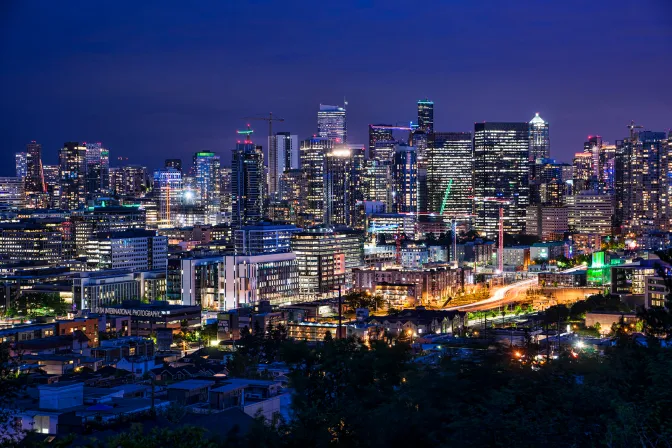
Seattle is called the Emerald City because of its abundant evergreen trees, parks, and greenbelts that keep the region looking lush most of the year.
The name was officially adopted in 1982 after a public contest run by the Seattle-King County Convention and Visitors Bureau.
The 1981 Contest That Started It All
In the summer of 1981, Seattle’s Convention and Visitors Bureau launched a public contest to find a fresh nickname for the city.
Tourism officials wanted something more distinctive than the city’s older, generic nickname, especially during a rough economic stretch tied to aerospace layoffs.
Residents and outside writers were invited to submit nickname ideas along with a short essay explaining their reasoning.
Sarah Sterling-Franklin’s Winning Entry
The contest’s grand prize went to Sarah Sterling-Franklin, a writer and photographer from Carmel, California who owned a summer home on San Juan Island.
Her winning submission read: “Seattle, the Emerald City… the jewel of the Northwest, the queen of the Evergreen State, the many-faceted city of space, elegance, magic and beauty.”
Sterling-Franklin won two vacations as her prize, one trip to Seattle and another to Acapulco, for crafting the winning phrase.
When Did Seattle Officially Become the Emerald City?
The Convention and Visitors Bureau formally adopted “Emerald City” as Seattle’s new nickname in 1982, right after reviewing all contest submissions.
That timing matters because it clears up a common misconception about the name’s origin, which many people still get wrong today.
Table: Emerald City Nickname Timeline
| Year | Event |
|---|---|
| 1869 | Portland real estate agents coin “Queen City of the Pacific Northwest” |
| 1897 | Seattle promotes itself as “Gateway to Alaska” during the Klondike Gold Rush |
| 1950s | “Jet City” nickname spreads due to Boeing’s aerospace presence |
| 1975 | Harper’s Magazine calls Seattle “America’s Most Livable City” |
| 1981 | Convention and Visitors Bureau launches the nickname contest |
| 1982 | “Emerald City” officially adopted, replacing “Queen City” |
| 2001 | The original Emerald City logo is retired for a new city brand |
Does the Name Have Anything to Do With The Wizard of Oz?
No, the connection is purely coincidental despite how often people assume otherwise.
L. Frank Baum’s fictional Emerald City appeared in his 1900 novel, more than 80 years before Seattle adopted its own nickname in 1982.
Seattle’s version refers strictly to real evergreen forests and greenery, not the fantasy world of Oz or its emerald-covered palace.
Does Seattle Have Actual Emerald Deposits or Mines?
No, Seattle has no emerald mines or gemstone deposits anywhere near the city or surrounding region.
The nickname is entirely symbolic, referring to the deep green color of the landscape rather than any literal gemstone connection.
Table: Common Myths vs Facts About the Emerald City Name
| Myth | Fact |
|---|---|
| The name comes from The Wizard of Oz | False, it’s an unrelated 1982 tourism nickname |
| Seattle has emerald mines | False, there are no emerald deposits nearby |
| The nickname is centuries old | False, it was created in 1982 |
| Seattle invented the term “Emerald City” | False, Baum used it first in 1900 fiction |
| The name was chosen by the city council | False, a tourism bureau contest chose it |
Why Evergreen Trees Made the Name Fit So Well
Roughly 28% of Seattle’s total land area is covered in trees, and most of those trees are evergreen species that stay green year-round.
Unlike deciduous trees that lose their leaves every fall, Seattle’s evergreens keep their color through the cooler months, giving the city a consistent green backdrop.
That year-round greenery is the main visual reason the “Emerald City” nickname felt so natural to residents and tourism officials alike.
The Climate Behind Seattle’s Year-Round Green Look
Seattle’s temperate climate plays a huge role in keeping the region green, with mild winters and relatively cool summers.
The Olympic Mountains to the west block heavy coastal rainstorms, while the Cascade Range to the east shields the city from extreme heat and cold.
That balanced climate allows plants, parks, and forests around Seattle to thrive without the harsh seasonal swings seen in many other American cities.
Ironically, Summer Is Seattle’s Least Green Season
Many people assume Seattle looks greenest during summer, but the opposite is actually true according to local climate patterns.
Seattle receives far less rain from June through August, which causes many lawns and grassy areas to dry out and turn brown.
The city’s deepest, most vibrant greenery actually appears during the rainy months of fall, winter, and early spring instead.
Seattle’s Nicknames Before Emerald City
Long before “Emerald City” existed, Seattle carried a rotating list of nicknames tied to different eras of its growth.
“Queen City of the Pacific Northwest” was coined by Portland real estate promoters back in 1869 and stuck around for over a century.
After the 1897 Klondike Gold Rush, the city marketed itself as the “Gateway to Alaska” and later the “Gateway to the Orient” for trade purposes.
Table: Seattle’s Nicknames Through History
| Nickname | Era Used | Reason Behind It |
|---|---|---|
| Queen City of the Pacific Northwest | 1869–1981 | Coined by Portland real estate agents |
| Gateway to Alaska | Late 1890s | Tied to the Klondike Gold Rush |
| Gateway to the Orient | Early 1900s | Reflected Pacific trade routes |
| Jet City | 1950s–1970s | Named for Boeing’s aerospace industry |
| America’s Most Livable City | 1975 onward | Coined by Harper’s Magazine |
| Emerald City | 1982–present | Official tourism bureau nickname |
| Rain City | Informal, ongoing | Reference to the region’s rainfall |
| Coffee Capital of the World | Informal, ongoing | Home of Starbucks and major coffee culture |
The Jet City Era and Why It Faded
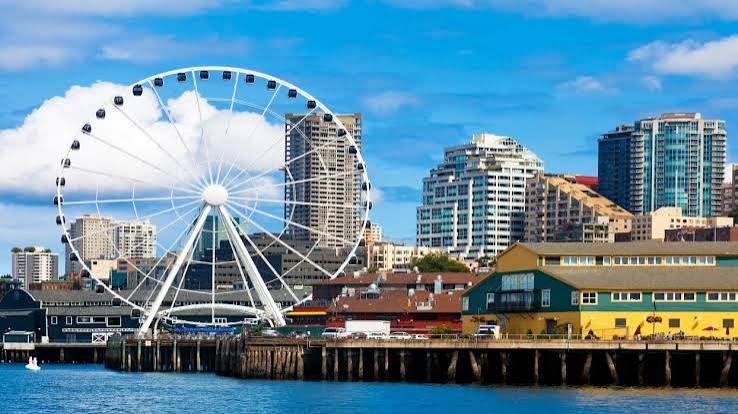
“Jet City” became popular in the 1950s and 1960s thanks to Boeing’s massive presence and thousands of aerospace jobs based in the region.
That nickname lost momentum in the 1970s when Boeing and other aerospace companies began cutting jobs, causing an economic downturn across the city.
The infamous “Will the last person leaving Seattle turn out the lights?” billboard from that era captured just how badly the city needed a rebrand.
How the Emerald City Logo Helped Seattle’s Tourism
After the nickname was chosen, local artist Karen Holum designed an official Emerald City logo for the Convention and Visitors Bureau.
That logo appeared on countless brochures, postcards, and promotional materials throughout the 1980s and 1990s, cementing the nickname in the public’s mind.
The Emerald City logo remained Seattle’s primary tourism brand until 2001, when officials introduced a new, more modern design.
The 2001 Rebrand: From Emerald City Logo to “See-at-L”
In 2001, Seattle’s tourism branding shifted toward a new logo created by the Hornall Anderson design firm.
That logo combined an eyeball, the “@” symbol, and the letter “L,” which together read phonetically as “See-at-L,” a playful nod to the city’s name.
Even though the official logo changed, the “Emerald City” nickname itself never disappeared and remained just as popular with locals and visitors.
Table: Emerald City Branding Evolution
| Period | Branding Element | Description |
|---|---|---|
| 1982–2001 | Emerald City logo | Green-themed design used on tourism materials |
| 2001–present | “See-at-L” logo | Modern rebrand by Hornall Anderson |
| 1982–present | “Emerald City” nickname | Still widely used regardless of logo changes |
Why the Nickname Still Fits Seattle Perfectly Today
More than four decades after its adoption, “Emerald City” remains one of the most recognized nicknames for any major U.S. city.
Seattle’s continued investment in parks, urban forestry, and green space has only strengthened how well the nickname matches the city’s actual appearance.
With over 6,000 acres of public parkland inside city limits, Seattle’s green identity is arguably even stronger today than it was back in 1982.
How Emerald City Connects to Washington’s “Evergreen State” Nickname
Washington State itself carries the official nickname “The Evergreen State,” which pairs naturally with Seattle’s own Emerald City branding.
Both nicknames highlight the same defining feature of the region, dense evergreen forests that stay green throughout the year regardless of season.
That shared theme helps reinforce Seattle’s identity as a green, nature-forward city both within Washington and across the broader Pacific Northwest.
Other Cities That Use the “Emerald City” Nickname
Seattle isn’t the only city with an Emerald City nickname, though it remains by far the most famous example in the United States.
Eugene, Oregon also uses the “Emerald City” title, referencing its own lush forests and green surroundings in the Willamette Valley.
Greenville, North Carolina similarly leans on Emerald City branding for local tourism and marketing purposes, though on a much smaller scale than Seattle.
Table: Other Emerald City Nicknamed Locations
| Location | Reason for the Nickname |
|---|---|
| Seattle, Washington | Evergreen forests, 1982 tourism contest |
| Eugene, Oregon | Lush greenery in the Willamette Valley |
| Greenville, North Carolina | Local tourism branding tied to greenery |
Why This Question Still Trends Every Year
New residents, tourists, and remote workers relocating to Seattle regularly search for the meaning behind the city’s most famous nickname.
Because the name is so often mistakenly linked to The Wizard of Oz, curious searchers keep looking for a clear, factual explanation.
That mix of genuine city history and a popular pop-culture misconception is exactly why “why is Seattle called the Emerald City” remains a consistently searched question in 2026.
Seattle’s Parks System and Its Role in the Green Identity
Seattle’s extensive parks system dates back to the early 1900s, when city planners hired the Olmsted Brothers firm to design a citywide network of green spaces.
That early investment in parks and boulevards laid the groundwork for the lush, tree-lined character that later inspired the Emerald City nickname decades afterward.
Today, Seattle maintains more than 400 parks covering thousands of acres, ranging from small neighborhood greenspaces to sprawling urban forests like Discovery Park.
Discovery Park, Washington Park Arboretum, and Other Green Landmarks
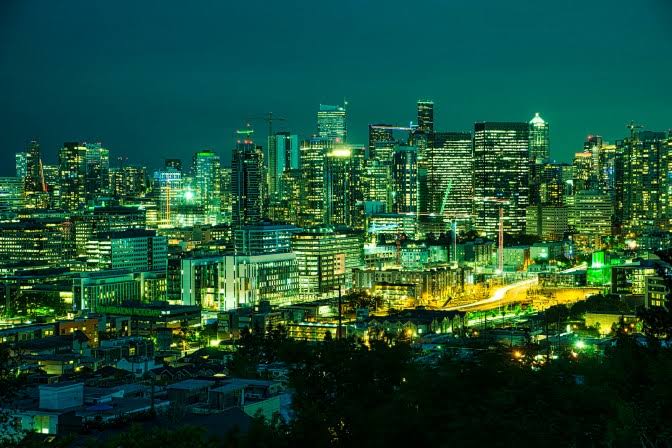
Discovery Park is Seattle’s largest public park, featuring forested trails, meadows, and dramatic bluffs overlooking Puget Sound.
The Washington Park Arboretum houses thousands of tree and plant species, serving as a living showcase of the region’s evergreen diversity.
Both landmarks are frequently cited by tourism materials as proof that Seattle’s Emerald City nickname reflects real, tangible greenery rather than just marketing language.
The Economic Motivation Behind the 1982 Rebrand
Seattle’s tourism bureau didn’t launch the Emerald City contest purely for fun, the rebrand was a direct response to serious economic pressure in the region.
Boeing’s major layoffs throughout the 1970s left the city searching for new industries and a stronger public image to attract visitors and investment.
A fresh, positive nickname tied to natural beauty offered tourism officials a way to shift public perception away from the struggling aerospace-dependent economy.
How Other Pacific Northwest Cities Compare in Green Branding
Seattle isn’t alone in leaning on green, nature-based branding, since many Pacific Northwest cities market themselves around forests, mountains, and outdoor recreation.
Portland, Oregon often promotes itself using similar environmental themes, though it has never officially adopted an “Emerald City” style nickname of its own.
Seattle’s early, decisive branding move in 1982 helped the city claim the “Emerald” identity before neighboring cities could establish something similar.
Table: Seattle’s Green Space by the Numbers
| Category | Approximate Figure |
|---|---|
| City land covered by trees | About 28% |
| Total public parks in Seattle | 400+ |
| Total parkland acreage | 6,000+ acres |
| Largest single park | Discovery Park |
| Official state nickname | The Evergreen State |
Why Tourists Still Ask About the Emerald City Name
Visitors flying into Seattle for the first time often notice the surrounding forests and hills before they even reach downtown, prompting immediate curiosity about the nickname.
Tour guides and local businesses frequently reference the Emerald City name in marketing, which keeps new visitors asking about its origin story throughout their trip.
That consistent exposure, combined with the Oz-related mix-up, is a major reason the nickname’s backstory remains a popular search topic well into 2026.
The Cultural Legacy of the Emerald City Branding
Decades after the original contest, “Emerald City” has become deeply embedded in Seattle’s local culture, appearing in business names, event titles, and civic branding.
Local sports, music, and community events frequently reference the nickname, reinforcing its status as an unofficial civic identity rather than just a tourism slogan.
That lasting cultural footprint is a big reason the Emerald City name has outlived its original 1980s marketing campaign by more than four decades.
How Seattle’s Rainfall Actually Fuels Its Green Reputation
Seattle is famous for its rainy reputation, and ironically, that same rainfall is exactly what keeps the region’s forests and parks so consistently green.
Most of Seattle’s precipitation falls between October and April, feeding the root systems of evergreen trees throughout the cooler months of the year.
That steady rainfall pattern is a key reason the city can maintain its lush, forested appearance even without the intense summer heat seen in other regions.
Comparing Seattle’s Nickname to Other Famous City Nicknames
Many major U.S. cities carry nicknames tied to industry, geography, or local culture, and Seattle’s Emerald City title fits neatly into that broader tradition.
New York is “The Big Apple,” Chicago is “The Windy City,” and New Orleans is “The Big Easy,” each reflecting a distinct piece of local identity or history.
Seattle’s Emerald City nickname stands out because it was deliberately created through an official contest rather than evolving organically from slang or folklore over time.
Table: Famous U.S. City Nicknames Compared
| City | Nickname | Origin Type |
|---|---|---|
| Seattle | Emerald City | Official 1982 tourism contest |
| New York City | The Big Apple | Organic slang, popularized in the 1920s |
| Chicago | The Windy City | Debated origin, tied to weather or rhetoric |
| New Orleans | The Big Easy | Organic nickname tied to relaxed lifestyle |
| Portland | Rose City | Tied to the city’s rose gardens |
Why the Contest-Based Origin Makes Seattle’s Story Unique
Unlike most city nicknames that develop gradually through years of casual use, Seattle’s Emerald City title has a clearly documented birthdate, contest, and winning author.
That level of documentation makes it far easier for historians, journalists, and curious residents to verify exactly how and why the nickname came to exist.
It also explains why so many local sources, from HistoryLink to Seattle’s own government records, tell a remarkably consistent version of the story.
Even the runners-up in the original 1981 contest are documented by name, with contestants like Kris Sherman receiving Space Needle passes and other prizes for their entries.
That kind of archival detail is rare for a city nickname and adds an extra layer of credibility whenever the Emerald City story gets retold today.
Fun Facts About Seattle’s Emerald City Nickname
Sarah Sterling-Franklin didn’t even live in Seattle full-time; she owned a summer home on San Juan Island when she submitted her winning entry.
The original 1982 contest replaced “Queen City,” a nickname Seattle had shared with several other American cities, including Cincinnati, Denver, and Buffalo.
Seattle’s Emerald City branding helped shift the city’s public image away from a struggling aerospace town and toward a scenic, livable destination.
Frequently Asked Questions (FAQs)
1. Why is Seattle called the Emerald City?
Seattle earned the nickname in 1982 through an official tourism contest that celebrated its lush, evergreen landscape.
2. Who came up with the name “Emerald City” for Seattle?
California writer Sarah Sterling-Franklin submitted the winning entry during the 1981–1982 contest.
3. Does the nickname come from The Wizard of Oz?
No, the connection is coincidental. Baum’s fictional Emerald City appeared in 1900, decades earlier.
4. Does Seattle have emerald mines?
No, Seattle has no emerald deposits; the nickname refers purely to its green landscape.
5. What nicknames did Seattle have before Emerald City?
Seattle was previously called Queen City, Gateway to Alaska, and Jet City at different points.
6. Is Seattle actually green all year round?
Mostly yes, thanks to evergreen trees, though lawns can turn brown during drier summer months.
7. When was the Emerald City nickname officially adopted?
The Convention and Visitors Bureau adopted it in 1982 after reviewing contest submissions.
8. Is Seattle the only city called the Emerald City?
No, Eugene, Oregon and Greenville, North Carolina also use similar Emerald City branding.
9. What happened to the original Emerald City logo?
It was retired in 2001 and replaced with a new “See-at-L” branding design.
10. How does the nickname relate to Washington State?
It pairs naturally with Washington’s official nickname, “The Evergreen State,” both tied to evergreen forests.
Conclusion
So, why is Seattle called the Emerald City? The answer traces back to a 1982 tourism contest that rewarded a nickname reflecting Seattle’s lush, evergreen landscape, not any connection to L. Frank Baum’s fictional Oz.
From Sarah Sterling-Franklin’s winning essay to Karen Holum’s iconic logo, the name grew from a marketing campaign into a permanent part of Seattle’s identity.
The city’s mild climate, surrounding mountains, and countless evergreen trees make the title feel authentic even decades later. Along the way, Seattle carried other nicknames like Queen City, Gateway to Alaska, and Jet City, each capturing a different era of its growth.
Today, Emerald City stands as the most recognized and beloved name for this Pacific Northwest gem, blending real geography with genuine civic pride that locals and visitors both embrace.
