

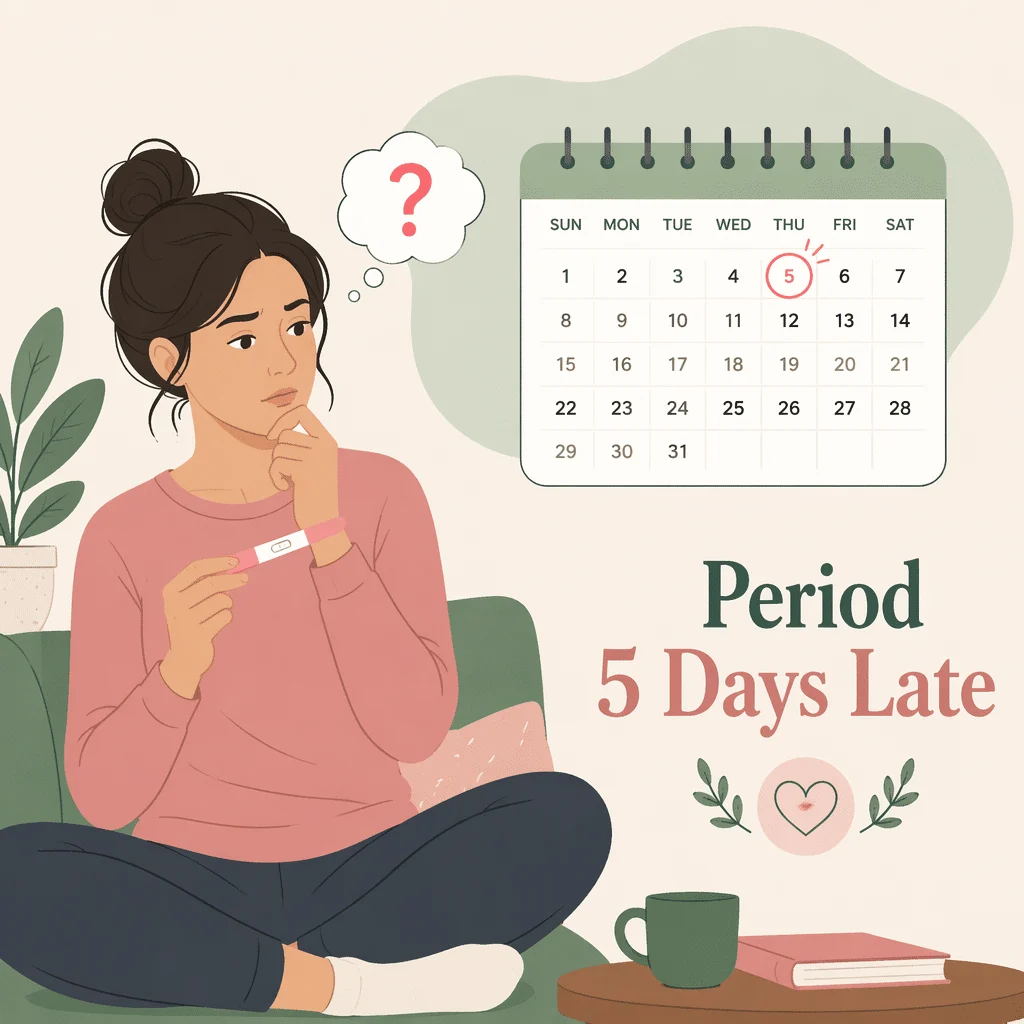
Why is my period 5 days late? This is one of the most searched questions by women of all ages, and the answer is rarely just one thing.
A late period can feel alarming, but in most cases it is caused by everyday factors like stress, hormonal shifts, or lifestyle changes.
Is a Period 5 Days Late Actually “Late”?

A normal menstrual cycle ranges from 21 to 35 days. This means your period does not arrive at exactly the same time every month for most women.
If your cycle is 28 days and your period has not started by day 33, it is considered 5 days late. But if your natural cycle runs longer, 5 days may still be within your normal range.
A period is generally considered late when it has not arrived within 5 to 7 days of your expected date based on your personal cycle history.
How the Menstrual Cycle Works
Understanding your cycle helps explain why delays happen. Your body follows four phases every month.
| Phase | Days (Avg) | What Happens |
|---|---|---|
| Menstrual | Day 1–5 | Uterine lining sheds, bleeding occurs |
| Follicular | Day 1–14 | Estrogen rises, uterine lining thickens |
| Ovulation | Around Day 14 | Egg is released from the ovary |
| Luteal | Day 15–28 | Progesterone rises; drops if no pregnancy |
Any disruption to ovulation — which happens in the middle of your cycle — can push your period back by days or even weeks.
Top Causes of a Period Being 5 Days Late
1. Pregnancy
Pregnancy is the most common reason for a missed or late period. If you have been sexually active since your last period, a pregnancy test is the first step you should take.
Home pregnancy tests detect the hormone hCG and are most accurate when taken at least 5 to 7 days after a missed period. Testing with first-morning urine gives the most reliable result.
2. Stress
Stress is one of the leading non-pregnancy causes of a late period. When you are under physical or emotional stress, your body releases more cortisol.
High cortisol levels interfere with the hypothalamus, the part of the brain that controls ovulation. When ovulation is delayed, your period is delayed too. Work pressure, relationship problems, financial stress, or a big life change can all trigger this response.
3. Polycystic Ovary Syndrome (PCOS)
PCOS is a hormonal condition that affects 5 to 10 percent of people who menstruate. It causes the ovaries to produce excess androgens, which can prevent regular ovulation.
Women with PCOS often experience irregular, late, or completely absent periods along with other signs like acne, excess facial hair, and weight gain. PCOS requires medical diagnosis through blood tests and an ultrasound.
4. Thyroid Disorders
Your thyroid gland regulates metabolism and plays a role in hormone production throughout the body. Both an overactive thyroid (hyperthyroidism) and an underactive thyroid (hypothyroidism) can disrupt your menstrual cycle.
Hypothyroidism can lead to heavier or irregular periods while hyperthyroidism may cause lighter or missed periods. A simple blood test measuring TSH and Free T4 can check thyroid function.
5. Weight Changes
Significant weight gain or rapid weight loss can both affect hormone levels and delay your period. Fat cells produce estrogen, so dramatic shifts in body weight disrupt this balance.
Underweight women may not have enough body fat to produce the estrogen needed for ovulation. Women who have gained weight rapidly may experience increased estrogen and insulin levels that disrupt their cycle.
6. Excessive Exercise
Intense or sudden increases in physical activity can stop ovulation, especially when combined with low calorie intake. This is known as athletic amenorrhea and is common in competitive athletes or people who exercise very heavily.
The female athlete triad links low energy availability, irregular periods, and low bone density. If you recently started a rigorous workout routine and your period is now late, exercise intensity may be the cause.
7. Birth Control Changes
Starting, stopping, or switching hormonal birth control can cause temporary period delays. Hormonal contraceptives work by suppressing ovulation, and your body may need time to readjust.
This is especially common after stopping birth control pills, implants, or hormonal IUDs. Your cycle may be irregular for a few months as your hormones re-regulate naturally.
8. Perimenopause
Women in their late 30s to early 50s may begin perimenopause, the transition period before menopause. During this phase, estrogen and progesterone levels fluctuate significantly.
Periods may become irregular, come closer together or farther apart, or become heavier or lighter. Other signs include hot flashes, mood changes, night sweats, and vaginal dryness.
9. Illness or Travel
Being sick with a fever, infection, or any acute illness can temporarily delay ovulation and push your period back. Your body prioritizes healing over reproduction when it is fighting off a health threat.
Travel, especially across time zones, can also disrupt your circadian rhythm and hormonal patterns. Even a vacation can shift your cycle by a few days.
10. Medications
Certain medications can affect your cycle. These include antidepressants, antipsychotics, chemotherapy drugs, blood pressure medications, and allergy medications.
If you recently started a new prescription and your period is late, speak with your doctor. Never stop prescribed medication without guidance.
11. Hormonal Imbalances
Beyond PCOS and thyroid issues, other hormonal conditions can cause a late period. Hyperprolactinemia, which is elevated prolactin hormone, can suppress ovulation and cause missed periods.
Primary ovarian insufficiency (POI) is when the ovaries stop working properly before age 40. This causes estrogen levels to drop and leads to irregular or absent periods.
12. Low Body Weight or Eating Disorders
Disordered eating or extreme calorie restriction sends a signal to your body that it is not safe to reproduce. The hypothalamus responds by reducing reproductive hormone output.
This can lead to hypothalamic amenorrhea, where periods stop entirely. Women with anorexia or who restrict food severely often experience irregular or absent periods.
Symptoms That Come With a Late Period
A late period rarely happens in isolation. Your body gives you signals that can help identify the cause.
| Symptom | Possible Cause |
|---|---|
| Breast tenderness | Pregnancy or hormonal fluctuation |
| Nausea or fatigue | Pregnancy, stress, thyroid issue |
| Bloating and cramps | PMS or incoming period |
| Acne breakouts | Hormonal imbalance, PCOS |
| Mood swings or irritability | Hormonal shifts, PMS |
| Excess hair growth | PCOS or elevated androgens |
| Unexplained weight changes | Thyroid dysfunction, PCOS |
| Hot flashes | Perimenopause |
| Milky discharge from breasts | Hyperprolactinemia |
What To Do When Your Period Is 5 Days Late
Knowing what to do right now can save you a lot of worry.
Step 1: Take a Pregnancy Test
If you have been sexually active, take a home pregnancy test as your first step. Do it with first-morning urine for the best accuracy. A negative result does not always mean you are not pregnant if tested too early, so repeat it in a few days if your period still has not come.
Step 2: Track Your Symptoms
Write down any symptoms you are experiencing. Breast tenderness, fatigue, bloating, acne, and mood changes can all provide clues. Noting these helps you and your doctor narrow down what is happening.
Step 3: Reflect on Recent Life Changes
Think back over the past few weeks. Have you been unusually stressed? Have you traveled, changed your diet, or started a new exercise routine? Did you recently start or stop birth control? Any of these can be the reason your period is late.
Step 4: Manage Stress Actively
If stress is a likely factor, take steps to reduce it. Simple techniques like deep breathing, yoga, meditation, or even consistent sleep can calm the hypothalamus and help restore hormonal balance.
Step 5: Maintain a Healthy Routine
Eat balanced meals with enough calories, protein, and healthy fats. Aim for 7 to 9 hours of sleep. Do moderate exercise rather than intense workouts. These lifestyle habits support healthy hormone production.
Step 6: See a Doctor If Needed
If your period is more than 7 to 10 days late and a pregnancy test is negative, schedule an appointment with a doctor or OB-GYN. They can run blood tests to check hormone levels, thyroid function, and rule out conditions like PCOS.
When To See a Doctor Immediately
Some situations need prompt medical attention.
- Your period is more than 3 months late and you are not pregnant
- You experience severe pelvic pain or sharp one-sided pain
- You have unusually heavy bleeding when your period does arrive
- You feel dizzy, faint, or have a rapid heartbeat
- You notice unexpected hair growth, milk discharge, or rapid weight change
- You have been trying to conceive and your cycles are consistently irregular
How Late Is Too Late? A Quick Reference
| Days Late | What It May Mean | Action |
|---|---|---|
| 1–4 days | Normal variation | Monitor and wait |
| 5–7 days | May be stress, lifestyle, or early pregnancy | Take a pregnancy test |
| 7–14 days | Worth investigating if pattern repeats | See a doctor if negative test |
| 15–35 days | May indicate PCOS, thyroid, or hormonal issue | Book a doctor appointment |
| 35+ days | Secondary amenorrhea range | Medical evaluation needed |
Foods and Habits That Support a Regular Cycle
What you eat and how you live has a direct impact on hormonal health and cycle regularity.
Foods That Support Hormonal Balance
Omega-3 rich foods like salmon, walnuts, and flaxseeds help reduce inflammation and support hormone production. Leafy greens provide magnesium and folate, which support progesterone production.
Complex carbohydrates like oats and sweet potatoes stabilize insulin and blood sugar levels, which is especially helpful if PCOS is a concern. Avoid ultra-processed foods and excessive alcohol, both of which can disrupt estrogen balance.
Lifestyle Habits That Help
Sleeping 7 to 9 hours every night supports healthy cortisol and melatonin rhythms, which in turn affect reproductive hormones.
Moderate exercise for around 150 minutes per week supports hormonal health without triggering athletic amenorrhea. Staying hydrated and managing stress through daily relaxation practices also supports a regular cycle.
Cycle Tracking Tips
Tracking your period is one of the most useful things you can do for your reproductive health.
Use a period tracking app or a simple journal to log when your period starts and ends each month. Also note symptoms like cramps, mood, discharge, and spotting.
Over three to six months, this data shows your average cycle length and helps identify patterns. Bring this record to your doctor if you experience repeated delays. It speeds up diagnosis significantly.
Difference Between a Late Period and a Missed Period
These two terms are often confused.
A late period means your period has started but later than expected, or has not yet arrived within a few days of your expected date. A missed period means your period did not come at all during a full cycle.
Missing one period occasionally is usually not alarming. Missing two or three periods in a row (secondary amenorrhea) without a known cause is a reason to see a doctor.
Can Stress Alone Delay Your Period by 5 Days?
Yes, absolutely. Stress is one of the most underestimated causes of a late period. Even moderate stress over a week or two can delay ovulation enough to push your period back by 5 days or more.
The hypothalamus is sensitive to emotional and physical stress. It regulates the release of GnRH, the hormone that starts the ovulation process. When stress hormone cortisol is elevated, GnRH production slows down and ovulation gets delayed.
Period 5 Days Late With a Negative Pregnancy Test: What Now?
A negative test with a late period is common and does not always mean something is wrong.
Testing too early is the most common reason for a false negative. If you tested before 5 days after your expected period, test again in 2 to 3 days.
If the second test is also negative and your period has still not arrived by day 10 to 14 of being late, see a doctor. They can order a blood hCG test for more sensitivity, plus additional hormone panels.
PCOS vs Stress: How to Tell the Difference
Both can cause a late period, but they have distinct patterns.
| Factor | PCOS | Stress |
|---|---|---|
| Pattern | Irregular periods consistently | Usually temporary |
| Other symptoms | Acne, hair growth, weight gain | Fatigue, anxiety, insomnia |
| Cycle length | Often 35 to 90 days or more | Variable, returns to normal |
| Diagnosis | Blood test, ultrasound | Clinical history |
| Treatment | Hormonal therapy, lifestyle | Stress management |
If you have had irregular cycles for most of your adult life, PCOS is worth testing for. If your cycle became irregular after a stressful event, stress is the more likely cause.
Frequently Asked Questions (FAQs)
Why is my period 5 days late but the pregnancy test is negative?
You may have tested too early, or a non-pregnancy cause like stress, hormonal shifts, or illness is delaying your cycle. Retest in 2 to 3 days using first-morning urine for the most accurate result.
Can stress alone cause a 5-day period delay?
Yes. Stress raises cortisol, which interferes with the hypothalamus and delays ovulation, pushing your period back by several days or even weeks.
Is it normal for your period to be 5 days late?
Yes, occasional delays of up to 7 days are common and usually not a medical concern. If it becomes a frequent pattern, speak with a doctor.
Should I take a pregnancy test if my period is 5 days late?
Yes, especially if you have been sexually active. Take the test with first-morning urine for the highest sensitivity and accuracy.
Can birth control cause a period that is 5 days late?
Yes. Starting, stopping, or switching hormonal birth control can temporarily disrupt your cycle until your hormones re-regulate on their own.
What does it mean if my period is late and I have cramps but no bleeding?
This can happen just before your period arrives, or it can be a sign of delayed ovulation. It can also sometimes indicate an early pregnancy, so a test is recommended.
Can PCOS cause a 5-day late period?
Yes. PCOS disrupts regular ovulation, which can make periods arrive later than expected or cause them to be skipped entirely.
How long should I wait before seeing a doctor for a late period?
If your period is more than 7 to 10 days late, a pregnancy test is negative, and there is no obvious lifestyle cause, it is a good idea to see a doctor.
Can exercise delay my period?
Yes, especially if you have recently increased workout intensity significantly or are doing very high-volume training with low calorie intake.
Will my period come on its own if stress is the cause?
In most cases, yes. Once the stressor resolves or your cortisol levels normalize, ovulation occurs and your period follows within 2 to 4 weeks.
Conclusion
Why is my period 5 days late? The answer could be as simple as everyday stress or as significant as an underlying hormonal condition.
For most women, a 5-day delay is within the range of normal variation and resolves on its own. Start with a pregnancy test if there is any chance of pregnancy, then assess recent lifestyle changes like stress, diet, exercise, or medication. Track your symptoms carefully and keep a record of your cycle history.
If your period does not arrive within 7 to 10 more days, your pregnancy test remains negative, or your cycles are consistently irregular, it is time to see a doctor.
A blood test and ultrasound can quickly identify what is going on and get you on the right path. Your menstrual cycle is a powerful signal of your overall health, and paying attention to it is always worth the effort.
