

Why is my feet peeling? This is a question millions of people ask every year, and the answer is not always simple. Peeling skin on the feet can range from a minor dryness issue to a sign of a deeper skin condition.
In most cases, it is nothing serious and can be treated at home with the right approach. Understanding the root cause is the first step toward healthy, smooth feet.
What Does Peeling Skin on Feet Look Like?
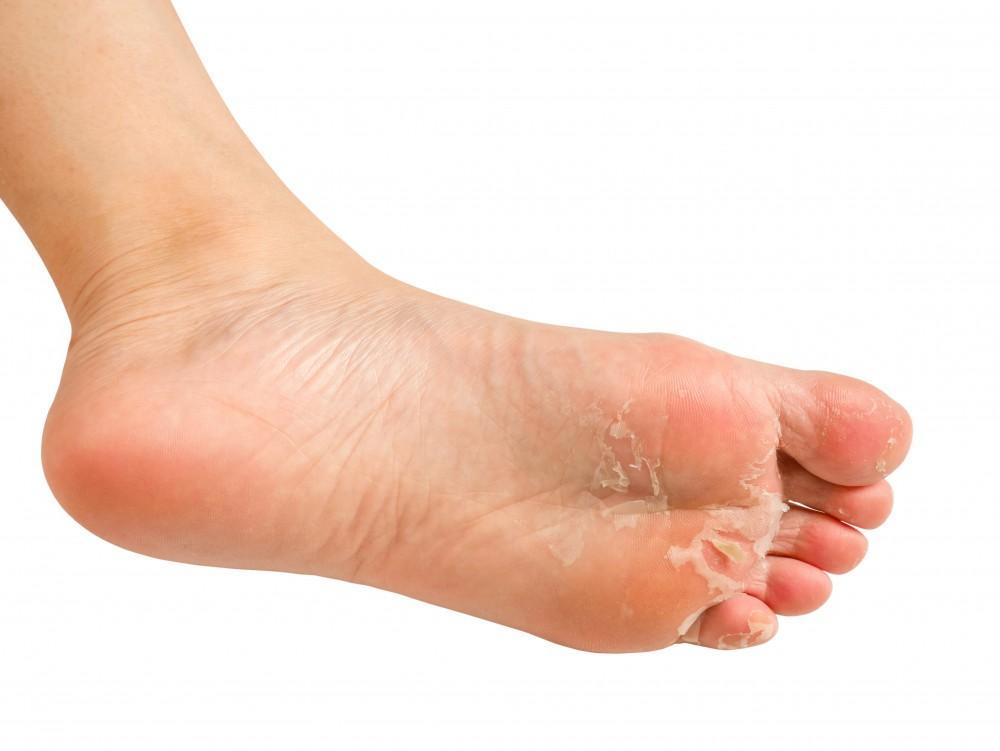
Peeling feet can show up in several different ways depending on the cause. You may notice dry flakes on the soles, sheets of skin lifting from the heels, or raw and tender patches between the toes.
Some people see thick, rough skin that cracks before peeling. Others experience redness, itching, or a burning feeling alongside the peeling. Recognizing the pattern helps identify the cause early.
Common Symptoms That Come With Peeling Feet
| Symptom | Possible Cause |
|---|---|
| Itching between toes | Athlete’s foot (fungal infection) |
| Thick dry patches on heels | Dry skin / xerosis |
| Red, inflamed patches | Eczema or psoriasis |
| Peeling after sun exposure | Sunburn |
| Excessive sweating + peeling | Hyperhidrosis |
| Painful cracks and hard skin | Calluses or corns |
| Peeling without itching or pain | Acral peeling skin syndrome |
Why Is My Feet Peeling? 10 Common Reasons
1. Dry Skin (Xerosis)
Dry skin is the single most common reason why feet peel. The feet carry your full body weight all day, which slows circulation and reduces natural moisture levels.
Hot showers, dry weather, harsh soaps, and not moisturizing regularly all make dryness worse. You may notice tight, flaky, or cracked skin mainly on the heels and soles.
2. Athlete’s Foot (Tinea Pedis)
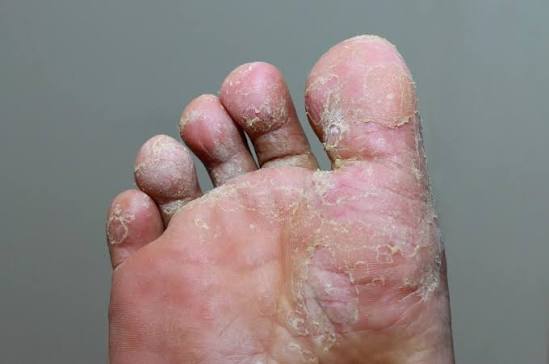
Athlete’s foot is a fungal infection that thrives in warm, moist places like sweaty shoes, gym locker rooms, and public pool areas. It typically causes peeling, itching, and redness between the toes.
The skin may also burn or sting, and a mild odor is common. It spreads easily and needs consistent antifungal treatment to clear fully.
3. Eczema (Atopic Dermatitis)
Eczema is an inflammatory skin condition that can affect the feet just as it does elbows and knees. Flare-ups can be triggered by stress, allergens, heat, or certain fabrics.
Symptoms include dry and itchy patches, redness, inflammation, and skin that cracks and peels. Fragrance-free moisturizers and breathable socks help manage mild cases.
4. Psoriasis
Psoriasis is an autoimmune condition where skin cells build up too quickly, forming thick, scaly plaques. On the feet, this is called palmoplantar psoriasis.
These plaques become flaky and peel over time. Common triggers include stress, skin injuries, and harsh skin care products with fragrances or dyes.
5. Sunburn on Feet
Many people apply sunscreen to their face and arms but forget about the tops of their feet. Sandals leave the feet fully exposed to UV rays, and sunburn on feet causes the outer skin layer to peel after a few days.
The affected skin may feel tender and sting when walking. Applying sunscreen to feet before outdoor activities prevents this completely.
6. Hyperhidrosis (Excessive Sweating)
Hyperhidrosis causes abnormally high levels of sweating, which frequently affects the feet. The constant moisture breaks down the skin barrier, leading to irritation, redness, and peeling.
Keeping feet clean and dry, changing socks often, and using moisture-absorbing foot powder in shoes helps reduce symptoms significantly.
7. Calluses and Corns
Calluses form on the bottom of the feet from repeated pressure and friction, usually from tight shoes or walking barefoot on hard surfaces. Corns develop on the toes.
Both conditions cause dead skin to build up, which eventually cracks or peels. Soaking feet in warm water and using a pumice stone can help remove the excess skin safely.
8. Contact Dermatitis
Contact dermatitis occurs when the skin reacts to a substance it touches directly. Common triggers on the feet include rubber in shoes, dyes in socks, metal in shoe fastenings, or ingredients in foot creams.
The skin becomes red, blistered, and peeling at the point of contact. Identifying and avoiding the trigger clears the condition over time.
9. Acral Peeling Skin Syndrome
This is a rare genetic condition where the outermost skin layer peels away painlessly without any itching, redness, or infection. It usually begins in childhood and affects the hands and feet.
There is no cure, but moisturizers help manage the appearance and keep skin hydrated. It does not indicate any serious underlying health threat.
10. Toxic Epidermal Necrolysis (TEN)
Toxic epidermal necrolysis is a rare but very serious condition where large sheets of skin peel off rapidly, often triggered by a medication reaction. It requires immediate hospital treatment.
This is a medical emergency. If you notice sudden widespread peeling across the body with fever and sore eyes or mouth, seek emergency care immediately.
Athlete’s Foot vs Dry Skin: How to Tell the Difference
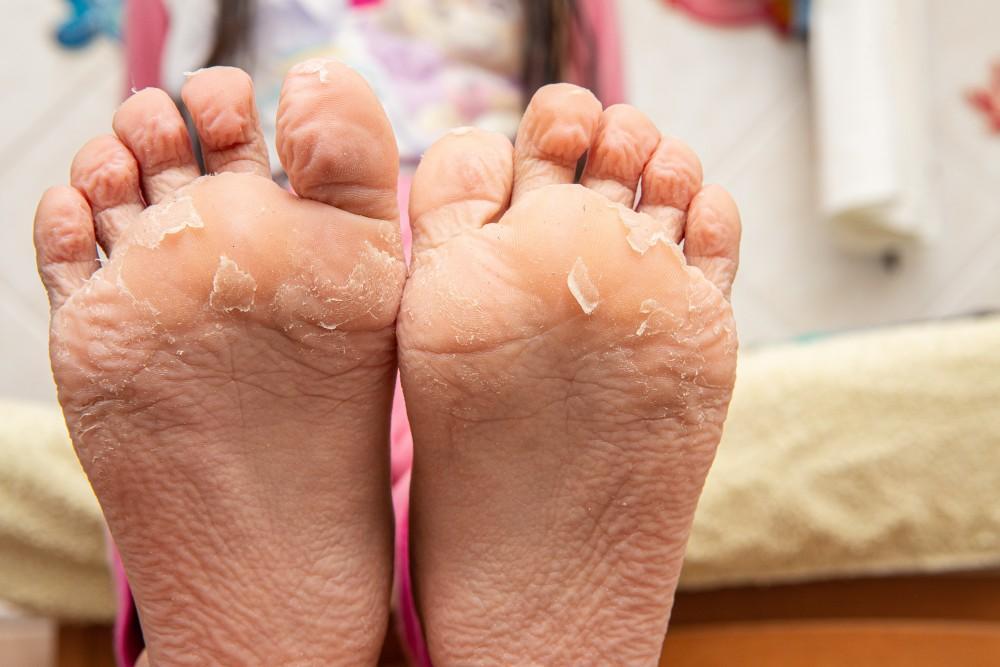
These two causes are often confused because both make feet peel. Here is how to tell them apart.
| Feature | Dry Skin | Athlete’s Foot |
|---|---|---|
| Location | Heels and soles | Between toes |
| Itching | Mild | Intense, persistent |
| Odor | None | Mild unpleasant odor |
| Burning | No | Yes |
| Redness | Rare | Common |
| Response to moisturizer | Improves | Does not improve |
Best Treatment Options for Peeling Feet in 2026
Moisturizing and Hydration
The most effective first step for almost every cause of peeling feet is regular moisturizing. Apply a thick, fragrance-free cream or ointment after washing your feet and before bed.
Look for ingredients like urea, lactic acid, shea butter, or glycerin. Wearing cotton socks after applying moisturizer at night locks in the product and speeds up healing.
Antifungal Creams and Sprays
For athlete’s foot, over-the-counter antifungal products containing clotrimazole, terbinafine, or miconazole work well. Apply consistently as directed, even after symptoms improve, to prevent the infection from returning.
Keep feet clean and dry throughout treatment. Change socks daily and avoid walking barefoot in communal wet areas.
Exfoliation and Pumice Stone
Gently removing dead skin helps speed up the healing process for dry skin and calluses. Soak feet in warm water for ten minutes to soften the skin, then use a pumice stone or foot file to buff away rough areas.
Do not over-exfoliate. Two to three times per week is enough. Avoid doing this if the skin is broken or infected.
Foot Peels and Exfoliating Treatments
Foot peel products, including gel-lined booties, use gentle acids such as lactic acid, glycolic acid, and citric acid to dissolve dead skin cells. After a week or more, the old skin peels away in sheets, leaving smoother skin underneath.
These are best used for dry, callused feet rather than infected or inflamed skin. Follow product instructions carefully and patch-test first.
Topical Steroids
For eczema and psoriasis, mild over-the-counter hydrocortisone cream can reduce inflammation and itching. More severe cases may need prescription-strength topical corticosteroids prescribed by a doctor.
Use only as directed and for the shortest time necessary. Prolonged use of strong steroids on the feet can thin the skin.
Prescription Treatments
When home remedies do not work, a podiatrist or dermatologist can prescribe stronger treatments. These include prescription antifungal medications, stronger topical steroids, or systemic treatments for severe psoriasis or eczema.
For hyperhidrosis, prescription aluminum chloride solutions or anticholinergic medications can control excessive sweating effectively.
Home Remedies That Actually Work
Warm Water Soaks
Soaking feet in warm (not hot) water for ten to fifteen minutes softens the skin and prepares it for exfoliation and moisturizing. Add a small amount of Epsom salt to help draw out excess moisture and reduce mild inflammation.
Do not use hot water as it strips away natural oils and worsens dryness. Pat feet dry thoroughly before applying any cream.
Coconut Oil
Coconut oil is a natural moisturizer with mild antifungal properties. Applying it to clean, dry feet before bed can reduce dryness and flaking effectively.
It works best for dry skin and mild cases. It is not a substitute for prescription antifungal treatment for moderate or severe athlete’s foot.
Aloe Vera Gel
Aloe vera has soothing and anti-inflammatory properties that help calm irritated, peeling skin. Apply fresh aloe gel or a pure aloe product to affected areas after washing.
It is especially useful for sunburn-related peeling and contact dermatitis. It cools the skin and supports faster healing.
Shea Butter
Shea butter is one of the richest natural moisturizers and creates a strong barrier against moisture loss. It is ideal for severely dry, cracked heels.
Apply generously at night and cover with socks for best absorption. Regular use prevents the skin from drying out to the point of peeling.
How to Prevent Feet from Peeling
Prevention is far easier than treatment. Small daily habits can keep your feet smooth and healthy year-round.
| Prevention Tip | Why It Helps |
|---|---|
| Moisturize daily after showering | Locks in moisture before skin dries |
| Wear moisture-wicking socks | Reduces sweating and fungal risk |
| Rotate shoes daily | Allows shoes to dry fully between uses |
| Wear shower shoes in public areas | Prevents fungal infections |
| Apply sunscreen to feet in sandals | Prevents sunburn and peeling |
| Use lukewarm water, not hot | Protects natural skin oils |
| Stay well hydrated | Keeps skin hydrated from the inside |
| Choose breathable footwear | Reduces excess sweating |
When to See a Doctor for Peeling Feet
Most cases of peeling feet clear up with home care within a few weeks. However, certain signs mean you should see a podiatrist or dermatologist without delay.
Seek medical attention if the peeling does not improve after two to three weeks of home treatment. You should also see a doctor if you notice open sores, spreading redness, swelling, or significant discharge from the feet.
People with diabetes must be especially careful. Even minor foot issues can progress rapidly and become serious in people with diabetes-related circulation or nerve problems. See a doctor at the first sign of any peeling, redness, or cracking if you have diabetes.
Other warning signs include a fever alongside the peeling, large fluid-filled blisters, foot odor that will not go away despite good hygiene, and severe pain when walking.
Peeling Feet in Children vs Adults
Children can develop peeling feet for many of the same reasons as adults, including dry skin, athlete’s foot, and eczema. However, they are also more likely to develop contact dermatitis from shoe materials or socks.
Avoid using adult foot care products on children without checking with a pediatrician first. Keep their feet clean and dry, apply a gentle child-safe moisturizer, and make sure their shoes fit properly without excessive rubbing.
Best Products for Peeling Feet in 2026
| Product Type | Key Ingredients to Look For | Best For |
|---|---|---|
| Foot cream | Urea 10–25%, lactic acid | Dry skin, thick calluses |
| Antifungal cream | Terbinafine, clotrimazole | Athlete’s foot |
| Hydrocortisone cream | 1% hydrocortisone | Mild eczema flare-ups |
| Foot peel | Glycolic acid, lactic acid | Dead skin buildup |
| Foot powder | Talc-free, absorbent | Hyperhidrosis |
| Exfoliating scrub | Natural pumice particles | Regular maintenance |
Footwear Choices That Affect Peeling
The shoes and socks you choose directly impact foot health. Tight shoes create pressure and friction that build up calluses. Non-breathable shoes trap moisture and heat, creating the perfect environment for fungal infections.
Choose shoes made from breathable materials like leather or mesh. Wear moisture-wicking socks rather than cotton, which holds sweat against the skin. Replace worn-out shoes that no longer provide proper support.
Avoid wearing the same pair of shoes two days in a row. Rotating pairs gives each pair time to dry fully, reducing the bacterial and fungal load inside the shoe.
Frequently Asked Questions (FAQs)
Why is my feet peeling but not itching?
Peeling without itching is usually caused by dry skin, sunburn, or acral peeling skin syndrome. These conditions peel without the inflammatory response that causes itch.
Can dehydration cause feet to peel?
Yes, dehydration reduces skin moisture from the inside out. Drinking enough water daily supports overall skin health including the feet.
Is peeling feet a sign of diabetes?
It can be. Diabetes affects circulation and nerve function, leading to dry and cracked feet. Any peeling or cracking in a diabetic patient should be assessed by a doctor promptly.
How long does it take for peeling feet to heal?
Mild dry skin peeling usually improves within one to two weeks with regular moisturizing. Fungal infections may take four to six weeks of consistent antifungal treatment to clear fully.
Can stress cause feet to peel?
Stress can trigger or worsen eczema and psoriasis flare-ups, both of which cause peeling on the feet. Managing stress through sleep, exercise, and relaxation reduces flare frequency.
Should I peel the dead skin off my feet myself?
Avoid forcefully pulling peeling skin. Use a pumice stone or foot file after soaking to gently buff away dead skin. Forced removal can cause pain, bleeding, and risk of infection.
What vitamin deficiency causes peeling feet?
Deficiencies in vitamin B3 (niacin), vitamin A, and vitamin E can contribute to dry, peeling skin. A balanced diet or supplements may help if deficiency is suspected.
Can shoes cause feet to peel?
Yes. Tight shoes, non-breathable materials, and shoes with dyes or rubber that irritate the skin can all cause or worsen peeling. Choosing well-fitting, breathable footwear helps prevent this.
Is athlete’s foot contagious?
Yes, athlete’s foot spreads through direct contact with infected skin or contaminated surfaces. It is common in locker rooms, public showers, and swimming pools. Wearing shower shoes in these areas prevents infection.
When is peeling feet a medical emergency?
Widespread, sudden peeling across large areas of the body, especially with fever, sore eyes, or sore mouth, can indicate toxic epidermal necrolysis. This is a medical emergency requiring immediate hospital care.
Conclusion
Why is my feet peeling is a question with many possible answers, from dry skin and fungal infections to eczema, psoriasis, and sunburn.
In most cases, the cause is straightforward and the treatment is simple. Daily moisturizing, proper footwear, good hygiene, and consistent antifungal care when needed will resolve most cases of peeling feet within a few weeks.
Knowing the difference between a minor dryness issue and a condition that needs medical attention helps you act faster and avoid complications.
Pay attention to other symptoms that come with the peeling, such as itching, odor, or spreading redness, as these clues point to the cause.
If home treatment is not working after two to three weeks, or if you have diabetes or any open wounds on your feet, see a podiatrist or dermatologist. With the right care, smooth and healthy feet are very achievable in 2026.
