

Why does my cat sleep by my feet is one of the most common questions cat parents ask after noticing their feline curled up at the end of the bed night after night. This spot is not random.
Cats choose the foot of the bed for a mix of warmth, safety, and trust. It gives them a clear escape route while still keeping them close to your scent and body heat.
Quick Answer: Why Cats Sleep at Your Feet
Before diving deep, here is a short summary table covering the core reasons cats pick your feet over your pillow or lap.
| Reason | What It Means |
|---|---|
| Warmth | Feet radiate steady heat cats find cozy |
| Safety | Feet stay still, unlike a moving upper body |
| Trust | Sleeping near you shows they feel protected |
| Independence | Close contact without full physical confinement |
| Escape Route | Easy exit if startled or too warm |
| Routine | Cats like consistency once a spot feels right |
Each of these points is explored in detail further down this guide.
Cats Sleep by Feet for Warmth
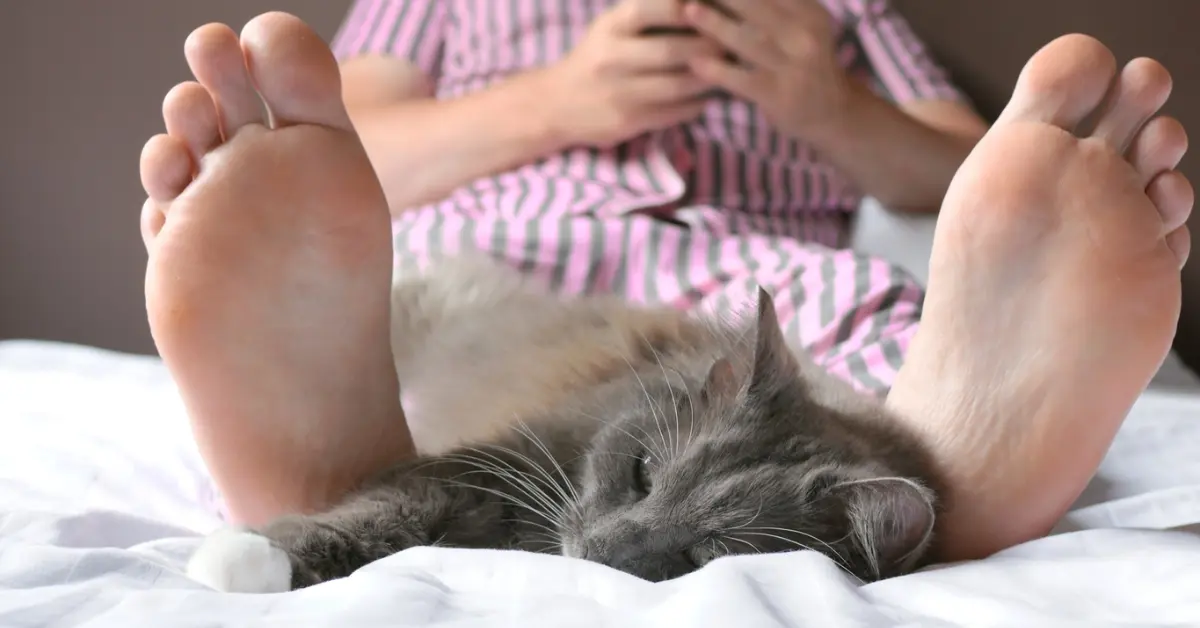
Cats seek out warm spots instinctively, and your feet are a steady, low-effort heat source through the night.
Unlike blankets, your body heat does not cool down or shift position much. This makes the end of the bed a reliable warm zone, especially in colder months.
Cats Sleep by Feet for Safety and Security
Feet tend to move far less than your arms, chest, or head while you sleep.
This stillness gives your cat a predictable, undisturbed resting spot. In the wild, cats stay alert even during sleep, so a quiet zone matters a lot to them.
Sleeping by Feet Is a Sign of Trust
A cat that sleeps close to you, even without touching you directly, is telling you they feel safe in your presence.
Cats rarely nap deeply around anything they see as a threat. Choosing your feet night after night is a quiet vote of confidence in you.
It Offers Closeness Without Full Contact
Not every cat wants to be draped across your chest or curled on your lap.
Sleeping at your feet lets a cat stay near you while keeping personal space. This balance suits cats who value both affection and independence.
Your Feet Give an Easy Escape Route
The foot of the bed is usually closer to the floor and the door than the pillow area.
If your cat startles awake, wants water, or hears a noise, this position lets them leave without climbing over you. It is a practical choice as much as an emotional one.
Scent Marking and Territory
Cats have scent glands on their paws and cheeks, and sleeping near you helps transfer their scent onto shared spaces.
This is a subtle way of marking you and your bed as part of their territory. It reinforces the bond between you and reduces anxiety for your cat.
Routine and Habit Play a Role
Once a cat settles into a sleeping pattern, they tend to repeat it out of comfort and predictability.
If your cat has slept at your feet for weeks or months, it may simply be habit now. Cats value consistency, and disrupting a routine can sometimes cause mild stress.
Cat Sleeping Positions and What They Reveal
Where a cat sleeps on your body or bed often reflects their personality and comfort level. The table below breaks down common positions.
| Sleeping Position | What It Usually Means |
|---|---|
| By your feet | Affection with independence, watchful nature |
| On your chest | Deep trust and desire for closeness |
| By your head or pillow | Seeking your scent, strong bond |
| Between your legs | Wants warmth and a den-like, enclosed feel |
| Curled in a ball | Conserving heat, feeling slightly cautious |
| Belly exposed | High trust and full relaxation |
| Sitting upright | Alert but comfortable, ready to groom or move |
Most cats rotate between a few favorite spots depending on temperature, mood, and household activity.
Sleeping by Feet vs Sleeping by Head or Chest
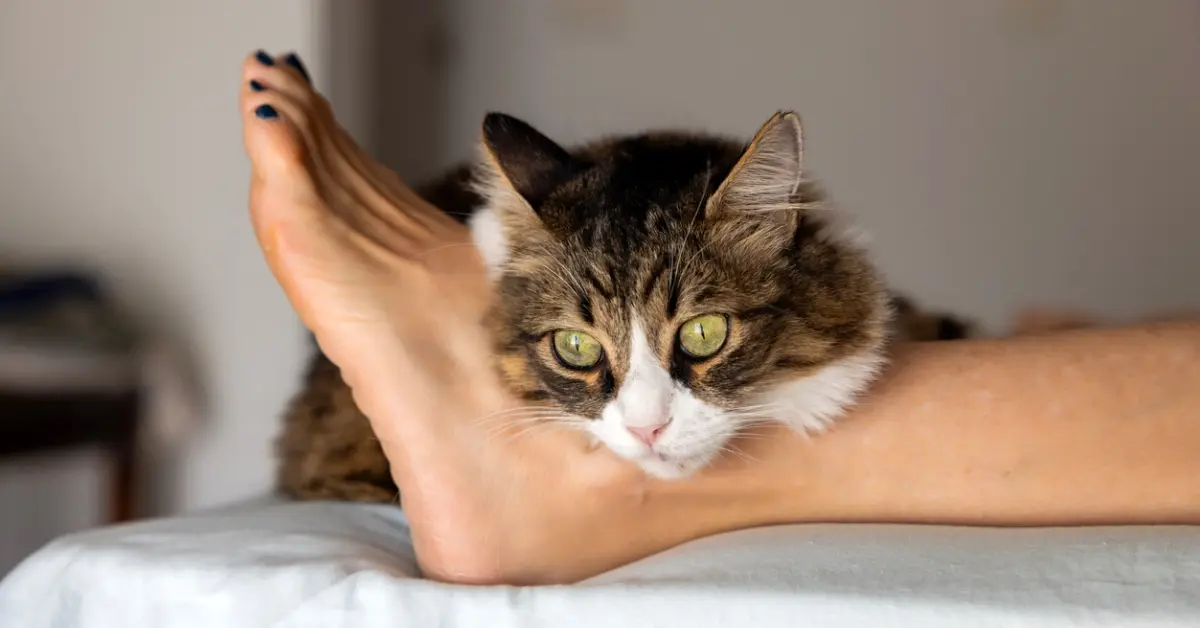
People often wonder if one sleeping spot means more affection than another. Here is a simple comparison.
| Factor | Sleeping by Feet | Sleeping by Head/Chest |
|---|---|---|
| Physical contact | Minimal to none | Direct and close |
| Scent access | Lower | Highest, near your face |
| Movement disturbance | Low, feet stay still | Higher, upper body shifts more |
| Independence level | Higher | Lower |
| Trust signal | Strong | Very strong |
Neither position is objectively more loving. Cats simply weigh comfort, temperature, and personal space differently.
Why Did My Cat Suddenly Start Sleeping at My Feet?
A change in sleeping spot is usually harmless and tied to comfort or temperature shifts in the room.
Sometimes it reflects a new routine, a change in household activity, or even a growing sense of trust. Sudden changes paired with hiding or appetite loss, however, deserve a vet check.
Is It Normal for a Cat to Always Sleep on My Feet?
Yes, many cats settle into one preferred sleeping location and stick with it for months or years.
This consistency is a sign of comfort rather than a problem. Cats are creatures of habit once they find a spot that feels safe and warm.
When Sleeping Habits May Signal a Health Issue
While sleeping by your feet is normal, certain changes in sleep behavior can point to underlying issues.
| Warning Sign | Possible Concern |
|---|---|
| Sudden avoidance of usual spots | Pain, stress, or illness |
| Hunched or tense posture | Discomfort or injury |
| Hiding in unusual places | Anxiety or sickness |
| Increased sleep beyond normal | Could indicate lethargy or illness |
| Restlessness at night | Possible discomfort or cognitive changes in senior cats |
If you notice these signs alongside a sudden sleep location change, a veterinary visit is a smart precaution.
Do Cats Choose a Favorite Person Based on Sleep Spot?
Cats often gravitate toward the household member who feeds them, plays with them, or simply sits still the longest.
Sleeping by your feet consistently can be one indicator of a favorite person, though it is not the only sign. Grooming, following you room to room, and slow blinking are other strong clues.
How to Make the Foot of the Bed More Comfortable for Your Cat
If you want to encourage this behavior, a few small changes can help.
- Add a soft blanket or cat bed at the foot of your bed
- Keep the room at a comfortable, consistent temperature
- Avoid sudden movements near your feet at night
- Give your cat a consistent bedtime routine
These small adjustments can make the spot even more appealing and reduce nighttime disruptions for both of you.
How to Redirect a Cat Sleeping on Your Feet
Some owners love this habit, while others find it disruptive to their own sleep.
If your cat’s movement bothers you, set up a dedicated bed near the foot of your bed. Reward your cat with treats or praise when they use it, and stay consistent for best results.
Do Male and Female Cats Sleep Differently Near Owners?
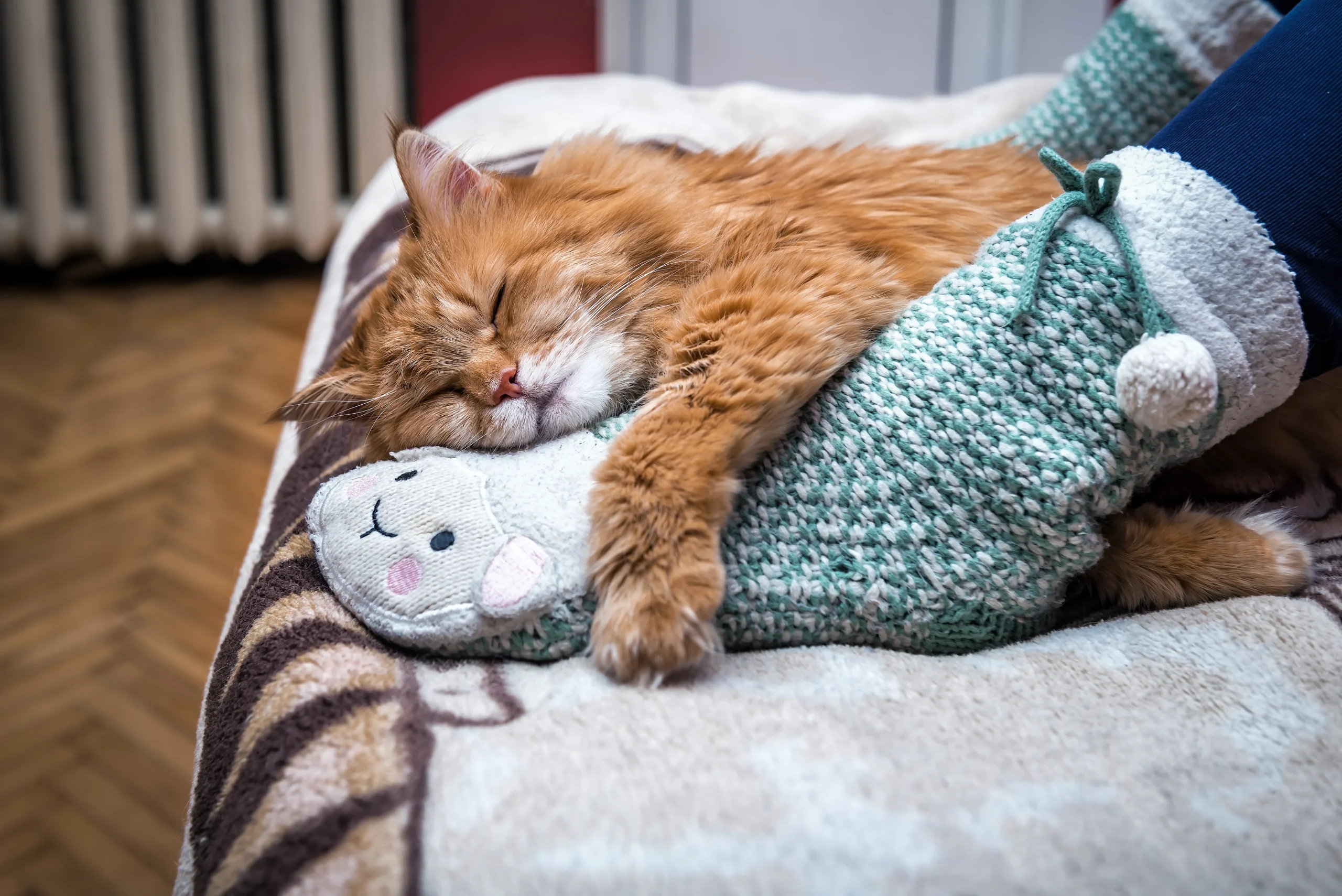
There is no strict rule, since sleeping preference depends more on personality than sex.
Some individual cats simply prefer more space, while others crave constant contact regardless of whether they are male or female. Personality, early socialization, and past experiences shape this far more than gender.
Does Age Affect Where a Cat Sleeps?
Older cats often shift toward lower, more accessible sleeping spots as mobility decreases.
Kittens, on the other hand, may bounce between several spots as they explore comfort options. A cat’s chosen sleeping area can naturally evolve throughout its life.
Seasonal Changes and Sleeping Spot Preferences
Temperature plays a bigger role in sleeping location than many owners realize.
In colder months, cats often move closer to warm body parts like feet or laps. In warmer months, they may spread out or choose cooler, open areas of the bed instead.
Multi-Cat Households and Sleeping Positions
In homes with more than one cat, sleeping spots can also reflect social dynamics between the cats themselves.
A cat may choose your feet specifically to avoid competition with another pet near your head or chest. This keeps peace in the household while still allowing closeness to you.
Summary Table: Reasons vs Behavior Signals
| Behavior Observed | Likely Reason |
|---|---|
| Sleeps at feet every night | Routine, warmth, trust |
| Recently moved from chest to feet | Temperature shift or new comfort preference |
| Sleeps at feet only in winter | Seeking warmth |
| Avoids feet, sleeps elsewhere suddenly | Possible stress or health issue |
| Sleeps at feet in multi-cat home | Avoiding competition, seeking space |
This table can act as a quick reference the next time you notice a shift in your cat’s sleeping habits.
The Science Behind Cat Sleep Behavior
Cats spend a huge portion of their life asleep, often between 12 and 16 hours a day. This is far more than most other pets.
This extended rest comes from their wild ancestry as hunters. Bursts of energy for hunting require long recovery periods, and domestic cats still follow this same biological rhythm today.
Why Cats Never Fully Power Down
Even during deep sleep, cats remain partially aware of their surroundings through light REM cycles.
This is why a cat may look completely relaxed at your feet yet still react instantly to a sound or movement. Their senses stay on standby even in rest.
Cat Body Language While Sleeping
The way a cat’s body looks while sleeping can tell you a lot about their comfort level in that exact spot.
| Body Signal | Meaning |
|---|---|
| Twitching paws or whiskers | Dreaming, deep sleep cycle |
| Tail wrapped around body | Cold or slightly cautious |
| Fully stretched out | High comfort and trust |
| Ears relaxed, not pinned | Calm and undisturbed |
| One eye barely open | Light sleep, staying alert |
Watching these small cues near your feet can confirm whether your cat is truly relaxed there.
Breed Differences in Sleeping Preferences
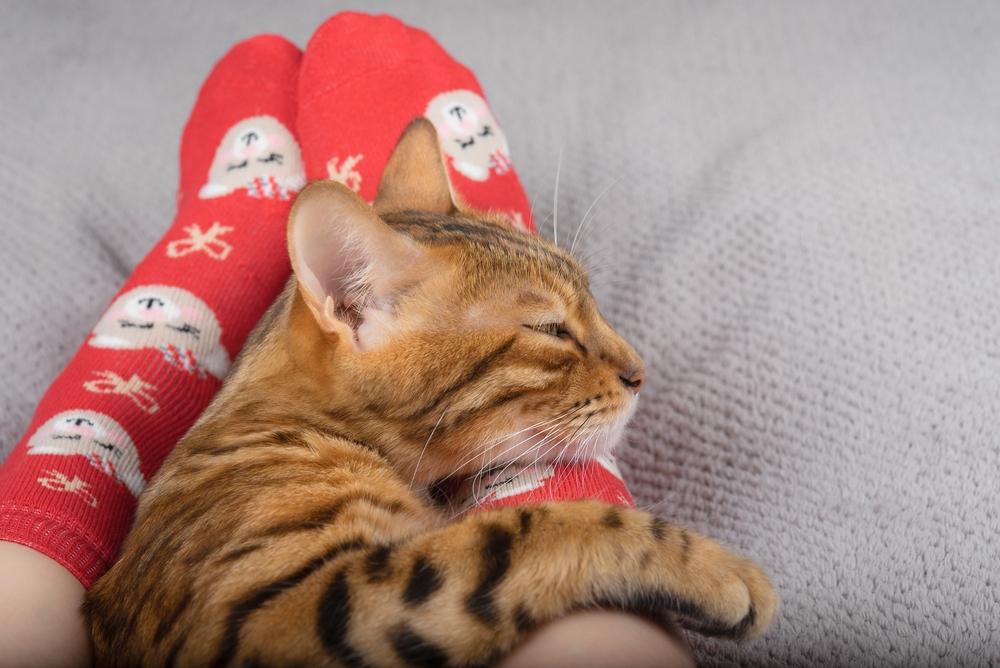
Some cat breeds are naturally more affectionate or clingy, which can influence how often they choose to sleep touching you.
Breeds like Ragdolls and Siamese often prefer close contact, while independent breeds may favor nearby but separate spots, such as the foot of the bed. Personality within a breed still varies a lot.
How Environment Shapes Sleeping Spot Choices
A cat’s chosen sleeping spot is rarely random. Lighting, noise, airflow, and even bedding texture all play a part.
| Environmental Factor | Effect on Sleep Spot |
|---|---|
| Bright morning light | May avoid pillow area near windows |
| Noisy hallway near headboard | Prefers quieter foot of bed |
| Soft blanket at feet | Increases likelihood of choosing that spot |
| Cold drafts near floor | May move higher on the bed instead |
| Warm sunbeam nearby | Strong pull toward that exact location |
Small changes to your bedroom setup can shift where your cat feels most comfortable sleeping.
Bonding Activities That Encourage Closeness at Night
If you want your cat to feel even more comfortable sleeping near you, daytime bonding matters just as much as nighttime setup.
Regular play sessions, gentle petting, and a predictable feeding schedule all build trust. Cats that feel secure during the day are far more likely to choose close, relaxed sleeping spots at night.
Common Myths About Cats Sleeping on Feet
There are a few misunderstandings worth clearing up about this common feline habit.
| Myth | Reality |
|---|---|
| It means my cat doesn’t love me as much | Independence and affection are not opposites |
| Only insecure cats sleep at the feet | Confident cats often choose this spot too |
| Cats pick this spot randomly | Warmth, safety, and routine drive the choice |
| It always means something is wrong | Most of the time, it is simply comfort |
Understanding these myths helps owners read their cat’s behavior more accurately.
What Veterinarians Say About Sleeping Spot Changes
Veterinary behaviorists generally agree that sleeping location alone is rarely a diagnostic tool on its own.
Instead, they recommend watching for a cluster of changes, such as appetite shifts, vocal changes, or reduced grooming, alongside any sleeping spot change. One new habit alone is usually not a red flag.
Comparing Cats to Dogs in Sleeping Behavior
Dog owners often notice their pets sleep pressed directly against them, while cats tend to keep more distance.
| Trait | Cats | Dogs |
|---|---|---|
| Physical contact while sleeping | Often minimal, chooses feet or nearby spot | Frequently full body contact |
| Escape route priority | High | Lower |
| Territorial marking through sleep | Common | Less pronounced |
| Consistency of spot | High once established | Varies more often |
This comparison helps explain why a cat’s foot-sleeping habit can still be a deep sign of trust, even without direct contact.
When to Simply Enjoy the Habit
For most cat owners, a cat sleeping by their feet is one of the small, comforting routines that make pet ownership rewarding.
There is no need to overanalyze a consistent, calm sleeping pattern. As long as your cat eats, plays, and behaves normally during the day, this nighttime habit is simply a sign of a happy, secure companion.
Tips for a Better Night’s Sleep for You and Your Cat
A few simple habits can help both you and your cat enjoy calmer, more restful nights together.
- Keep a consistent bedtime routine for feeding and play
- Offer a soft, warm spot at the foot of the bed
- Avoid sudden loud noises or bright lights before sleep
- Trim your cat’s nails to reduce nighttime scratching disturbances
Small, consistent changes like these often lead to noticeably better sleep for the whole household.
Key Takeaways at a Glance
Here is a condensed summary of the most important points covered in this guide.
| Key Point | Takeaway |
|---|---|
| Main reason for foot sleeping | Warmth, safety, and trust combined |
| Is it a sign of love | Yes, in almost all healthy cats |
| Should you worry about it | Rarely, unless paired with other symptoms |
| Can the spot change over time | Yes, based on age, season, and household |
| Best way to encourage the habit | Comfort, routine, and daytime bonding |
Keep this table handy as a quick reference whenever your cat’s sleeping habits shift.
Frequently Asked Questions (FAQs)
Why does my cat sleep by my feet instead of my head?
Your feet stay still and radiate steady warmth. This makes them a calmer, more predictable resting spot than a moving head or chest area.
Does a cat sleeping on my feet mean it loves me?
Yes, it usually reflects trust and affection. Cats rarely sleep close to anyone or anything they see as unsafe.
Why did my cat suddenly start sleeping at my feet?
This often relates to temperature changes or a new routine. It becomes a concern only if paired with hiding or appetite loss.
Is it bad for my cat to sleep on my feet every night?
No, consistent sleeping spots are completely normal for cats. It simply means they have found a comfortable, safe routine.
Should I stop my cat from sleeping on my feet?
Only if it disrupts your sleep quality. Otherwise, this behavior is harmless and often comforting for your cat.
Why does my cat sleep between my legs instead of my feet?
This spot mimics a warm, enclosed den. Cats who like tight, protected spaces often prefer it over open feet space.
Do all cats sleep at their owner’s feet?
No, sleeping spots vary widely by personality. Some cats prefer laps, pillows, or entirely separate rooms.
Can a cat’s sleeping spot change with age?
Yes, older cats often move to lower, easier-to-reach spots. Mobility and joint comfort play a big role in this shift.
Why does my cat only sleep on my feet in winter?
Cold weather increases a cat’s need for warmth. Your feet offer a steady heat source that becomes more appealing in winter.
What does it mean if my cat stops sleeping near me at all?
This can signal stress, illness, or a household change. A sudden, complete shift away from you is worth monitoring closely.
Conclusion
So, why does my cat sleep by my feet? In almost every case, it comes down to warmth, safety, and trust.
Your feet offer a still, cozy, and low-disturbance spot that lets your cat stay close without feeling crowded. This behavior is a quiet form of affection, built on instinct as much as bonding.
Most sleeping habits, including sudden changes, are harmless and tied to comfort, temperature, or routine. Watch for signs like hiding, tension, or appetite changes if a shift feels unusual.
Otherwise, enjoy the quiet compliment your cat is paying you every night. A cat that chooses to sleep by your feet, night after night, is simply telling you that your presence feels like home.
