

Why does coffee give me diarrhea is one of the most searched gut health questions online, and you are not alone in asking it.
Millions of people run to the bathroom within minutes of their morning cup.
It is not random. Coffee is one of the most powerful gut stimulants you can consume.
Why Does Coffee Give Me Diarrhea?
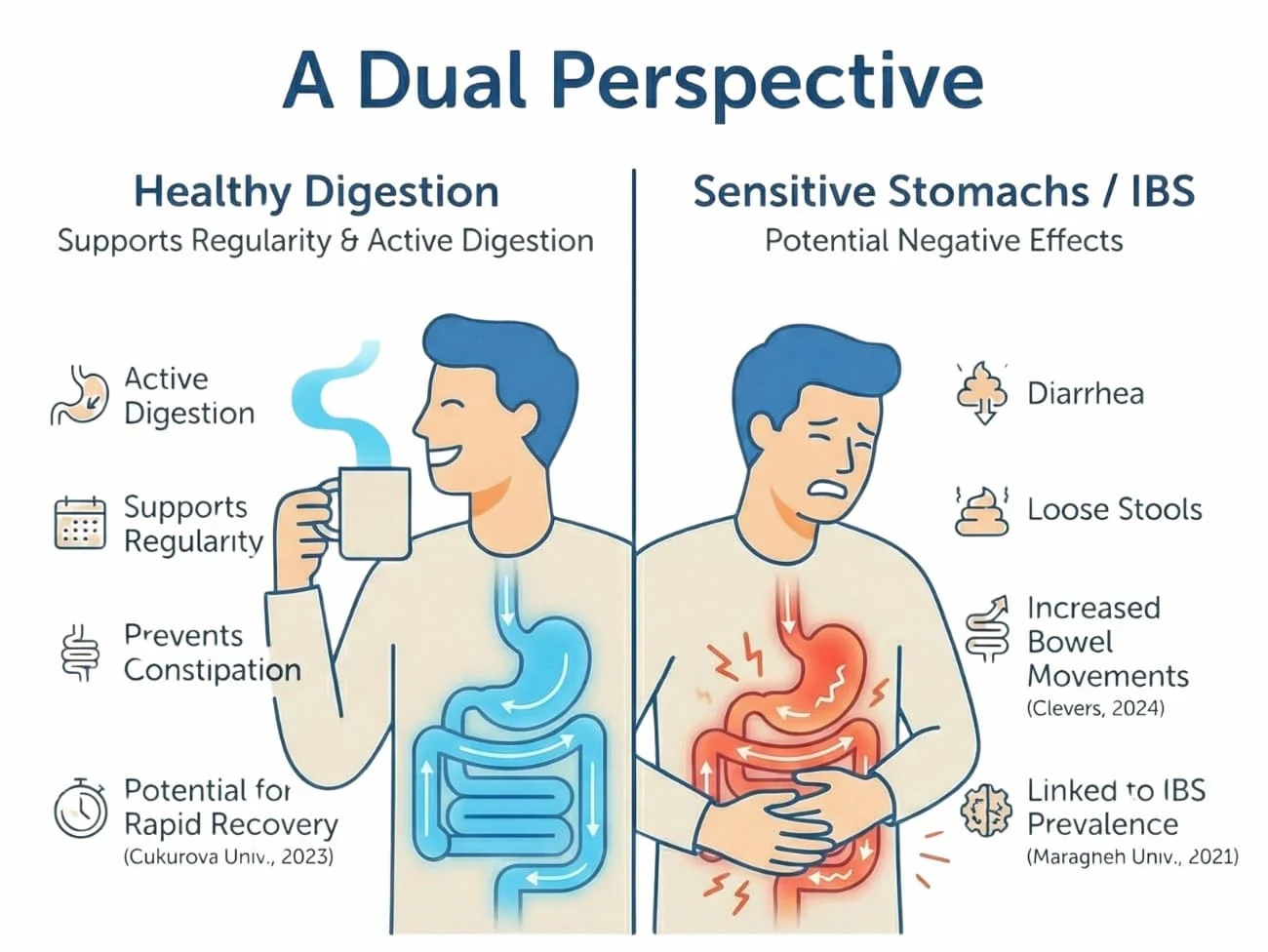
Coffee is not just caffeine. It contains over 1,000 active chemical compounds that all hit your digestive tract at once. The moment coffee reaches your stomach, your body starts a chain reaction that speeds up the entire digestive process.
This is why some people need the bathroom within 20 minutes of their first sip. It is fast, it is predictable, and for many people it happens every single day.
The Gastrocolic Reflex: The Main Trigger
The gastrocolic reflex is a wave of muscle contractions that sweeps through your colon whenever you eat or drink. It tells your colon to make room for incoming food.
Coffee is especially good at triggering this reflex. Research shows coffee increases colon activity by about 23% more than water. This reflex is also strongest in the morning, which is exactly when most people drink their first cup.
Caffeine and Gut Motility
Caffeine stimulates your central nervous system, and that stimulation reaches your digestive tract too. It speeds up peristalsis, the wave-like contractions that push food through your intestines.
When food moves too fast, your large intestine does not have enough time to absorb water from the stool. The result is loose, watery stool — which is exactly what diarrhea is. People who are more caffeine-sensitive will feel this effect even from a small cup.
Chlorogenic Acid: The Hidden Culprit
Most people blame caffeine entirely, but chlorogenic acid plays an equally big role. This is a polyphenol naturally found in coffee beans.
Chlorogenic acid triggers higher stomach acid production and irritates the stomach lining. It speeds up gastric emptying, meaning food leaves your stomach faster than normal. Both caffeinated and decaf coffee contain chlorogenic acid, which is why even decaf can cause diarrhea in sensitive people.
Hormones: Gastrin and Cholecystokinin (CCK)
Coffee stimulates the release of two digestive hormones that directly drive colon activity.
| Hormone | What It Does | Effect on Gut |
|---|---|---|
| Gastrin | Stimulates stomach acid production | Makes the colon more active |
| Cholecystokinin (CCK) | Triggers enzyme and bile release | Accelerates food movement through colon |
One study found that regular coffee raised gastrin levels 2.3 times higher than water. Decaf still raised them 1.7 times. Both hormones are linked to the gastrocolic reflex, which means even switching to decaf may not fully solve the problem.
Why Does Decaf Coffee Still Give Me Diarrhea
This is a question many people have after trying to switch. Decaf still contains chlorogenic acids, coffee oils, and a small amount of caffeine (around 2 to 5 mg per cup).
These compounds still stimulate your gut, just less intensely than regular coffee. If decaf is still causing diarrhea, the problem likely goes beyond caffeine. Your gut may simply be sensitive to the acidic nature of coffee itself.
Coffee Additives That Make Diarrhea Worse
Sometimes coffee is not the primary problem. What you add to it can dramatically increase the laxative effect.
Dairy (Milk and Cream)
Lactose intolerance affects an estimated 65% of people worldwide. If you are even mildly lactose intolerant, adding milk, cream, or a latte-style drink to your coffee can trigger bloating, cramping, and diarrhea within 30 minutes.
Many people do not know they are lactose intolerant because symptoms are mild in everyday life. Coffee acts as an accelerant, making those symptoms much more obvious.
Artificial Sweeteners and Sugar Alcohols
Sugar alcohols like sorbitol and erythritol are found in many sugar-free and zero-sugar creamers. They are poorly absorbed by the large intestine.
These sweeteners increase pressure in the colon and prevent water absorption, which directly triggers loose stools. People with IBS are particularly sensitive to them.
Non-Dairy Creamers
Even plant-based creamers can be a problem. Many contain gums, emulsifiers, and seed oils that irritate a sensitive gut. If you switched to oat milk or almond milk and still have symptoms, the creamer additives might be to blame.
High-Fat Add-Ins
Adding heavy cream, butter, or MCT oil to your coffee (as in Bulletproof-style coffee) triggers extra digestive juice production from the pancreas and gallbladder. This pulls more water into the small intestine and can directly cause loose stools.
The Role of Coffee Roast and Acidity

The type of roast matters more than most people realize.
| Roast Type | Acidity Level | Gut Impact |
|---|---|---|
| Light Roast | Highest acid | Most likely to irritate gut |
| Medium Roast | Moderate acid | Moderate impact |
| Dark Roast | Lower acid | Gentler on the stomach |
| Cold Brew | Very low acid | Least likely to cause diarrhea |
Dark roast coffee produces less stomach acid than medium or light roast because the roasting process breaks down some of the chlorogenic acids. Cold brew is naturally low in acid because it is never exposed to high heat. If diarrhea is your main issue, switching to cold brew or dark roast is one of the most practical first steps.
Why Does Coffee Make Me Have Diarrhea on an Empty Stomach
Drinking coffee before eating is one of the fastest ways to trigger gut distress. Without food in your stomach, coffee’s acids hit the stomach lining directly.
There is nothing to buffer the acidity or slow down gastric emptying. Your colon gets the signal to contract without the normal digestive process slowing things down. A small meal or snack before your morning coffee can significantly reduce the urgency.
Coffee and IBS: A Complicated Relationship
People with irritable bowel syndrome (IBS) are significantly more reactive to coffee. A Swedish study found that 39% of IBS patients who drank coffee reported worsened gut symptoms including diarrhea and stomach pain.
People with IBS-D (diarrhea-predominant IBS) are the most affected group. Coffee increases gut motility at a level that a hypersensitive colon simply cannot handle. If you have IBS and coffee consistently triggers a flare, it may be worth eliminating it for a few weeks to see if symptoms improve.
Coffee, Anxiety, and the Gut-Brain Axis
The gut and brain are directly connected through the vagus nerve. Coffee increases nervous system activity, which can heighten anxiety and intensify bowel urgency in people who are already anxious.
If you notice your coffee-related diarrhea is worse on stressful mornings, the gut-brain connection may be amplifying the effect. Reducing caffeine and addressing anxiety together may give better results than changing coffee type alone.
How Much Coffee Is Too Much for Your Gut
The International Foundation for Gastrointestinal Disorders (IFFGD) notes that drinking two to three cups of coffee or tea daily may cause diarrhea in sensitive individuals.
| Daily Cups | Risk Level for Sensitive Individuals |
|---|---|
| 1 cup | Low to moderate |
| 2 to 3 cups | Moderate, IFFGD threshold |
| 4+ cups | High, especially on empty stomach |
For most healthy adults, one cup after a meal poses a low diarrhea risk. The problems typically start when intake increases, when coffee is consumed on an empty stomach, or when dairy and sweeteners are added.
When to See a Doctor About Coffee-Related Diarrhea
Occasional loose stools after coffee are usually nothing to worry about. But some warning signs indicate something more serious is going on.
You should see a doctor if you experience any of the following:
- Diarrhea that goes beyond one bathroom trip and persists throughout the day
- Blood in the stool after drinking coffee
- Severe abdominal cramping or pain
- Significant unintentional weight loss alongside digestive symptoms
- Symptoms that persist even after stopping coffee entirely
These symptoms could point to conditions like inflammatory bowel disease (IBD), celiac disease, or other gastrointestinal disorders that need proper diagnosis.
Practical Tips to Stop Coffee from Giving You Diarrhea
You do not have to quit coffee entirely. Small changes in how and when you drink it can make a big difference.
Eat Before You Drink
Have a small meal or snack before your first cup. Food buffers the acidity and slows the gastrocolic reflex. Even a handful of oats or a piece of toast helps.
Switch to Dark Roast or Cold Brew
Both are lower in acid and less likely to irritate your gut lining. Cold brew in particular has the lowest acidity of any coffee preparation method.
Try Dairy-Free Alternatives

Replace milk and cream with oat milk, almond milk, or coconut creamer. If your symptoms disappear, lactose intolerance was the real problem, not coffee itself.
Try Half-Caf
Mix half regular and half decaf to reduce the total caffeine while keeping the flavor. Many people find a sweet spot where they get the energy boost without the bathroom urgency.
Sip Slowly
Drinking coffee too quickly floods your digestive system all at once. Slow sipping over 20 to 30 minutes gives your gut more time to process it without going into overdrive.
Avoid Sugar-Free Creamers
Check labels for sorbitol, erythritol, or other sugar alcohols. Switching to natural sweeteners like stevia or monk fruit extract is easier on the gut.
Add Cinnamon
A light sprinkle of cinnamon can help settle the stomach, reduce acidity, and bring natural sweetness without sugar. It is a small change that works for some people with mild sensitivity.
Time It Right
Drink coffee 30 to 45 minutes before you need to leave the house. This turns the bathroom effect into something predictable and manageable rather than an emergency.
Does Coffee Cause Dehydration and Make Diarrhea Worse
Coffee is a mild diuretic, meaning it encourages your body to excrete more water. When combined with diarrhea, this can lead to mild dehydration.
If you are already experiencing diarrhea, drinking more coffee will make fluid loss worse. During an active episode of diarrhea, water, oral rehydration solutions (ORS), and electrolyte drinks are far better choices than coffee.
What the Research Says: Key Science Behind Coffee and Diarrhea
The science is well established. Here is a summary of the key research findings:
| Study / Source | Key Finding |
|---|---|
| Rao et al. (1998) | Coffee increases colonic motor activity significantly |
| Iriondo-DeHond et al. (2021) | Coffee compounds affect the gut-brain axis |
| IFFGD Guidelines | 2-3 cups per day may cause diarrhea in sensitive people |
| Swedish IBS Study | 39% of IBS coffee drinkers reported worsened gut symptoms |
| ZOE Research (2025) | Coffee increases colon activity 23% more than water, 60% more than decaf |
The evidence is consistent: coffee stimulates the gut through multiple pathways, not just caffeine. Managing coffee-related diarrhea requires understanding which pathway is most active in your body.
Coffee vs. Other Hot Drinks: Does Temperature Matter
The warmth of coffee plays a role too. A warm or hot drink upon waking widens blood vessels in the digestive system and increases GI blood flow and activity.
This means even a cup of hot water or herbal tea can trigger a mild gastrocolic reflex in the morning. Coffee simply amplifies this effect significantly through its additional chemical compounds. Green tea has far less impact because it is lower in acid and typically contains less caffeine per cup.
Is It Normal for Coffee to Give You Diarrhea Every Day
For some people, one bathroom trip after morning coffee is a completely normal and predictable physiological response. It becomes a concern when it causes persistent loose stools, pain, urgency that disrupts daily life, or symptoms that last all day.
Coffee poop alone does not damage the colon or cause long-term harm. However, repeated diarrhea can lead to dehydration and electrolyte loss if it is frequent enough. If it is happening every single day with urgency or discomfort, it is worth speaking to a doctor to rule out underlying conditions.
Frequently Asked Questions (FAQs)
Why does coffee give me diarrhea but not other people?
Individual gut sensitivity varies based on caffeine tolerance, lactose intolerance, IBS, and the composition of your gut microbiome. Some people’s colons are simply more reactive to coffee’s stimulating compounds.
Does decaf coffee still cause diarrhea?
Yes, decaf can still cause diarrhea. It contains chlorogenic acids, coffee oils, and trace caffeine (2-5mg per cup) that continue to stimulate the gut even without full caffeine content.
Why does coffee give me diarrhea immediately?
Coffee triggers the gastrocolic reflex very quickly, especially on an empty stomach. Some people experience a bowel urge within 4 to 20 minutes because caffeine and gastrin signals reach the colon fast.
Can one cup of coffee cause diarrhea?
Yes, especially if you are sensitive to caffeine, lactose intolerant, have IBS, or drink it on an empty stomach. Even a single small cup can trigger loose stools in reactive individuals.
Is diarrhea after coffee a sign of IBS?
It can be. People with IBS-D (diarrhea-predominant IBS) often have an exaggerated response to coffee. If diarrhea is frequent and accompanied by cramping or bloating, speak to a gastroenterologist.
Does the type of coffee affect diarrhea?
Yes. Dark roast and cold brew are lower in acid and generally easier on the gut. Light roast and espresso tend to be higher in acid and more likely to cause digestive issues.
Can coffee diarrhea cause dehydration?
Yes. Coffee is a mild diuretic, and combined with diarrhea, fluid loss can become significant. Drink water alongside coffee and avoid it during active diarrhea episodes.
Should I stop drinking coffee if it gives me diarrhea?
Not necessarily. Try eating before drinking, switching to dark roast or cold brew, removing dairy, and sipping slowly. If symptoms persist despite these changes, reducing or eliminating coffee is the next step.
Does adding milk make coffee diarrhea worse?
For the roughly 65% of people with some degree of lactose intolerance, yes. Milk and cream can dramatically worsen coffee-related diarrhea. Switching to oat milk or almond milk often resolves the problem.
When should I see a doctor about coffee diarrhea?
See a doctor if you experience blood in stool, persistent diarrhea beyond one trip, severe cramping, unexplained weight loss, or symptoms that continue even after stopping coffee completely.
Conclusion
Why does coffee give me diarrhea comes down to a combination of factors working together.
Caffeine speeds up gut motility, chlorogenic acid increases stomach acidity, digestive hormones like gastrin and CCK activate the colon, and the gastrocolic reflex does the rest.
Add dairy, sugar alcohols, or a sensitive gut condition like IBS into the mix, and the effect gets amplified even further.
The good news is you do not have to give up coffee entirely. Eating before you drink, choosing dark roast or cold brew, ditching dairy, sipping slowly, and reducing your daily cups are all practical steps that can significantly reduce or eliminate diarrhea without cutting out your morning ritual.
If symptoms are severe, persistent, or accompanied by pain or blood, always consult a healthcare provider to rule out an underlying gastrointestinal condition.
Your gut deserves the right answers, not just a guess.
