

Why did Vincent Van Gogh cut off his ear is one of the most searched questions in art history, and the honest answer is that no single reason explains it.
On a cold December night in 1888, in the French town of Arles, the painter sliced off part of his left ear during a mental breakdown linked to a bitter fight with fellow artist Paul Gauguin.
Historians have spent over a century studying letters, medical notes, and witness accounts to understand what pushed him to this point.
Quick Facts Table
Here is a fast overview before we go into the full story.
| Detail | Information |
|---|---|
| Date of incident | Night of December 23, 1888 |
| Location | The Yellow House, Arles, France |
| Ear removed | Left ear (most of it) |
| Person involved in the argument | Paul Gauguin |
| Who received the ear | A woman at a nearby brothel |
| Where he was treated | Hôtel-Dieu hospital, Arles |
| Van Gogh’s age at the time | 35 years old |
| Famous artwork after event | Self-Portrait with Bandaged Ear (1889) |
| Van Gogh’s death | July 29, 1890, age 37 |
Who Was Vincent Van Gogh Before Arles
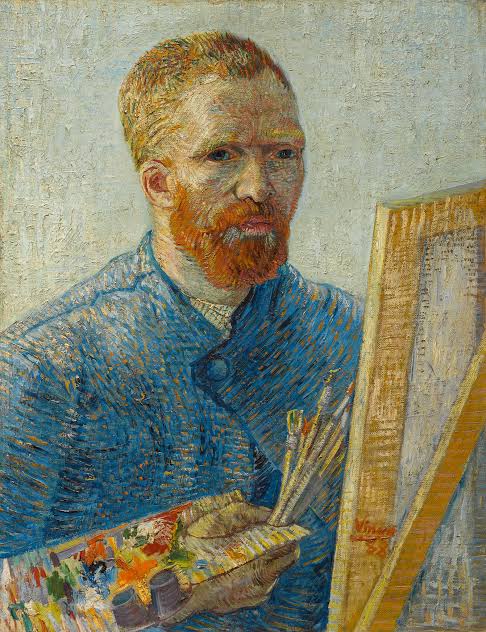
Before the ear incident ever happened, Van Gogh had already lived several different lives. He worked as an art dealer, a teacher, and even a preacher before turning to painting.
He only started painting seriously in his late twenties, encouraged largely by his brother Theo, who believed in his talent even when no one else did.
Van Gogh moved to Arles in February 1888, drawn by the bright southern light and hoping to start an artist community there.
He rented the now-famous Yellow House and invited Paul Gauguin to join him, hoping the partnership would bring both creative energy and financial stability.
Life Inside the Yellow House
Gauguin arrived in Arles in October 1888, and the two men initially painted side by side with enthusiasm.
Within weeks, cracks began to show. Van Gogh and Gauguin had opposite personalities and clashing views on how art should be made.
Van Gogh worked in fast, emotional bursts, while Gauguin preferred a slower, more deliberate and theoretical approach to painting.
Letters from this period show growing frustration on both sides, with Gauguin reportedly planning to leave Arles well before the final confrontation.
The Night It Happened
In late 1888, Van Gogh was living with Gauguin in the Yellow House in Arles. The two artists had moved in together hoping to build an artist community in the south of France.
Their friendship had been tense for weeks. They argued constantly about art, technique, and their very different personalities.
On the evening of December 23, 1888, the tension exploded into a violent confrontation. Gauguin later wrote that Van Gogh charged at him with an open razor before stopping and running back toward the house.
That same night, alone in the Yellow House, Van Gogh used the razor on himself instead. He cut off most of his left ear.
What Van Gogh Did With His Ear
After the injury, Van Gogh wrapped the severed piece of ear in paper or cloth.
He then walked to a brothel near the Yellow House and handed the wrapped ear to a woman who worked there.
Accounts differ slightly on his exact words, but he reportedly asked her to keep the object safe, an eerie and confusing request given the circumstances.
The woman was understandably shocked. Local police were alerted, and officers found Van Gogh at home the next morning, badly injured and unconscious.
How Much of the Ear Was Actually Cut Off
For decades, popular retellings said Van Gogh removed his entire ear. Modern research suggests this is not fully accurate.
Most historians now believe he cut off most of the ear, including the lobe, rather than the whole external structure.
The wound was still severe enough to cause major blood loss and require hospital treatment. Precise anatomical details remain debated among researchers.
Regardless of the exact amount, the injury was permanent and visibly changed his appearance for the rest of his life.
Gauguin’s Own Account of the Night
Gauguin later described feeling watched and followed by Van Gogh in the hours before the incident, sensing something was seriously wrong.
He claimed Van Gogh approached him with an open razor but stopped abruptly and turned back toward the house when Gauguin confronted him directly.
Some historians question parts of Gauguin’s version, since it was written years later and only from his own perspective.
Regardless of small inconsistencies, most agree the confrontation was real and marked the emotional breaking point of that night.
Was It Really About the Fight With Gauguin?
The argument with Gauguin is the most widely cited trigger, but most historians agree it was not the only cause.
Van Gogh had shown signs of serious mental distress for months before this event. The fight likely acted as the final spark rather than the sole reason.
Gauguin left Arles for Paris almost immediately after the incident and the two men never saw each other again.
The Theo Marriage Theory
A lesser-known but well-researched theory points to Van Gogh’s brother, Theo, who supported him financially and emotionally throughout his life.
Art historian Martin Bailey found evidence suggesting Van Gogh received a letter around December 23, 1888, announcing Theo’s engagement to Johanna Bonger.
The fear of losing Theo’s attention and support, right as the artist depended on him most, may have triggered intense anxiety that fed into the breakdown.
This theory does not replace the Gauguin conflict; instead, it suggests the two events combined at the worst possible moment.
Mental Illness and Psychiatric Theories
Van Gogh’s letters and hospital records show years of psychological struggle before the ear incident ever happened.
Researchers have proposed numerous psychiatric explanations, including bipolar disorder, borderline personality traits, and psychotic episodes.
A 1981 study by psychologist W.M. Runyan reviewed the case and identified over a dozen competing hypotheses, showing just how unresolved this question remains.
Most modern experts agree it was likely a combination of conditions rather than one single diagnosis.
Temporal Lobe Epilepsy Theory
Some neurologists argue Van Gogh’s symptoms match temporal lobe epilepsy, a condition that can cause confusion, hallucinations, and sudden behavioral changes.
This theory is supported by descriptions of his “fainting fits” and altered states recorded before and after the Arles incident.
Heavy alcohol use may have worsened these seizure-like episodes, according to several medical historians.
However, this diagnosis remains speculative since no modern testing was ever possible.
Meniere’s Disease Theory
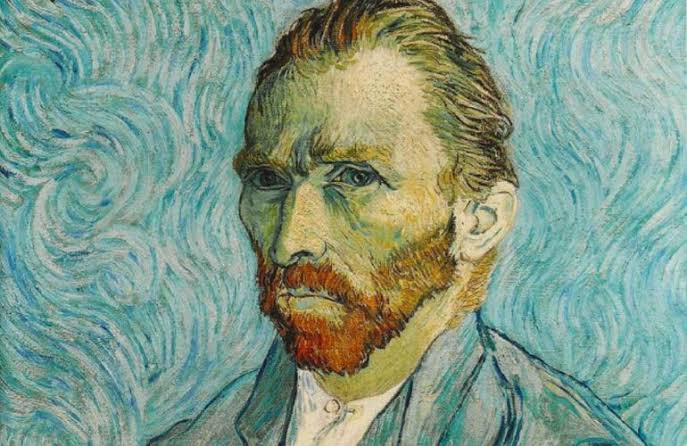
Another medical theory suggests Van Gogh suffered from Meniere’s disease, an inner ear disorder that causes vertigo, ringing in the ears, and hearing problems.
Under this theory, cutting his ear may have been a desperate, confused attempt to relieve unbearable tinnitus or ear pressure.
Some researchers strongly support this idea, while others have argued it can be ruled out based on his letters and symptoms.
The debate between epilepsy and Meniere’s disease is still active in medical literature today.
Absinthe and Alcohol Abuse
Van Gogh was known to drink heavily, including large amounts of absinthe, a strong alcoholic drink popular in 19th-century France.
Absinthe abuse was linked to hallucinations, confusion, and worsened neurological symptoms in people already struggling with mental health.
Combined with poor nutrition and exhaustion, alcohol likely made his emotional state significantly more unstable in late 1888.
Most historians view alcohol as a contributing factor rather than the root cause of the incident.
Other Physical Health Theories
Beyond epilepsy and Meniere’s disease, researchers have proposed several other physical explanations over the decades.
Acute intermittent porphyria, a rare metabolic disorder, has been suggested due to its links to pain, confusion, and psychiatric symptoms.
Lead poisoning is another theory, since Van Gogh reportedly chewed on paint tubes and used lead-based pigments regularly in his work.
Sunstroke was once a popular explanation too, though it is now considered unlikely since the incident occurred in December during heavy rain.
The Gastaut-Geschwind Syndrome Theory
Some neurologists have pointed to a specific pattern of behavior called Gastaut-Geschwind syndrome, linked to temporal lobe epilepsy in some patients.
This syndrome is associated with intense religious or philosophical preoccupation, excessive writing, and sudden emotional outbursts, traits Van Gogh displayed throughout his letters.
Supporters of this theory argue it helps explain both his creative intensity and his sudden violent episodes.
Critics note that this framework remains controversial and is not universally accepted within modern neurology.
Comparison of Leading Theories
| Theory | Main Idea | Level of Support |
|---|---|---|
| Gauguin argument | Emotional breakdown after a violent fight | Widely accepted |
| Theo’s engagement | Fear of losing his brother’s support | Strongly researched |
| Bipolar disorder | Long-term mood instability | Commonly proposed |
| Temporal lobe epilepsy | Seizure-related confusion | Debated |
| Meniere’s disease | Ear-related physical illness | Contested |
| Absinthe abuse | Alcohol-worsened mental state | Considered a factor |
What Happened Right After the Incident
Police brought Van Gogh to the Hôtel-Dieu hospital in Arles the morning after the incident.
He had lost a significant amount of blood and initially could not recall the events of the previous night clearly.
Gauguin, shaken by what happened, left Arles for good and returned to Paris, ending their shared living arrangement permanently.
Van Gogh described the event afterward as something deeply personal, offering little further explanation to doctors or friends.
The Famous Bandaged Ear Self-Portrait
After being released from the hospital, Van Gogh returned to the Yellow House and resumed painting almost immediately.
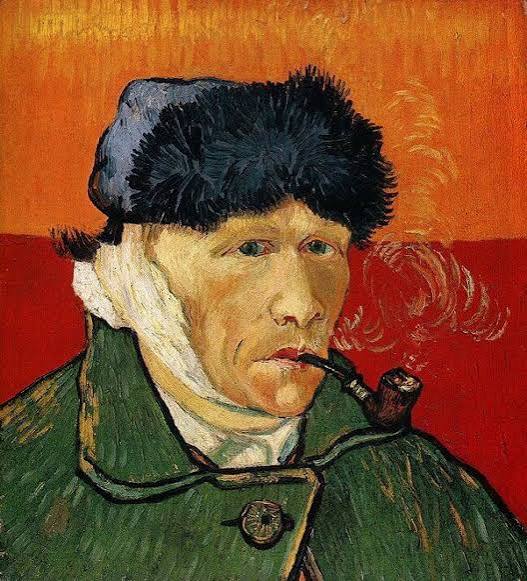
One of his most iconic works from this period is Self-Portrait with Bandaged Ear, painted in January 1889.
The painting shows him calm and composed, wearing a fur hat, with a thick white bandage covering the injured ear.
Art historians view this self-portrait as Van Gogh’s way of processing the trauma through his work rather than words.
Repeated Attacks and Hospitalization
Unfortunately, the ear incident was not an isolated event in Van Gogh’s mental health struggles.
Just weeks later, he suffered new episodes that alarmed his neighbors and local authorities in Arles.
These recurring attacks eventually led to his voluntary admission to the Saint-Paul-de-Mausole asylum in Saint-Rémy-de-Provence in May 1889.
During his time at the asylum, he continued painting prolifically, producing some of his most celebrated works, including versions of The Starry Night.
Van Gogh’s Final Years
Van Gogh left the asylum in May 1890 and moved to Auvers-sur-Oise, a small town near Paris, to be closer to his brother Theo.
He continued painting at an extraordinary pace, completing dozens of works in just a few short months.
On July 27, 1890, he shot himself in a wheat field and died two days later, at only 37 years old.
He is buried in the small cemetery of Auvers-sur-Oise, alongside his brother Theo, who died the following year.
Timeline of Key Events
The table below lays out the full sequence of events, from Van Gogh’s arrival in Arles to his death two years later.
| Date | Event |
|---|---|
| February 1888 | Van Gogh moves to Arles and rents the Yellow House |
| October 1888 | Paul Gauguin arrives to live and paint with him |
| December 23, 1888 | The argument occurs and Van Gogh cuts off part of his ear |
| December 24, 1888 | Police find Van Gogh and take him to Hôtel-Dieu hospital |
| January 1889 | He paints Self-Portrait with Bandaged Ear |
| May 1889 | Van Gogh admits himself to the Saint-Paul-de-Mausole asylum |
| May 1890 | He moves to Auvers-sur-Oise near Paris |
| July 27, 1890 | Van Gogh shoots himself in a wheat field |
| July 29, 1890 | He dies from his injuries, aged 37 |
How the Ear Incident Shaped His Art
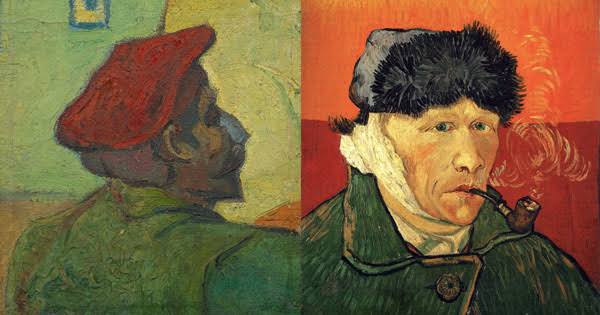
Many art historians believe the emotional aftermath of the ear incident pushed Van Gogh toward even more expressive and intense brushwork.
Paintings created in the months following the event show swirling skies, bold color contrasts, and heightened emotional energy.
Works like The Starry Night, painted during his time at the Saint-Rémy asylum, are often linked to this period of psychological turmoil.
Rather than ending his career, the crisis became a strange turning point that deepened the emotional power of his later work.
How Historians Piece This Story Together
Much of what we know comes from letters exchanged between Van Gogh and his brother Theo, who kept nearly all of his correspondence.
Gauguin’s later memoirs also provide details, though historians treat his account with some caution due to potential bias.
Hospital records from Arles and asylum documents from Saint-Rémy add clinical details that support parts of the story.
Modern medical historians continue to reanalyze these same documents using updated psychiatric and neurological frameworks.
Common Myths About the Incident
One popular myth claims Van Gogh cut off his entire ear, which most modern historians now dispute based on medical descriptions.
Another myth suggests Gauguin was directly responsible for the injury, a claim with little credible historical support.
Some stories exaggerate the woman’s reaction at the brothel, though contemporary reports confirm she was genuinely shocked and frightened.
Separating documented fact from dramatized legend is essential to understanding what truly happened that December night.
Why This Story Still Fascinates People Today
The mystery behind why Van Gogh cut off his ear continues to attract historians, psychologists, and art lovers alike.
Part of the fascination comes from the contrast between his violent personal struggles and the beauty and calm found in his paintings.
No single confirmed diagnosis exists, which keeps the debate alive among medical researchers and art historians today.
This unresolved mystery has, ironically, helped cement Van Gogh’s status as one of the most talked-about artists in history.
Van Gogh’s Legacy Today
Van Gogh sold only one painting during his lifetime, yet today his works sell for hundreds of millions of dollars at auction.
Museums like the Van Gogh Museum in Amsterdam draw millions of visitors each year, many specifically curious about the ear incident.
His story is often used in psychology and medical courses as a case study in undiagnosed mental illness and creative genius.
The ear incident, once a source of shame and confusion, has become part of the larger legend that keeps his art relevant more than a century later.
Documentaries, books, and even feature films continue to revisit this single night in Arles, treating it as a defining moment in art history.
For many people, learning why Van Gogh cut off his ear opens the door to a much deeper appreciation of his paintings and personal struggles.
It also serves as a reminder that behind many great works of art lies a real human being who dealt with real pain, illness, and isolation.
Frequently Asked Questions (FAQs)
1. Why did Vincent Van Gogh cut off his ear?
He cut off his ear during a mental health crisis following a violent argument with Paul Gauguin. Underlying psychiatric and physical health issues likely played a role too.
2. Did Van Gogh cut off his whole ear?
No, most historians believe he removed most of the ear, including the lobe, rather than the entire ear. The exact extent is still debated.
3. What did Van Gogh do with his ear?
He wrapped it and gave it to a woman working at a brothel near his home in Arles. She was reportedly shocked by the gesture.
4. Who was Van Gogh fighting with before the incident?
He had been arguing repeatedly with fellow painter Paul Gauguin, who lived with him in the Yellow House in Arles.
5. Did Gauguin cut off Van Gogh’s ear?
No credible evidence supports this claim. Most historical accounts agree Van Gogh injured himself with his own razor.
6. What mental illness did Van Gogh have?
There is no confirmed diagnosis. Proposed conditions include bipolar disorder, temporal lobe epilepsy, and borderline personality traits.
7. Did absinthe cause Van Gogh to cut his ear?
Absinthe likely worsened his mental state but is not considered the sole cause. It combined with existing psychiatric and neurological issues.
8. What happened to Van Gogh after the ear incident?
He was hospitalized, later admitted himself to an asylum, and continued painting until his death in 1890.
9. Is the Self-Portrait with Bandaged Ear a real painting?
Yes, Van Gogh painted it in January 1889, shortly after being released from the hospital following the incident.
10. How did Van Gogh die?
He died from a self-inflicted gunshot wound on July 29, 1890, two days after shooting himself in a wheat field.
Conclusion
Why did Vincent Van Gogh cut off his ear remains one of history’s most debated art mysteries, and the truth is that no single cause fully explains it.
A violent argument with Paul Gauguin, fear over his brother Theo’s engagement, and possible undiagnosed mental or neurological illness likely combined on that December night in 1888.
Absinthe abuse and physical exhaustion may have made things worse. What followed was hospitalization, repeated breakdowns, and eventual admission to an asylum, yet Van Gogh kept painting through it all, producing some of art history’s most treasured works.
His death in 1890 closed a short but extraordinary life. More than a century later, this unresolved mystery still draws millions of people into deeper appreciation of Van Gogh’s art, humanity, and struggle.
