

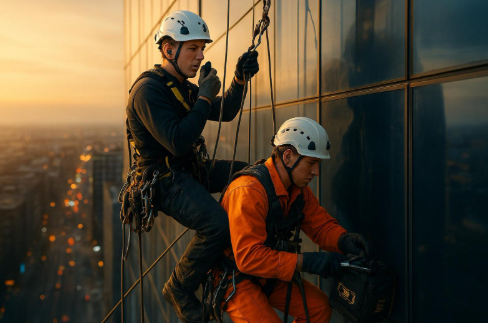
Rope access technicians tackle jobs in places where lifts and scaffolding can’t go. How do they stay safe while hanging high above the ground, often in tough weather?
The answer is a careful mix of hard training, reliable gear, clear rules, and a constant focus on safe work methods. Born from climbing and caving, this trade has become a safety leader, beating many older access methods.
From maintaining rope access offshore oil platforms to inspecting tall wind turbines, the work calls for steady hands, skill, and a strong safety mindset.
Who Are Rope Access Technicians and What Do They Do?
Rope access technicians work at heights that are hard to reach, where scaffolding or cherry pickers don’t make sense. They use methods adapted from mountaineering for industrial and commercial jobs. Their role blends hands-on ability with strict safety habits while they work on ropes.
Their job sites now cover many areas. They still help with construction and heritage work, such as restoring historic buildings, cleaning facades, and fixing roofs. But they also work in many other fields, including tree work for pruning very tall trees, showing how flexible these methods are.
Core Responsibilities of Rope Access Technicians
Rope access technicians handle many kinds of tasks at height, from routine jobs to urgent repairs. Common work includes:
- Maintenance, cleaning, inspection, and repairs
- Public works like installing rockfall nets near roads by cliffs or mountains
- Industrial and energy tasks, including work on electricity pylons, offshore platforms, wind turbines, and solar panels
- Entertainment setup at height, such as stages, lighting, and scenery
Their ability to reach difficult spots with little disruption makes them useful across many sectors, especially as renewable energy grows.
What Training and Certification Do Rope Access Technicians Need?
Training is a must in rope access work. Because working at height carries clear risks, a clear training and certification system helps technicians build the right knowledge and skills to do the job safely and well. This training covers anchors, abseiling, rescue and evacuation, and how to use and care for Personal Protective Equipment (PPE).
Ongoing learning also matters because methods and rules keep changing. Technicians stay current with new techniques and tighter regulations to keep safety levels high. Some courses focus on specific sites, like wind turbines, showing the depth of skill this job needs.
IRATA and SPRAT Certification Levels Explained
The Industrial Rope Access Trade Association (IRATA) and the Society of Professional Rope Access Technicians (SPRAT) set the main training and certification standards worldwide. IRATA offers levels from beginner to supervisor with structured training in safety, rescue, and rigging.
To move up, technicians must log many hours on ropes, signed by a qualified supervisor. For example, IRATA Level 2 usually calls for at least 1,000 hours and 12 months of experience.
SPRAT follows a similar path, confirming that technicians can plan and carry out rope access work safely and effectively. Both IRATA and SPRAT require re-certification so skills stay current. Only those who meet these demands can work on high-risk sites.
| Body | Scope | Progression | Re-certification |
| IRATA | Global industrial rope access | Multi-level, logged hours (e.g., Level 2: ~1,000 hours/12 months) | Required |
| SPRAT | North America and beyond | Multi-level with logged hours and assessments | Required |
Mandatory Safety Training and Skill Assessments
Beyond core certificates, safety training and regular skill checks are part of a rope access career. Trainees build a strong grasp of current laws, rescue steps, and hazard spotting. Training is hands-on, so workers can handle changing situations, not just pass a written test. The goal is clear: all qualified staff know the risks and rules for work at height.
Employers must also take major steps to protect their teams. Workers need proper training and must meet safety rules before they go on site. This wide approach to training and checks supports the industry’s strong safety record.
What Regulations and Standards Govern Rope Access Safety?
Because work at height is risky, rope access is covered by strict rules. These rules help keep the sector safe and reliable. Key guidance includes the 2005 Work at Height Regulations, which aim to cut accidents.
These rules help reduce human error before work starts and set out many controls during the job to keep both workers and the public safe. Standards get tighter over time, and companies must follow them on every project.
For full compliance and expertly managed high-access work, trust Rope Access in London — a professional team that combines safety, efficiency, and precision in every rope access project across the capital.
Site-Specific Risk Assessments
Before any work starts, a careful risk check is done for the exact site. This step looks at hazards that are unique to that place. Teams plan for:
- Weather and other environmental issues
- Emergency plans suited to the site
- Terrain or turbine layout and access paths
- Anchor points and structural features
- Potential fall risks and obstacles
- Safe zones and escape routes

Rescue needs and gear are also planned in detail. No climbing starts until the plan is approved and briefed to the whole team. This upfront work helps reduce risks and sets a strong base for safe work.
Legal Requirements and Compliance with Industry Standards
Beyond the site plan, rope access companies work under a clear set of laws and international standards. IRATA and SPRAT help set these benchmarks so methods stay consistent worldwide. These rules cover training, certification, gear, and daily procedures.
Firms such as Access Limited follow these standards closely and apply strong safety rules to cut risk. This commitment helps the field keep one of the lowest incident rates in industrial maintenance, which suits companies that value safety and efficiency.
How Does Safety Equipment Protect Technicians at Height?
In rope access, safety gear is a life-support system. A fall or hard impact can be deadly, so the quality of the gear and the way it’s checked matter a lot. The industry’s strong safety record comes from reliable equipment and careful inspections, along with the worker’s confidence in that gear.
New tech keeps improving PPE. Smart harnesses with sensors can alert ground teams to a sudden jolt or fall. Updates like these help keep technicians protected with reliable tools.
Personal Protective Equipment (PPE) Requirements
PPE for rope access is built to handle the risks of height work. Typical items include:
- Full-body harnesses
- Carabiners and connectors
- Static and dynamic ropes
- Lanyards and backup devices
- Self-locking and fall-arrest systems
- Helmet to protect from impacts and swings
- Gloves to prevent rope burns during abseil
Clothing also matters. It should be flexible and well-fitted for easy movement and to reduce strain. Since much of the work is outdoors, clothing must match the weather. Overheating in a heatwave or getting too cold can be dangerous, so dressing right is part of safety.
Regular Equipment Inspections and Compliance
Safety gear only works if it’s in good condition. Harnesses, ropes, connectors, and anchors must meet international standards (EN, ANSI, IRATA), and they get checked before and after each use by trained staff. Any faults are fixed or the item is taken out of service. Gear is recorded and replaced or re-certified based on wear and maker guidance.
These steady checks help prevent equipment-related incidents. This safety habit builds strong trust between technicians and their gear, which is key for hard jobs at height.
Rescue Kits and Emergency Preparedness
Even with careful planning, emergencies can happen. That’s why rescue kits and clear emergency plans are part of every job. An IRATA Level 3 supervisor is on-site, bringing years of rope hours and training in team leadership, advanced rigging, and rescue. They lead the setup, guide the work, and step in fast if conditions change.
Rescue steps are planned during the site risk assessment, and kits are close at hand. All team members practice how to use them. From prevention to response, these layers help teams work safely in tough places.
Which Rope Access Techniques Keep Safety High?
Rope access is more than hanging on a rope. It uses proven methods built over decades to manage risk. Key ideas include having backups for every critical part, careful rigging, and smooth, controlled movement. Each method aims to stop incidents and protect the worker.
These techniques are reviewed often, with updates from lessons learned and new tech to keep safety steps strong.
Redundancy and Backup Systems
A core safety idea is redundancy: one failure should not cause a disaster. Each technician uses two separate systems-one main working rope and one backup safety rope. Each rope is fixed to its own strong anchor, giving full fall protection even if one part fails.
This two-rope setup is a big reason rope access often beats scaffolding and lifts in safety results. The worker’s safety never rests on a single device; there is always a solid backup.
Rigging, Anchoring, and Fall Arrest Methods
Safe rigging and anchoring are central to stable rope systems. Technicians plan and set anchors carefully and choose devices-connectors, descenders, ascenders-that are strong and reliable. Each part must fit the full system.
Fall-arrest methods add another layer, limiting the force of a fall. Knowing how to set up, check, and use these systems is a key part of safe rope access work.
Controlled Ascent and Descent Procedures
Moving up and down the ropes follows clear steps. Technicians train to move smoothly and predictably while staying in control. This includes body position, good use of devices, and constant awareness of what’s around them.
Strong skills and regular practice let teams work in hard conditions with confidence-from the first anchor to the final descent.
What Role Do Teamwork and Supervision Play in Safe Rope Access?
Skill and gear matter, but teamwork and supervision matter just as much. Rope access is not a solo job. It depends on clear communication, trust, and shared checks. This helps catch small problems early and gives fast support when needed.
Clear roles in the team, especially the supervisor’s role, help keep standards high and the work running smoothly.
Importance of Experienced Level 3 Supervisors
Every job has an IRATA Level 3 supervisor on site. These are the most experienced people in the crew, with many rope hours and training in leading teams, complex rigging, and rescue. They do more than watch; they plan, solve problems, and have the final say on safety.
They oversee everything from setup and rigging to daily tasks. If conditions change or an emergency comes up, they act fast and guide the response. Their knowledge and leadership help keep the site safe and efficient.
Communication and Coordination on the Job
Clear communication keeps rope access safe. Technicians do not work alone; there is always another worker ready to help and watch for hazards. The team agrees on simple signals or uses radios, which helps in noisy or large areas.
With steady communication and the supervisor in charge, the crew can react quickly to any issue. Professional teamwork keeps the focus on doing the job safely and to a high standard.
Key Safety Tips for Anyone Considering Rope Access Work
If you want a hands-on career at height that makes a real impact, start with the basics of safety. This job needs physical ability, sharp thinking, steady learning, and respect for risk. The tips below will help you work safely and build a long career in this field.
Pre-Job Planning and Hazard Identification
Before you clip in, plan the job and look for hazards. Do a site-specific risk check that covers:
- Anchor strength and structural features
- Weather and other environmental factors
- Fall risks and obstacles
- Clear safe zones and escape routes
- Rescue plan and gear location
No climbing should start until the plan is ready, approved, and explained to the whole team. Put safety first every time.
Continuous Learning and Skill Refreshment
Rope access methods, tools, and rules change over time. Keep learning. Take refresher training, stay current with new techniques, and keep up with IRATA or SPRAT re-certification. Log your rope hours and take regular assessments so your skills stay sharp. With this mindset, you can handle new challenges and adjust to changing sites with confidence.
