

Why does my dog keep scratching? If you have caught your pup pawing at their skin nonstop, you are not alone. Constant scratching is one of the most common reasons pet owners search for answers online.
The good news is that most causes are identifiable once you know what to look for. In this guide, you will learn every major reason dogs scratch, how to spot the difference between them, and what steps actually bring relief.
We will also cover when scratching becomes serious enough to call your veterinarian.
Why Dogs Keep Scratching

Dogs scratch for many reasons, ranging from fleas and allergies to dry skin and stress. Persistent scratching, known as pruritus, usually points to an irritant affecting the skin.
Common triggers include parasites, food or environmental allergies, infections, and even boredom or anxiety. Identifying the pattern of scratching helps narrow down the actual cause.
How Much Scratching Is Normal for a Dog?
Occasional scratching is completely normal dog behavior. Dogs naturally scratch to relieve minor itches, just like people do.
You should pay closer attention if scratching becomes frequent, intense, or focused on one specific area. Nonstop scratching, chewing, or licking that leads to redness or hair loss is not normal and needs attention.
Parasites: The Most Common Cause of Dog Scratching
Parasites are frequently behind sudden or intense scratching episodes. They are also one of the easiest causes to rule out with a simple check.
Fleas
Even a single flea bite can trigger frenzied scratching in dogs allergic to flea saliva. This reaction is known as flea allergy dermatitis.
Fleas are most active in late summer and fall but can appear year-round indoors. Regular use of a vet-approved flea preventative is the most reliable protection.
Mites and Mange
Sarcoptic mange is caused by microscopic mites that burrow into the skin and trigger intense inflammation. This condition spreads easily between dogs and requires veterinary diagnosis.
Ear mites are another common culprit, especially when scratching is concentrated around the head and ears. A vet can confirm mites with a simple skin scraping.
Ticks
Ticks can cause localized irritation and scratching at the attachment site. They can also transmit diseases, so removing them quickly and correctly matters.
Allergies: A Leading Cause of Chronic Itching

Allergies are behind a large share of ongoing scratching cases in dogs. Unlike parasites, allergic reactions tend to be more persistent and seasonal.
Environmental Allergies
Pollen, mold, and dust mites can trigger seasonal allergic reactions in dogs. This is often called atopic dermatitis and tends to flare up during specific times of year.
Symptoms usually include itchy paws, ears, and belly. Some dogs also develop recurring ear infections tied to environmental allergies.
Food Allergies
Food allergies can cause itchy skin along with digestive upset in some dogs. Common triggers include specific proteins, grains, or additives in commercial dog food.
An elimination diet supervised by a veterinarian is the most reliable way to identify a food allergy. Symptoms usually improve within weeks of removing the trigger.
Contact Allergies
Some dogs react to specific fabrics, cleaning products, or grooming shampoos. This type of allergy usually causes localized redness where the skin touched the irritant.
Skin Infections and Irritations

Broken or irritated skin creates the perfect environment for bacteria and yeast to grow. These infections often make existing itchiness significantly worse.
Bacterial and Yeast Infections
When scratching breaks the skin barrier, bacteria or yeast can take hold quickly. Infections typically cause odor, redness, and greasy or flaky patches.
Hot Spots
A hot spot, or acute moist dermatitis, is a red, wet, irritated patch caused by persistent licking or scratching. These can develop and spread rapidly within hours.
Hot spots most often appear on the head, chest, or hips. They usually require medicated treatment from a veterinarian to heal properly.
Dry Skin
Low humidity, harsh weather, and certain nutritional deficiencies can all lead to dry, flaky skin. Dogs often respond to this discomfort by scratching or licking the affected area.
Table: Common Causes of Dog Scratching
| Cause | Common Signs | Typical Areas Affected |
|---|---|---|
| Fleas | Frenzied scratching, small red bumps | Back, tail base, belly |
| Mange or mites | Intense itching, hair loss | Ears, face, legs |
| Environmental allergies | Seasonal itching, paw licking | Paws, ears, belly |
| Food allergies | Itchy skin, digestive upset | Face, ears, paws |
| Bacterial or yeast infection | Odor, redness, greasy patches | Skin folds, ears, paws |
| Hot spots | Wet, red, rapidly spreading patch | Head, chest, hips |
| Dry skin | Flaking, mild scratching | Back, sides |
| Anxiety or boredom | Repetitive scratching without visible cause | Varies, often no clear pattern |
Behavioral and Neurological Causes
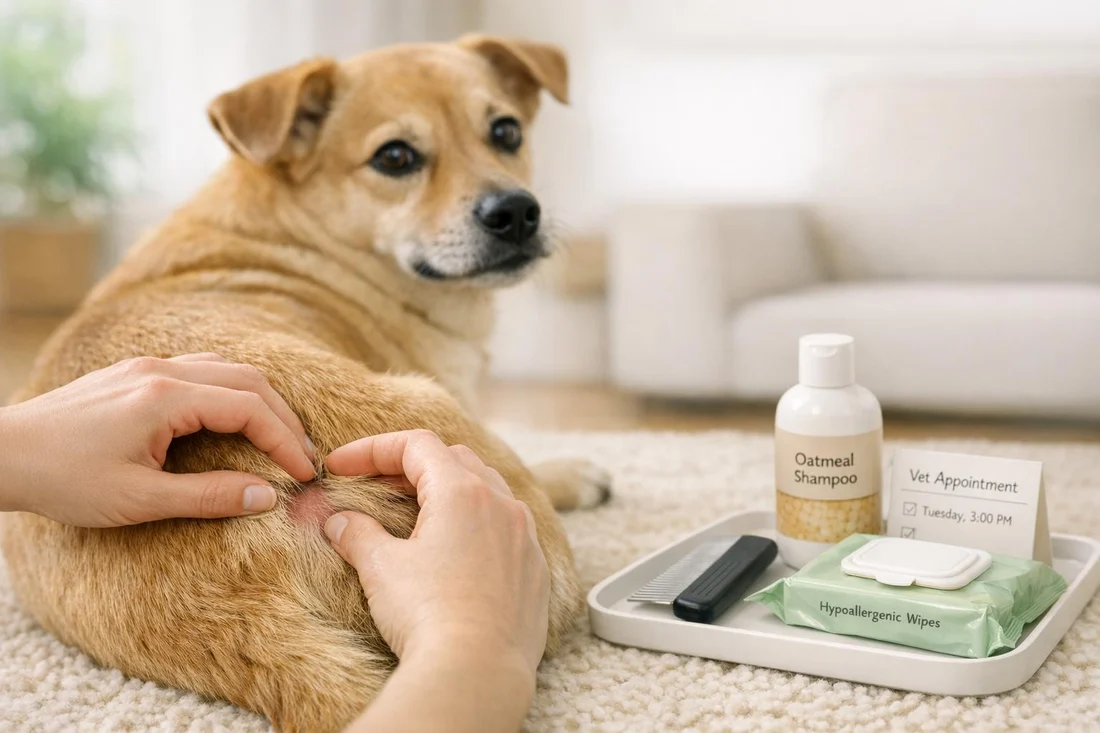
Not every case of scratching comes from a physical skin problem. Some dogs scratch because of stress, boredom, or an underlying nerve issue.
Anxiety and Boredom
Dogs can develop compulsive behaviors similar to how humans respond to stress. This can show up as repetitive scratching, licking, or chewing without an obvious physical cause.
Increasing exercise, mental stimulation, and routine can often reduce this type of scratching. Severe or persistent cases may benefit from a veterinary behaviorist.
Phantom Scratching
Some dogs scratch repeatedly at the same spot, usually near the head or neck, without ever making contact with their skin. This unusual pattern is sometimes linked to a neurological condition affecting how the brain processes sensation.
If your dog seems to be scratching at the air near their neck without relief, mention this specific pattern to your veterinarian.
How to Tell What’s Causing Your Dog’s Scratching
Look closely at where and how your dog scratches, since the pattern often reveals the cause. Sudden, all-over scratching is more typical of fleas or a new allergen exposure.
Scratching that stays in one specific spot may point to a localized irritation, hot spot, or joint pain. Scratching focused around the ears is commonly linked to ear infections or mites.
If your dog’s scratching does not match a clear physical pattern, behavioral causes become more likely. A veterinary exam is the most reliable way to confirm the exact cause.
Home Remedies for Mild Dog Scratching
For mild, occasional itching, a few home remedies can offer meaningful relief. These are best used for minor cases, not severe or worsening symptoms.
Oatmeal Baths
Colloidal oatmeal has natural soothing properties for irritated skin. A gentle oatmeal bath can calm mild itching and reduce inflammation.
Regular Grooming
Routine brushing helps distribute natural skin oils and removes loose fur and debris. This can reduce minor irritation and helps you spot skin issues early.
Moisturizing Shampoos
Vet-approved moisturizing shampoos can help with dry, flaky skin. Avoid human shampoos, since they are not formulated for a dog’s skin pH.
Consistent Flea Prevention
Year-round flea prevention remains one of the most effective ways to stop parasite-related scratching before it starts. This is far easier than treating an established infestation.
Table: Home Remedies at a Glance
| Remedy | How It Helps | Best For |
|---|---|---|
| Oatmeal bath | Soothes irritated skin | Mild, generalized itching |
| Regular grooming | Removes debris, spreads natural oils | Prevention and early detection |
| Moisturizing shampoo | Relieves dryness and flaking | Dry skin |
| Flea prevention | Stops parasites before they bite | Flea allergy dermatitis |
| Diet adjustment | Reduces food-related reactions | Suspected food allergies |
When Should You Call a Veterinarian?
Home care only helps with mild, temporary itching. Ongoing or worsening scratching almost always signals an underlying issue that needs professional treatment.
Schedule a veterinary visit if scratching lasts longer than a week without improvement. The same applies if you notice hair loss, open sores, or a strong odor.
Warning Signs That Need Prompt Attention
Bleeding or broken skin from scratching should be checked right away to prevent infection. Sudden, severe itching paired with swelling can also indicate a serious allergic reaction.
Repeated head shaking combined with scratching often points to an ear infection that needs treatment. Behavioral scratching that disrupts sleep or daily activity is also worth discussing with your vet.
What Treatments Might Your Vet Recommend?
Treatment depends entirely on the underlying cause identified during examination. Your veterinarian may recommend one or more of the following approaches.
Flea and Parasite Control
Prescription-strength flea and mite treatments quickly eliminate the source of parasite-related itching. Your vet will select the safest option based on your dog’s age and health.
Allergy Management
Allergy testing and elimination diets help pinpoint specific triggers. Long-term management may include medication, dietary changes, or environmental adjustments.
Medicated Shampoos and Topicals
Antifungal or antibacterial shampoos treat active skin infections directly. These are often paired with oral medication for more severe cases.
Anti-Itch Medication
Veterinarians may prescribe short-term anti-itch medication to break the scratch cycle while the underlying cause is treated. This helps prevent secondary skin damage.
Preventing Future Scratching Episodes
Consistent prevention is the best long-term strategy for keeping your dog comfortable. A few simple habits go a long way.
Keep your dog on a year-round flea and parasite prevention plan recommended by your veterinarian. This addresses the most common trigger before it ever becomes a problem.
Feed a high-quality, consistent diet and avoid frequent food changes. This reduces the chances of triggering a new food sensitivity.
Groom your dog regularly and check their skin and coat for early warning signs. Catching irritation early prevents it from developing into a larger issue.
Make sure your dog gets enough exercise and mental stimulation. This helps rule out boredom and anxiety as contributing factors.
Also Read:
- Enjoy4Fun – Play Free Games Online Anytime
- Secrets to Winning Big on Online Slot Machines
- 145 One Liner Tree Puns
- 50+ Tree Puns That’ll Leaf You Laughing
- Leaf It to Us: Short & Funny Plant Puns
- Cud You Believe It? Funny Cow Puns
- 150+ One Liner & Short Chicken Puns
- 145 Funny Coffee Puns
- 130 Pirate Puns: Swashbuckling Humor Ahoy
- 100 Space Puns (One Liners)
- 100 Food Puns: A Feast of Fun and Laughter
- 50+ Book Puns That Will Make You LOL
- 145 Sunday Puns: Holy Smokes, It’s Pun-day
- Discover 15 Weather Puns That Will Storm Your Heart
- 160 Halloween Puns: A Touch of Wit for Spooky Season
- 160 Tuesday Puns to Bring Some Midweek Cheer
- Dinner Puns: A Feast of Fun with Food
- Teen Goon Captions: Unleashing the Bold Spirit
- Wrestling Chat Up Lines
- 15 Perfect Girl Quotes to Make You Believe in Love
- 140 Time Puns | Clockwise Comedy
- Into The Wild (Themes & Quotes)
- Top 15 Pun Names That Are Too Good to Miss
- Pun Creator: Generate Clever & Funny Puns in Seconds
- 100 Funny Terrible Puns (One Liners)
Frequently Asked Questions (FAQs)
Why is my dog scratching but has no fleas?
Scratching without fleas is often caused by environmental allergies, food sensitivities, or dry skin. A vet exam can help pinpoint the exact trigger.
How can I tell if my dog has an allergy or fleas?
Flea-related scratching is usually sudden and concentrated near the tail base and back. Allergy-related itching tends to be more gradual and affects the paws, ears, or belly.
Is it normal for dogs to scratch a little every day?
Yes, occasional light scratching is normal dog behavior. Frequent, intense, or focused scratching is what signals a problem worth investigating.
Can stress or boredom really cause a dog to scratch?
Yes, dogs can develop compulsive scratching, licking, or chewing behaviors linked to anxiety or lack of stimulation. Increasing exercise and enrichment often helps.
What home remedy works best for mild dog itching?
An oatmeal bath is one of the gentlest and most effective options for mild, generalized itching. Persistent symptoms still need veterinary evaluation.
When should I take my dog to the vet for scratching?
See a vet if scratching lasts more than a week, causes hair loss, or leads to open sores or odor. These signs suggest an infection or deeper issue.
Can food cause my dog to scratch?
Yes, food allergies can cause itchy skin along with digestive symptoms in some dogs. An elimination diet supervised by a vet can confirm this.
Why does my dog keep scratching one specific spot?
Scratching focused on one area often points to a localized irritation, hot spot, or joint discomfort. It can also be a sign of a neurological issue in rare cases.
Are certain dog breeds more prone to itching?
Yes, some breeds are more genetically prone to skin allergies and sensitivities. Your veterinarian can advise on breed-specific risks and prevention.
Can scratching lead to a skin infection?
Yes, broken skin from repeated scratching allows bacteria or yeast to take hold easily. This is why prompt treatment matters, even for minor irritation.
Conclusion
Dogs scratch for a wide range of reasons, from fleas and allergies to dry skin, infections, and even stress or boredom. Watching where and how your dog scratches gives helpful clues about the underlying cause.
Mild, occasional itching can often be managed with simple home care like oatmeal baths and consistent grooming. Persistent, severe, or worsening scratching is your dog’s way of signaling that something needs professional attention.
A veterinary exam remains the most reliable way to identify the exact trigger and get lasting relief. Addressing the root cause early keeps your dog comfortable and prevents small issues from becoming bigger problems.
