

One minute your tooth feels fine, and the next it’s aching, then it’s fine again. If you’re asking why does tooth pain come and go, the pattern itself is actually a clue.
Intermittent pain almost always means an underlying problem is still active, even during the quiet stretches. This guide explains why the pain fluctuates and how to tell when it’s time to see a dentist.
Why Does Tooth Pain Come and Go?

Tooth pain comes and goes because the underlying issue, like a cavity, crack, or inflammation, is triggered by specific stimuli rather than causing constant irritation yet.
Pain fading doesn’t mean the problem is gone. It usually means inflammation, pressure, or nerve irritation is fluctuating rather than healing.
Why Intermittent Pain Doesn’t Mean the Problem Is Solved
Each tooth has pulp tissue inside containing nerves and blood vessels. When decay, a crack, or trauma irritates that tissue, inflammation develops gradually rather than all at once.
In early stages, that irritation only flares under specific triggers, like cold drinks or biting pressure. As the underlying issue progresses, episodes tend to become more frequent or longer lasting.
Common Causes of Tooth Pain That Comes and Goes
Several dental issues are known for producing pain that fluctuates rather than staying constant.
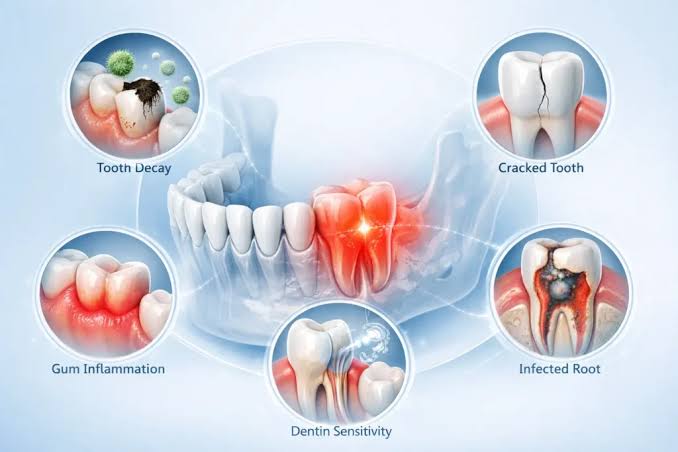
Tooth Decay (Cavities)
Early-stage cavities often cause occasional sensitivity rather than constant pain. You might feel a sharp zing when eating something cold or sweet, then nothing until the next trigger.
As decay reaches deeper layers of the tooth, episodes usually become more frequent and intense.
Tooth Sensitivity
Worn enamel or receding gums can expose the sensitive dentin layer underneath. This often causes short, sharp bursts of pain triggered by hot, cold, sweet, or acidic foods.
Cracked or Chipped Tooth
A cracked tooth may only hurt when you bite at a certain angle or apply pressure to a specific spot. Because cracks shift slightly during chewing, the pain can feel inconsistent and hard to pin down.
Gum Disease
Early gum disease, including gingivitis, can create occasional soreness, especially when food debris gets trapped below the gumline. Swelling may temporarily go down, but the underlying bacteria stay active.
Dental Infection or Abscess
Infections can cause throbbing pain from pressure buildup inside or around the tooth. If the infection finds a way to drain, pressure drops and pain may briefly ease, but the infection itself hasn’t resolved.
Recent Dental Work
Soreness after a filling or crown is common and can fluctuate for a few days to a few weeks while the nerve settles. This should gradually improve rather than worsen over time.
Sinus Pressure
Upper back teeth share nerve pathways with the sinuses. Sinus inflammation can create pressure that feels like dental pain, and it often varies with congestion levels.
How the Pain Pattern Changes Over Time
| Stage | Typical Pain Pattern | What’s Happening |
|---|---|---|
| Early | Brief, triggered by cold or sweets | Enamel irritation, early decay |
| Progressing | More frequent, longer episodes | Deeper decay or inflammation nearing the nerve |
| Advanced | Throbbing, may briefly ease after pressure drops | Infection or nerve involvement |
| Nerve decline | Sharp pain may decrease | Pulp losing vitality, not a sign of healing |
Does Cavity Pain Come and Go?
Yes, especially in the early stages. A small cavity can trigger pain only when food or liquid reaches the sensitive dentin beneath the enamel.
Once the trigger is removed, the pain fades, but the cavity itself keeps growing underneath.
Is Intermittent Tooth Pain an Emergency?
Often, no, but it’s still a signal worth acting on. Intermittent pain usually means the tooth is starting to lose its ability to protect itself, even if it isn’t a crisis yet.
Pay closer attention if episodes are becoming more frequent, more intense, or triggered more easily than before.
Signs You Shouldn’t Ignore
- Pain that returns more often or more intensely over time
- Swelling in the face or gums
- A bad taste or odor near the affected tooth
- Sensitivity that lingers well after the trigger is gone
- Pain when biting or chewing in a specific spot
- Fever alongside tooth discomfort
What to Do While You Wait for a Dental Appointment
- Rinse with warm salt water to reduce irritation
- Avoid very hot, cold, or sugary foods that trigger episodes
- Use a soft-bristled toothbrush around the sensitive area
- Avoid chewing directly on the affected tooth
- Keep the area clean with gentle flossing to remove trapped debris
Mistakes to Avoid
- Assuming pain that fades means the problem resolved itself
- Waiting for constant pain before scheduling a dental visit
- Self-diagnosing without an exam or X-ray
- Ignoring pain that follows a worsening pattern over weeks
When to See a Dentist
Schedule an appointment if intermittent pain lasts more than a few days, keeps returning, or is accompanied by swelling, fever, or a bad taste in your mouth. A dentist can pinpoint the source with a clinical exam and X-rays, since the pattern alone can’t confirm the exact cause.
Expert Tip

Don’t let temporary relief set your treatment timeline. Reduced pain after an infection drains is a pressure change, not a sign the infection has cleared.
Also Read:
- 75 Literary Devices (A to Z List)
- Literary Devices vs. Figurative Language
- Literary Devices For Storytelling
- 10 Literary Devices That Use Comparison
- Literary Tools: Mastering the Art of Powerful Storytelling and Poetry
- Why Understanding Literary Devices Can Make You a Better Writer
- Literary Devices In The Scarlet Letter
- Examples of Innuendo in Literature
Frequently Asked Questions (FAQs)
Why does my tooth hurt sometimes and not other times?
Pain fluctuates because the underlying issue, like decay or inflammation, reacts to specific triggers rather than causing constant irritation at every stage.
Does cavity pain come and go?
Yes, especially early on. Cavities often cause occasional sensitivity before becoming more constant as decay deepens.
Is it normal for tooth pain to come and go for weeks?
It’s common, but not something to leave unaddressed. Pain lasting weeks usually points to an active issue that needs evaluation.
Can tooth pain go away on its own?
Dental issues rarely resolve on their own. Pain may pause temporarily, but the underlying cause typically continues or worsens.
What does throbbing pain that comes and goes usually mean?
Throbbing pain often indicates infection or inflammation inside the tooth, with pressure changes causing the on-and-off pattern.
Can a cracked tooth cause pain that comes and goes?
Yes. Cracks often only hurt when biting at a certain angle, making the pain feel inconsistent rather than constant.
Is intermittent tooth pain always a cavity?
No. Sensitivity, gum disease, sinus pressure, and cracks can all cause pain that comes and goes, not just cavities.
How long should I wait before seeing a dentist for intermittent pain?
If pain persists beyond a few days or keeps recurring, it’s time to schedule an appointment rather than wait it out.
Can sinus issues cause tooth pain that comes and goes?
Yes, especially in the upper back teeth, since they share nerve pathways with the sinuses.
Why does my tooth only hurt when I eat something cold or sweet?
This pattern often points to early sensitivity or a developing cavity reacting to specific stimuli.
Does pain reducing after a while mean the infection is gone?
Not necessarily. Reduced pain can happen when infection pressure drains, which is a pressure change, not resolution.
Can recent dental work cause pain that comes and goes?
Yes, mild soreness after a filling or crown is common and can fluctuate for a few days to weeks as the nerve settles.
Is it dangerous to ignore tooth pain that isn’t constant?
Yes, ignoring it can allow the underlying issue to progress, potentially leading to infection or more extensive treatment later.
What tests help identify the cause of intermittent tooth pain?
A dental exam paired with X-rays helps dentists pinpoint decay, cracks, infection, or other underlying causes.
Can gum disease cause pain that comes and goes?
Yes, early gum disease can cause occasional soreness, especially around trapped food debris, even as visible swelling fluctuates.
Conclusion
Why does tooth pain come and go usually comes down to an active dental issue reacting to specific triggers rather than staying constant, not the problem resolving on its own. Cavities, sensitivity, cracks, and infections can all follow this on-and-off pattern in their early stages.
The safest move is treating the pattern as a signal rather than reassurance, and getting a dental exam before intermittent pain becomes constant.
