

Why was homework invented is a question millions of students have asked while staring at a pile of assignments late at night.
The real answer is not simple — it goes back thousands of years, through ancient Rome, the Prussian empire, and Cold War-era America.
Homework was not created to punish students, though some early uses came close to that. It evolved over centuries for political, educational, and social reasons.
The Big Question: Why Was Homework Invented?

Homework was invented to extend learning beyond classroom walls. The core idea was simple — students need more time with a concept than a single class period allows.
Over time, the reasons behind homework shifted from political control to academic reinforcement. Understanding this history helps explain why homework still exists today.
The Roberto Nevilis Myth: Did He Really Invent Homework?
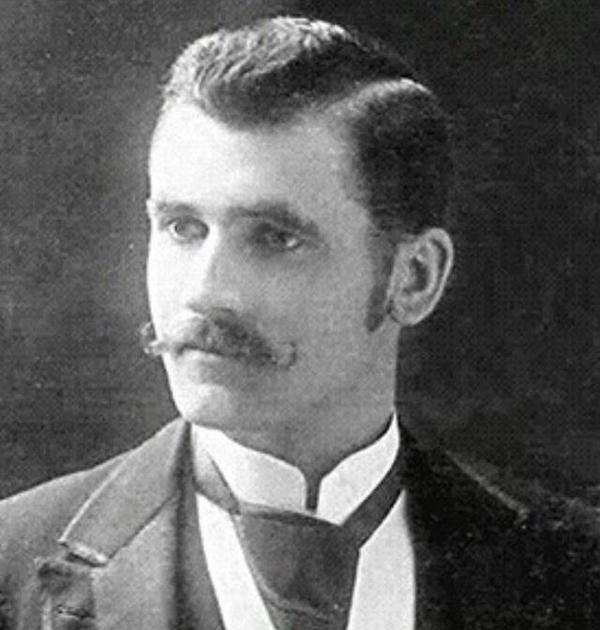
If you search “who invented homework,” the name Roberto Nevilis appears almost everywhere. The story claims he was a Venetian teacher who invented homework in 1905 as a punishment for poorly performing students.
Historians have found zero credible evidence that Nevilis ever existed. The timeline itself disproves the story — California had already banned homework for students under 15 in 1901, four years before Nevilis supposedly created it.
This story circulates widely on blogs and social media, but it has no basis in documented history. It is, in short, an internet myth.
The Real Origin: Ancient Civilizations
The actual roots of homework stretch back thousands of years into ancient civilizations.
- In Mesopotamia, students copied complex texts onto clay tablets at home.
- In ancient Egypt, students drilled geometry problems and practiced hieroglyphics outside formal lessons.
- In ancient Greece, education emphasized ongoing learning, with students expected to memorize and recite texts independently.
These early practices show that the idea of learning outside a formal setting is as old as education itself.
Pliny the Younger: The First Recorded Homework Assignment
The earliest documented example of homework as we recognize it today comes from ancient Rome. Pliny the Younger, a rhetoric teacher in the first century AD, asked his students to practice their public speeches at home.
His goal was to help students become more confident and fluent speakers in a relaxed environment. Historians widely credit this as the first recorded instance of assigned out-of-class work.
This was not a punishment. It was a deliberate educational strategy to build a specific skill — oral communication.
The Prussian Education System: Where Modern Homework Was Born
The story of modern homework truly begins in early 19th-century Prussia. After Napoleon’s defeat, the German philosopher Johann Gottlieb Fichte developed a system called the Volksschule — a mandatory, government-funded nine-year education system.
The Volksschule was designed with a very specific political goal: to create loyal, disciplined citizens who identified with the German national state. Homework was not just about academics. It was a tool for ideological control.
Students were expected to continue state-approved learning at home, leaving less time for independent thought or activities outside the government’s agenda. This political origin is why many critics of homework have argued for centuries that it is less about learning and more about compliance.
| Feature | Volksschule System |
|---|---|
| Established | Early 1800s, Prussia |
| Primary Goal | National identity and discipline |
| Role of Homework | Reinforce state-approved values at home |
| Inspired By | Johann Gottlieb Fichte |
| Spread To | Europe, then United States via Horace Mann |
Horace Mann: The Man Who Brought Homework to America
Horace Mann (1796–1859) is the single most important figure in the history of homework in the United States. He was an American educator and politician who served on the Massachusetts Board of Education and is often called the “Father of American Education.”
Mann visited Prussia in the 1840s and was deeply impressed by their structured educational model, which included daily homework assignments. He returned to America and began implementing similar reforms across the public school system.
His influence was massive. Within decades, homework became a standard expectation in American schools. Mann did not invent homework from scratch — but he normalized it in a way that shaped education for over 150 years.
Timeline of Homework History
| Year | Event |
|---|---|
| 1st Century AD | Pliny the Younger assigns oral practice at home in Rome |
| Early 1800s | Prussian Volksschule makes homework mandatory |
| 1840s | Horace Mann visits Prussia, brings model to America |
| 1880 | Boston restricts math homework under Francis Amasa Walker |
| 1901 | California bans homework for children under 15 |
| 1917 | California homework ban is lifted |
| 1930s–40s | Homework debates intensify across the US |
| 1957 | Sputnik launch triggers push for more rigorous homework in America |
| 1980s | “A Nation at Risk” report increases homework expectations |
| 2000s–Present | Debate over homework overload and student mental health grows |
Why Was Homework Originally Invented? The Real Reasons
There was never just one reason. Homework was invented — and re-invented — for multiple overlapping purposes across different eras.
To reinforce classroom learning. The most straightforward reason is academic. A single class period is not enough to master complex material. Homework gives students time to revisit, practice, and consolidate what they learned.
To build discipline and responsibility. Early educators saw homework as a character-building tool. Completing assignments on time teaches time management, self-regulation, and accountability — skills that matter beyond school.
To extend the school day. Before the era of extended schooling, homework effectively doubled the time students spent with academic content. This was especially important in systems where classroom time was limited.
For political control. In the Prussian model, homework served an ideological function. It kept students busy with state-sanctioned material and reinforced loyalty to national values.
To involve families in education. Assigning work at home naturally draws parents into the educational process. This creates a bridge between school and home that many educators value.
How Homework Evolved Through the 20th Century

Homework has never been without controversy. Its history in the 20th century is a back-and-forth story of bans, revivals, and reforms.
Early 1900s: The Anti-Homework Movement
In 1901, California became the first US state to ban homework for children under 15. Around the same time, major publications including The New York Times and Ladies’ Home Journal published statements from doctors and parents arguing that homework was harmful to children’s health and development.
1957: Sputnik Changes Everything
When the Soviet Union launched Sputnik in 1957, American educators panicked about falling behind in science and math. Homework suddenly became patriotic. Schools dramatically increased academic workloads, and homework was seen as essential to national competitiveness.
1980s: A Nation at Risk
The 1983 report “A Nation at Risk” again pushed for increased academic rigor, leading to a spike in homework expectations across all grade levels. This era cemented homework as a core feature of American schooling.
2000s to Present
The modern era has seen growing pushback against excessive homework. Research showing links between heavy homework loads and student stress, anxiety, and burnout has led many schools to adopt “homework policies” that cap the amount assigned per night.
What Is the Purpose of Homework Today?
Modern educators generally agree on several key purposes for homework, though the debate about how much is appropriate continues.
Skill practice and retention. Repetition is a key factor in long-term memory. Homework gives students repeated exposure to concepts, which strengthens retention and fluency — especially in subjects like mathematics and foreign languages.
Independent learning habits. Homework trains students to work without direct supervision. This builds the independence and self-direction that college and careers require.
Parent-school connection. Homework is often described as the place where schools and families most frequently intersect. It gives parents a window into what their child is learning.
Preparation for future academic challenges. Regular homework builds the study habits and academic discipline that students need in higher education and professional life.
Types of Homework: Not All Assignments Are Equal
Researchers generally categorize homework into two main types, each serving a different educational function.
| Type | Purpose | Best For |
|---|---|---|
| Remedial Homework | Help struggling students catch up | Students who missed material or need extra support |
| Advancement Homework | Extend and deepen learning | High-performing students or advanced topics |
| Practice Homework | Repetition to build fluency | Math, language, vocabulary |
| Creative/Project Homework | Develop research and synthesis skills | Science projects, essays, presentations |
| Reading Homework | Build background knowledge | History, literature, science |
Does Homework Actually Work? What Research Says
The research on homework effectiveness is more nuanced than most people realize. The answer depends heavily on the student’s age and the quality of the assignment.
For younger students: Research indicates little measurable academic benefit of homework for elementary school students. Studies suggest that for children under 10, play and free time may do more for learning outcomes and emotional development than nightly worksheets.
For middle school students: The academic impact becomes clearer at this level. Moderate amounts of homework — less than an hour per night — show positive effects on test scores and academic performance.
For high school students: The evidence is strongest here. Students benefit most from about 1.5 to 2.5 hours of homework per night. International data consistently shows a link between homework time and academic performance in older students.
The 10-minute rule: Many education researchers support the “10-minute rule” — 10 minutes of homework per grade level per night. So a 3rd grader gets 30 minutes, while a 10th grader gets about 100 minutes.
The Homework Gap: An Equity Problem
One major modern concern is the “homework gap” — the inequality that arises when students lack the resources needed to complete assignments at home.
Not all students have reliable internet access, a quiet study space, or a parent available to help. Students from lower-income families are disproportionately affected. Even as school-issued devices have expanded access, significant disparities remain in many communities.
This is a direct challenge to the idea that homework creates equal learning opportunities. In reality, homework can sometimes deepen the very inequalities that education is supposed to reduce.
The Debate: Should Homework Be Abolished?
The homework debate is one of the most persistent in modern education. Here is a fair summary of both sides.
Arguments in favor of homework:
- Reinforces classroom learning and improves retention
- Builds study habits, discipline, and time management
- Keeps parents connected to their child’s education
- Prepares students for the demands of higher education
- Supports academic achievement, especially for older students
Arguments against homework:
- Creates stress, anxiety, and burnout in students
- Provides little benefit for younger children
- Deepens educational inequalities (homework gap)
- Cuts into time for play, family, and creative exploration
- Can be assigned in excessive amounts without clear educational value
Most researchers today do not argue for eliminating homework entirely, but for making it more intentional, age-appropriate, and equitable.
How Different Countries Approach Homework
Not every country handles homework the same way, and the differences are striking.
| Country | Homework Culture |
|---|---|
| Finland | Minimal homework; focus on in-class learning |
| South Korea | Heavy homework load; high academic pressure |
| Japan | Moderate homework with strong parental involvement |
| United States | Varies widely by school district and grade level |
| Germany | Moderate; rooted in the original Prussian system |
| France | Homework was officially banned in primary schools in 2012 |
Finland consistently ranks among the top countries in global education assessments despite assigning very little homework. This challenges the assumption that more homework always leads to better outcomes.
Why Students Hate Homework (And Why That Matters)
Student resistance to homework is not new. It has existed as long as homework itself. But understanding why students resist it is important.
Common reasons students dislike homework include feeling overwhelmed by volume, not understanding the material well enough to work independently, having no quiet or comfortable place to study, and feeling that the work is repetitive without being genuinely useful.
These complaints are not simply laziness. They often point to real problems with how homework is designed and assigned. Effective homework should be meaningful, manageable, and clearly connected to what students are learning in class.
Homework in the Age of AI and Technology
The rise of AI tools like ChatGPT has created new challenges for homework as an educational practice. Students can now use AI to generate answers, raising questions about academic integrity and the purpose of take-home assignments.
Many educators are responding by shifting toward more in-class assessments, project-based learning, and assignments that require personal reflection or hands-on work that AI cannot easily replicate.
This shift may actually bring homework closer to its original purpose — developing genuine understanding and skill — rather than simply producing completed worksheets.
Tips for Making Homework More Effective

Whether you are a student, parent, or educator, these research-backed strategies can make homework more productive.
For students:
- Create a consistent homework schedule and dedicated workspace
- Break large assignments into smaller tasks
- Use the Pomodoro technique — 25 minutes of work, 5 minutes of rest
- Ask for help early rather than waiting until the assignment is due
- Review notes from class before starting homework
For parents:
- Provide a quiet, well-lit space for study
- Avoid doing the homework for your child — guide instead of solving
- Stay aware of homework volume and communicate with teachers if it seems excessive
- Encourage a healthy balance between schoolwork and downtime
For educators:
- Follow grade-appropriate time guidelines (the 10-minute rule)
- Ensure homework is clearly connected to classroom instruction
- Provide feedback on homework so students know it matters
- Consider the equity implications of homework that requires internet or parental help
Frequently Asked Questions (FAQs)
Why was homework invented in the first place?
Homework was invented to extend learning beyond the classroom, reinforce skills, and build student discipline. Over time, it also served political goals, particularly in the Prussian education system that shaped modern schooling.
Who really invented homework?
No single person invented homework. It evolved over centuries. Pliny the Younger is the earliest documented example, while Horace Mann is credited with formalizing it in the American education system in the 1840s.
Did Roberto Nevilis really invent homework?
No. The story that Roberto Nevilis invented homework in 1905 is an internet myth. Historians have found no credible evidence he existed, and the timeline contradicts the claim since California banned homework in 1901.
Was homework originally a punishment?
Not originally. While some early uses treated homework as a punishment for underperforming students, its primary purpose across most of history has been academic reinforcement and extending learning beyond the school day.
When did homework become common in the United States?
Homework became common in the US in the mid-to-late 19th century after Horace Mann introduced ideas from the Prussian educational system. It was briefly banned in California in 1901 before becoming fully normalized in the 20th century.
Does homework actually improve academic performance?
Research shows homework benefits are age-dependent. There is little measurable benefit for elementary students, moderate benefit for middle schoolers, and stronger evidence of academic gains for high school students who do 1.5 to 2.5 hours nightly.
What is the 10-minute homework rule?
The 10-minute rule is a research-backed guideline suggesting students should receive 10 minutes of homework per grade level per night. A 4th grader would get 40 minutes; a 10th grader about 100 minutes.
Why do some countries assign very little homework?
Countries like Finland assign minimal homework and still achieve top global education rankings. Research suggests that high-quality in-class instruction can be more effective than large amounts of take-home work, especially for younger students.
What is the homework gap?
The homework gap refers to the inequality between students who have access to quiet study spaces, internet, and parental support at home versus those who do not. It is a significant equity concern in modern education systems.
Is homework becoming less important in the age of AI?
AI tools have challenged traditional homework models by making it easy for students to generate answers. Many educators are shifting toward in-class assessments and project-based work that emphasizes genuine understanding over completed assignments.
Conclusion
Why was homework invented is a question with a rich and complicated answer. It was not invented by one person on a single date.
It evolved over thousands of years — from Pliny the Younger’s rhetoric exercises in ancient Rome, to the discipline-focused Volksschule of 19th-century Prussia, to Horace Mann’s educational reforms in America.
The original purposes ranged from genuine academic reinforcement to political control.
Today, homework serves real functions when it is well-designed and age-appropriate, but research makes clear that more is not always better.
As education continues to evolve in the age of technology and AI, the question of why homework exists — and whether it is achieving those goals — remains as relevant as ever.
