

Why is my sewer bill so high is one of the first questions homeowners ask when a shocking utility statement shows up. Your sewer charge is not measured separately from your water use.
It is calculated based on the total water flowing into your home, because utilities assume most of it drains back out as wastewater.
Why Is My Sewer Bill So High? How Sewer Bills Are Actually Calculated
Most people assume their sewer bill is a separate measurement. It is not.
Your utility company measures the water that flows into your home through your meter. They then assume that nearly all of it eventually drains out as wastewater and bill you accordingly. The more water that enters your home, the higher your sewer charge.
Charges are typically measured in MCF, which stands for one thousand cubic feet and equals approximately 7,480 gallons of water. Some utilities use a flat-rate system while others bill based on metered usage.
Flat Rate vs. Usage-Based Sewer Billing
| Billing Type | How It Works | Effect on Your Bill |
|---|---|---|
| Flat Rate | Fixed charge regardless of usage | Stable but no savings from cutting use |
| Usage-Based | Rises and falls with water consumption | Leaks and high usage directly raise the bill |
| Winter Average | Bill set using winter months as baseline | Summer outdoor use may or may not count |
| Tiered Rate | Higher usage triggers a higher rate per gallon | Heavy users pay significantly more per unit |
Understanding which billing method your utility uses is the first step. Once you know that, you can identify exactly which of the seven common reasons below is driving your high sewer bill.
Reason 1: Hidden Toilet Leaks
A leaking toilet is the single most common reason a sewer bill spikes unexpectedly. The problem is that most toilet leaks are completely silent and invisible from the outside.
The most frequent culprit is a worn flapper valve inside the toilet tank. When the flapper fails to seal properly, water trickles continuously from the tank into the bowl and straight down the drain without any visible sign.
A toilet leaking at just a quarter gallon per minute can add up to $350 extra on a single three-month billing cycle. Multiply that across two or three toilets and the damage becomes serious.
How to Test It
Drop a few food coloring tablets into your toilet tank. If color appears in the bowl without flushing, the flapper is leaking. A replacement flapper costs under $15 at any hardware store and takes about ten minutes to install.
Reason 2: Dripping Faucets and Showerheads
A dripping faucet feels harmless, but it is a constant, steady drain on your water usage and therefore your sewer bill.
Even one faucet dripping at one drip per second wastes more than 3,000 gallons of water per year. Showerheads with worn seals drip between uses and run at high flow rates during showers. Older showerheads can push 2.5 gallons per minute or more, while modern low-flow models use as little as 1.5 gallons per minute.
Most leaky faucets need only a replacement rubber washer inside the handle. Replacing a showerhead with a WaterSense-certified model costs between $20 and $60 and pays for itself within a few billing cycles.
Reason 3: Increased Household Water Usage
Sometimes the reason your sewer bill is high has nothing to do with leaks. It is simply that more water is being used in the home than usual.
Common causes include guests staying for extended periods, children returning home from school or college, filling a swimming pool, watering a lawn more frequently in hot weather, or running the dishwasher and washing machine more often.
Because sewer charges track water input directly, any increase in household water use shows up on the sewer bill. Tracking your usage month to month on your utility account is the easiest way to spot when usage shifted.
Reason 4: Aging or Inefficient Appliances
Older appliances use significantly more water than modern equivalents. Washing machines manufactured before 2010 can use 40 or more gallons per load. Modern ENERGY STAR front-load models use as little as 14 gallons per load.
The same gap exists for dishwashers. Older models can consume 10 to 15 gallons per cycle. Modern efficient dishwashers use 3 to 5 gallons per cycle.
| Appliance | Old Model Usage | Efficient Model Usage | Annual Savings |
|---|---|---|---|
| Washing Machine | 40+ gallons/load | 14–18 gallons/load | 6,000+ gallons/year |
| Dishwasher | 10–15 gallons/cycle | 3–5 gallons/cycle | 2,500+ gallons/year |
| Toilet (older) | 3.5–7 gallons/flush | 1.28 gallons/flush | 4,000+ gallons/year |
| Showerhead | 2.5 gallons/minute | 1.5 gallons/minute | 2,000+ gallons/year |
Upgrading even one appliance can produce a measurable drop in your sewer bill over the course of a year.
Reason 5: Underground Pipe Leaks or Sewer Line Damage

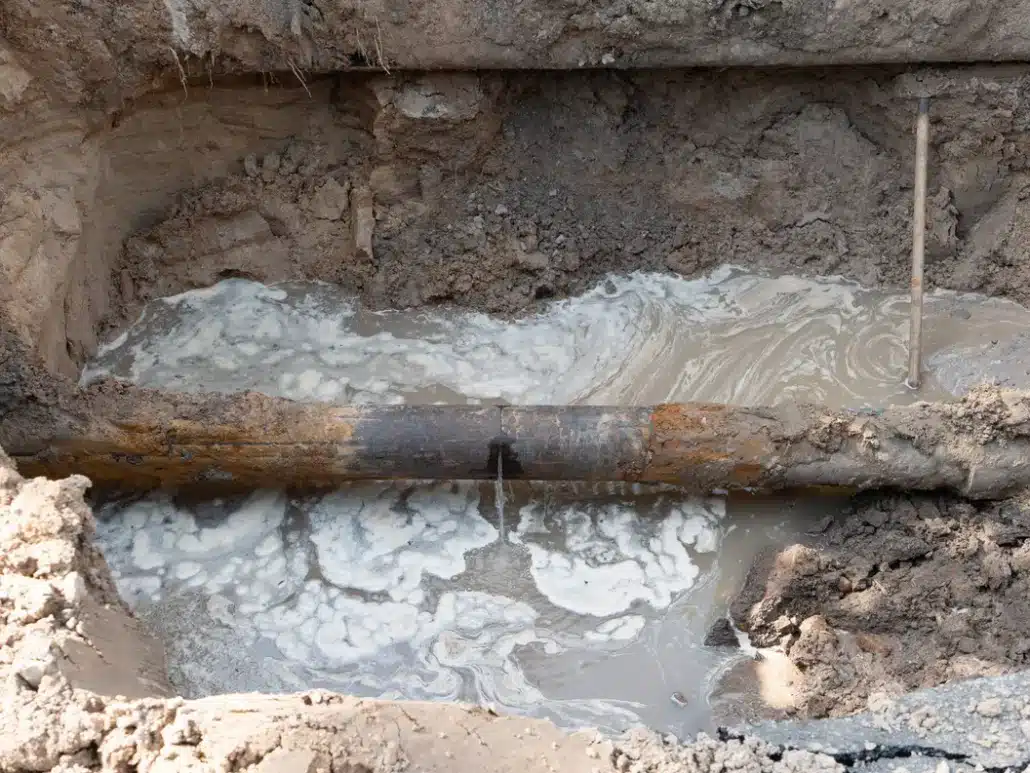
Not all leaks happen inside your walls or fixtures. Underground pipe leaks and sewer line damage are serious and often go unnoticed for months.
When a sewer line develops a crack or blockage, or when tree roots infiltrate underground pipes, water escapes before it reaches the municipal sewer system. The utility still bills you for the water that entered your home, even though a significant portion of it never made it to the drain properly.
Signs of underground sewer line problems include unexplained wet patches in your yard, sinkholes forming near the house, slow drains throughout the home, or a persistent sewage odor. A licensed plumber can run a camera inspection of your sewer line to confirm damage without any major excavation.
Tree roots are a particularly common cause. They are naturally drawn to the moisture and nutrients inside sewer pipes and can infiltrate through tiny cracks, expanding over time until the pipe is partially or fully blocked.
Reason 6: Faulty or Misread Water Meter
Sometimes the problem is not inside your home at all. A malfunctioning or inaccurate water meter can result in inflated bills that do not reflect your actual usage.
Water meters do malfunction, particularly older mechanical meters that may stick or over-report usage. If you have ruled out all internal causes and your bill remains high, contact your utility company and request a meter test or replacement.
It is also worth reading your meter yourself and comparing it to what your bill states. Your utility company’s website or bill should include instructions on how to read your specific meter type. If the numbers do not match, file a dispute with your utility provider immediately.
Reason 7: Municipal Rate Increases
Even if nothing has changed inside your home, your sewer bill can rise because your utility has raised its rates. Municipal sewer systems require constant investment in infrastructure maintenance, treatment facilities, and regulatory compliance.
In 2026, many municipalities have implemented rate increases to fund aging infrastructure upgrades and comply with updated federal environmental standards. Rate increases of 5% to 12% year-over-year are not uncommon in many regions.
You can verify whether a rate increase is the cause by checking your utility provider’s website for any published rate change notices. If the per-unit rate has gone up, your bill will increase even if your usage stayed exactly the same.
How to Lower Your Sewer Bill: Practical Steps
Knowing why your sewer bill is high is only useful if you act on it. Here are the most effective steps homeowners take to bring their sewer costs down.
Step 1: Check for Toilet Leaks First
Start with the food coloring test in every toilet. Fix or replace the flapper valve in any that show leaking. This single step resolves the problem for a large percentage of homeowners.
Step 2: Inspect All Faucets and Showerheads
Walk through the entire house and check every faucet and showerhead for dripping. Replace worn washers and switch to low-flow showerheads where possible.
Step 3: Monitor Your Water Meter
Turn off all water in the house and check your meter. If the dial is still moving, there is a leak somewhere. Repeat after 30 minutes. Any movement confirms an active leak.
Step 4: Schedule a Plumbing Inspection
If internal fixes do not bring the bill down, hire a licensed plumber to inspect underground pipes, check the sewer line with a camera, and assess your overall plumbing system for hidden inefficiencies.
Step 5: Upgrade Old Appliances
If your washing machine, dishwasher, or toilets are more than 12 to 15 years old, the investment in efficient replacements will pay back in lower water and sewer bills over time.
Step 6: Contact Your Utility
If you suspect a meter error or billing mistake, call your utility company. Many providers have programs to help homeowners who experience a one-time spike due to a documented leak or a meter fault.
When to Call a Professional Plumber
Not every high sewer bill is a DIY fix. Some situations require a licensed professional.
You should call a plumber if you notice wet spots or sinkholes in your yard near the sewer line, if multiple drains in the home are slow simultaneously, if there is a sewage smell inside or outside the home, or if your meter shows movement after all fixtures have been turned off and you cannot locate the source.
Sewer line camera inspections, pipe relining, and root removal are jobs that require professional tools and expertise. Attempting to handle them without the right equipment can make the damage worse and more expensive to repair.
What Counts Toward Your Sewer Bill and What Does Not
One area of confusion for many homeowners is which water uses actually count toward their sewer charge. Water used outdoors for irrigation, pools, or car washing technically does not return to the sewer system, yet many utilities bill you for it anyway because they measure input at the meter.
Some utilities allow homeowners to apply for a sewer credit or irrigation exclusion if they can demonstrate that a portion of their water use does not return to the drain. Installing a separate irrigation meter is another option that some municipalities allow, which keeps outdoor water use off the sewer calculation entirely.
Check with your specific utility to see whether any exclusion programs are available in your area.
Signs Your Sewer Bill Is Abnormally High
Not every elevated bill signals a problem. Seasonal variation is normal. But there are clear signs that your bill is abnormally high and warrants investigation.
Your bill has jumped more than 20% compared to the same month last year. Your water usage has not changed but your sewer charge has increased significantly. You have noticed any of the physical signs of leaks such as wet spots, running water sounds, or sinkholes. Your neighbor with a comparable household size is paying significantly less.
If any of these apply, work through the seven reasons above systematically before calling your utility or a plumber.
Sewer Bill vs. Water Bill: Understanding the Difference
Many homeowners are surprised to learn their sewer bill is often higher than their water bill. This is normal and expected.
The water bill covers the cost of supplying clean, treated water to your home. The sewer bill covers the cost of collecting, transporting, and treating all the wastewater that leaves your home. Wastewater treatment is a complex, energy-intensive process that requires significant municipal infrastructure, which is why the per-gallon cost of sewer service tends to be higher than for water supply.
In most municipalities, you will see both charges on a single combined utility statement. Understanding that they are calculated and billed differently helps clarify why the sewer portion can feel disproportionately large.

Frequently Asked Questions (FAQs)
Why is my sewer bill higher than my water bill?
Wastewater treatment is more expensive than water supply because it requires complex infrastructure to process used water. Most utilities charge more per gallon for sewer service than for clean water delivery.
Can a toilet leak really cause a high sewer bill?
Yes, a silent toilet leak from a faulty flapper valve can waste tens of thousands of gallons per year, adding hundreds of dollars to a quarterly sewer bill without any visible signs.
How do I know if I have an underground pipe leak?
Look for wet patches in your yard, sinkholes near the house, slow drains throughout the home, or a sewage odor. A plumber can confirm with a camera inspection of the sewer line.
Does outdoor water use count toward my sewer bill?
In most cases, yes. Utilities calculate sewer charges based on the water entering your home through the meter, regardless of whether it goes down the drain or into your garden.
What is MCF and how does it affect my sewer bill?
MCF stands for one thousand cubic feet, which equals approximately 7,480 gallons. It is the standard unit utilities use to measure water consumption and calculate your sewer charge.
Can my water meter cause a high sewer bill even if I have no leaks?
Yes. A faulty water meter that over-reports usage will result in inflated sewer bills even if your actual consumption has not changed. Contact your utility to request a meter test.
How much can a leaky faucet add to my sewer bill?
A single faucet dripping at one drip per second wastes more than 3,000 gallons per year, which can add a noticeable amount to your annual sewer bill depending on your local rate.
Do municipal rate increases affect the sewer bill even if my usage stays the same?
Yes. If your utility has raised its per-gallon sewer rate, your bill will increase even with identical usage. Many municipalities have implemented rate increases in 2026 to fund infrastructure upgrades.
What is the fastest way to find out why my sewer bill is high?
Start with the toilet dye test, check all faucets for drips, and read your water meter with all fixtures off. These three steps identify the most common causes in under 30 minutes.
Can I get a credit on my sewer bill after fixing a leak?
Many utility companies offer a one-time sewer bill adjustment or credit when a documented leak is repaired and proof of the repair is provided. Contact your utility company to ask about their specific leak credit policy.
Conclusion
Why is my sewer bill so high is a question that has a clear answer in most cases, and that answer is almost always fixable.
The seven common reasons covered in this guide, from silent toilet leaks and dripping faucets to aging appliances, underground pipe damage, meter faults, increased household usage, and municipal rate hikes, cover the vast majority of situations homeowners face in 2026.
The key is to investigate systematically rather than assume. Start with the simplest and most common causes like toilet leaks and faucet drips before moving on to more involved solutions like sewer line inspections or appliance upgrades.
Most homeowners who work through this checklist find the cause within their first or second step. Understanding how sewer charges are calculated, what drives them up, and what practical actions bring them back down puts you in control of one of the most overlooked items on your monthly utility bill.
