

Why does my throat hurt at night even when you feel perfectly fine during the day? You are not alone. Millions of people wake up or go to bed with a scratchy, dry, or painful throat and have no idea why.
The good news is that nighttime throat pain is almost always caused by something manageable.
Why Does My Throat Hurt at Night? What Makes Nighttime Throat Pain Different from Daytime Pain

During the day, you swallow frequently, breathe through your nose, and stay upright. All of these things keep your throat moist and clear.
At night, everything changes. Gravity is gone, mucus pools, stomach acid travels upward more easily, and mouth breathing dries the throat out fast.
This is why your throat can feel completely fine at 3 PM and terrible by midnight. The environment changes, not just your immune system.
Top Causes of Throat Pain at Night
Dry Bedroom Air
Dry air is one of the most common and overlooked reasons your throat hurts at night. Heating and cooling systems strip moisture from indoor air, and a dry throat becomes irritated within hours of sleep.
This problem gets worse in winter when heaters run constantly. If you wake up with a scratchy, rough feeling that clears up after drinking water, dry air is likely the culprit.
Mouth Breathing During Sleep
When your nose is blocked or your jaw falls open, you breathe through your mouth all night long. Mouth breathing bypasses your nasal passages, which normally warm and humidify the air.
The result is a raw, dry, and painful throat by morning. People with a deviated septum, allergies, or nasal congestion are especially prone to this.
Postnasal Drip
Postnasal drip happens when excess mucus from your sinuses drips down the back of your throat. During the day you swallow it without noticing, but when you lie flat at night, mucus pools at the back of the throat and causes irritation, soreness, and a constant urge to clear your throat.
Triggers include allergies, sinus infections, colds, and cold air. It is one of the most frequent causes of a throat that hurts specifically at night.
Acid Reflux and GERD
Acid reflux, also called GERD (gastroesophageal reflux disease), is a major nighttime throat aggravator. When you lie down, stomach acid flows backward up the esophagus and into the throat much more easily than when you are upright.
This causes a burning, raw, or sore sensation in the throat. You may not even feel classic heartburn. A condition called laryngopharyngeal reflux (LPR), or silent reflux, can cause throat pain and hoarseness without any chest burning at all.
Key triggers that make nighttime reflux worse:
| Trigger | Why It Worsens Reflux at Night |
|---|---|
| Eating within 2–3 hours of bed | Stomach is still full when you lie down |
| Spicy or fatty foods | Relax the lower esophageal sphincter |
| Alcohol before bed | Relaxes throat muscles and increases acid |
| Sleeping flat on your back | Removes gravity’s protection |
| Obesity | Increases abdominal pressure on the stomach |
Sleep Apnea
Sleep apnea causes the airway to partially or fully collapse during sleep. Your body responds by gasping, snoring, and breathing hard, all of which dry out and irritate the throat.
People with sleep apnea often wake up with severe sore throats, headaches, and daytime fatigue. Loud snoring plus morning throat pain is a strong sign you need a sleep study.
Allergies and Dust Mites
Your bedroom may be full of allergens you never think about. Dust mites live in pillows, mattresses, and bedding. Pet dander settles on sheets. Mold can grow in humidifiers or carpets.
Exposure to these allergens at night triggers your immune system to release histamines, which cause mucus production, postnasal drip, and throat swelling. If your throat hurts more on certain nights, or improves when you change bedding, allergies are likely involved.
Viral Infections (Cold, Flu, COVID-19)
A standard viral infection like a cold, the flu, or COVID-19 can cause throat pain that feels worse at night. This is partly because your immune system is more active at night and partly because lying down worsens drainage.
Viral sore throats typically come with other symptoms like runny nose, fever, or body aches. They usually resolve within 7–10 days with rest and fluids.
Strep Throat (Bacterial Infection)
Strep throat is caused by Group A Streptococcus bacteria and produces a sudden, severe sore throat. Unlike viral infections, strep requires antibiotic treatment.
Watch for these warning signs that separate strep from a typical sore throat:
| Symptom | Viral Sore Throat | Strep Throat |
|---|---|---|
| Onset | Gradual | Sudden |
| Fever | Mild or none | Often above 101°F |
| Runny nose | Common | Rare |
| White patches on tonsils | Rare | Common |
| Cough | Common | Rare |
| Swollen neck lymph nodes | Sometimes | Usually present |
If you suspect strep, see a doctor. A rapid strep test gives results in 10–20 minutes.
Tonsil Stones
Tonsil stones are small, calcified deposits of bacteria and food debris that get trapped in the crevices of the tonsils. They cause a chronic low-grade sore throat, bad breath, and a feeling that something is stuck at the back of your throat.
Tonsil stones are not dangerous for most people, but they can be persistently uncomfortable. Gargling with warm salt water or using a water flosser can help dislodge them.
Laryngitis and Vocal Cord Irritation
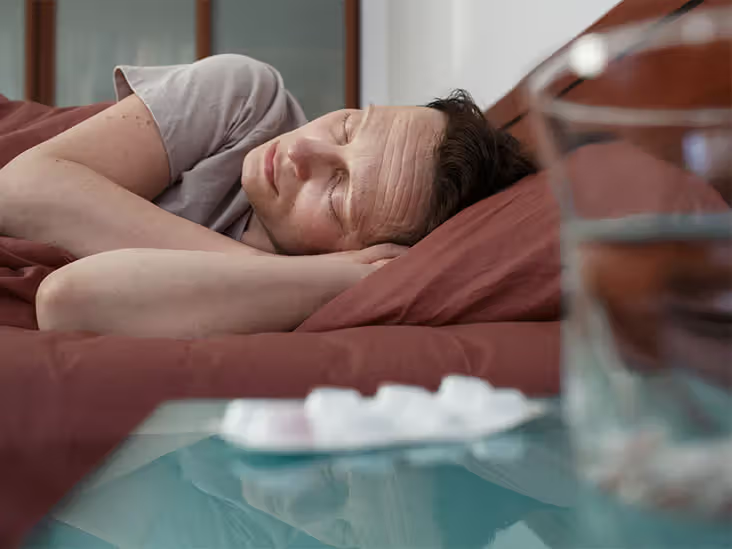
Overuse of your voice during the day, whether from teaching, singing, yelling, or prolonged talking, can leave your vocal cords inflamed and sore by nighttime.
Smoking and alcohol also dry out and irritate the larynx. The irritation accumulates throughout the day and peaks in the evening and night. Resting your voice and staying hydrated is the main treatment.
Mononucleosis (Mono)
Mononucleosis, commonly called mono or the kissing disease, is caused by the Epstein-Barr virus. It produces one of the most severe sore throats a person can experience, often with extreme fatigue, swollen glands, and an enlarged spleen.
Mono is most common in teenagers and young adults. If a standard strep test comes back negative but your throat pain is severe and you feel exhausted for weeks, ask your doctor to test for mono.
Muscle Tension and Vocal Strain
If you have been under stress or used your voice heavily, muscle tension around the larynx and neck can cause a deep, achy throat pain at night. This is sometimes called muscle tension dysphonia.
It is more common in people who work high-stress jobs, public speakers, teachers, singers, and call center workers. Resting the voice and using warm compresses on the neck can bring relief.
Environmental Irritants
Cigarette smoke, air pollution, cleaning chemicals, and indoor pollutants can coat the throat and cause ongoing irritation. If you live in an area with poor air quality or recently used strong chemicals, this could explain nighttime throat discomfort.
Running an air purifier with a HEPA filter in your bedroom can make a meaningful difference.
Thyroid Issues
In some cases, an enlarged thyroid gland or thyroid inflammation can cause a sensation of tightness or soreness in the throat, particularly when lying down. This is less common than other causes but worth considering if throat discomfort persists without an obvious explanation.
If you also notice swelling at the base of your neck, difficulty swallowing solid foods, or a change in your voice, have your thyroid evaluated by a doctor.
Low Humidity and Central Heating
Central heating in winter is one of the biggest environmental contributors to nighttime throat pain. Heated indoor air in winter months can drop humidity levels to as low as 10–20%, well below the comfortable range of 40–50%.
At these low humidity levels, the mucous membrane lining your throat loses moisture rapidly during sleep. The result is a scratchy, dry, and painful throat that is especially noticeable in the first few hours after waking up.
How to Tell What Is Causing Your Throat Pain
Use this quick reference to match your symptoms to the most likely cause:
| Symptom Pattern | Most Likely Cause |
|---|---|
| Worst right after waking, clears with water | Dry air or mouth breathing |
| Sore throat plus runny nose, no fever | Allergies or postnasal drip |
| Burning or raw sensation, no cold symptoms | Acid reflux or LPR |
| Loud snoring, morning headache | Sleep apnea |
| Sudden severe pain, fever, white spots on tonsils | Strep throat |
| Scratchy throat with cold or flu symptoms | Viral infection |
| Bad breath plus throat discomfort | Tonsil stones |
| Hoarse voice after heavy talking or singing | Laryngitis |
Fast Relief for Nighttime Throat Pain
Use a Humidifier
Adding moisture to bedroom air is one of the fastest and most effective fixes. A cool-mist humidifier raises humidity to 40–50%, which prevents the throat from drying out during sleep.
Clean the humidifier regularly to avoid mold growth, which would make allergies worse.
Try Over-the-Counter Medications
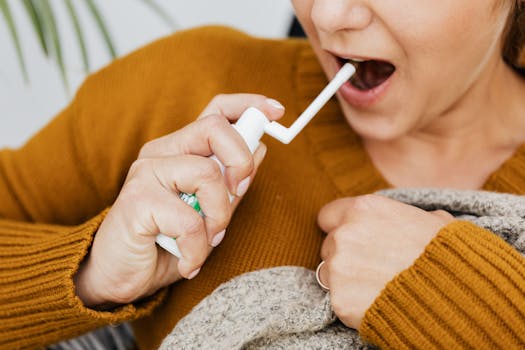
For immediate relief, several OTC options work well at night. Throat sprays containing benzocaine or menthol numb the throat temporarily. Antihistamines reduce mucus from allergies and postnasal drip. Antacids or H2 blockers reduce stomach acid for reflux-related throat pain.
Ibuprofen or acetaminophen address pain and inflammation from viral infections or strep. Always follow dosage instructions and consult a pharmacist if unsure which product suits your symptoms best.
Use Saline Nasal Rinse Before Bed
A saline nasal rinse (neti pot or squeeze bottle) flushes allergens, mucus, and irritants from the nasal passages before sleep. This reduces postnasal drip significantly and helps you breathe through your nose instead of your mouth.
It takes about 2 minutes and can make a noticeable difference in how your throat feels by morning.
Gargle With Salt Water Before Bed
Mix a quarter to half a teaspoon of salt in a cup of warm water and gargle for 30 seconds. Salt water reduces inflammation, loosens mucus, and flushes out irritants.
Do this right before sleeping. It is one of the oldest and most evidence-backed home remedies for throat irritation.
Elevate Your Head While Sleeping

Raising the head of your bed by 6–8 inches keeps stomach acid from traveling upward. It also helps mucus drain more effectively, reducing postnasal drip.
Use a wedge pillow or bed risers. Simply adding extra pillows under your head is less effective and can strain your neck.
Drink Warm Liquids
Warm herbal tea, broth, or honey in warm water soothes the throat lining and keeps it hydrated. Honey has mild antimicrobial properties and coats the throat.
Avoid cold drinks at night, as they can tighten the throat and trigger more discomfort.
Switch to Side Sleeping
Sleeping on your side reduces mouth breathing, snoring, and acid reflux compared to sleeping on your back. If you have sleep apnea or reflux, this one change can produce noticeable improvement within a few nights.
Get Evaluated for Sleep Apnea
If you snore loudly, wake up gasping, or consistently have a sore throat every single morning, talk to your doctor about a sleep study. Sleep apnea is diagnosable and highly treatable.
CPAP (continuous positive airway pressure) therapy is the standard first-line treatment for obstructive sleep apnea. It delivers a steady stream of pressurized air through a mask to keep the airway open, eliminating snoring, gasping, and the resulting throat irritation. Many people who start CPAP notice their morning sore throat disappears within days.
Oral appliances are an alternative for mild to moderate sleep apnea. They reposition the jaw forward to keep the airway open without a machine.
Wash your bedding in hot water weekly to kill dust mites. Keep pets out of the bedroom. Consider an antihistamine at night if allergies are a regular trigger.
Talk to a doctor about allergy testing if you suspect a specific trigger you have not been able to identify.
Avoid Eating Late
Stop eating at least 2–3 hours before bed. This gives your stomach time to empty so there is less acid available to reflux when you lie down.
Avoid spicy food, alcohol, chocolate, citrus, and fatty meals in the evening.
Stay Hydrated Through the Day
Chronic mild dehydration dries the throat and makes you more susceptible to nighttime irritation. Aim to drink enough water throughout the day so your throat stays naturally moist.
When to See a Doctor
Most nighttime throat pain resolves on its own or with simple home remedies. However, some symptoms signal a condition that needs medical attention.
See a doctor if you have:
- Throat pain that lasts more than 7–10 days without improving
- Fever above 101°F (38.3°C) for more than two days
- Difficulty swallowing or breathing
- White patches or pus on the tonsils
- Swollen, painful lymph nodes in the neck
- Hoarseness that persists for more than 2 weeks
- Chronic morning sore throat with loud snoring (get a sleep study)
- Suspected strep throat (requires antibiotics)
An ENT (ear, nose, and throat) specialist or your primary care provider can diagnose the underlying cause and recommend targeted treatment.
Nighttime Throat Pain in Children
Children can develop nighttime throat pain for the same reasons as adults, including dry air, allergies, viral infections, and mouth breathing. Enlarged tonsils or adenoids are more common in children and can cause significant snoring and nighttime throat discomfort.
If your child consistently wakes up with throat pain, snores loudly, or breathes through their mouth during sleep, consult a pediatrician. A referral to a pediatric ENT may be appropriate.
A Simple 4-Week Plan to Reduce Nighttime Throat Pain
Week 1 — Fix the environment Add a humidifier to your bedroom. Wash all bedding in hot water. Keep bedroom temperature slightly cool but not cold. Remove dust-collecting items from the sleep space.
Week 2 — Fix your breathing Try nasal strips if you mouth breathe. Practice nasal breathing exercises during the day. Shift to side sleeping if you sleep on your back. Consider saline nasal rinses before bed.
Week 3 — Fix your diet and reflux Stop eating 3 hours before bed. Cut spicy, fatty, and acidic foods from evening meals. Eliminate alcohol and smoking. Elevate the head of your bed.
Week 4 — Evaluate and escalate If symptoms have not improved, see a doctor. Ask about allergy testing, a sleep study for sleep apnea, or an endoscopy for chronic reflux.
Frequently Asked Questions (FAQs)
Why does my throat hurt only at night and not during the day?
At night, you breathe through your mouth, stomach acid moves upward more easily, and mucus pools at the back of your throat. These changes create conditions for irritation that simply do not exist when you are upright and swallowing regularly.
Can acid reflux cause throat pain at night without heartburn?
Yes, absolutely. Laryngopharyngeal reflux (LPR) causes throat irritation, hoarseness, and soreness without any classic chest burning or heartburn sensation.
How do I stop mouth breathing at night?
Using a humidifier, clearing nasal congestion with saline rinse, and trying nasal strips at bedtime can help. Side sleeping also reduces mouth breathing significantly compared to back sleeping.
Is a sore throat at night a sign of COVID-19?
It can be. COVID-19 causes sore throat along with fatigue, fever, body aches, or loss of taste and smell. If you suspect COVID-19, take a rapid test and follow current health guidelines.
What is the fastest home remedy for nighttime throat pain?
Gargling with warm salt water, drinking warm honey tea, and running a humidifier in your bedroom provide the fastest short-term relief. Elevation of your head also helps with reflux and drainage.
Can my pillow or mattress cause a sore throat at night?
Yes. Old pillows and mattresses harbor dust mites and allergens that trigger postnasal drip and throat irritation. Wash pillowcases weekly and consider allergen-proof pillow covers.
How can I tell if my sore throat is strep or just a cold?
Strep usually starts suddenly with severe pain, fever, and white patches on the tonsils but no runny nose or cough. A viral cold sore throat comes on gradually with nasal congestion and coughing. A rapid strep test from a clinic is the only reliable way to confirm.
Does sleeping position affect throat pain at night?
Yes. Sleeping on your back worsens acid reflux, snoring, and postnasal drip. Side sleeping reduces all three and is generally recommended for people with nighttime throat discomfort.
When should I worry about a sore throat at night?
Worry if the pain lasts more than 10 days, is accompanied by high fever, makes it hard to swallow or breathe, or comes with white spots on the tonsils. These signs require a medical evaluation.
Can tonsil stones cause nighttime throat pain?
Yes. Tonsil stones cause chronic low-grade soreness, bad breath, and a foreign body sensation at the back of the throat. They are usually harmless but can be removed with salt water gargling or a water flosser.
Conclusion
Why does my throat hurt at night? In most cases, the answer is one of a handful of common, treatable causes — dry air, mouth breathing, postnasal drip, acid reflux, or allergies.
Each of these has a clear pattern and a clear solution. Start by identifying which symptoms match your situation, then make targeted changes to your sleep environment, diet, and habits.
Most people see significant improvement within a week or two of addressing the root cause. For symptoms that persist beyond 10 days, come with fever and white patches, or involve suspected strep or sleep apnea, do not wait — see a doctor. Your body is signaling something that deserves attention.
A healthy, pain-free night of sleep is not out of reach. With the right knowledge and a few practical changes, you can wake up feeling rested and comfortable every morning.
