

Why do my knees hurt when I sleep on my side? For most people, it comes down to pressure, alignment, and the way your joints behave overnight.
When you lie on your side, your top knee often rests directly on your bottom knee. This adds weight, squeezes the joint, and can pull your hips and spine slightly out of line.
If you already have arthritis, bursitis, or an old injury, this pressure becomes much more noticeable in the middle of the night. The good news is that simple changes to your pillow, mattress, and position can fix most of this pain fast.
Why Do My Knees Hurt When I Sleep on My Side?
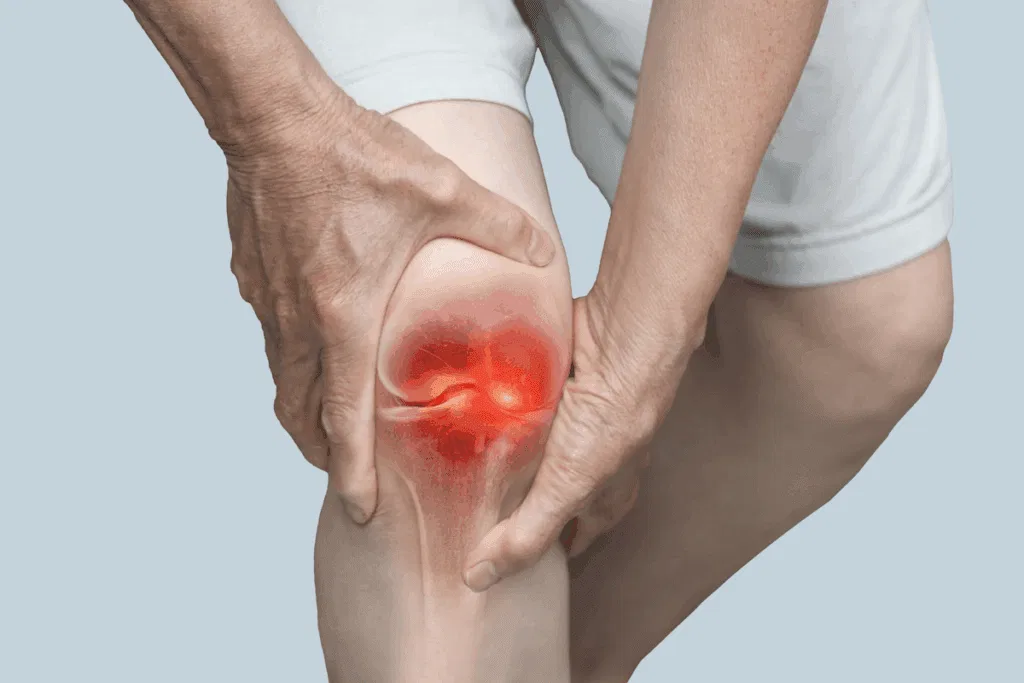
Side sleeping itself is not harmful. The problem is usually how your knees are positioned while you sleep.
When your knees touch or your top leg drops forward, it twists your hips slightly. This twist puts uneven stress on the inner knee joint.
Over several hours, this steady pressure can irritate cartilage, tendons, and the soft tissue around your kneecap.
Osteoarthritis and Cartilage Wear
Osteoarthritis happens when the cartilage cushioning your knee joint slowly wears down. Without this cushion, bones can rub closer together.
Side sleeping adds extra compression to the joint. This is why osteoarthritis pain often feels worse specifically at night.
Morning stiffness after side sleeping is a classic sign that cartilage wear is contributing to your pain.
Bursitis Around the Knee
Bursitis is inflammation of the small fluid-filled sacs that cushion your knee joint. These sacs reduce friction between bone, muscle, and tendon.
Lying directly on the affected side compresses these sacs. This can trigger sharp, localized pain right where you feel pressure.
People with bursitis often notice pain the moment they roll onto that particular side.
Runner’s Knee and Kneecap Pain
Runner’s knee causes pain around or behind the kneecap, especially when the knee stays bent for long periods.
Side sleeping naturally bends the knee, which increases pressure behind the kneecap for hours at a time.
This is one reason kneecap pain often feels sharper in the morning than it did the night before.
Meniscus Tears and Ligament Issues
The meniscus is a piece of cartilage that acts as a shock absorber inside the knee joint. A tear here can make certain positions extremely uncomfortable.
Twisting motions during side sleeping, even small ones, can aggravate a meniscus tear.
Ligament sprains behave similarly, becoming more painful under sustained pressure or awkward positioning.
Gout and Sudden Knee Pain
Gout is caused by a buildup of uric acid crystals inside the joint. It often strikes suddenly, without warning, and frequently at night.
Even light contact with bedding or another leg can feel unbearable during a gout flare.
If your knee pain came on suddenly with redness, heat, and swelling, gout should be considered.
Rheumatoid Arthritis and Inflammation
Rheumatoid arthritis is an autoimmune condition that causes ongoing joint inflammation. It often affects both knees at once.
Inflammation naturally increases at night due to hormonal changes in the body. This makes joint pain feel more intense while sleeping.
Side sleeping can add mechanical pressure on top of this existing inflammation.
Hip and Spine Misalignment
Sometimes the knee itself is not the real problem. Poor hip or spine alignment during side sleeping can send pain down into the knee.
Without support between the legs, your top leg drops forward and pulls the pelvis out of a neutral position.
This chain reaction places rotational stress directly on the knee joint.
Poor Mattress and Pillow Support
A mattress that is too soft or too firm fails to distribute your body weight evenly. This creates pressure points at the hips, shoulders, and knees.
Without a pillow between the knees, side sleepers place extra load on the lower leg all night long.
Upgrading your sleep setup is often the fastest way to reduce nightly knee pain.
Common Causes at a Glance
| Cause | Typical Pain Pattern | Quick Fix |
|---|---|---|
| Osteoarthritis | Deep ache, worse in morning | Knee pillow, gentle stretching |
| Bursitis | Sharp pain on pressure | Avoid lying directly on that side |
| Runner’s Knee | Pain around kneecap | Keep knee slightly straighter |
| Meniscus Tear | Pain with twisting | Support knee, avoid deep bending |
| Gout | Sudden, intense, red, hot | Medical treatment, avoid contact |
| Rheumatoid Arthritis | Both knees, stiff mornings | Anti-inflammatory routine |
| Poor Mattress | General soreness, hip pain | Medium-firm mattress upgrade |
Why Knee Pain Feels Worse at Night

Many people ask why their knee feels fine during the day but painful the moment they lie down. There are real physiological reasons for this.
During the day, movement keeps joint fluid circulating and distracts your brain from mild pain signals.
At night, movement stops, distractions disappear, and your body becomes far more aware of discomfort.
The Role of Cortisol
Cortisol is a natural anti-inflammatory hormone. Its levels drop significantly in the evening and overnight.
Lower cortisol means your body has less natural ability to control inflammation while you sleep.
This is one major reason arthritis and joint pain often intensify specifically at night.
Joint Fluid and Temperature Changes
Synovial fluid lubricates your knee joint and helps cartilage glide smoothly. Fluid distribution shifts when you stay still for long periods.
Cooler nighttime temperatures can also make joints feel stiffer and more sensitive.
Combined, these changes make the same amount of pressure feel more painful at 2 a.m. than at 2 p.m.
How Sleep Position Affects Knee Pressure
Every sleep position places weight differently across your joints. Side sleeping concentrates pressure on the hips, shoulder, and knees.
Back sleeping spreads weight more evenly, but can leave the knee joint fully extended and under tension.
Stomach sleeping is generally the least supportive position for knee and spine alignment.
Side Sleeping Pressure Points
When you sleep on your side, your top leg naturally wants to fall forward and downward. Without support, this pulls on the hip and knee.
Your bottom knee also bears extra weight from the leg resting above it.
This combination is exactly why a knee pillow makes such a noticeable difference.
Sleeping Position Comparison
| Position | Effect on Knees | Best For |
|---|---|---|
| Side, no pillow | High pressure, poor alignment | Not recommended for knee pain |
| Side with pillow between knees | Balanced, aligned, low pressure | Osteoarthritis, bursitis, general knee pain |
| Back with pillow under knees | Even weight, slightly bent knee | Post-surgery, swelling, stiffness |
| Stomach | Knee often twisted or hyperextended | Generally not recommended |
Best Sleeping Position for Knee Pain
The most consistently recommended position is side sleeping with a firm pillow placed between your knees.
This keeps your knees parallel, prevents them from pressing together, and holds your hips in neutral alignment.
If you prefer sleeping on your back, place a pillow under your knees instead of between them.
How to Fix Knee Pain When Sleeping on Your Side in 2026
Fixing this type of knee pain rarely requires a single solution. Most people need a small combination of changes.
The goal is to reduce pressure, support alignment, and calm inflammation before bedtime.
Below are the most effective, doctor-recommended fixes for 2026.
Use a Knee Pillow Between Your Legs
A dedicated knee pillow keeps your knees from touching directly. This alone can dramatically reduce nighttime pressure.
Choose a firm pillow that holds its shape all night rather than a soft one that flattens out.
Place it between your knees, not just around your ankles, for proper hip alignment.
Choose the Right Mattress Firmness
A medium-firm mattress generally offers the best combination of support and pressure relief for side sleepers.
Mattresses that are too soft allow your hips to sink, twisting your spine and knees out of alignment.
If your mattress is old or sagging, upgrading it can meaningfully reduce joint pain.
Try Heat and Cold Therapy Before Bed
Cold therapy works best for recent swelling, sharp inflammation, or acute injuries. Apply ice for about fifteen to twenty minutes.
Heat therapy is better suited for chronic stiffness and general muscle tension around the joint.
Many people with arthritis find alternating between the two provides the most relief before sleep.
Stretch and Warm Up Before Sleeping
Gentle stretching relaxes tight muscles around the knee, hip, and lower back before bed.
Even ten minutes of light stretching can help your muscles release tension and prepare for rest.
Focus on the hamstrings, quadriceps, and hip flexors, since tightness here often pulls directly on the knee.
Maintain a Healthy Body Weight
Extra body weight places additional load on your knee joints with every movement, including shifting positions at night.
Even modest weight loss can meaningfully reduce pressure on the knee joint over time.
This is especially important for people managing osteoarthritis.
Switch Sides Occasionally
Sleeping on the same side every night places repeated stress on one knee and hip.
Alternating sides occasionally, or sleeping on your back with support, gives overworked joints a break.
If one knee is more painful, try favoring your pain-free side when possible.
Consider Anti-Inflammatory Support
Over-the-counter anti-inflammatory options can help manage occasional flare-ups, but should not replace medical advice.
Topical gels applied to the sore joint can offer localized relief without the effects of oral medication.
Always check with a doctor before starting any new pain-management routine, especially long term.
Keep Your Bedroom Cool and Supportive
Cooler sleeping temperatures are generally linked to better overall sleep quality.
Overheating during the night can increase restlessness, which often worsens the perception of joint pain.
Breathable bedding paired with a supportive mattress creates a more comfortable overall sleep environment.
Quick Fix Checklist
| Fix | Best For |
|---|---|
| Knee pillow between knees | Osteoarthritis, bursitis, general alignment |
| Medium-firm mattress | Pressure relief across hips and knees |
| Cold therapy | Recent swelling or sharp inflammation |
| Heat therapy | Chronic stiffness, muscle tension |
| Evening stretching | Tight hamstrings, hips, quadriceps |
| Weight management | Long-term joint pressure reduction |
| Switching sides | Repetitive strain on one knee |
When to See a Doctor
Occasional mild discomfort after side sleeping is common and usually not serious. Persistent or worsening pain is a different story.
You should see a doctor if pain is sudden, severe, or paired with visible swelling, redness, or deformity.
Pain that continues for more than four to six weeks despite home care also deserves a professional evaluation.
Warning Signs to Watch For
| Symptom | Possible Concern |
|---|---|
| Sudden sharp pain with swelling | Gout, injury, or acute inflammation |
| Redness and warmth around joint | Infection or gout flare |
| Locking or instability | Meniscus or ligament tear |
| Pain lasting beyond six weeks | Chronic arthritis needing treatment |
| Pain radiating from hip or back | Referred pain, not knee itself |
Common Mistakes Side Sleepers Make
Many side sleepers unknowingly make their knee pain worse through small daily habits. Recognizing these mistakes is the first step toward fixing them.
Sleeping in the fetal position with knees pulled tightly to the chest increases joint compression significantly.
Using an old, flattened pillow between the knees provides little real support after just a few months of use.
Sleeping Without Any Leg Support
Many people assume a knee pillow is optional rather than essential. Without one, the top leg drops forward with no resistance.
This unsupported drop rotates the pelvis and places twisting stress directly on the knee joint for hours.
Adding even a basic pillow between the knees corrects this immediately.
Ignoring Mattress Age and Sagging
Mattresses lose support over time, even when they still look fine on the surface. Most mattresses need replacing every seven to ten years.
A sagging mattress lets your hips sink lower than your shoulders, twisting your spine and knees out of alignment.
If you wake up sore regardless of position, your mattress may be the hidden culprit.
Skipping Evening Movement Entirely
Staying completely sedentary all evening can leave joints stiffer by bedtime. Light movement earlier in the evening keeps joint fluid circulating.
A short walk or gentle stretching session an hour before bed can reduce stiffness once you lie down.
This is especially helpful for people managing osteoarthritis or general joint stiffness.
Helpful Exercises for Knee Pain Relief
Certain low-impact exercises can strengthen the muscles supporting your knee joint without adding strain. Stronger surrounding muscles reduce pressure on the joint itself.
Straight leg raises build quadriceps strength without bending the knee joint at all.
Gentle hamstring stretches loosen tight muscles that often pull on the back of the knee during sleep.
Water-based exercises like swimming or water walking are especially gentle since water supports body weight.
Exercise Guide for Knee Pain
| Exercise | Benefit | Best Time to Do It |
|---|---|---|
| Straight leg raises | Strengthens quadriceps without bending knee | Morning or early evening |
| Hamstring stretch | Reduces tension pulling on the knee | Before bed |
| Wall sits | Builds supporting muscle strength | Daytime |
| Swimming or water walking | Low-impact full-body movement | Anytime, several times weekly |
| Gentle yoga | Improves flexibility and alignment | Evening |
Knee Pain and Pregnancy Side Sleeping
Pregnant women are often advised to sleep on their side, which can add extra pressure on the knees and hips.
A pregnancy or body pillow placed between the knees and under the belly helps distribute this weight more evenly.
This same setup also reduces lower back strain, which often contributes indirectly to knee discomfort.
Choosing the Right Type of Knee Pillow
Not all knee pillows work the same way, and choosing the right shape matters for lasting comfort.
Contoured hourglass-shaped pillows tend to stay in place better than flat rectangular pillows throughout the night.
Memory foam options mold closely to your leg shape, while firmer foam pillows resist flattening over time.
Knee Pillow Types Compared
| Pillow Type | Best Feature | Ideal For |
|---|---|---|
| Contoured memory foam | Molds to leg shape, stays in place | Most side sleepers |
| Firm foam wedge | Holds shape all night | Heavier sleepers, restless movers |
| Pillow with strap | Prevents slipping during sleep | Frequent position changers |
| Basic rectangular pillow | Budget-friendly, simple support | Occasional or mild knee pain |
Building a Nightly Knee Care Routine
Consistency matters more than any single fix on its own. A simple nightly routine can compound these benefits over time.
Start with light stretching, follow with heat or cold therapy if needed, and finish by settling into a side position with your knee pillow in place.
Over several weeks, this routine often leads to noticeably fewer wake-ups from knee discomfort.
Best Products That Can Help
Several simple products consistently show up as effective tools for side sleepers dealing with knee pain.
Memory foam knee pillows conform closely to your leg shape and hold position better throughout the night.
Contoured leg pillows with straps can stay in place even if you shift positions during sleep.
A medium-firm mattress topper is also a budget-friendly way to improve pressure relief without buying an entirely new mattress.
Frequently Asked Questions
Why do my knees hurt only when I sleep on my side?
Side sleeping compresses the knee joint and shifts hip alignment, adding pressure that isn’t present in other positions.
Is it bad to sleep on your side if you have knee pain?
Not necessarily, as long as you use a knee pillow to keep your knees supported and aligned properly.
Should I sleep with a pillow between my knees every night?
Yes, most side sleepers with knee pain benefit from a nightly pillow between the knees for alignment and comfort.
Why does knee pain feel worse at night than during the day?
Lower cortisol levels, less movement, and fewer distractions at night all make joint pain feel more noticeable.
What is the best sleeping position for knee arthritis?
Side sleeping with a pillow between the knees, or back sleeping with a pillow under the knees, both work well.
Can a bad mattress cause knee pain while sleeping?
Yes, an unsupportive mattress can misalign your spine and hips, indirectly increasing pressure on your knees.
Should I use heat or ice for knee pain before bed?
Use ice for recent swelling or sharp inflammation, and heat for chronic stiffness or general tightness.
How long does it take for a knee pillow to help?
Many people notice reduced pressure and better alignment within the first few nights of consistent use.
When should I worry about knee pain while sleeping?
See a doctor if pain is sudden, severe, swollen, or lasts longer than four to six weeks.
Can stretching before bed reduce knee pain at night?
Yes, gentle stretching relaxes the muscles around the knee and hip, easing tension before you sleep.
Conclusion
Knee pain while side sleeping usually comes down to pressure, alignment, and how your joints behave overnight. Conditions like osteoarthritis, bursitis, and old injuries make this pressure far more noticeable once you lie down. The good news is that most people find real relief through simple changes.
A firm knee pillow, a supportive medium-firm mattress, gentle evening stretches, and smart use of heat or cold therapy address the root causes for most side sleepers. Maintaining a healthy weight and occasionally switching sides also helps protect your joints long term. If pain is sudden, severe, or lasts beyond a few weeks, a medical evaluation is the safest next step. With the right setup, side sleeping and pain-free nights can absolutely go together in 2026.
