

Why do dogs kick after pooping is one of the most searched dog behavior questions online — and for good reason.
You take your dog for a walk, they do their business, and then they launch into a dramatic backward-kicking frenzy like a tiny bull in a rodeo.
It looks random. It looks funny. But it is actually one of the most instinct-driven, communication-rich behaviors in the canine world.
What Is Ground Scratching in Dogs?
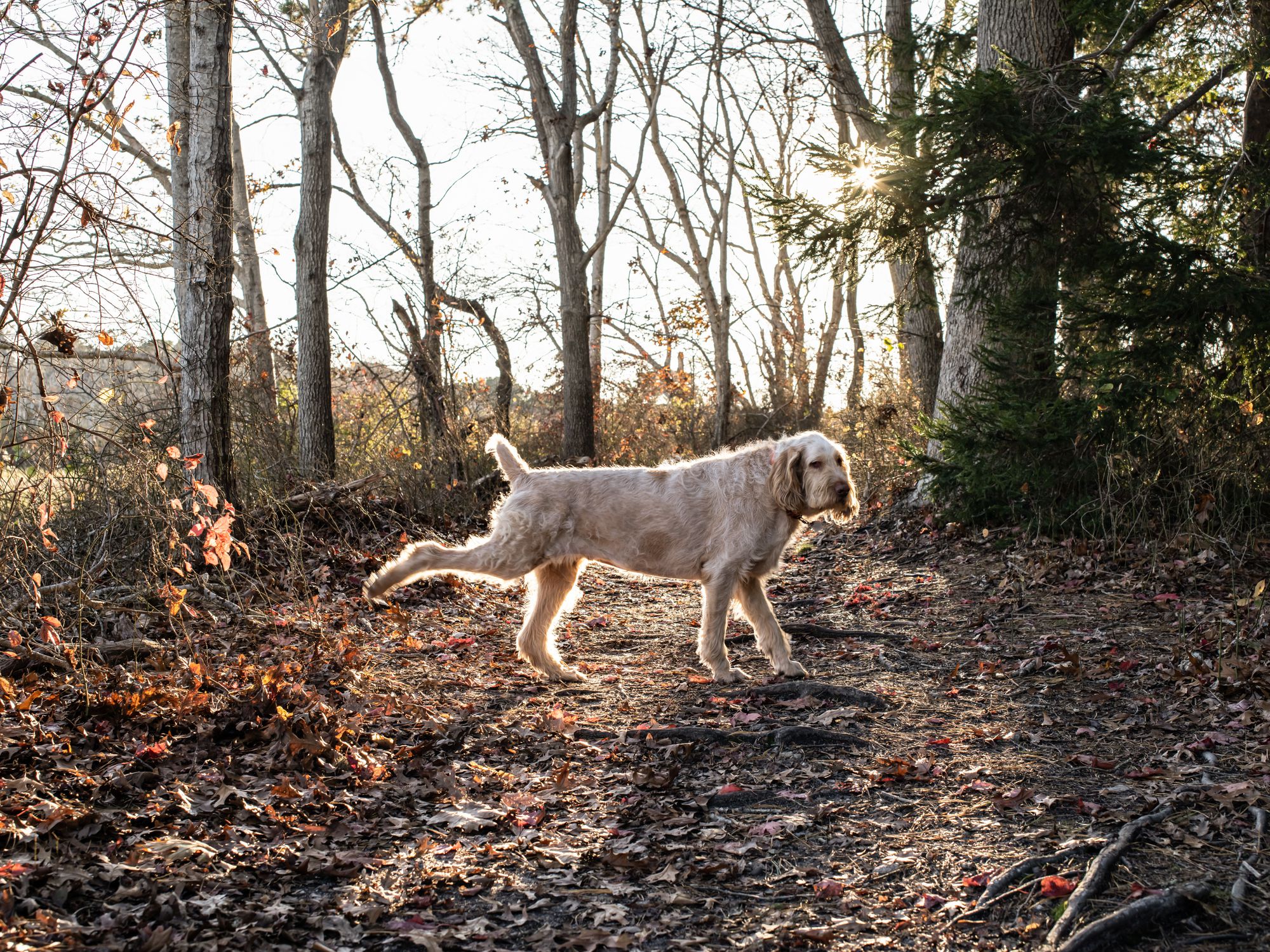
The behavior of kicking or scratching the ground after elimination has an official name: ground scratching. Scientists and veterinarians have studied it in both domestic dogs and wild canids like wolves and coyotes.
It is classified as a composite signal — meaning it combines chemical communication (scent) and visual communication (scratch marks) at the same time.
It is not random. It is not accidental. It is one of the most purposeful things your dog does on a walk.
Is This Behavior Normal?
Yes, absolutely. Ground scratching after elimination is considered completely normal dog behavior by veterinary experts.
It has been documented across wolves, coyotes, foxes, and domestic dogs of all sizes and breeds. If your dog does it, they are not being weird — they are being a dog.
Not every dog does it every time, though. Studies suggest that around 10% of dogs regularly engage in this behavior, and some dogs only do it in specific locations or when other dogs are nearby.
The Main Reason: Scent Marking and Territory
The primary reason dogs kick after pooping is scent marking. This is the answer that every veterinarian and animal behaviorist agrees on.
Dogs are scent-driven creatures. Their sense of smell is estimated to be 10,000 to 100,000 times more powerful than a human’s. Scent is how they read the world and communicate with other dogs.
How Scent Glands in the Paws Work
Dogs have special scent glands located between the pads of their paws, called interdigital glands. These glands produce pheromones — chemical signals that carry detailed personal information.
When a dog kicks the ground, these glands are activated and release pheromones directly onto the soil, grass, or pavement. This creates a unique scent signature that acts like a fingerprint.
The Double-Layer Message
When a dog kicks after pooping, they are actually creating two layers of scent communication at the same spot:
- Layer 1: The feces itself, which communicates diet, health, sex, and identity
- Layer 2: Pheromones from the paw glands, adding a second personal “calling card”
Together, these two layers create a powerful, lasting message for any dog who passes through the area afterward.
Visual Marks Add a Third Signal
Beyond scent, the actual scratch marks left in the dirt or grass serve as a visual territorial signal. Other dogs can see the disturbed ground even before they smell it.
This triple-layered communication — feces scent, paw pheromones, and visible scratch marks — makes post-poop kicking one of the most efficient messaging systems in the animal world.
Reason 2: Territorial Boundaries and Dominance
Kicking after pooping is closely linked to territory establishment. Research on free-ranging dogs shows that ground scratching happens far more often near territorial boundaries than in neutral areas.
For a pet dog, these boundaries might be the front yard, the edge of the apartment block, or a favorite corner at the local park.
Dogs Kick More Around Their Home Turf
Studies confirm that dogs are more likely to engage in ground scratching near places they consider their own. This includes the area in front of the house, the yard, or the regular walking route.
The behavior essentially says to passing dogs: “This zone is mine. I was here. And I have the energy and confidence to prove it.”
Dominant Dogs Kick More Vigorously
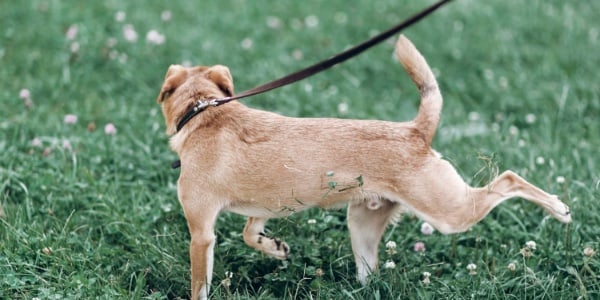
Dogs with stronger territorial instincts tend to kick harder and more frequently. Breeds like German Shepherds, Huskies, and other historically territorial working dogs are particularly known for this behavior.
Some experts also suggest that vigorous kicking demonstrates health and physical vitality — signaling to rivals and potential mates that the dog is strong and capable.
Reason 3: Wild Ancestor Instincts Passed Down Through Generations
Domestic dogs are descended from wolves, and this behavior is a direct inheritance from their wild ancestors.
In the wild, wolves and other canines kicked ground after elimination as part of survival strategy. Marking the edges of pack territory was critical for keeping rival packs away from food sources and dens.
The Wolf Connection Is Strong
Wild wolves engage in ground scratching particularly at territorial boundary points — the same pattern observed in domestic dogs near their home areas.
Even though your dog does not need to defend a pack from rival wolves, the neural wiring that drives this behavior is still fully intact.
Instincts Do Not Require a Purpose to Persist
Your dog does not consciously think “I must protect my territory from predators.” The behavior is hardwired. It activates automatically after elimination, just as it did in wild ancestors thousands of years ago.
This is why even small, gentle, non-aggressive dogs will sometimes engage in enthusiastic post-poop kicking.
Reason 4: Scent Dispersal Over a Wider Area
Beyond just marking the spot, kicking actively disperses scent over a broader radius. The physical action of kicking sends soil, grass particles, and pheromone-laced material flying outward.
This means the territorial message reaches farther than the poop itself could on its own.
Wind and Distance Help Too
Disturbed particles carrying pheromones can travel considerable distances on a breeze. A dog that kicks energetically may be broadcasting their presence to a much wider area than is immediately visible.
This extended reach is especially valuable in open spaces like parks where many dogs pass through.
The Scent Lasts Longer Than Urine
Urine scent fades relatively quickly. The physical scratch marks in the ground, combined with pheromones from the paw glands, can persist as territorial signals for days — far outlasting the smell of the waste itself.
Reason 5: Communication With Other Dogs in the Area
Dogs gather information through scent the way humans scroll through social media. A patch of disturbed grass can tell an incoming dog who was there, when, how healthy they were, and whether the area is claimed.
When a dog kicks after pooping, they are essentially posting a status update that other dogs can read in detail.
What Other Dogs Can Learn From the Mark
The combined scent left behind can communicate:
- The kicking dog’s age and sex
- Their general health and diet
- Their reproductive status
- Their social rank in the local canine community
- How recently they were in the area
Dogs That Are Unfamiliar React More
When a dog enters an area where another dog has recently kicked and marked, they often spend extra time sniffing, circling, and sometimes kicking in the same spot themselves — essentially engaging in a conversation across time.
Reason 6: Paw Cleaning Instinct
Some veterinarians suggest a simpler, more practical explanation for part of the kicking behavior: cleaning the paws.
After stepping near their own waste, a dog may instinctively scrape their paws on the ground to wipe them clean — similar to a human wiping their feet on a doormat.
It Is Probably a Secondary Reason
This explanation on its own does not fully account for the behavior, since dogs often kick in areas completely away from where they actually pooped.
However, it likely contributes alongside the more dominant scent-marking motivations, especially in dogs who kick briefly and without great enthusiasm.
Reason 7: Emotional Release and Post-Elimination Relief
There is a growing understanding among animal behaviorists that the kicking behavior may also involve an element of emotional catharsis.
Defecation is a moment of physical vulnerability for dogs — in the wild, squatting leaves an animal temporarily less able to flee or fight. When it is over, the resulting burst of energy expressed through kicking may be a release of built-up tension.
The “I Did That!” Moment
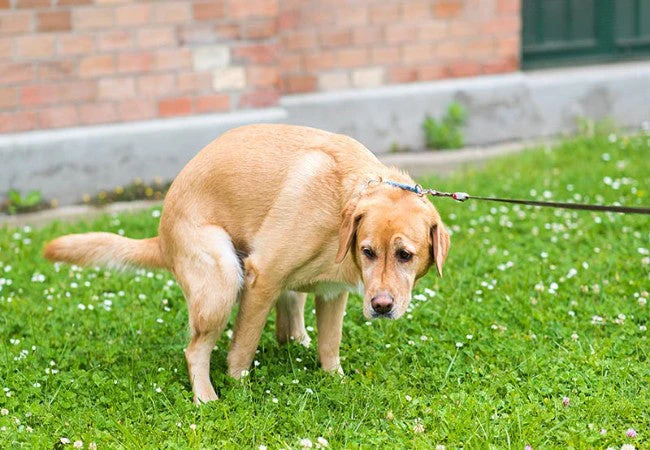
The vigorous, almost celebratory nature of the kicking in some dogs suggests it may partly be an expression of relief and satisfaction — a physical punctuation mark on the completed act.
This does not override the scent-marking explanation. Both can be true simultaneously.
Reason 8: Marking in Front of Other Dogs
Research has shown that dogs are significantly more likely to kick after eliminating when other dogs are present compared to when they are alone.
This strongly supports the communication and social signaling aspect of the behavior — the kicking is a performance as much as it is a scent deposit.
It Is a Confidence Display
Kicking in front of another dog is essentially a social statement. It says: “I am confident, I am established here, and I am not hiding.”
Dogs that are anxious or submissive are less likely to kick in the presence of dominant dogs. More confident, assertive dogs tend to kick more dramatically when an audience is present.
Reason 9: Hiding Scent From Predators (Opposite Theory)
One less common but scientifically discussed theory suggests that some kicking behavior may actually be aimed at covering up the scent of the waste — not amplifying it.
In this view, kicking dirt and debris over feces is a defensive move to avoid detection by predators who might track the pack through waste scent.
Both Theories Can Be Correct
The apparent contradiction between “broadcasting scent” and “hiding scent” is resolved by context. Confident dogs in familiar territory kick to advertise. Dogs in unfamiliar or high-risk environments may kick to cover.
Most domestic dogs fall firmly into the advertising category, which is why the scent-marking explanation dominates current veterinary understanding.
Do All Dogs Kick After Pooping?
No. Ground scratching is not universal. Estimates suggest only around 10% of dogs exhibit the behavior consistently, though occasional kickers are more common.
Several factors influence whether a dog kicks:
| Factor | Effect on Kicking Behavior |
|---|---|
| Territorial personality | Higher tendency to kick |
| Other dogs present | Increases frequency significantly |
| Familiar vs. unfamiliar location | More common in familiar territories |
| Sex | Both male and female dogs kick equally |
| Age | Observed across all age groups |
| Breed | Territorial breeds (Huskies, GSDs) kick more often |
| Individual personality | Confident dogs kick more than anxious ones |
Is It Different Between Male and Female Dogs?
According to veterinary experts, there is no meaningful difference between male and female dogs when it comes to this behavior.
Both sexes have the same paw scent glands. Both use ground scratching for territorial marking. Dr. Penny Coder, DVM, a veterinarian at Small Door Veterinary, confirms that both genders may exhibit kicking and scratching after defecating with similar frequency.
Does Breed Matter?
While the behavior can appear in any breed, some dogs are more likely to be enthusiastic kickers than others.
Breeds with historically strong territorial instincts — German Shepherds, Siberian Huskies, Malinois, Chow Chows — tend to display the behavior more often and more vigorously.
Smaller or more laid-back breeds may occasionally kick, but with less frequency and intensity.
When Should You Be Concerned?
In the vast majority of cases, post-poop kicking is completely harmless. However, there are a few situations where it is worth paying closer attention.
Watch for These Signs
- Excessive or compulsive kicking that goes on long after the dog has finished
- Kicking that occurs at random times unrelated to bathroom breaks
- Visible injury or scraping of the paw pads from hard surfaces
- Kicking accompanied by straining during elimination
- Blood in the stool combined with unusual kicking behavior
If any of these accompany the kicking, a veterinary checkup is a smart next step.
Should You Try to Stop the Behavior?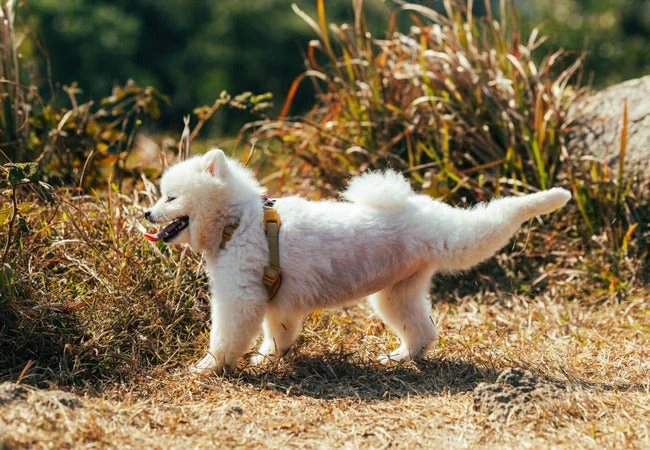
Generally, no. Ground scratching is a natural, instinct-driven behavior that does no harm in most settings.
Attempting to suppress a deep instinctual behavior can cause frustration and stress in dogs without any real benefit.
When It Becomes a Nuisance
If your dog is destroying a lawn, kicking near other people, or tearing up landscaping, you can manage — not eliminate — the behavior through these approaches:
- Designate a specific bathroom area where kicking is acceptable
- Use positive reinforcement to move the dog along after elimination
- Use a verbal cue like “Let’s go!” to redirect attention after they finish
- Avoid abrasive surfaces where vigorous kicking could injure paw pads
Comparison: Dogs vs. Cats Post-Elimination Behavior
One of the most common misunderstandings is assuming dogs kick after pooping for the same reason cats bury their waste in a litter box. These behaviors are completely different in purpose.
| Behavior | Dogs | Cats |
|---|---|---|
| Purpose | Scent marking and territory | Covering scent to hide from predators |
| Result | Scent is amplified and spread wider | Scent is concealed and buried |
| Social message | “I was here, this is my spot” | Avoid detection entirely |
| Pheromone glands used | Interdigital paw glands | Primarily anal glands |
| Wild ancestor behavior | Wolves mark territory boundaries | Wild cats hide from larger predators |
Dogs and cats have opposite post-elimination goals. Dogs want to be noticed. Cats want to disappear.
The Science Behind Canine Scent Communication
To fully appreciate why dogs kick after pooping, it helps to understand just how sophisticated their scent communication system is.
A dog’s nose contains approximately 300 million olfactory receptors, compared to about 6 million in humans. The part of a dog’s brain dedicated to analyzing scent is, proportionally, about 40 times larger than in humans.
Pheromones Carry Detailed Data
The pheromones released from the interdigital glands carry chemical information that other dogs can decode with extraordinary precision.
A dog sniffing a kicked patch of ground is essentially reading a detailed profile of the dog who was there — not unlike reading someone’s full social media biography in under a second.
The Nose Does the Work, Not the Eyes
When a dog approaches a marked area, they will typically sniff intensely before deciding whether to kick themselves, mark over it, or simply move on. The nose is always doing the primary work of reading the message left behind.
What Ground Scratching Tells Us About Canine Intelligence
The complexity of this behavior — combining chemical signals, visual marks, and social performance into one coordinated action — reveals something important about dogs.
They are operating with a sophisticated, multi-channel communication system that humans largely cannot perceive. What looks like a silly post-poop ritual is actually a nuanced social interaction with the broader canine community.
Understanding this deepens the bond between dogs and their owners. Every walk your dog takes is a social event full of messages being sent and received that you cannot hear or smell.
Summary: All the Reasons Dogs Kick After Pooping
| Reason | Explanation |
|---|---|
| Scent marking | Paw glands release pheromones that identify the dog |
| Territory establishment | Claims the area as theirs, especially near home |
| Wild ancestor instinct | Inherited from wolves and wild canids |
| Scent dispersal | Spreads the message over a wider radius |
| Social communication | Sends detailed information to other dogs |
| Paw cleaning | Minor practical reason to wipe paws |
| Emotional release | Post-elimination relief and energy burst |
| Confidence display | Performed more in front of other dogs |
| Predator evasion (minor) | Occasionally covers scent in unfamiliar areas |
Frequently Asked Questions (FAQs)
Why do dogs kick after pooping?
Dogs kick after pooping primarily to mark territory using scent glands in their paws, releasing pheromones that communicate their identity and presence to other dogs.
Is it normal for dogs to kick after they poop?
Yes, it is completely normal. It is called ground scratching and is a natural, instinct-driven behavior observed in domestic dogs and wild canids like wolves.
Do all dogs kick after pooping?
No, not all dogs do it. Studies suggest around 10% engage in it regularly, and individual personality, territorial nature, and the presence of other dogs influence the frequency.
Do female dogs kick after pooping or only males?
Both male and female dogs exhibit this behavior equally. There is no significant difference between the sexes when it comes to ground scratching after elimination.
What are the scent glands in a dog’s paws called?
They are called interdigital glands, located between the paw pads. These glands produce pheromones released when the dog kicks or scratches the ground.
Why do dogs kick more when other dogs are around?
Because the behavior is partly a social performance and confidence display. Kicking in front of other dogs sends a direct territorial and dominance message to them.
Is my dog trying to cover up their poop like a cat?
No. Unlike cats, dogs are not trying to hide their waste — they are doing the opposite, amplifying their scent to broadcast their presence more effectively to other animals.
Should I stop my dog from kicking after pooping?
Generally no, as it is a healthy natural behavior. If it damages your lawn or disturbs others, redirect with a verbal cue and positive reinforcement rather than punishing the instinct.
When does post-poop kicking become a concern?
If the kicking is compulsive, happens outside bathroom time, causes paw injuries, or is accompanied by straining or blood in stool, a vet visit is recommended.
What breeds kick after pooping the most?
Territorial breeds like German Shepherds, Siberian Huskies, and Malinois tend to kick more often and more vigorously than less territorial breeds, though any dog can do it.
Conclusion
Why do dogs kick after pooping comes down to one powerful word: communication. This behavior is not random, not embarrassing, and not something dogs do to tidy up.
It is a deeply wired, multi-layered territorial and social signal rooted in thousands of years of canine evolution.
Through pheromones released from interdigital paw glands, combined with visible scratch marks and the scent of the feces itself, dogs create a rich, lasting message for every dog that passes through afterward.
Understanding this behavior changes how you see your dog’s daily walks.
Every kick is a signature. Every scratched patch of earth is a bulletin board.
Your dog is not making a mess — they are having a conversation.
Embrace it, watch for the rare signs that something is wrong, and appreciate the ancient instinct playing out right in your backyard.
