

Why do cats bite when you pet them is one of the most common and confusing questions cat owners ask.
One moment your cat is purring happily under your hand, and the next they are sinking their teeth into your wrist.
This behavior is not random, mean, or a sign that your cat hates you.
It is a form of communication rooted in feline instinct, sensory sensitivity, and body language that most people simply have not been taught to read.
Why Do Cats Bite When You Pet Them
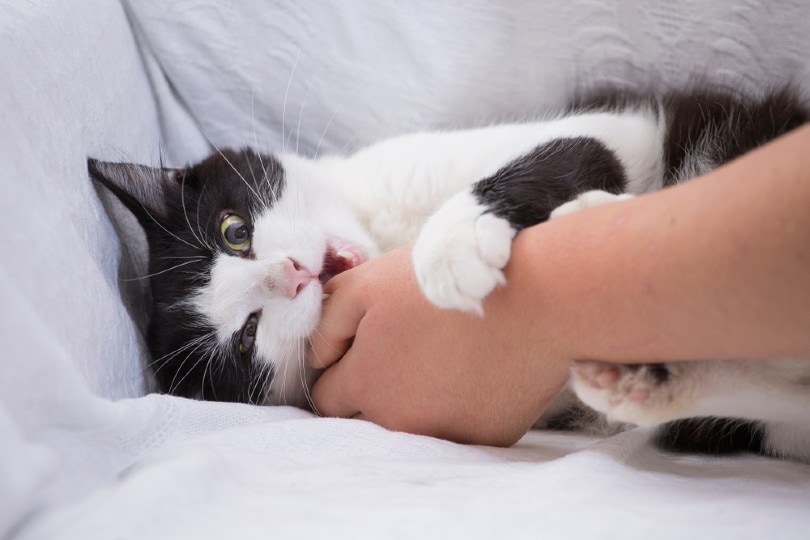
Petting-induced aggression, also called overstimulation aggression, is the most common reason cats bite during petting. It happens when a cat reaches its sensory limit and uses a bite to make the petting stop.
It is one of the least understood behaviors among cat owners. Many people assume the bite came out of nowhere, when in reality the cat had been signaling discomfort for several seconds before the nip happened.
The behavior is especially common in indoor cats. These cats tend to have lower thresholds for physical interaction because they did not get as much handling exposure during early kittenhood.
Why Cats Are So Sensitive to Touch
Cats have a much more sensitive nervous system than most people realize. Their skin contains a high density of nerve endings, especially along the spine, the base of the tail, and the belly.
When petting starts, those nerve endings send pleasant signals to the brain. But as the stroking continues, the repeated stimulation builds up rapidly. What felt good at first starts to feel irritating, uncomfortable, and even painful.
Think of it like being tickled. The first few seconds feel fine. After that, it becomes unbearable. Your cat’s bite is the equivalent of saying “enough, stop now.”
The Top Reasons Cats Bite During Petting
1. Overstimulation From Too Much Petting
This is the number one reason cats bite when you pet them. Cats enjoy physical contact in small doses, but repetitive stroking crosses their tolerance threshold quickly.
Certified cat behavior consultant Ingrid Johnson explains that “too many swipes down the spine could get them riled up and possibly cause them to bite.” The back and tail base are especially sensitive zones where overstimulation happens fastest.
Every cat has a different threshold. Some cats tolerate long sessions easily. Others reach their limit after thirty seconds. The key is learning where your individual cat’s line is before you cross it.
2. They Are Communicating a Clear Boundary
Cats are not aggressive animals by default. They prefer to communicate displeasure through subtle signals before ever resorting to a bite.
When those subtle signals are missed or ignored, the cat escalates. A bite is the final and most effective way they know to communicate “I need this to stop right now.”
You were not punished randomly. You missed the earlier messages your cat was sending, and the bite was simply the loudest version of the same request.
3. Love Bites as a Sign of Affection
Not all bites during petting are aggressive. Some are love bites, and they feel very different.
A love bite is a gentle graze of the teeth that does not break the skin. It often happens when a cat is deeply relaxed, purring, and has been grooming you before the nip. In the wild, cats groom each other with a mix of licking and light nibbling. When your cat does this to you, they are treating you like a fellow cat they feel bonded to.
Love bites are a compliment. If the bite is soft, comes with purring, and the cat looks relaxed and comfortable, it is affection, not aggression.
4. Play Behavior and Hunting Instinct
Kittens learn to hunt by playing, and that play involves biting. When you pet a young or energetic cat during a playful mood, your moving hand can trigger their prey drive.
The bite is not personal. Your hand just looked like the most available target. Cats who were weaned too early or separated from their littermates young tend to have stronger biting during play because they missed out on learning bite inhibition from siblings.
Adult cats retain this behavior, especially when under-stimulated or bored. A cat that is not getting enough active play will often redirect its prey drive onto the nearest moving thing, which is frequently your hand.
5. Pain or an Underlying Medical Issue
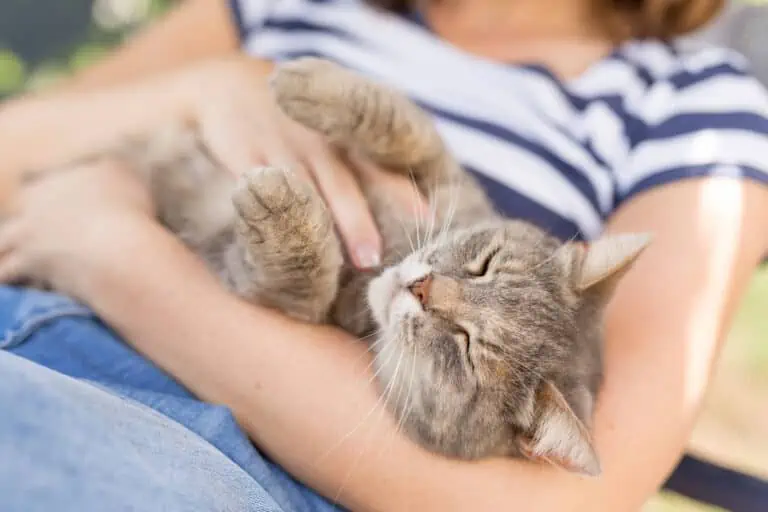
A sudden change in biting behavior, particularly if it happens when you touch a specific body part, is a strong signal of pain. This is one of the most important reasons to take seriously.
VCA Animal Hospitals state clearly that pain can trigger an aggressive response to being touched. Common culprits include arthritis, dental disease, skin conditions like dermatitis, and injuries the owner cannot see.
By age 3, more than 70% of cats show signs of periodontal disease. A cat with a painful mouth will bite when touched near the face. Arthritis affects an estimated 90% of cats over the age of 12, making any stroking along the spine or hips genuinely painful.
If your previously calm cat has started biting during petting recently, a vet visit should be your first step.
6. Redirected Aggression
Redirected aggression happens when a cat is already aroused or agitated by something it cannot reach, like a cat outside the window or a strange sound, and then takes that frustration out on whatever is nearby.
If you happen to start petting your cat at that exact moment, you will receive a bite that has nothing to do with you. The cat is not angry at you. You just entered the equation at the wrong time.
Signs of redirected aggression include a cat that was staring intently at something moments before the bite, or one that seemed tense and alert even while being petted.
7. Fear and Anxiety
Cats that have experienced rough handling, neglect, or poor socialization early in life may associate touch with threat. When you reach toward them, even with loving intentions, their nervous system interprets the movement as a potential danger.
Fearful cats often tolerate petting for a moment to avoid conflict but will bite when they feel they cannot escape. New pets, new people, changes in routine, or rearranged furniture can all increase baseline anxiety and lower a cat’s tolerance for touch significantly.
8. Static Electricity
This one surprises most people. Repetitive petting, particularly in dry or low-humidity environments, builds up static electricity in a cat’s fur.
The small electric shocks that result from continued petting can become genuinely uncomfortable. Your cat is not being difficult. The sensation is physically unpleasant, and the bite is a direct reaction to a real physical irritant.
Using a humidifier during dry months or lightly moistening your hands before petting can reduce this issue noticeably.
9. Territorial and Status-Related Behavior
Some cats use biting during petting as a way to assert control over an interaction. This is sometimes described as status-induced aggression, where the cat is essentially communicating that the interaction happens on their terms, not yours.
These cats often approach you for attention, seem to enjoy the first few strokes, then bite when they decide the session is over. They initiated contact and they are deciding when it ends. Understanding this as a power dynamic rather than aggression makes it easier to manage.
10. Poor Socialization as a Kitten
Cats who did not receive enough positive handling between two and seven weeks of age, the critical socialization window, often develop lasting sensitivities to touch.
Kittens who were raised without littermates also miss out on learning bite inhibition through play. Siblings teach each other through feedback that biting too hard ends the fun. Without that experience, cats grow into adults who bite without modulating the force well.
Body Language Warning Signs Before a Bite
The bite almost never comes without warning. Learning to read these pre-bite signals is the most effective way to protect yourself.
| Warning Sign | What It Means |
|---|---|
| Tail flicking or thumping | Growing irritation, stop petting now |
| Ears flattening or rotating back | Discomfort escalating |
| Skin rippling or twitching on the back | Nerve overstimulation has begun |
| Pupils suddenly dilating | Shifting from calm to aroused |
| Body becoming tense or stiff | Preparing to act |
| Low growl or change in purring tone | Vocal warning to back off |
| Head turning to look at your hand | Tracking the source of irritation |
| Tail wrapping tightly around body | Defensive posture building |
Any one of these signals, and especially a combination of two or more, is your cat asking you to stop. Respecting these cues is the single most effective thing you can do to prevent being bitten.
Where Cats Like and Dislike Being Petted
Not all body areas are equal when it comes to cat petting tolerance. Knowing the safe zones saves a lot of bites.
| Body Area | Tolerance Level | Notes |
|---|---|---|
| Top of the head | High | Most cats enjoy this universally |
| Cheeks and chin | High | Scent glands here, most cats love it |
| Behind the ears | High | Gentle scratches are usually welcome |
| Back of the neck | Moderate | Fine for most cats, shorter sessions |
| Along the spine | Low to Moderate | Avoid repetitive long strokes |
| Base of the tail | Very Low | Highly sensitive, avoid for most cats |
| Belly | Very Low | A trap for most cats, bite risk is high |
| Paws and legs | Low | Most cats dislike having paws touched |
When in doubt, stick to the head and chin area. These spots have scent glands that cats enjoy activating through contact, and they are far less likely to trigger overstimulation.
Love Bites vs. Aggressive Bites: How to Tell the Difference
Understanding what type of bite you are dealing with shapes how you should respond.
| Feature | Love Bite | Aggressive Bite |
|---|---|---|
| Force | Gentle, no broken skin | Hard, may break skin |
| Body language | Relaxed, purring, calm | Tense, ears back, tail thumping |
| Context | During grooming or close bonding | After overstimulation or fear trigger |
| What follows | Cat stays calm, may continue grooming | Cat moves away, hisses, or swats |
| Meaning | Affection, social bonding | Stop, I am overwhelmed or in pain |
If your cat bites hard enough to break the skin, this needs to be taken seriously. Cat bites carry a high risk of infection due to the bacteria in their mouths. Clean the wound immediately and seek medical evaluation if swelling, redness, or warmth develops.
Medical Conditions That Cause Biting During Petting
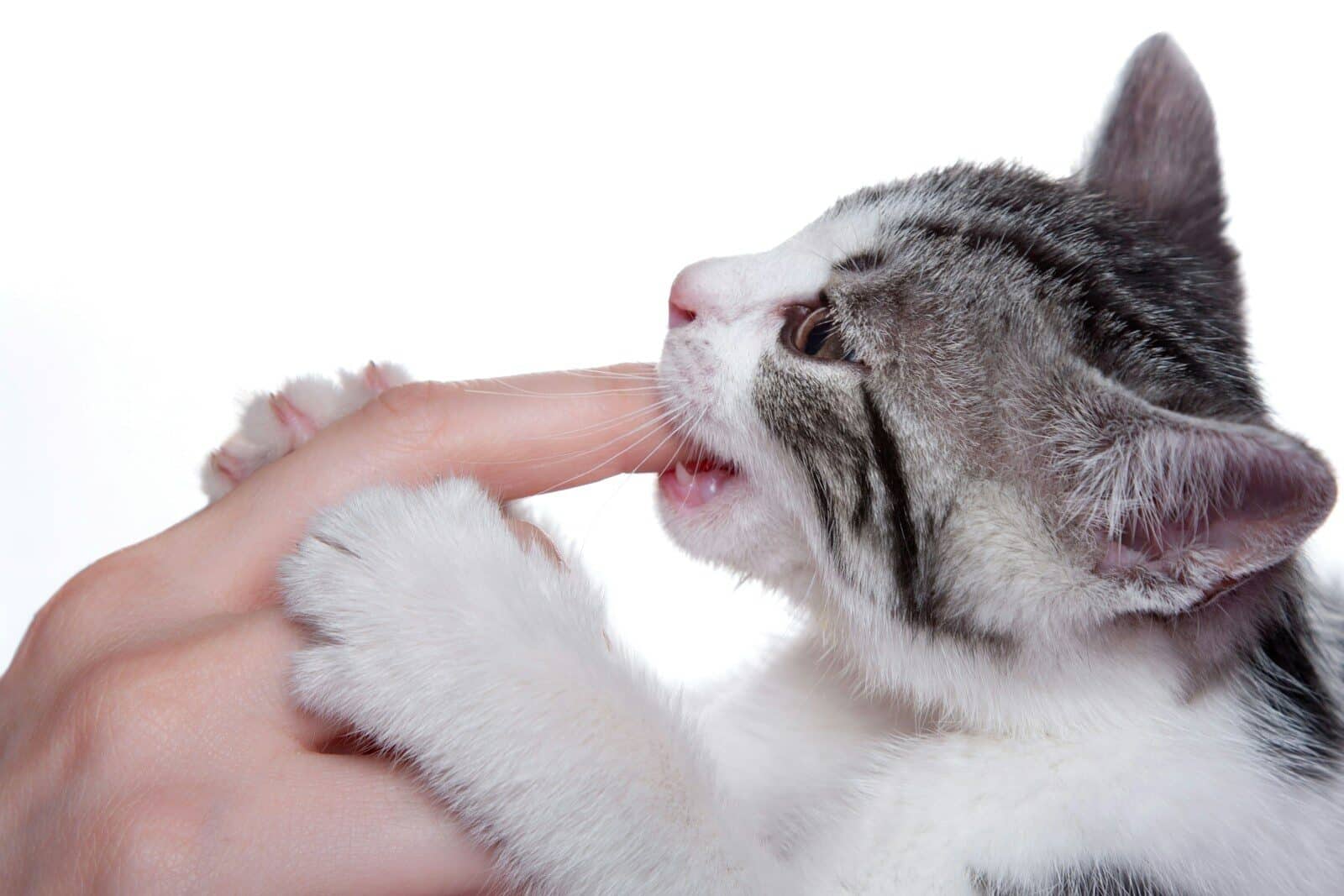
If your cat has recently started biting when they never did before, rule out medical causes first. Behavioral explanations are less likely when the change is sudden.
Arthritis
Arthritis is extremely common in older cats, affecting an estimated 90% of cats over 12. Stroking along the back, hips, or spine can cause real pain in arthritic joints.
Your cat is not becoming mean. They are in pain. A vet visit and appropriate pain management can dramatically reduce biting in these cases.
Dental Disease
Dental disease affects over 70% of cats by age 3 and is one of the most underdiagnosed causes of behavioral change. A cat with a painful mouth will bite when touched near the face, jaw, or neck.
Watch for other signs like reduced appetite, preference for soft food, drooling, or pawing at the mouth.
Dermatitis and Skin Conditions
Cats with skin inflammation find any touch irritating, particularly during extended petting sessions. This condition makes the normally enjoyable sensation of being stroked feel painful.
Hyperthyroidism and Neurological Issues
Hyperthyroidism can increase general irritability and lower tolerance for interaction. Neurological conditions can cause abnormal pain responses to touch. These require veterinary diagnosis and treatment.
How to Stop Your Cat From Biting When You Pet Them
Watch the Signals and Stop Early
The most effective prevention is stopping before your cat reaches their limit. Learn their specific warning signs and end the session proactively while they are still comfortable.
Stop at the first tail flick. Put your hand down calmly. Let your cat decide whether to stay for more or move away. Giving them that control significantly reduces biting over time.
Keep Sessions Short
Short, frequent petting sessions work far better than long continuous ones. Two minutes of calm petting several times a day builds tolerance better than a single fifteen-minute session that ends in a bite.
End on a positive note every time. Your cat begins to associate your touch with good, brief experiences rather than an ordeal that must be escaped.
Stick to Safe Zones
Focus your petting on the head, cheeks, and chin. Avoid long strokes down the spine and never attempt the belly unless your specific cat clearly enjoys it.
If you want to desensitize your cat to other areas, do it gradually over weeks with treats and patience.
Use Treats to Reinforce Calm Petting
Pair each brief petting session with a high-value treat. This creates a positive association between your touch and something your cat loves.
Over time, your cat’s tolerance for petting increases because they associate the experience with reward rather than sensory overload.
Never Punish a Bite
Punishing a cat for biting damages trust and makes the problem worse. Cats do not understand punishment after the fact, and a strong reaction from you can make them more fearful and more likely to bite defensively in future.
The correct response to a bite is calm withdrawal. Remove your hand quietly, give your cat space, and try again later with a shorter session.
Redirect to Toys
If your cat is biting from play drive rather than overstimulation, redirect immediately to an appropriate toy. A wand toy or kicker toy gives them a safe outlet for the hunting and biting instinct.
Never use your hands as toys with a kitten. What feels harmless with a tiny kitten becomes a painful habit when they grow into an adult cat.
Rule Out Medical Issues
If biting has started suddenly or changed in intensity, see your vet. Pain is a leading cause of unexpected aggression. Treating the underlying condition often resolves the biting entirely without any behavioral training needed.
How to Desensitize an Overstimulated Cat
Desensitization is a gradual process that can meaningfully raise your cat’s tolerance for petting over time. It requires patience and consistency.
Start by petting your cat for just a few seconds in their favorite spot. Stop before any warning sign appears. Offer a treat immediately.
Repeat this multiple times daily. Very slowly, over days and weeks, increase the duration by just a few seconds at a time. Only extend the session if your cat shows zero pre-bite signals.
If your cat shows any warning sign, you went too fast. Go back to shorter sessions and rebuild from there. This process cannot be rushed.
Breeds More Prone to Petting-Induced Biting
Some cat breeds have naturally lower tolerance for extended petting than others. This does not make them bad pets. It just means owners need to manage expectations.
| Breed | Petting Tolerance | Notes |
|---|---|---|
| Siamese | Moderate | Vocal, will warn loudly before biting |
| Bengal | Low to Moderate | High energy, easily overstimulated |
| Russian Blue | Moderate | Shy, dislikes unexpected touch |
| Maine Coon | High | Generally very tolerant and gentle |
| Ragdoll | Very High | Known for exceptional touch tolerance |
| Abyssinian | Low to Moderate | Active, prefers play over petting |
| Persian | Moderate | Enjoys calm petting, dislikes rough handling |
Why Does My Cat Bite Me and Then Lick Me?
This sequence is one of the most confusing for owners. Your cat bites, then immediately starts licking your hand or skin. It feels contradictory.
It is not. Biting followed by licking is a social grooming behavior called allogrooming. In cat colonies, cats groom each other with a mix of licking and gentle nibbles. When your cat does this to you, they are treating you as a member of their social group.
The lick is the follow-up that says “no hard feelings, I still love you.” If the bite was gentle and the lick is calm and rhythmic, this is affectionate bonding behavior, not aggression.
When Should You See a Vet About Cat Biting?
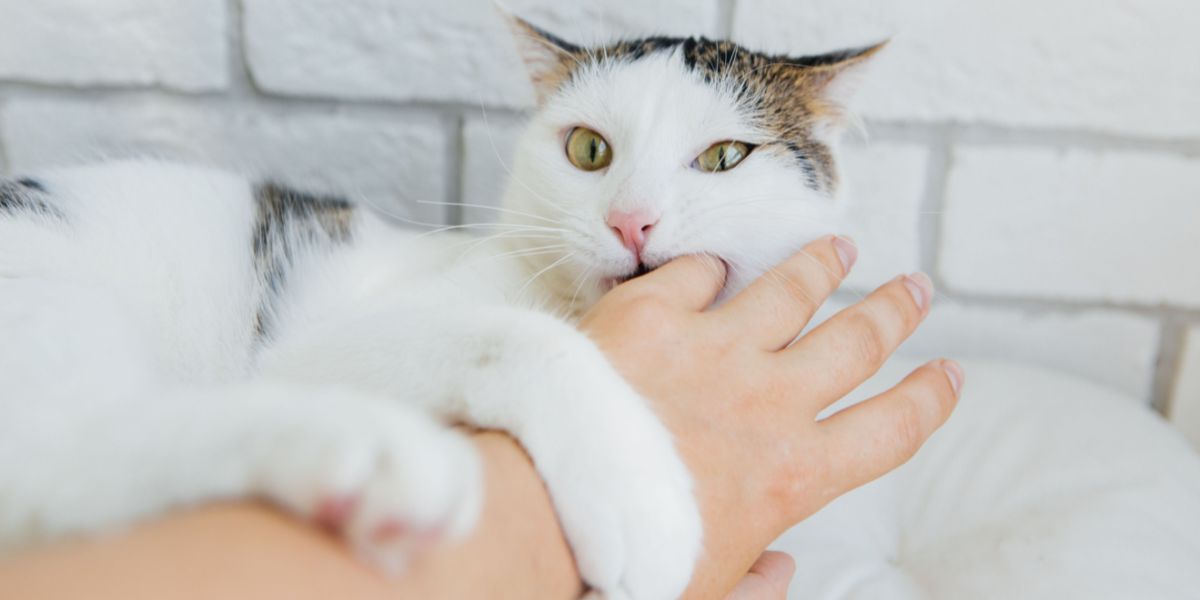
Most petting-related biting is manageable at home with behavioral changes. But there are situations where a vet is the right first call.
See your vet if your cat has suddenly started biting with no behavioral explanation. See your vet if the biting is getting more intense or more frequent over time. See your vet if biting only happens when you touch one specific area of the body.
Also see your vet if biting is accompanied by other behavioral changes like reduced appetite, hiding, excessive grooming, or vocalizing. These are signs of pain or systemic illness, not behavioral problems.
Quick Reference: Why Cats Bite During Petting
| Reason | How Common | Key Fix |
|---|---|---|
| Overstimulation | Very Common | Stop earlier, shorter sessions |
| Love bites | Common | No action needed if gentle |
| Play drive | Common | Redirect to toys |
| Pain or illness | Moderate | Vet visit immediately |
| Redirected aggression | Moderate | Remove from trigger, give space |
| Fear or anxiety | Moderate | Reduce stressors, go slowly |
| Poor early socialization | Less Common | Gradual desensitization with treats |
| Static electricity | Less Common | Humidifier, dampen hands |
| Status-related control | Less Common | Let cat initiate, respect exit |
Frequently Asked Questions (FAQs)
Why does my cat bite me when I pet them even though they were purring?
Purring does not always mean a cat is happy. Cats also purr when anxious or overstimulated, so the purr does not guarantee they are comfortable with continued petting.
Is it normal for cats to bite during petting?
Yes, it is very common and is called petting-induced aggression or overstimulation. It does not mean your cat is aggressive or broken, just that they have reached their sensory limit.
What should I do immediately after my cat bites me while petting?
Calmly remove your hand and give your cat space. Do not yell, punish, or make sudden movements, as these escalate fear and make future biting more likely.
Why does my cat bite me gently and then lick me?
This is a love bite combined with social grooming. Your cat is treating you like a fellow cat they feel bonded to. It is a sign of affection, not aggression.
Why does my cat bite me in the same spot every time I pet them?
Repeated biting in one specific area often signals pain or sensitivity at that location. Have your vet check for arthritis, injury, or skin inflammation in that area.
How do I train my cat to stop biting when I pet them?
Watch for pre-bite warning signs and stop before they bite. Keep sessions short, use treats to reward calm interactions, and gradually build tolerance over weeks.
Can a cat bite during petting become dangerous?
Any bite that breaks the skin carries infection risk. Clean the wound thoroughly immediately. If redness, swelling, or warmth develops, see a doctor as cat bites can cause serious bacterial infections.
Why does my cat bite me but no one else?
Your cat may associate you specifically with overstimulation from past petting sessions. They may also feel safer expressing discomfort with you than with strangers, which is paradoxically a sign of trust.
Do cats bite more as they get older?
Older cats often become more sensitive to touch due to arthritis, dental disease, or other age-related conditions. If biting increases with age, a vet checkup is the right first step.
What spots should I avoid when petting my cat to prevent biting?
Avoid the belly, the base of the tail, the paws and legs, and long repeated strokes down the spine. Stick to the head, cheeks, chin, and behind the ears for the safest petting experience.
Conclusion
Why do cats bite when you pet them comes down to one core truth: your cat is communicating with you, and the bite is the loudest signal in their vocabulary.
Overstimulation is the most common cause, but pain, play drive, fear, redirected aggression, and even affection can all produce the same behavior.
The good news is that this is one of the most manageable feline behaviors once you understand it.
Learning your cat’s pre-bite body language, keeping sessions short, sticking to safe petting zones, and responding to bites with calm redirection rather than punishment will transform your interactions over time.
If the biting started suddenly or is getting worse, rule out medical causes first.
Most cats who bite during petting are not mean. They are simply misunderstood.
Read the signals, respect the boundaries, and your bond with your cat will be stronger for it.
