

If you are asking why are my teeth yellow when I brush them everyday, the honest answer is that brushing alone was never designed to make your teeth white.
Brushing removes plaque, bacteria, and surface debris — but it cannot reverse enamel thinning, reach stains embedded deep inside your tooth structure, or change your natural dentin color.
Millions of people brush twice a day and still struggle with yellow teeth. In 2026, understanding the real science behind tooth discoloration is the first step to finally fixing it. This guide covers every cause, every solution, and every truth you need to know.
Why Are My Teeth Yellow When I Brush Them Everyday? The Real Reason
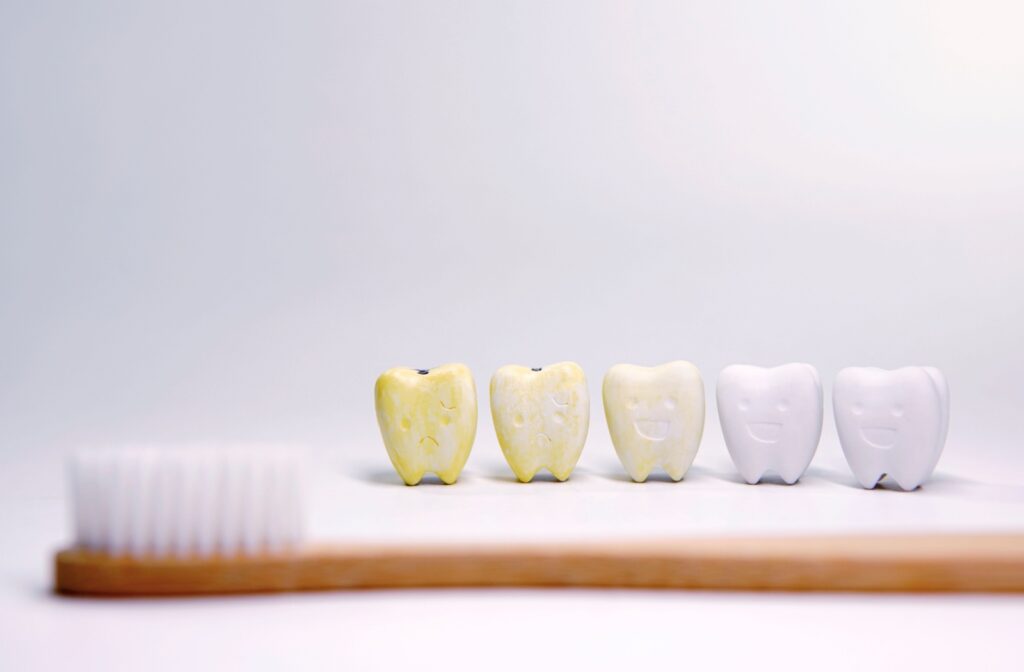
Brushing is essential for oral hygiene, but it has a physical limitation. The bristles of your toothbrush can only reach the outer surface of your teeth.
Tooth color is determined by two layers working together — the outer enamel and the inner dentin. Enamel is slightly translucent, so as it wears down, the naturally yellow dentin beneath it starts to show through.
Once the yellowing is coming from inside the tooth structure rather than from the surface, your toothbrush simply cannot reach it no matter how well or how long you brush.
Extrinsic vs. Intrinsic Staining: The Core Distinction
This is the most important concept to understand when asking why your teeth are yellow despite daily brushing.
Extrinsic stains sit on the outer surface of your enamel. They come from food pigments, drinks, tobacco, and plaque buildup. These stains can be reduced or removed with consistent brushing, whitening toothpaste, and professional cleanings.
Intrinsic stains are locked inside the tooth — within the enamel itself or deep in the dentin layer underneath. They result from aging, genetics, medications, trauma, or fluorosis. Brushing has no meaningful effect on intrinsic stains at all.
| Stain Type | Location | Common Causes | Removed by Brushing? | Best Treatment |
|---|---|---|---|---|
| Extrinsic | Outer enamel surface | Coffee, tea, wine, tobacco, plaque | Partially | Whitening toothpaste, professional cleaning |
| Intrinsic | Inside enamel or dentin | Aging, genetics, tetracycline, trauma, fluorosis | No | Professional bleaching, veneers, bonding |
| Age-Related | Dentin layer | Natural enamel thinning over time | No | Peroxide-based whitening, professional treatment |
Most people who brush daily but still have yellow teeth are dealing with intrinsic or age-related discoloration, not surface stains.
Top Reasons Why Your Teeth Are Yellow When You Brush Them Everyday
Incorrect Brushing Technique
This is the most overlooked cause. Brushing for less than two minutes, using the wrong motion, or missing certain surfaces means plaque is never fully removed.
Plaque that stays on the teeth hardens into tartar within 24 to 48 hours. Tartar has a yellow or brownish color and cannot be removed by brushing at home — only a professional dental cleaning can remove it.
The correct technique is to brush for two full minutes using gentle circular motions, covering the front, back, and chewing surfaces of every tooth.
Enamel Thinning and Dentin Showing Through
As you age, the enamel that covers your teeth gradually wears away. This is a completely natural process that accelerates with acid exposure, grinding, and aggressive brushing.
When enamel thins, the dentin beneath becomes more visible. Dentin is naturally a deep yellow to brownish-yellow color, and it is what you are seeing when your teeth look yellow despite good hygiene.
This type of yellowing cannot be fixed by brushing at all. It requires professional whitening or cosmetic dental treatment.
Foods and Drinks That Stain
Certain foods and beverages leave chromogens — highly pigmented molecules — on the enamel surface that build up over time.
The main culprits are coffee, black tea, red wine, dark berry juices, tomato-based sauces, soy sauce, and curry. Tannins found in coffee and tea are especially aggressive at bonding to enamel.
Even healthy foods like blueberries, blackberries, and balsamic vinegar can contribute to surface staining if consumed frequently without rinsing afterward.
Tobacco Use
Tobacco is one of the most aggressive causes of yellow and brown teeth. Both cigarette smoke and smokeless tobacco leave tar and nicotine deposits on the enamel that are extremely difficult to remove with brushing alone.
The discoloration is proportional to how much you use tobacco. Heavy smokers develop deep brown staining that eventually becomes intrinsic and requires professional treatment to address.
Quitting tobacco is the single most impactful lifestyle change you can make for both tooth color and overall oral health.
Genetics and Natural Tooth Color
Not everyone is born with naturally bright white teeth, and that is completely normal. Teeth naturally come in four shades — reddish brown, reddish yellow, gray, and reddish gray — with variation from light to dark.
If your parents have yellowish teeth, there is a strong chance you inherited the same enamel thickness and dentin shade. Thinner enamel means more of the yellow dentin shows through, regardless of how well you brush.
This type of genetic yellowing does not indicate poor hygiene. It simply means your natural baseline color is slightly warmer or more yellow than average.
Aging
Tooth yellowing is a natural consequence of getting older. Over decades, the enamel layer gets progressively thinner from chewing and acid exposure.
At the same time, the dentin layer inside the tooth thickens and darkens as part of the normal aging process. These two changes happening together make teeth appear significantly more yellow with each passing decade.
No amount of brushing reverses the biological changes associated with aging. Professional whitening and cosmetic options are the only real solutions.
Medications and Medical Treatments
Certain medications are known to cause tooth discoloration that is entirely unrelated to hygiene. The most well-known are tetracycline antibiotics, which can bond to the calcium in developing teeth and create gray or brown banding that is visible for life.
Other medications linked to tooth yellowing include antihistamines, some antihypertensives, and antipsychotics. Chemotherapy and radiation therapy can also cause discoloration of the teeth.
If you suspect a medication is causing your yellow teeth, speak to your dentist before stopping any prescribed treatment. There are cosmetic options that can help mask or reduce this type of staining.
Fluorosis
Fluoride is important for strong teeth, but excessive fluoride exposure during childhood — while the permanent teeth are still developing — can cause fluorosis.
Fluorosis appears as white spots, streaks, or in more severe cases, brown discoloration and pitting on the enamel. It affects the inner structure of the tooth and cannot be removed by brushing.
Sources of excess fluoride include high-fluoride water, swallowing toothpaste as a child, and taking fluoride supplements beyond the recommended dose.
Dental Trauma
A tooth that has suffered physical trauma — from a fall, sports injury, or accident — can darken from the inside out. The impact disrupts the internal blood supply, and the pulp may bleed or die.
When the pulp tissue breaks down inside the tooth, it releases pigments that stain the dentin from the inside. The affected tooth takes on a gray, dark yellow, or brown appearance over time.
This type of discoloration is entirely intrinsic and requires internal bleaching or cosmetic dentistry to correct.
Tartar Buildup
Plaque that is not properly removed by brushing hardens into tartar (also called calculus) within a day or two. Tartar is porous, has a yellowish or brownish color, and acts as a magnet for more staining.
Once tartar forms, it cannot be removed by brushing at home. It requires professional scaling by a dentist or hygienist using special tools.
People who skip dental cleanings for months or years accumulate significant tartar buildup that makes the teeth look yellow even when they brush every single day.
Teeth Grinding (Bruxism)
Grinding or clenching your teeth, especially during sleep, wears down enamel faster than normal aging would. The mechanical friction strips enamel from the chewing surfaces and sometimes the sides of the teeth.
As the enamel becomes thinner from grinding, the yellow dentin beneath shows through more prominently. The teeth may also develop a flattened, worn-down appearance.
A night guard prescribed by your dentist protects the enamel and slows this process significantly.
Acidic Foods and Drinks
Acidic foods and beverages do not directly stain teeth yellow, but they erode enamel. Once enamel is eroded, not only does the yellow dentin show through more, but the roughened surface traps pigments from food and drink more easily.
Common culprits include citrus fruits, sports drinks, sodas, energy drinks, and vinegar-based dressings. Even sparkling water can contribute to enamel erosion over time due to its mild carbonic acid content.
Rinsing your mouth with plain water immediately after consuming acidic items is one of the simplest ways to reduce enamel erosion.
Why Brushing Harder or More Often Does Not Help
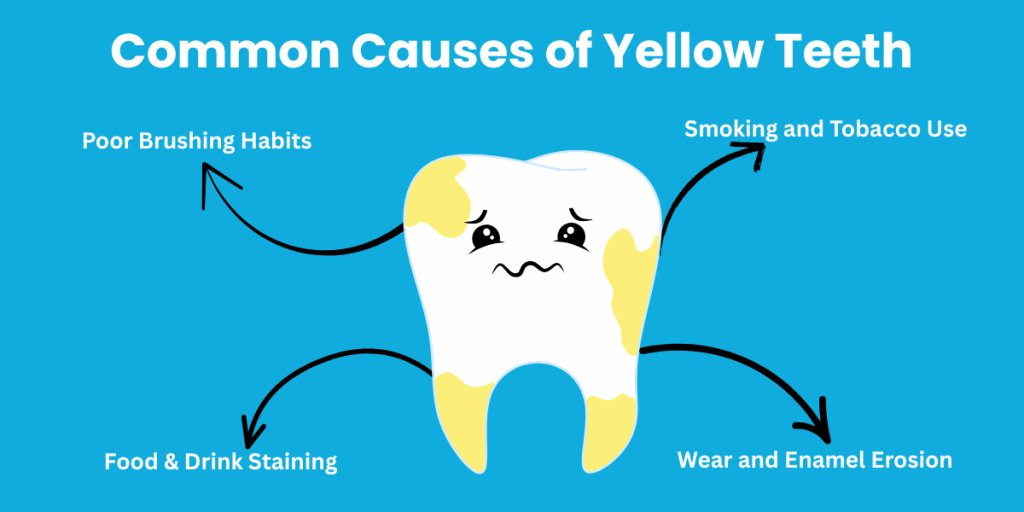
Many people respond to yellow teeth by brushing harder or adding a third brushing session. This actually makes the problem worse.
Over-brushing with too much pressure physically scrapes enamel off the teeth. Thinner enamel means more dentin shows through, which means more yellow.
If you use a medium or firm-bristled toothbrush, switching to a soft-bristled brush and applying lighter pressure will protect your enamel and give your teeth a better chance of staying bright long-term.
Does Whitening Toothpaste Actually Work?
Whitening toothpastes work by using mild abrasives or low-concentration bleaching agents to lift surface stains. They are effective for extrinsic stains from food and drink.
They do not have any meaningful impact on intrinsic stains or on dentin that is showing through thin enamel. For those types of yellowing, whitening toothpaste makes no noticeable difference.
That said, switching to a whitening toothpaste is a good habit for people who consume a lot of staining foods and drinks, as it helps prevent extrinsic buildup from accumulating.
Teeth Whitening Options That Actually Work in 2026
| Treatment | Stain Type Addressed | Effectiveness | Cost Range |
|---|---|---|---|
| Whitening toothpaste | Extrinsic only | Low to moderate | Low |
| Whitening strips (OTC) | Extrinsic, mild intrinsic | Moderate | Low to moderate |
| Custom tray whitening (dentist) | Extrinsic and intrinsic | High | Moderate |
| In-office professional whitening | Extrinsic and intrinsic | Very high | High |
| Laser or light-activated whitening | Extrinsic and intrinsic | Very high | High |
| Veneers | All types including severe | Permanent | Very high |
| Dental bonding | Localized stains | Good for specific teeth | Moderate |
| Internal bleaching | Single darkened tooth | Very effective | Moderate to high |
Professional In-Office Whitening
This is the most effective solution for most cases of yellow teeth. Dentists use high-concentration hydrogen peroxide or carbamide peroxide gels that penetrate deep into the enamel and dentin to break down chromophores — the pigmented molecules causing discoloration.
In 2026, many practices also offer light-activated or laser-assisted whitening that speeds up the chemical reaction for faster, more dramatic results in a single appointment.
Custom At-Home Whitening Trays
Your dentist creates trays that fit your exact tooth shape and provides prescription-strength whitening gel. You wear these trays for a set number of hours each day or overnight for several weeks.
This method is highly effective for both extrinsic and mild to moderate intrinsic staining. It is gentler than in-office treatment and delivers gradual, natural-looking results.
PAP-Based Whitening (New in 2026)
Phthalimidoperoxycaproic acid (PAP) is a newer whitening agent that breaks down stain molecules without releasing free radicals the way hydrogen peroxide does. This makes it significantly gentler on enamel and reduces tooth sensitivity.
PAP-based whitening products are ideal for people with sensitive teeth or gum recession who cannot tolerate traditional peroxide treatments. It works best on extrinsic stains.
Veneers
For severe or permanent intrinsic staining that does not respond to bleaching — such as tetracycline staining or significant trauma discoloration — porcelain veneers provide a complete cosmetic solution.
Thin shells of porcelain are bonded to the front surface of the teeth, completely masking any underlying discoloration. Veneers can be color-matched to any desired shade and last 10 to 15 years with proper care.
Foods and Habits That Help Keep Teeth Whiter
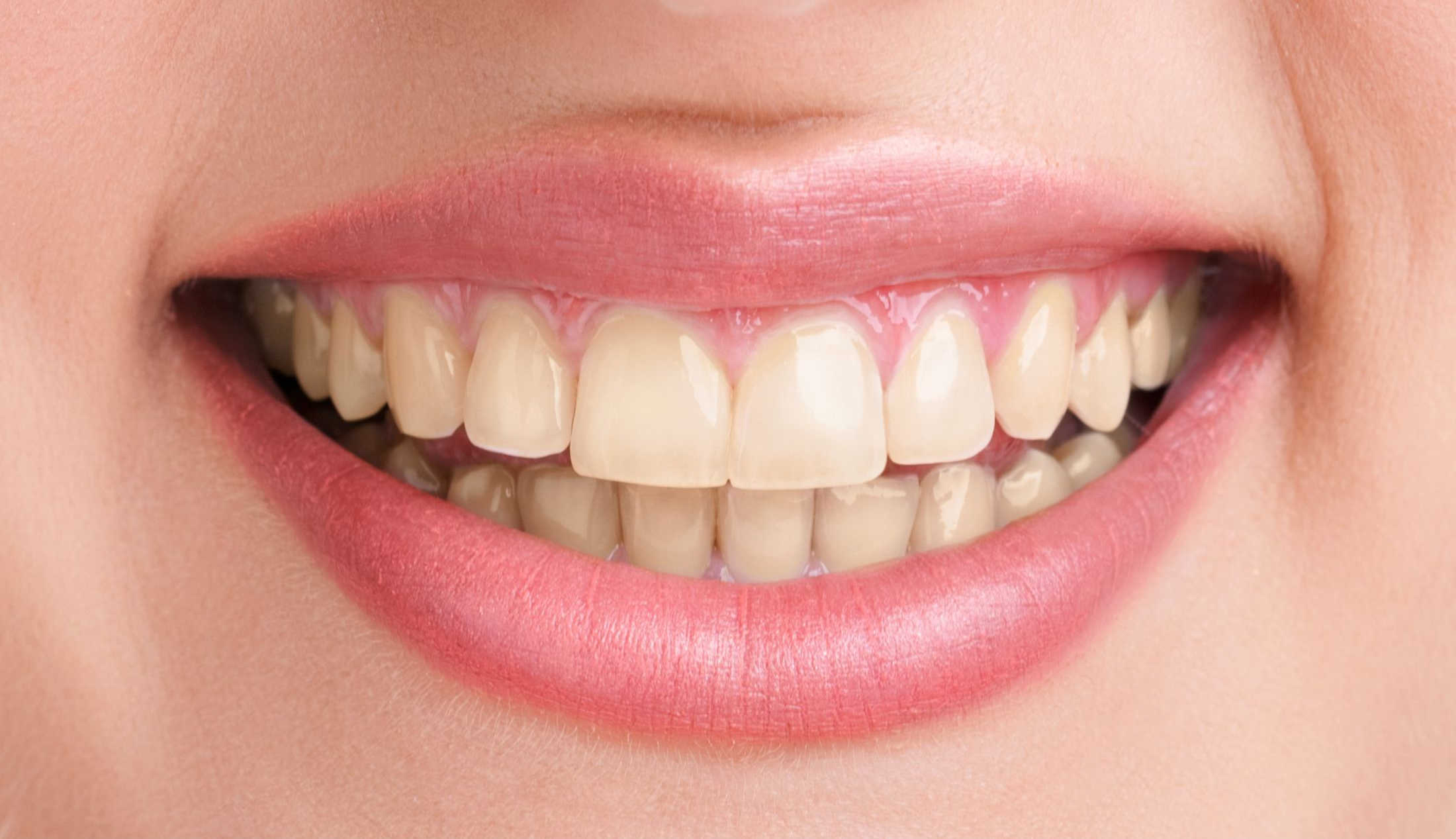
Protecting the whiteness of your teeth is easier when you know which habits help.
Drinking coffee and tea through a straw reduces direct contact with your teeth. Rinsing your mouth with plain water immediately after consuming staining food or drink washes away pigments before they can bond to enamel.
Eating crunchy vegetables like carrots, celery, and apples has a mild mechanical cleaning effect on teeth and stimulates saliva production, which naturally neutralizes acids and washes away bacteria.
Chewing sugar-free gum after meals stimulates saliva flow, which helps neutralize acid and rinse away food debris from tooth surfaces.
Vitamins and Nutrients That Support Tooth Enamel
What you eat directly impacts the strength and appearance of your enamel. A diet rich in certain nutrients helps keep enamel thick and resistant to yellowing.
Calcium is the primary mineral in tooth enamel. Getting adequate calcium from dairy, leafy greens, and fortified plant milks keeps enamel dense and resilient.
Vitamin D helps the body absorb calcium efficiently. Low vitamin D means poor calcium absorption even if your diet contains plenty of it.
Vitamin C supports the collagen framework that holds gum tissue around the teeth and supports overall oral health. Deficiency causes gum problems that contribute to teeth looking worse overall.
Phosphorus works alongside calcium to maintain enamel mineral density. It is found in eggs, fish, meat, and nuts.
When to See a Dentist About Yellow Teeth
Brushing more is not the answer. Seeing your dentist is the right move when your teeth have been yellow for months without improvement, when the yellowing is getting noticeably worse over time, or when a single tooth has darkened suddenly.
Sudden darkening of one tooth can indicate a dead or dying nerve, which requires root canal treatment. This is a dental concern beyond cosmetics.
Regular professional cleanings every six months remove tartar and surface staining that your toothbrush cannot reach. These appointments alone can visibly brighten teeth that have accumulated buildup.
Frequently Asked Questions (FAQs)
Why are my teeth still yellow even though I brush twice a day?
Brushing removes surface plaque but cannot reach stains inside the tooth structure or reverse enamel thinning that makes yellow dentin visible. The discoloration is likely intrinsic.
Does brushing harder make yellow teeth whiter?
No. Brushing too hard strips enamel away, which makes the yellow dentin beneath more visible and worsens the problem over time.
Can whitening toothpaste fix yellow teeth?
Whitening toothpaste removes surface stains only. It has no effect on intrinsic yellowing caused by thin enamel, genetics, aging, or medications.
How long does it take for professional whitening to work?
In-office professional whitening produces visible results in a single session of about one hour. Custom tray treatments at home typically show results within two to four weeks.
Does coffee stain teeth permanently?
Coffee causes extrinsic staining that builds up over time. With regular professional cleanings and whitening treatment it can be significantly reduced, though it is not always fully reversible once deeply embedded.
Can yellow teeth turn white again without a dentist?
Mild extrinsic staining can be improved with OTC whitening strips or whitening toothpaste. Intrinsic staining, enamel thinning, and genetic yellowing require professional treatment for any real improvement.
Do genetics cause yellow teeth?
Yes. The natural thickness of your enamel and the baseline shade of your dentin are both inherited traits. People with thinner enamel or darker dentin naturally have more yellow-looking teeth.
Is it normal for teeth to be yellow even with good oral hygiene?
Completely normal. Yellow teeth are often caused by genetics, aging, or diet rather than poor hygiene. Many people with excellent oral hygiene still have naturally yellow-toned teeth.
Can medications make teeth permanently yellow?
Yes. Tetracycline antibiotics taken during childhood or during pregnancy cause permanent intrinsic staining that does not respond to standard whitening. Veneers or advanced professional bleaching are the main options.
What is the fastest way to whiten yellow teeth in 2026?
In-office professional whitening with light or laser activation is the fastest method, producing several shades of improvement in a single appointment of 60 to 90 minutes.
Conclusion
Now you know the full truth behind why your teeth are yellow when you brush them everyday. The problem is almost never about brushing effort or frequency — it is about stain type, enamel thickness, genetics, aging, and lifestyle factors that brushing alone cannot reverse.
Extrinsic stains from food and drink can be managed with better habits and professional cleanings. Intrinsic stains and dentin yellowing from aging or genetics require professional whitening, custom trays, or cosmetic treatments. In 2026, the options available are more effective and accessible than ever before.
The best next step is a conversation with your dentist to identify your specific type of yellowing and the right treatment plan for your smile.
