

Why am I craving salt so much lately? You are not alone. Salt cravings are one of the most common food urges people experience, and they almost always have a real biological or lifestyle reason behind them.
Your body is constantly working to keep sodium levels balanced, and when something disrupts that balance, it sends you straight to the chip bag.
What Is a Salt Craving and Why Does It Happen?
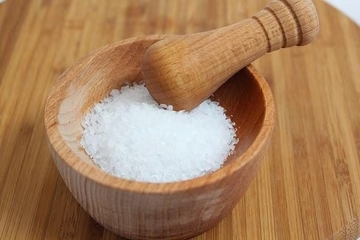
A salt craving is your body’s way of signaling that sodium levels are off balance. Sodium is an essential electrolyte that controls fluid distribution, nerve signaling, and muscle contractions.
When sodium drops even slightly, your brain activates appetite signals that steer you toward salty foods. It is a survival mechanism that has been wired into human biology for thousands of years.
The Role of Sodium in Your Body
Before understanding cravings, it helps to understand what sodium actually does.
| Function | What Sodium Does |
|---|---|
| Fluid balance | Controls how water moves in and out of cells |
| Nerve signaling | Helps transmit electrical signals through nerves |
| Muscle contraction | Required for muscles to contract and relax |
| Blood pressure | Regulates blood volume and pressure |
| Nutrient absorption | Assists in absorbing glucose and amino acids in the gut |
A healthy blood sodium level sits between 135 and 145 millimoles per liter. When it drops below that range, called hyponatremia, your body reacts quickly.
Top Causes of Salt Cravings
Dehydration and Fluid Loss
Dehydration is the single most common reason people crave salt. When you lose fluids through sweat, vomiting, diarrhea, or simply not drinking enough water, your sodium levels can drop alongside your fluid levels.
Your brain picks up on this drop and triggers a desire for salty food to pull sodium back up. This type of craving is your body doing exactly what it should.
Signs you are dehydrated alongside salt cravings:
- Headache or dizziness
- Dark-colored urine
- Dry mouth or lips
- Fatigue or brain fog
- Rapid heart rate
Heavy Sweating and Exercise
When you exercise intensely or spend time in hot weather, you can lose more than two liters of sweat per hour. That sweat carries a significant amount of sodium with it.
Athletes and manual workers are especially prone to this. After a hard session, the salt crust you see on your skin is real sodium your body lost. Craving salty food after exercise is completely normal and even healthy.
Chronic Stress and Cortisol
Stress is a major but often overlooked driver of salt cravings. When you are under chronic stress, your adrenal glands release cortisol. This hormone triggers your body to seek out comfort foods, and salty snacks are at the top of that list.
Research also shows that stress causes your body to excrete more sodium through urine. So the craving is not just emotional. Your body actually needs more sodium when stressed.
Poor Sleep Quality
Lack of sleep throws off hunger hormones like ghrelin and leptin. People who are sleep-deprived tend to crave foods that are high in salt, fat, or sugar because these feel satisfying and stimulating.
A 2019 study found that poor sleep quality was directly linked to more frequent food cravings and lower overall diet quality. If you are waking up already wanting chips or salty snacks, your sleep may be the root cause.
Hormonal Changes in Women
Hormones play a significant role in how women experience salt cravings. During the luteal phase of the menstrual cycle, just before a period, progesterone rises and estrogen fluctuates. This shift can increase cravings for salty, high-fat comfort foods.
Perimenopause and menopause also bring erratic hormonal changes that can affect thirst sensitivity, hydration status, and electrolyte balance. Many women notice intensified salt cravings during these transitions.
Pregnancy
Salt cravings during pregnancy are extremely common. The body’s blood volume increases significantly during pregnancy, which means it needs more sodium to maintain fluid balance.
Hormonal shifts and nausea-related fluid loss can also push sodium levels down, making salty foods feel irresistible. This is one craving that usually has a very clear physiological reason.
Addison’s Disease (Adrenal Insufficiency)
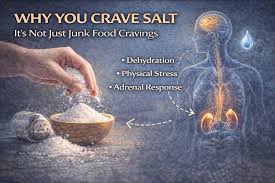
Addison’s disease is a rare but serious condition where the adrenal glands fail to produce enough cortisol and aldosterone. Aldosterone is the hormone responsible for signaling the kidneys to retain sodium.
Without enough aldosterone, the kidneys leak sodium out of the body. This creates intense, persistent salt cravings along with symptoms like:
- Severe fatigue
- Low blood pressure
- Dizziness when standing
- Weight loss
- Darkening of the skin
If your salt cravings are constant and accompanied by these symptoms, see a doctor. Addison’s disease requires medical treatment.
POTS (Postural Orthostatic Tachycardia Syndrome)
POTS is a condition where blood pressure drops when a person stands up, causing the heart to race to compensate. Low blood pressure is a key feature of POTS, and doctors often recommend higher sodium intake to help manage it.
People with POTS may instinctively crave salt because their body is trying to increase blood volume and stabilize blood pressure. This is one case where craving salt is actually a clinically recognized signal.
Bartter Syndrome
Bartter syndrome is a rare genetic kidney disorder where the kidneys are unable to properly reabsorb sodium. Because so much sodium is lost through urine, the body develops intense and persistent salt cravings.
It usually appears in childhood and requires medical management, including electrolyte supplementation.
Cystic Fibrosis
Cystic fibrosis affects how the body handles salt through mucus and sweat glands. People with CF lose far more salt through their sweat than the average person, leading to chronic sodium depletion and strong salt cravings.
Nutrient Deficiencies Beyond Sodium
Sometimes a craving for salt is really the body trying to fix a broader mineral imbalance. Deficiencies in potassium, magnesium, zinc, and iron can all affect how the body regulates electrolytes and may trigger what feels like a salt craving.
| Nutrient | How It Relates to Salt Cravings |
|---|---|
| Potassium | Works with sodium to balance fluid in cells; low potassium disrupts this balance |
| Magnesium | Involved in hundreds of enzymatic reactions; deficiency affects electrolyte balance |
| Zinc | Affects taste perception; low zinc can distort flavor signals |
| Iron | Deficiency can trigger cravings for unusual substances, occasionally including salty foods |
Habit and Palate Training
Sometimes salt cravings have nothing to do with your body’s needs. If your diet has been consistently high in sodium, your palate literally adapts to expect that level of saltiness.
Foods that would normally taste fine start to seem bland or unsatisfying. Your taste receptors recalibrate over time, and you need more salt to feel the same level of flavor satisfaction. The good news is that this is reversible. Gradually reducing sodium intake retrains your palate within a few weeks.
Boredom Eating
Boredom is a surprisingly common driver of salty food cravings. When you are not mentally stimulated, the brain seeks stimulation through sensory experiences, and salty, crunchy foods deliver that quickly.
This is not a physical need at all. The best way to tell the difference is to check whether you are actually hungry or just bored and understimulated.
When Should You Be Concerned About Salt Cravings?
Most salt cravings are harmless and short-lived. But some patterns deserve medical attention.
See a doctor if you experience:
- Salt cravings that are intense and constant, not occasional
- Cravings paired with extreme fatigue, low blood pressure, or dizziness
- Unexplained weight loss alongside cravings
- Cravings that have worsened significantly without a clear lifestyle cause
- Other symptoms like darkening skin, nausea, or muscle weakness
These could point to an underlying condition like Addison’s disease, POTS, or a kidney disorder.
How Much Salt Is Too Much?
The American Heart Association recommends no more than 2,300 mg of sodium per day. Their ideal target for most adults is 1,500 mg per day.
However, individual needs vary. Athletes, people who sweat heavily, pregnant women, and those with certain medical conditions may need more. Always factor in your personal health status when thinking about sodium targets.
| Group | Recommended Daily Sodium Intake |
|---|---|
| General adult population | Up to 2,300 mg |
| Adults with high blood pressure | Up to 1,500 mg |
| Athletes with heavy sweat loss | May exceed 2,300 mg with guidance |
| Pregnant women | Consult healthcare provider |
| People with POTS | Higher intake often recommended by doctor |
What to Eat When You Are Craving Salt
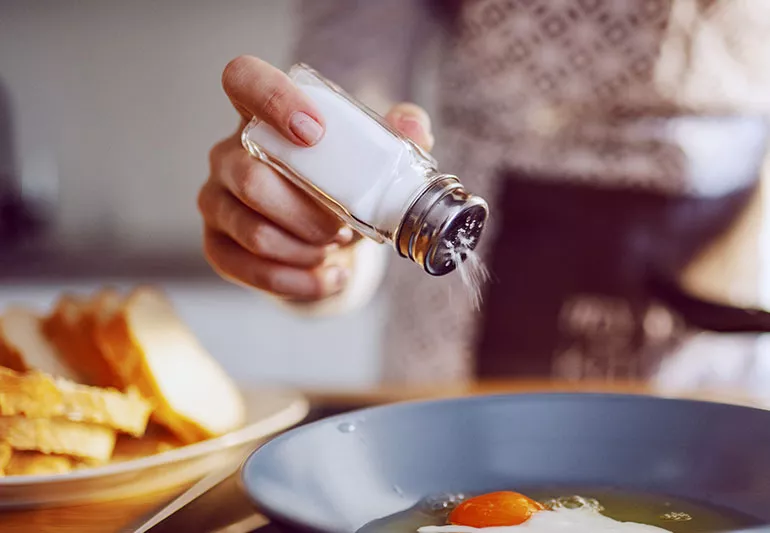
Not all salty options are equal. Here are smarter choices to satisfy the craving without overloading on sodium.
Healthier salty food options:
- Crunchy vegetables with hummus
- Lightly salted popcorn (air-popped)
- Edamame with a pinch of sea salt
- Pickles or olives in moderation
- Miso soup (lower sodium versions)
- Roasted chickpeas
- Seaweed snacks
- Cheese with raw vegetables
These options give you the salty flavor hit your body is after while delivering real nutrients at the same time.
How to Reduce Unwanted Salt Cravings
If your cravings are habit-based or lifestyle-driven, these strategies can help.
Hydrate Properly
Drink water consistently throughout the day, not just when you feel thirsty. Adding electrolytes to your water after exercise or on hot days helps restore sodium without reaching for processed snacks.
Use Herbs and Spices
Garlic, lemon juice, citrus zest, black pepper, cumin, and smoked paprika add bold flavor without adding sodium. Over time, cooking with these ingredients reduces your reliance on salt for taste.
Sleep More
Prioritizing seven to nine hours of quality sleep per night reduces hunger hormone disruption and lowers the likelihood of craving high-salt, high-fat foods during the day.
Manage Stress
Regular physical activity, mindfulness practices, and adequate rest all reduce cortisol levels. Lower cortisol means fewer stress-driven food cravings overall.
Cut Back on Processed Foods Gradually
Processed foods are the biggest source of hidden sodium in most diets. Gradually reducing how much processed food you eat allows your palate to recalibrate without the shock of an abrupt change.
Track Your Sodium Intake
Using a food tracking app for even a few days can be eye-opening. Most people significantly underestimate how much sodium they consume daily, especially from condiments, bread, and packaged foods.
Salt Cravings vs. Sugar Cravings: What Is the Difference?
| Feature | Salt Craving | Sugar Craving |
|---|---|---|
| Main trigger | Sodium/electrolyte loss, stress, dehydration | Blood sugar dips, insulin fluctuation, emotional eating |
| Time of day | Often post-exercise or afternoon | Often mid-morning or after meals |
| Associated feelings | Physical fatigue, heaviness | Energy crash, mood dip |
| Likely cause | Physiological imbalance | Hormonal or habitual |
| Best response | Electrolytes, hydration, rest | Protein, fiber, stable meals |
Both types of cravings are signals. The key is learning to read them accurately instead of suppressing them or overindulging mindlessly.
The Brain Science Behind Salt Cravings
Your brain has dedicated neural pathways that respond to sodium. The hypothalamus, the part of the brain that manages homeostasis, monitors blood sodium closely.
When levels dip, it activates the renin-angiotensin-aldosterone system, which triggers both water retention and appetite for salty foods. The brain also releases signals that make salty foods taste better than usual when you are sodium-depleted. This is why a craving for salt often comes with food that seems exceptionally satisfying in the moment.
Eating salty food when stressed also triggers the release of serotonin and norepinephrine, both feel-good neurotransmitters. This creates a reinforcement loop where stress leads to salt intake, which leads to temporary mood improvement, which reinforces the habit.
Sodium and Blood Pressure: Clearing Up the Confusion
There is a lot of fear around sodium and blood pressure, but the picture is more nuanced than most people think.
High sodium intake does raise blood pressure in people who are salt-sensitive, and this is a genuine concern for those with hypertension. However, very low sodium intake has also been linked to increased cardiovascular events in some studies.
The key is balance. Most people do not need to fear salt entirely. They need to avoid consistent excess sodium, especially from ultra-processed foods, and maintain a diet that also includes enough potassium to counterbalance sodium’s effects.
Testing for the Underlying Cause
If your cravings are persistent and unexplained, specific tests can help identify the cause.
Useful tests include:
- Comprehensive metabolic panel (measures sodium, potassium, chloride, and other electrolytes)
- Cortisol testing throughout the day (to assess adrenal function)
- Aldosterone and renin levels (to evaluate hormonal sodium regulation)
- Urine sodium test (to see how much sodium you are excreting)
- Iron panel
- Thyroid function tests
These tests give a fuller picture than a single blood draw, which may look normal even when underlying imbalances exist.
Frequently Asked Questions (FAQs)
Why am I craving salt all of a sudden?
A sudden salt craving usually means your body has lost sodium through sweat, illness, or dehydration and is signaling you to replace it.
Is craving salt a sign of low sodium?
Yes, low sodium or hyponatremia is one of the most direct triggers of a salt craving as your body tries to restore electrolyte balance.
Can stress cause salt cravings?
Yes, chronic stress increases cortisol, which causes the body to excrete more sodium through urine, making salty food feel both physically and emotionally satisfying.
Why do I crave salt before my period?
Hormonal shifts during the luteal phase of the menstrual cycle affect fluid retention and electrolyte balance, which commonly increases cravings for salty foods.
What deficiency causes salt cravings?
Sodium deficiency is the most direct cause, but deficiencies in potassium, magnesium, and zinc can also disrupt electrolyte balance and trigger salt cravings.
Is it bad to eat salt when you crave it?
Occasionally satisfying a salt craving is fine and often appropriate, but persistent or extreme salt intake should be discussed with a doctor to rule out underlying conditions.
Why do I crave salt after exercise?
Exercise causes significant sodium loss through sweat, and your body craves salt afterward to restore proper electrolyte balance and support muscle recovery.
Can poor sleep make you crave salt?
Yes, sleep deprivation disrupts hunger hormones and increases cravings for high-sodium, high-fat, and high-sugar foods as the brain seeks quick stimulation and reward.
What medical conditions cause salt cravings?
Addison’s disease, POTS, Bartter syndrome, cystic fibrosis, and certain kidney disorders are all associated with persistent or intense salt cravings.
How do I stop craving salt?
Staying well-hydrated, getting enough sleep, managing stress, cutting back on processed foods, and using herbs and spices to enhance flavor are the most effective long-term strategies.
Conclusion: What Your Salt Craving Is Really Telling You
Why am I craving salt? In most cases, your body is doing exactly what it is designed to do.
It is detecting a shift in sodium balance and prompting you to fix it.
Dehydration, exercise, stress, poor sleep, and hormonal changes are the most common culprits.
These are manageable with the right lifestyle adjustments.
Occasional cravings are normal and should not be feared.
The goal is to understand the signal behind the craving rather than ignoring it or mindlessly giving in to it.
If your cravings are constant, intense, or paired with other symptoms like fatigue, low blood pressure, or unexplained weight loss, they deserve medical attention.
Conditions like Addison’s disease and POTS are very treatable once identified.
Your body communicates through cravings. Learning to listen accurately, rather than suppressing or overindulging, is one of the most powerful things you can do for your long-term health in 2026.
