

Why Was the Second Amendment Created? The Second Amendment was created to protect Americans’ right to keep and bear arms — and it remains one of the most debated clauses in U.S. history.
Ratified on December 15, 1791, as part of the Bill of Rights, the Second Amendment was drafted by James Madison in response to deep fears about federal power, standing armies, and government tyranny.
In just 27 words, it established a right that continues to shape law, politics, and culture in 2026. Understanding why it was created means looking at the fears, history, and ideals of America’s Founding Fathers.
The Full Text of the Second Amendment
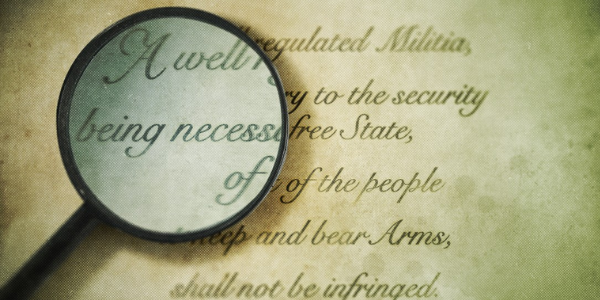
“A well regulated Militia, being necessary to the security of a free State, the right of the people to keep and bear Arms, shall not be infringed.”
These 27 words were ratified in 1791 as part of the Bill of Rights — the first ten amendments to the U.S. Constitution. Every word was deliberate. Every phrase was debated.
| Key Term | Meaning in 1791 Context |
|---|---|
| Well regulated Militia | Organized citizen soldiers, trained and disciplined |
| Security of a free State | Protection of individual states from federal overreach |
| Keep and bear Arms | Own and carry weapons |
| Shall not be infringed | Cannot be taken away or limited by the government |
Historical Background: Where Did the Second Amendment Come From?
English Roots and the 1689 Bill of Rights
The Second Amendment did not appear from nowhere. It drew directly from English legal tradition. The English Bill of Rights of 1689 gave Protestant subjects the right to possess arms for their defense, though it was limited and subject to legal conditions.
This English precedent planted the idea in American minds that the right to bear arms was a fundamental liberty. The Founding Fathers inherited this tradition and expanded it.
Colonial Experience Under British Rule
Americans living under British rule experienced firsthand what an armed government could do. The Declaration of Independence listed specific grievances against King George III, including that he had kept standing armies among citizens without consent, and made the military superior to civil power.
These were not abstract fears. Colonists had lived through British soldiers quartered in their homes and military authority overriding civilian law. That lived trauma shaped the Constitution they wrote.
The Revolutionary War and Militia Lessons
The Revolutionary War showed both the strengths and weaknesses of citizen militias. Militias played a critical role in resisting British forces across a vast territory. The British could capture coastal cities, but controlling the interior proved nearly impossible when armed citizens could rise up anywhere.
At the same time, the war revealed that unorganized militias alone could not defeat a professional army. This dual lesson — militias are essential, but they need support — informed the Second Amendment directly.
The 5 Key Reasons the Second Amendment Was Created
Reason 1: To Prevent Federal Tyranny
The number one fear of the Anti-Federalists was that the new federal government would become tyrannical. They had just fought a revolution against exactly that. They were not going to hand unlimited power to a new central authority.
James Madison argued in Federalist No. 46 that an armed citizenry alongside state governments would form a powerful check against any federal army. He believed that armed citizens, combined with state governments, made tyranny nearly impossible.
The Second Amendment was designed to ensure that the people would always have the means to resist a government that violated their rights.
Reason 2: To Protect State Militias
The new Constitution gave the federal government broad powers to raise and control a standing army. Anti-Federalists were alarmed. They viewed standing armies as dangerous to liberty and saw state militias as the proper defense force.
The Second Amendment was partly a political compromise. It guaranteed that state militias — made up of ordinary armed citizens — would remain a functioning counterweight to any federal standing army.
Without armed citizens, there could be no effective militia. Without a militia, there was no check on federal military power.
Reason 3: To Enable National Defense Without a Permanent Army
In the late 18th century, professional standing armies were expensive, politically dangerous, and associated with European monarchies. Many Founders preferred a system where ordinary armed citizens could be called up in times of need.
An armed population meant a ready militia. A ready militia meant national defense without the cost and political danger of a large permanent army. The Second Amendment ensured citizens kept the weapons they would need if called to serve.
Reason 4: To Protect the Natural Right of Self-Defense
Beyond the militia context, the Founders recognized self-defense as a natural right — one that existed before government and could not be taken away by government.
William Blackstone, whose legal writings heavily influenced the Founders, called the right to bear arms an “auxiliary right” that supported the natural rights of self-defense and resistance to oppression. This individual dimension of the Second Amendment ran alongside the militia purpose from the beginning.
Reason 5: To Secure Political Support for the Constitution
The Constitution was controversial. Several states nearly refused to ratify it. Anti-Federalists demanded a Bill of Rights as the price of their support.
The Second Amendment was part of that deal. Promising to protect gun rights — essential to militias and self-defense — helped bring enough Anti-Federalists on board to ratify the Constitution. Without the Second Amendment, there might not have been a United States in its current form.
Who Wrote the Second Amendment?
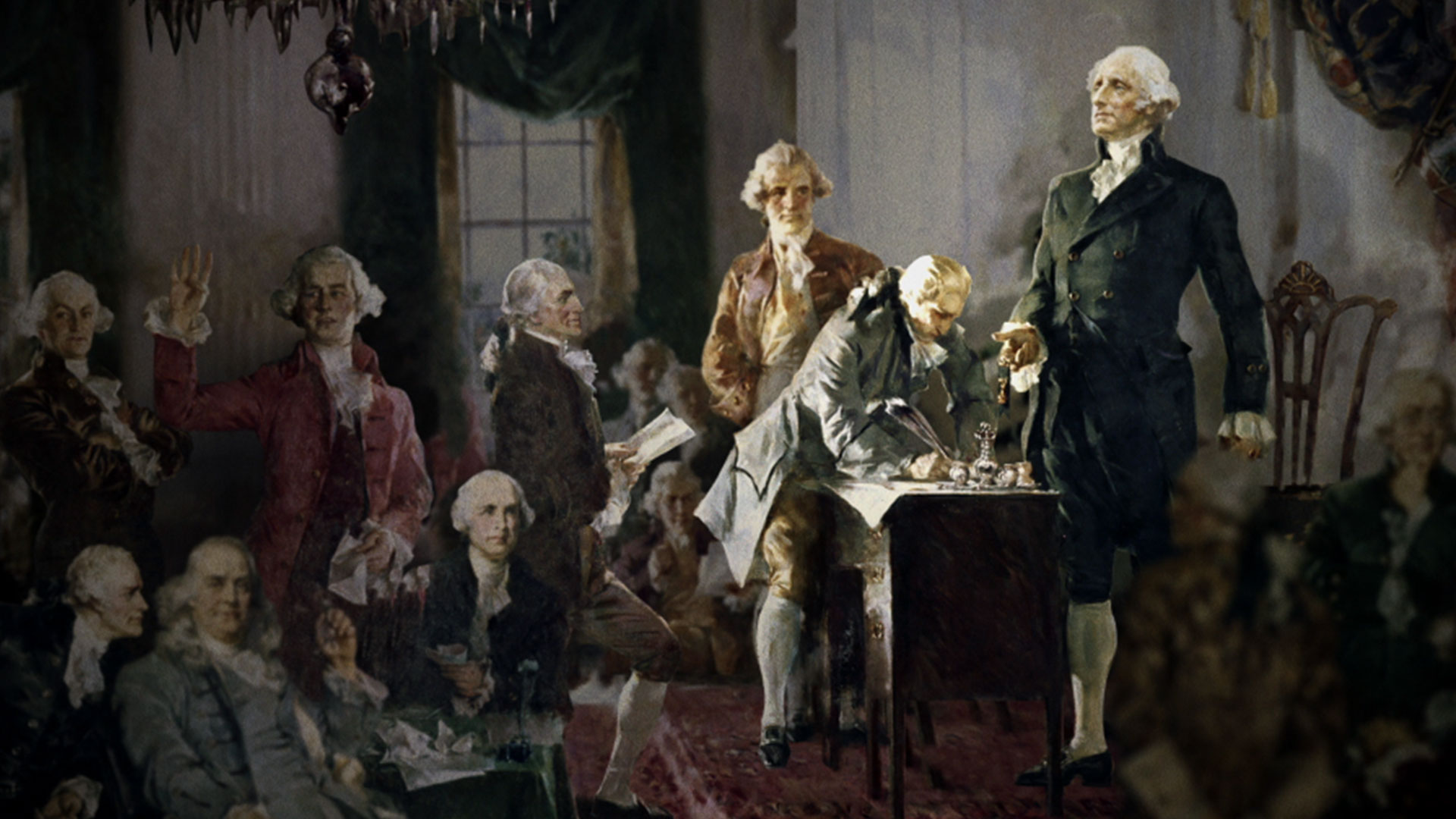
James Madison drafted the Second Amendment on June 8, 1789, when he proposed 17 amendments to the First Congress. He was a Federalist who believed the Constitution was strong enough on its own — but he understood that political compromise required a Bill of Rights.
| Person | Role |
|---|---|
| James Madison | Drafted and proposed the amendment |
| Anti-Federalists | Demanded gun rights protection as a condition of ratification |
| House of Representatives | Debated and revised the language |
| Senate | Finalized the text (Senate debates were not recorded) |
| State legislatures | Ratified the Bill of Rights in December 1791 |
The Senate made several important changes to Madison’s original draft. The religious objector clause was removed. The phrase describing militia as “the best security of a free State” was changed to “necessary to the security of a free State.” These word choices mattered deeply to those debating the amendment.
The Federalist vs. Anti-Federalist Divide
The Second Amendment was born out of a fundamental disagreement about power.
Federalists believed a strong central government with the power to raise a national army was essential. They argued that state militias had proven unreliable and that national security required professional forces. James Madison and Alexander Hamilton led this side.
Anti-Federalists feared that federal military power would be used to crush liberty. They wanted states to retain the ability to defend themselves and their citizens. They demanded explicit protection for the right to bear arms.
The Second Amendment was the compromise that bridged this divide — at least enough to move forward with ratification.
The Militia System in Early America
In the founding era, the militia was not just a military concept. It was a civic institution. Almost all able-bodied adult male citizens were expected to serve in the local militia, supply their own weapons, and be ready to defend their community.
This is why protecting the right to keep and bear arms was so practical. Without personal ownership of firearms, there could be no functioning militia. Without a functioning militia, the state had no defense force independent of the federal government.
| Feature | Founding-Era Militia | Modern National Guard |
|---|---|---|
| Membership | All able-bodied male citizens | Voluntary enlistment |
| Weapons | Personally owned | Government issued |
| Control | State governments | State + federal government |
| Readiness | Variable, community-based | Professionally trained |
| Purpose | Local/state defense | State + federal missions |
How the Supreme Court Has Interpreted the Second Amendment
For most of American history, the Second Amendment was rarely scrutinized by the Supreme Court. The few early cases established that it applied only to the federal government, not to states.
The landmark shift came in 2008.
District of Columbia v. Heller (2008)
In a 5-4 ruling, the Supreme Court held that the Second Amendment protects an individual’s right to possess firearms for traditionally lawful purposes — including self-defense in the home — independent of militia service.
This was a historic change. For the first time, the Court explicitly confirmed that the Second Amendment is not only about militias. It protects individual gun ownership.
McDonald v. City of Chicago (2010)
Two years later, the Court extended the Heller ruling to state and local governments. States and cities could no longer impose firearm bans that violated Second Amendment rights.
New York State Rifle & Pistol Association v. Bruen (2022)
In 2022, the Court went further, striking down a New York law requiring people to show a special need to carry a firearm in public. The ruling established that gun regulations must be consistent with the historical tradition of firearm regulation in America.
| Case | Year | Ruling |
|---|---|---|
| United States v. Miller | 1939 | Second Amendment tied to militia use |
| District of Columbia v. Heller | 2008 | Individual right to own firearms confirmed |
| McDonald v. City of Chicago | 2010 | Ruling applied to state/local governments |
| New York State Rifle & Pistol Association v. Bruen | 2022 | Right to carry in public strengthened |
The Second Amendment and Slavery: A Contested History
Some historians argue that protecting the right to bear arms also served to maintain slave patrols in Southern states. Virginia, for instance, depended on armed citizen patrols to control enslaved populations and suppress uprisings.
This is a genuinely debated point among historians. The majority view emphasizes the militia and anti-tyranny motivations. But the racial dimensions of early American gun law — including laws forbidding enslaved people and free Black Americans from owning firearms — are part of the full historical record.
The Second Amendment itself was originally applied only to the federal government. It was not until after the Civil War, with the Fourteenth Amendment in 1868, that efforts were made to extend constitutional rights to all citizens regardless of race.
Why the Debate Over the Second Amendment Never Ends
The reasons the Second Amendment was created are rooted in an 18th-century world. The specific conditions — no professional military, citizen militias as the primary defense force, fresh memory of British tyranny — no longer exist in the same form.
Yet the values behind the amendment remain deeply relevant. Questions about government power, individual liberty, self-defense, and public safety are not historical artifacts. They are live debates in 2026.
Those who favor broad gun rights argue that an armed citizenry is still a check against potential government overreach and still the most reliable means of personal self-defense. Those who favor stricter gun regulations argue that the original militia context has no modern equivalent, and that public safety demands laws the Founders never imagined.
Both positions draw genuine support from the historical record. This is why the Second Amendment debate is so persistent — and so passionate.
The Second Amendment in 2026: What Still Applies
The core legal framework established by Heller, McDonald, and Bruen remains in place. The Second Amendment protects individual gun ownership. States and localities cannot ban firearms outright. Regulations must align with historical tradition.
But courts continue to define the edges. What weapons are covered? What locations? What restrictions on who can own a gun? These questions are being litigated right now.
The Second Amendment is not a historical relic. It is a living constitutional provision actively shaping American law and life in 2026.
Key LSI and Related Terms Reference
| Primary Keyword | Related Terms |
|---|---|
| Why was the Second Amendment created | Second Amendment history, right to bear arms origin |
| Second Amendment purpose | Militia clause, anti-tyranny, self-defense rights |
| Founding Fathers gun rights | James Madison, Bill of Rights, Constitutional Convention |
| Second Amendment interpretation | Heller ruling, individual rights, collective rights |
| Gun control history | Standing army debate, Anti-Federalists, firearm regulation |
Frequently Asked Questions (FAQs)
Why was the Second Amendment created in simple terms?
The Second Amendment was created to protect Americans’ right to own guns so they could defend themselves, serve in militias, and resist any government that became tyrannical.
Who wrote the Second Amendment?
James Madison drafted the Second Amendment and proposed it to the First Congress on June 8, 1789, as part of a broader set of constitutional amendments.
When was the Second Amendment ratified?
The Second Amendment was ratified on December 15, 1791, along with the other nine amendments that form the Bill of Rights.
What does “well regulated Militia” mean in the Second Amendment?
In 1791, a “well regulated Militia” meant an organized, trained, and disciplined group of citizen soldiers prepared to defend their state — not a professional army.
Did the Founders intend the Second Amendment to protect individual gun rights?
The historical record shows both militia-focused and individual rights interpretations. The Supreme Court confirmed in 2008 (D.C. v. Heller) that it does protect an individual right to own firearms for self-defense.
Was the Second Amendment about preventing tyranny?
Yes, preventing federal tyranny was one of the primary motivations. The Founders wanted armed citizens and state militias as a check against any government that might use military force against its own people.
How does the Second Amendment relate to the English Bill of Rights?
The English Bill of Rights of 1689 established that Protestant subjects had the right to bear arms for defense. The Founders drew directly from this tradition when drafting the Second Amendment.
Has the meaning of the Second Amendment changed over time?
Yes. Courts interpreted it narrowly for most of American history, but Supreme Court rulings in 2008, 2010, and 2022 have significantly expanded its protection to include individual gun ownership rights.
Does the Second Amendment allow any restrictions on guns?
Yes. Even the Heller ruling confirmed the right is not unlimited. Long-standing restrictions — such as prohibiting gun ownership by felons or the mentally ill — are considered constitutional.
Why is the Second Amendment still debated in 2026?
Because it was written for an 18th-century world but must be applied today. Disagreements over gun control, public safety, and the scope of individual rights make it one of the most contested constitutional provisions in America.
Conclusion
The Second Amendment was created for reasons that were urgent, practical, and deeply personal to the Founders.
It reflected a fear of federal tyranny, a belief in citizen militias, a commitment to natural rights of self-defense, and the political necessity of securing the Constitution’s ratification.
James Madison drafted it in 1789, and it was ratified in 1791 as part of the Bill of Rights. In 2026, its meaning continues to be interpreted, debated, and applied in courts, legislatures, and communities across America — making it one of the most important and contested provisions in the entire Constitution.
