

Why is it called Hell’s Kitchen? Hell’s Kitchen is a neighborhood on the west side of Midtown Manhattan, New York City, and its name comes from a dark, violent past filled with poverty, crime, gangs, and overcrowded tenements.
The exact origin of the name is debated, but the story behind it is one of the most fascinating in American urban history.
Where Is Hell’s Kitchen Located?
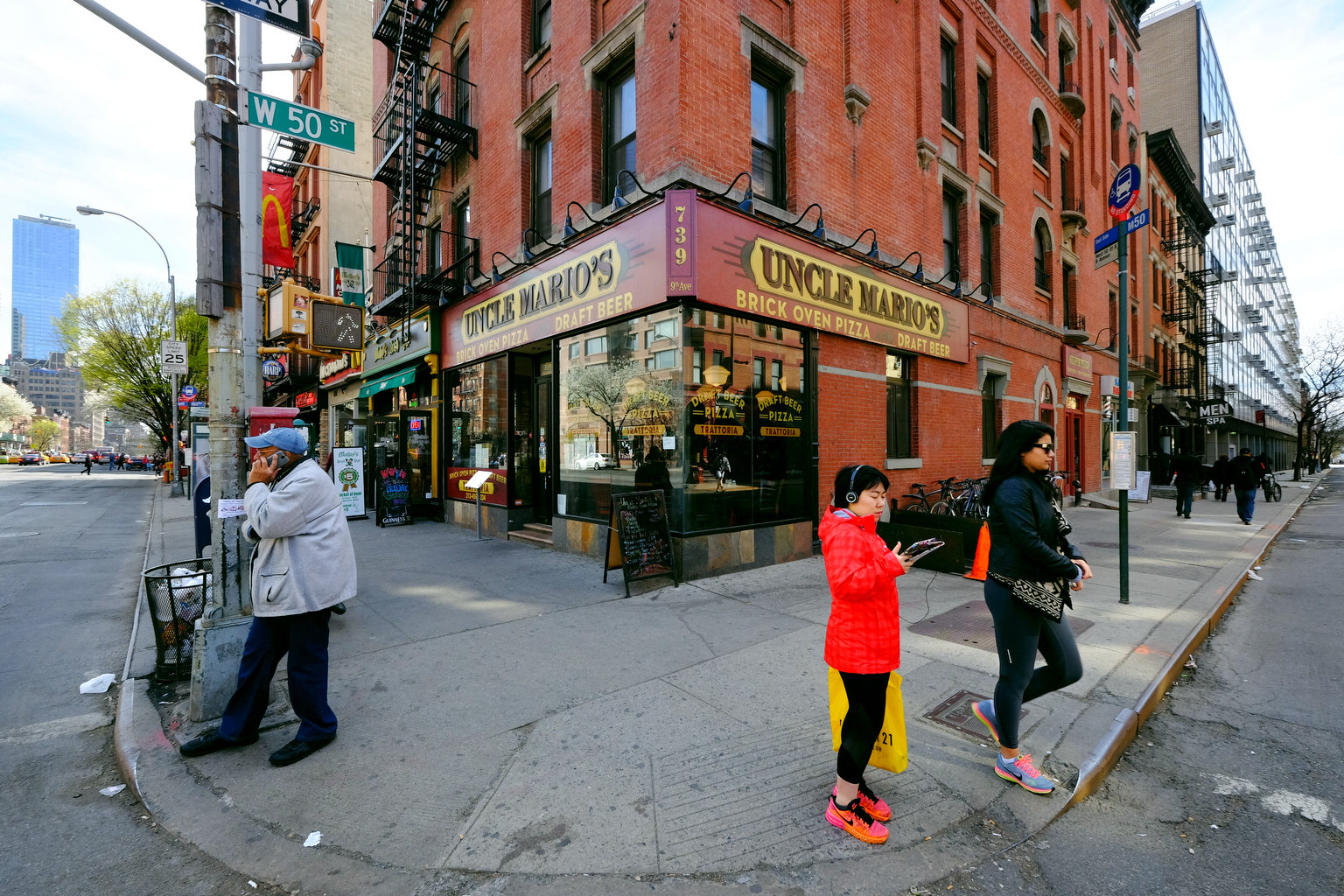
Hell’s Kitchen sits on the West Side of Manhattan, New York City. It is roughly bounded by:
| Boundary | Street/Feature |
|---|---|
| South | 34th Street |
| North | 59th Street |
| East | Eighth Avenue |
| West | Hudson River |
Today it is also called Clinton or Midtown West by real estate developers. But locals have always preferred the original name.
The neighborhood covers ZIP codes 10019 and 10036. It sits right next to Times Square, the Theater District, and the Hudson River piers.
The History of Hell’s Kitchen
A Neighborhood Born From Poverty
The story of Hell’s Kitchen begins in the mid-1800s. Irish immigrants — mostly refugees fleeing the Great Famine — began settling on the west side of Manhattan. They built shantytowns along the Hudson River and took jobs at the nearby docks and railroad.
After the Civil War, the area grew rapidly. Tenements were built quickly and cheaply. The population exploded. Overcrowding, poverty, and filth became the defining features of the neighborhood.
Industrial Chaos on the West Side
The Hudson River Railroad was completed in 1851. This triggered an industrial boom in the area. Businesses flooded in, and not the pleasant kind.
The blocks west of Tenth Avenue were packed with:
| Industry | Location |
|---|---|
| Slaughterhouses | West 39th Street (Abattoir Place) |
| Fat-melting plants | Near Tenth Avenue |
| Soap works | Along the river |
| Tanneries | Along the Hudson |
| Coal and rail yards | Eleventh Avenue |
| Breweries | Throughout the district |
The slaughterhouses on 39th Street were so numerous that the street was actually called Abattoir Place. Blood and offal drained into the gutters. Steam from fat-melting plants rose constantly. Butchers walked between buildings in blood-soaked aprons.
Walking through that block would have looked — and smelled — like something straight out of a nightmare.
Overcrowded Tenements With Terrible Names
Police gave names to the most notorious tenement blocks. These names tell you everything about life there:
- Battle Row
- The Barracks
- House of Blazes
- Sebastopol
- Hell’s Kitchen
These weren’t nicknames given with affection. They were warnings. The names told police officers and visitors exactly what they were walking into.
Why Is It Called Hell’s Kitchen? All the Major Theories
No single origin has ever been confirmed. Historians, local experts, and researchers have identified several competing theories. Here are all of them, clearly broken down.
Theory 1 — The Dutch Fred the Cop Story (Most Popular)
The most repeated origin story involves two police officers witnessing a small riot on the block.
A rookie cop looked at the chaos around him and said: “This place is hell itself.”
His more experienced partner — a veteran officer widely known as “Dutch Fred” — replied: “Hell’s a mild climate. This is Hell’s Kitchen, no less.”
This story has the most legs. It has been repeated in New York Parks Department signage, academic papers, and neighborhood histories. The phrase captures the idea perfectly — that this area was worse than hell itself.
Theory 2 — The 1881 New York Times Article
The earliest known printed use of the name “Hell’s Kitchen” in reference to the NYC neighborhood appeared on September 22, 1881.
A New York Times reporter toured the area with a police escort to cover a multiple murder. He referred to a specific tenement at 39th Street and Tenth Avenue as “Hell’s Kitchen” and described the entire section as “probably the lowest and filthiest in the city.”
This is the first documented use of the name in print. Whether the reporter invented the name or was repeating what locals already called it is unknown.
Theory 3 — The Hell’s Kitchen Gang
A violent street gang known as the Hell’s Kitchen Gang operated in the neighborhood during the 19th century. Their operations included:
- Stealing from railroad yards
- Extortion
- Breaking and entering
- General organized violence
It is possible that the neighborhood inherited the name from the gang — or that the gang took the name from the neighborhood. Historians are split on which came first.
Theory 4 — The Summer Heat
Before air conditioning existed, New York City summers were brutal. The area around the Hudson River docks and factories was known for being especially suffocating in hot weather.
Some locals believed the intense summer heat was the source of the “hellish” nickname. The combination of industrial heat from factories, physical labor, crowded bodies, and no ventilation made the area feel like an oven.
Theory 5 — Dutch Fred’s Restaurant (Heil’s Kitchen)
A German immigrant named Heil owned a diner popular with dockworkers after the Civil War. The restaurant was called Heil’s Kitchen after its owner.
Over time, the name was mispronounced and corrupted by English-speaking locals. “Heil’s” became “Hell’s,” and the name spread to the surrounding neighborhood.
This is considered a plausible theory because it explains the specific word “kitchen” — which is an unusual term to attach to a dangerous slum.
Theory 6 — Imported From London
Some historians believe the name was borrowed from a rough slum district on the south side of London also called Hell’s Kitchen.
The original expression “Hell’s Kitchen” may have been brought to New York by British or Irish immigrants who were familiar with the London district.
Theory 7 — Davy Crockett’s 1835 Quote
In 1835, frontiersman Davy Crockett visited New York and toured the notorious Five Points slum in Lower Manhattan. He wrote about the experience in his autobiography:
He described the residents there as worse than savages — people “too mean to swab hell’s kitchen.”
This is the earliest known use of the phrase in connection with New York City. However, Crockett was not referring to the West Side neighborhood — he was describing Five Points. The phrase migrated to the Hell’s Kitchen area later on.
Theory 8 — The Slaughterhouse Block
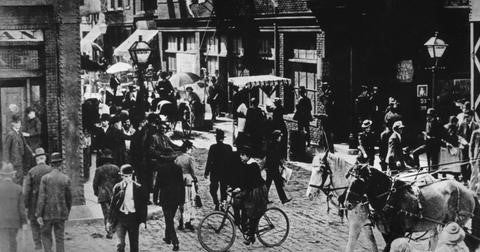
Some historians argue the most literal explanation is the most accurate. The block of West 39th Street between Ninth and Tenth Avenues was lined with slaughterhouses. The sights, sounds, and smells of mass animal slaughter — blood in the gutters, steam rising, the noise of dying animals — made it look exactly like a kitchen from hell.
The name may simply have been a vivid, obvious description of what the block literally looked like.
Timeline: Hell’s Kitchen Through the Decades
| Era | Key Events |
|---|---|
| 1840s–1850s | Irish famine refugees settle along the Hudson River |
| 1851 | Hudson River Railroad completed; industrial boom begins |
| 1857 | Panic of 1857 leads to gang formation across the West Side |
| 1868 | Landmark Tavern opens at 626 11th Ave |
| 1881 | First printed use of “Hell’s Kitchen” in the New York Times |
| 1889 | Term appears in “A Dictionary of Slang, Jargon & Cant” |
| Early 1900s | Gopher Gang controls the neighborhood under One Lung Curran and Owney Madden |
| 1920s–30s | Prohibition era; speakeasies and organized crime flourish |
| 1957 | West Side Story dramatizes Puerto Rican and Irish gang conflicts |
| 1959 | The “Capeman” murders shock the city |
| 1965 | The Westies, aligned with the Gambino crime family, dominate the area |
| 1959 | City begins using the name “Clinton” to rebrand the neighborhood |
| 1986 | Westies gang broken up through RICO convictions |
| 1990s | Gentrification begins; Times Square cleanup helps transform the area |
| 2005 | Gordon Ramsay’s Hell’s Kitchen premieres on Fox |
| 2010s–2020s | Luxury apartments, restaurants, and Broadway visitors redefine the neighborhood |
The Meaning Behind the Name
The phrase “Hell’s Kitchen” has a specific metaphorical logic to it.
Hell is understood as a place of unbearable heat, suffering, and chaos. A kitchen is hotter than any other room — it is the most intense, most chaotic part of any home or establishment.
So Hell’s Kitchen means a place even worse than hell itself. A place so extreme, so dangerous, so overwhelming that regular hell would be a step up.
This metaphor was applied to a neighborhood that was genuinely considered the most dangerous area in New York City — and possibly in all of America — at its peak.
Who Lived in Hell’s Kitchen?
The neighborhood was never home to just one group. It was shaped by wave after wave of immigrants and working-class people with nowhere else to go.
Irish Americans dominated from the 1850s onward, driven there by the Great Famine. They worked the docks, the railroads, and the slaughterhouses. They also ran the gangs.
German immigrants arrived in the late 1860s as laborers and dock workers.
Italian immigrants came in the early 1900s and competed with the Irish for control of the streets and the rackets.
Puerto Rican and African American residents arrived in large numbers from the 1940s onward. The tensions between Irish gangs and Puerto Rican youth were immortalized in West Side Story.
By the 1960s, civic leaders tried to rename the neighborhood “Clinton” to erase its violent image. The attempt largely failed. Locals refused to give up the name.
Hell’s Kitchen Gangs — The Real Story
The neighborhood’s gang history is central to its identity. These were not small-time operations.
The Hell’s Kitchen Gang (19th century) was one of the earliest known groups, operating out of the neighborhood and stealing from railroad yards.
The Gopher Gang rose to power in the early 1900s under leaders like One Lung Curran and later Owney Madden, one of the most powerful mobsters in New York City history.
The Westies were the final and most feared chapter. This Irish-American crew operated from the 1960s through the mid-1980s. They were aligned with the Gambino crime family and were known for extreme violence, murder, and dismemberment of victims.
The Westies were dismantled in 1986 following RICO convictions of most of their leadership.
Hell’s Kitchen vs. Clinton — The Name Battle
In 1959, the West Side Association of Commerce pushed for a new name. They chose “Clinton” — a reference to DeWitt Clinton Park at 52nd and Eleventh Avenue, named after the 19th-century New York governor.
City government adopted the Clinton name. Real estate developers used it to attract buyers and renters.
But it never stuck with residents.
The New York Times noted that people who actually lived in the area “prefer Hell’s Kitchen.” Even today, with luxury apartments and Broadway crowds filling the streets, the name Hell’s Kitchen endures.
The failed rebranding actually helped the neighborhood. Keeping the gritty name added to its authenticity and allure as gentrification arrived.
Gordon Ramsay’s Hell’s Kitchen — What Does It Mean?
Gordon Ramsay’s cooking competition show Hell’s Kitchen premiered on Fox in 2005. It has since run for over 20 seasons in the United States and has been adapted in more than 20 countries.
The name works on multiple levels:
Literal — A professional kitchen is genuinely one of the most extreme working environments. Heat, pressure, speed, and screaming are all part of the job.
Metaphorical — Ramsay’s kitchen is intentionally designed to feel hellish. Contestants are pushed to their absolute limits.
Cultural reference — The name connects to New York’s notorious neighborhood, giving the show a sense of urban toughness and authenticity.
Ramsay himself has not publicly worked in the Manhattan neighborhood. But the show borrowed the spirit of the name perfectly. For many viewers today, Hell’s Kitchen means the show first and the neighborhood second.
Hell’s Kitchen in Pop Culture
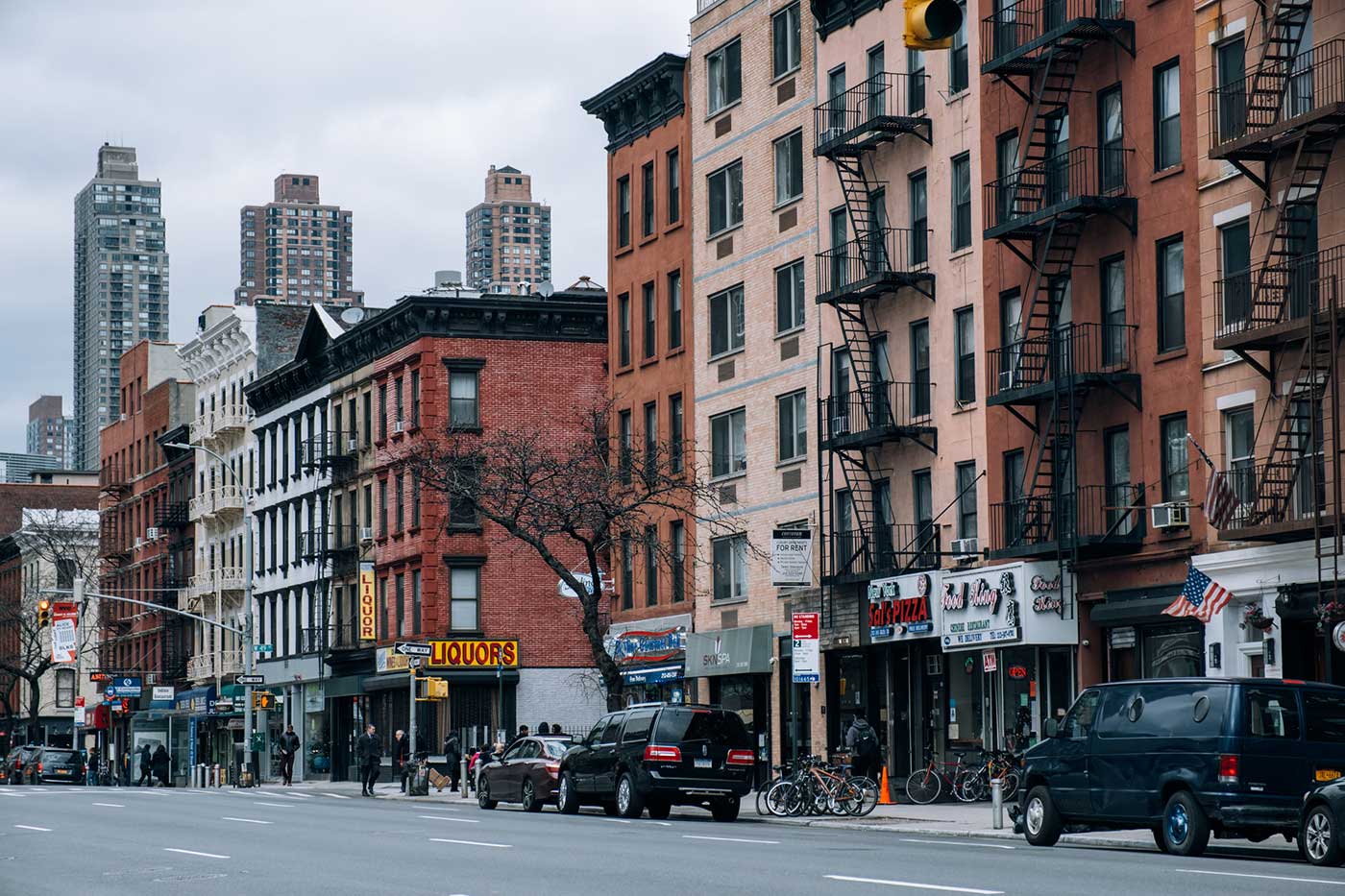
The neighborhood’s reputation made it a natural setting for stories about struggle, crime, and survival.
Marvel Comics set multiple superheroes in Hell’s Kitchen. Daredevil, Jessica Jones, Luke Cage, and Iron Fist all call the neighborhood home. Netflix adaptations of these characters (2015–2017) were largely filmed in and around the area.
West Side Story (1957 musical, 1961 and 2021 films) dramatized the real gang conflicts between Irish and Puerto Rican youth in the neighborhood.
Damon Runyon’s stories frequently featured characters from the West Side.
The neighborhood has appeared in countless films, novels, and television series as shorthand for a certain kind of New York toughness.
Hell’s Kitchen Today — 2026
The neighborhood has transformed dramatically. The Hell’s Kitchen of 2026 looks almost nothing like its 19th or 20th century version.
Today the area features:
- Luxury high-rise apartments
- Hundreds of restaurants representing dozens of cuisines along Ninth and Tenth Avenues
- The Ninth Avenue International Food Festival (running since 1974, every May)
- The Intrepid Sea, Air & Space Museum at Pier 86
- The Theater District and dozens of Broadway-adjacent venues
- The Actors Studio training school
- A large LGBTQ community and numerous LGBTQ bars and venues
- The Hudson River Greenway and new subway access from Hudson Yards development
Crime rates have dropped significantly. The gangs are gone. The slaughterhouses closed decades ago.
But the name remains. It carries history, grit, and identity that no rebranding campaign could ever erase.
Why the Name Survived
Names like Clinton come from committees. Names like Hell’s Kitchen come from experience.
The name survived because it was accurate. It described exactly what people felt when they walked through those streets — danger, heat, chaos, and poverty so deep it felt like another dimension.
Once a name like that takes hold in a community, it becomes part of the community’s identity. It stops being a description and becomes a point of pride.
Even wealthy new residents and tourists embrace the name today. It gives the neighborhood texture and story that bland alternatives like “Midtown West” simply cannot offer.
Related Terms and Concepts
Understanding the Hell’s Kitchen name means understanding several related ideas:
Tenement — A cheaply built, overcrowded apartment building, common in 19th-century immigrant neighborhoods.
Abattoir — A slaughterhouse. West 39th Street was known as Abattoir Place due to the concentration of slaughterhouses there.
RICO — The Racketeer Influenced and Corrupt Organizations Act, used to prosecute the Westies gang in 1986.
Gentry — The wealthier class whose arrival in a neighborhood is called gentrification, a process that transformed Hell’s Kitchen from the 1980s onward.
Five Points — The infamous Lower Manhattan slum where Davy Crockett first used the phrase “hell’s kitchen” in 1835, in reference to the Five Points neighborhood, not the West Side.
The Westies — The Irish-American organized crime group that dominated Hell’s Kitchen from the mid-1960s until 1986.
Summary: Why Is It Called Hell’s Kitchen?
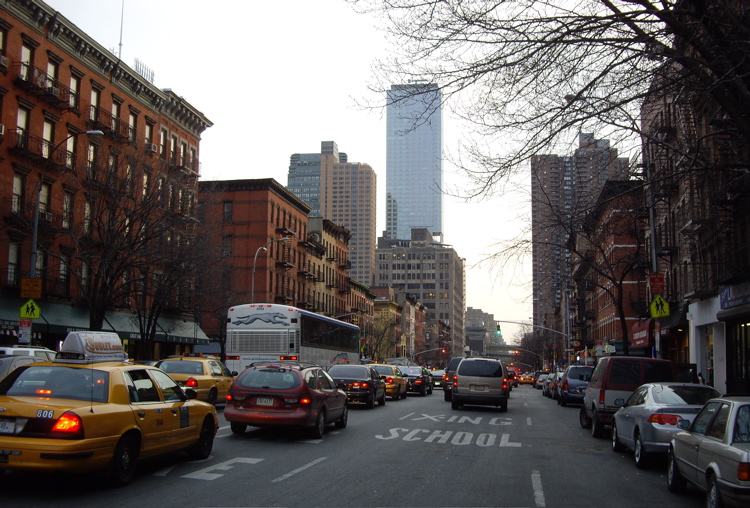
The name Hell’s Kitchen has no single confirmed origin. It emerged from a combination of:
- The brutal living conditions of 19th-century immigrant slums
- The industrial horrors of the slaughterhouse district on 39th Street
- The violence and lawlessness of gang activity
- A police officer’s legendary quip that the place was “hotter than hell”
- A newspaper article from 1881 that put the name in print for the first time
The name stuck because it was true. And it has outlasted every attempt to replace it because it carries meaning that no sanitized alternative can match.
Hell’s Kitchen is a place that earned its name. And it has kept it ever since.
Frequently Asked Questions (FAQs)
Why is it called Hell’s Kitchen in New York?
The name comes from the extreme poverty, violence, and industrial conditions of the 19th-century neighborhood. The earliest printed use appeared in an 1881 New York Times article describing a tenement at 39th Street and Tenth Avenue as the worst block in the city.
What is the origin of the name Hell’s Kitchen?
Multiple theories exist — a police officer’s quip, a German immigrant’s restaurant called “Heil’s Kitchen,” the neighborhood’s gang activity, summer heat, and the blood-soaked slaughterhouses on 39th Street. No single origin has been confirmed.
When did Hell’s Kitchen get its name?
The name first appeared in print on September 22, 1881, in the New York Times. However, the phrase was likely in oral use among locals before that date.
Is Hell’s Kitchen named after the TV show?
No. The neighborhood’s name is centuries older than the show. Gordon Ramsay’s Hell’s Kitchen premiered in 2005 and borrowed its name from the NYC neighborhood’s reputation for heat, chaos, and intensity.
What did Dutch Fred say about Hell’s Kitchen?
A veteran police officer known as Dutch Fred reportedly said, “Hell’s a mild climate. This is Hell’s Kitchen, no less,” when witnessing a riot on 39th Street. This quote is one of the most commonly cited origin stories for the name.
Is Hell’s Kitchen safe today?
Yes. The neighborhood has undergone extensive gentrification since the 1980s and is now considered one of Manhattan’s more desirable areas, with lower crime rates and a thriving restaurant and theater scene.
Why did they try to rename Hell’s Kitchen “Clinton”?
In 1959, the West Side Association of Commerce chose the name “Clinton” to improve the neighborhood’s image and attract investment. City government adopted it, but residents rejected it. The name Hell’s Kitchen has persisted.
What gangs were in Hell’s Kitchen?
The neighborhood was home to the Hell’s Kitchen Gang in the 1800s, the Gopher Gang in the early 1900s, and most famously, the Westies — an Irish-American organized crime group aligned with the Gambino family, active from the mid-1960s until 1986.
What does Hell’s Kitchen mean literally?
It means a place worse than hell itself. A kitchen is hotter than any other room, so “hell’s kitchen” suggests a level of heat, chaos, and suffering beyond what even hell could offer.
Is Hell’s Kitchen connected to Daredevil?
Yes. Marvel Comics set Daredevil, Jessica Jones, Luke Cage, and Iron Fist in Hell’s Kitchen. Netflix adaptations of these characters (2015–2017) used the neighborhood as a setting, bringing new international attention to the name.
Conclusion
Hell’s Kitchen earned its name the hard way — through decades of poverty, violence, industrial brutality, and immigrant struggle.
Whether the name came from a police officer’s sharp tongue, a German diner owner, a gang, a newspaper reporter, or the literal horror of a slaughterhouse street, it stuck because it was honest.
Today, the neighborhood has evolved into one of Manhattan’s most vibrant districts, home to world-class restaurants, theaters, and a diverse community.
But the name Hell’s Kitchen endures — a permanent reminder that where a place has been is always part of where it stands today.
