

If you are asking yourself why do my gums hurt in one spot, you are not alone.
Localized gum pain is one of the most common dental complaints, affecting millions of people every year. It can feel like a dull ache, sharp sting, or throbbing soreness in a single area of your mouth.
The cause could be something as simple as a piece of trapped food or as serious as a gum abscess. Understanding what is happening in that one painful spot is the first step toward fast relief and better oral health in 2026.
What Does It Mean When Your Gum Hurts in One Spot?
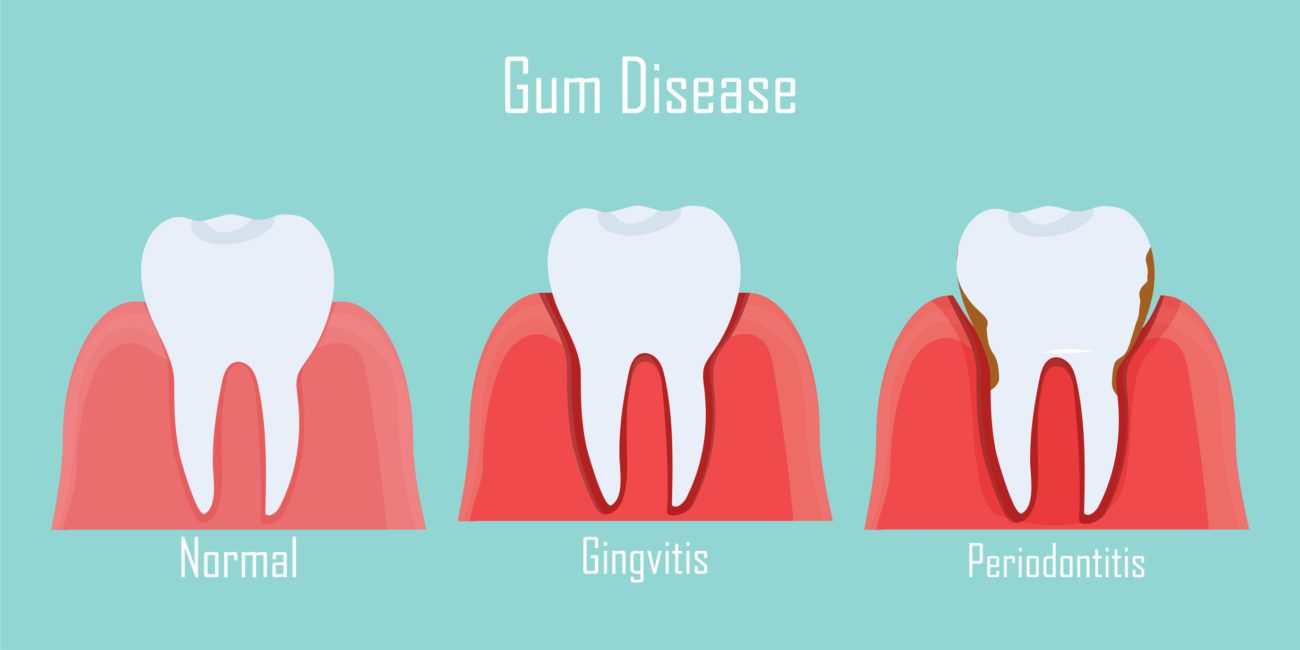
Gum pain that stays in one specific area usually means something local is triggering it. It is not the same as general gum tenderness that spreads across your whole mouth.
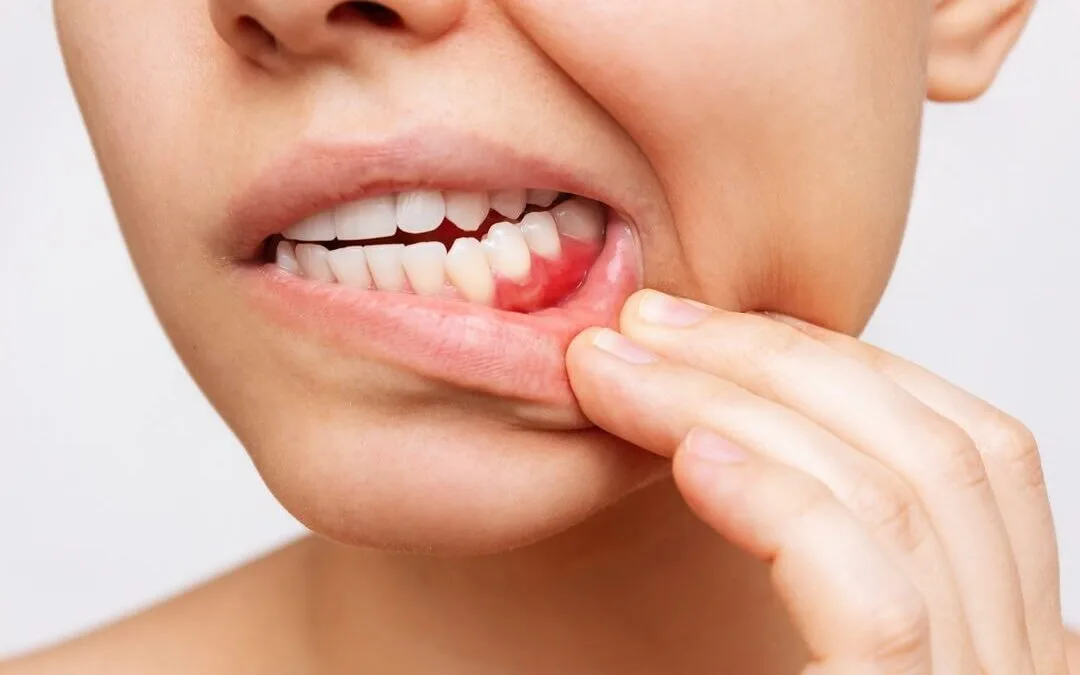
When only one spot hurts, the problem is almost always concentrated there. That could be a trapped food particle, a developing sore, an infection, or early gum disease forming in a single pocket.
Your gums are sensitive soft tissue. Any irritation, pressure, or bacterial activity in a small area will produce pain that you can pinpoint with your finger.
Top Causes: Why Do My Gums Hurt in One Spot?
Trapped Food or Debris
This is the most frequent reason for gum pain in one area. Food particles, especially popcorn hulls, seeds, and tiny bone fragments, can lodge between a tooth and gumline.
If that debris stays there even for a few hours, bacteria begin to multiply. The surrounding gum tissue becomes inflamed, red, and sore.
Fix: Gently floss the affected area and rinse with warm salt water. The pain should ease within 24 hours once the debris is removed.
Canker Sore (Aphthous Ulcer)
Canker sores are small, shallow, painful ulcers that develop on the soft tissue of the gums or inner mouth. They are round with a white or yellow center and a red border.
They can be triggered by stress, minor injuries from eating, acidic foods, or hormonal changes. They are not contagious but can be very painful despite their tiny size.
Most canker sores heal on their own within 7 to 10 days without any treatment.
Gum Abscess (Localized Infection)
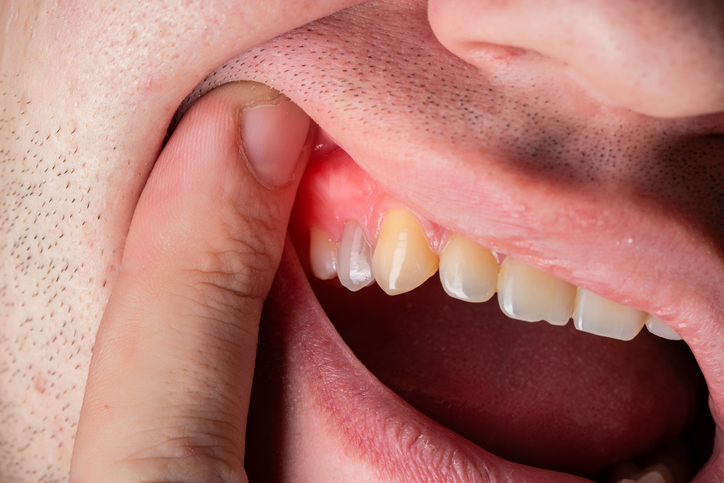
A gum abscess is a pocket of pus caused by a bacterial infection beneath the gumline. It often feels like intense throbbing pain in one exact spot.
You may also notice swelling, a small bump on the gum, a bad taste in your mouth, or even a foul smell. The infection can come from trapped food or an untreated cavity that has spread to the gum tissue.
A gum abscess will not get better on its own. It requires prompt dental attention to drain the infection and prevent it from spreading.
Gingivitis in One Area
Gingivitis does not always affect the whole mouth at once. In early stages, it can develop in just one pocket around a single tooth where plaque buildup is highest.
That localized gingivitis causes redness, tenderness, and slight bleeding when brushing. If left untreated, it can progress to periodontitis, which involves bone loss and deeper tissue damage.
Good news: early gingivitis in one spot is very reversible with proper brushing, flossing, and a professional cleaning.
Gum Recession
When gum tissue pulls back from a tooth, the root becomes exposed. That exposed root has no protective enamel, making it sensitive to temperature, pressure, and touch.
You may feel sharp or stinging pain in one spot when drinking cold water, biting down, or brushing. Gum recession can be caused by aggressive brushing, grinding, or untreated gum disease.
A soft-bristled toothbrush and sensitivity toothpaste are your first line of defense.
Abscessed Tooth
Unlike a gum abscess, a tooth abscess starts at the root tip deep inside the tooth. When a cavity goes untreated or a tooth suffers trauma, bacteria infect the pulp.
That deep infection can radiate pain to the surrounding gum tissue, making it feel like a gum problem when the source is actually inside the tooth.
Treatment usually requires a root canal or, in severe cases, tooth extraction.
Wisdom Tooth Eruption or Impaction
For people in their late teens or twenties, pain toward the back of the mouth near the molars is often linked to a wisdom tooth trying to break through or being partially impacted.
The gum over a partially erupted wisdom tooth can trap bacteria and become inflamed in a condition called pericoronitis. It causes localized swelling, pain, and sometimes difficulty opening the mouth.
Your dentist will take an X-ray to check the tooth’s position and recommend removal if necessary.
Physical Trauma or Irritation
Hard, crunchy, or sharp foods like chips, crackers, or crusty bread can scratch and bruise gum tissue. Brushing too hard or using a firm-bristled toothbrush can do the same.
Even ill-fitting braces, retainers, or dentures can rub against one spot of the gum and create a persistent sore.
Switching to a soft-bristled toothbrush and brushing more gently usually resolves this type of pain within a day or two.
Cracked Tooth or Broken Filling
A cracked tooth can create referred pain that feels like it is coming from the gum beside it. Similarly, a loose filling or rough crown edge can constantly rub the nearby gum.
The gum gets irritated repeatedly every time you bite or chew. That constant friction leads to localized soreness that will not go away until the dental restoration is fixed.
Your dentist can identify this with a visual exam and X-rays.
Hormonal Changes (Particularly in Women)
Hormonal fluctuations during menstruation, pregnancy, or menopause can make gum tissue more sensitive and prone to inflammation.
Some women experience swollen or sore gums in specific areas during these times. The pain is usually temporary and tied to the hormonal cycle.
Maintaining thorough oral hygiene during these periods helps keep the sensitivity manageable.
Teeth Grinding (Bruxism)
If you grind or clench your teeth, especially at night, it places extra pressure on specific teeth and the gum tissue around them. This can cause localized soreness that is hard to explain.
The pain often feels worse in the morning and may shift between spots depending on how you grind. A night guard prescribed by your dentist can protect both teeth and gums.
Causes at a Glance
| Cause | Main Symptom | Home Remedy | See Dentist? |
|---|---|---|---|
| Trapped food | Soreness, swelling | Floss + salt water rinse | If pain lasts over 2 days |
| Canker sore | White/yellow ulcer, stinging | OTC gel, avoid acid foods | If sore lasts over 2 weeks |
| Gum abscess | Throbbing, pus, bad taste | None — seek care immediately | Yes, urgently |
| Gingivitis | Redness, bleeding | Better brushing and flossing | If it does not improve in 1 week |
| Gum recession | Sharp sensitivity to cold | Sensitivity toothpaste | Yes, for treatment options |
| Tooth abscess | Deep throbbing, tooth sensitivity | Pain relief only | Yes, urgently |
| Wisdom tooth | Back-of-mouth pain, swelling | Warm salt water rinse | Yes, for X-ray |
| Physical trauma | Scratched or bruised feeling | Soft brush, gentle care | If pain persists over 3 days |
| Cracked tooth | Pain when biting | Avoid chewing on that side | Yes |
| Bruxism | Morning soreness, headache | Night guard | Yes |
Quick Relief Tips for Gum Pain in One Spot (2026)
1. Warm Salt Water Rinse
Salt water is the most time-tested and dentist-approved home remedy for gum pain. It works by reducing bacteria in the mouth and drawing fluid out of inflamed gum tissue through osmosis.
Mix half a teaspoon of salt into one cup of warm water. Swish gently for 15 to 30 seconds and spit. Repeat two to three times daily.
Do not overdo it. Rinsing more than a few times a day can gradually damage tooth enamel due to the salt content.
2. Cold Compress
Applying a cold compress to the outside of your cheek reduces blood flow to the inflamed area, which brings down swelling and numbs the pain.
Wrap ice in a cloth or use a cold pack. Hold it against your cheek for 15 minutes, then remove for 15 minutes. Repeat as needed in the first 24 to 48 hours.
Never apply ice directly to gum tissue as it can cause tissue damage.
3. Clove Oil
Clove oil contains eugenol, a natural compound with strong antibacterial and analgesic properties. It has been used in dentistry for centuries as a topical pain reliever.
Dab a small amount of clove oil onto a cotton ball and press it gently against the sore gum for a few minutes. You will feel a warming or numbing sensation.
Use it sparingly as it is very potent. Avoid swallowing it.
4. OTC Oral Numbing Gel
Products like Orajel or Anbesol contain benzocaine, a local anesthetic that numbs the gum surface on contact. They provide fast but temporary relief.
Apply a small amount with a clean finger or cotton swab directly to the sore spot. These gels are widely available at pharmacies without a prescription.
They are a good option for managing pain while you wait for a dental appointment.
5. Turmeric Paste
Turmeric contains curcumin, a natural compound with well-documented anti-inflammatory and antibacterial properties. It can soothe gum irritation and reduce redness.
Mix one teaspoon of turmeric powder with a little water to form a paste. Apply it to the affected gum and leave it on for 10 minutes, then rinse thoroughly with warm water.
Note that turmeric can stain teeth or dental work if used excessively, so use it sparingly.
6. Hydrogen Peroxide Rinse
A diluted hydrogen peroxide rinse helps kill harmful bacteria and reduce gum inflammation. Use a 3% solution mixed equally with water.
Swish the solution gently in your mouth for 20 seconds, then spit it out completely. Never swallow hydrogen peroxide.
This is especially useful if you suspect a mild infection or notice early signs of gingivitis in the painful spot.
7. OTC Pain Relievers
Ibuprofen (Advil, Motrin) is the most recommended over-the-counter option for gum pain because it reduces both pain and inflammation at the same time. Acetaminophen (Tylenol) reduces pain but does not address inflammation.
Follow the dosage instructions on the package. Do not take these as a long-term solution without identifying the underlying cause.
Always consult your doctor or pharmacist if you are on other medications.
8. Oil Pulling
Oil pulling involves swishing coconut oil in your mouth for 15 to 20 minutes. Coconut oil is rich in lauric acid, which has anti-inflammatory and antimicrobial properties.
Research suggests oil pulling may help reduce the bacterial count in the mouth, which can ease gum irritation. Spit the oil into the trash (not the sink, as it can clog pipes) and rinse with water afterward.
This works best as a complement to regular brushing and flossing, not a replacement.
9. Aloe Vera Gel
Pure aloe vera gel is soothing and has mild antibacterial properties. It can provide gentle relief for inflamed or irritated gum tissue.
Apply a small amount of food-grade aloe vera gel directly to the sore spot. Leave it for a few minutes before rinsing. It is safe to use a couple of times a day.
Make sure you use a product labeled safe for oral use, not a cosmetic skin lotion.
10. Floss and Rinse Gently
When in doubt, careful flossing is one of the first things you should do. A trapped food particle can cause significant pain that disappears the moment it is removed.
Use gentle, careful strokes around the sore area. Follow immediately with a warm salt water rinse.
If you feel resistance or the area is very swollen, stop and see a dentist rather than forcing the floss.
When Should You See a Dentist?
Home remedies are great for mild gum irritation. But certain signs mean you need professional care right away.
See your dentist if:
- Pain lasts more than 3 days without improving
- You notice visible swelling on the gum or jaw
- You have a bad taste or smell that will not go away
- You see pus or a bump near the sore spot
- You have fever, difficulty swallowing, or jaw stiffness
- A sore or ulcer has not healed after 2 weeks
- You experience pain spreading to the jaw, ear, or neck
Never ignore a gum abscess or signs of spreading infection. These conditions can become serious very quickly and may require antibiotics or emergency dental treatment.
How to Prevent Gum Pain in One Spot
Prevention is the most effective strategy. Most causes of localized gum pain are entirely avoidable with good daily habits.
Brush twice daily using a soft-bristled toothbrush and fluoride toothpaste. Use gentle circular motions and avoid scrubbing hard against the gumline.
Floss every day to remove food and plaque from between teeth where a toothbrush cannot reach. This one habit alone prevents most cases of localized gingivitis.
Use an antibacterial mouthwash to reduce bacterial load throughout the mouth, including in spots your brush and floss may miss.
Schedule dental cleanings every 6 months. Professional cleanings remove tartar that you simply cannot remove at home, no matter how well you brush.
Eat a balanced diet rich in Vitamin C (citrus fruits, bell peppers, broccoli) and calcium (dairy, leafy greens) to keep gum tissue strong and resilient.
Avoid tobacco. Smoking and chewing tobacco are directly linked to gum disease, slower healing, and increased risk of oral cancer.
Drink plenty of water throughout the day to wash away food debris and keep your mouth from becoming dry, which encourages bacterial growth.
Gum Pain vs. Tooth Pain: How to Tell the Difference
It can be confusing to figure out whether the pain is coming from the gum or the tooth itself. Here is a simple way to think about it.
| Feature | Gum Pain | Tooth Pain |
|---|---|---|
| Location | Soft tissue around or between teeth | Inside the tooth or root |
| Triggered by | Touch, food debris, pressure on gum | Biting, temperature, sweets |
| Appearance | Redness, swelling, ulcer visible on gum | May see no visible change |
| Common causes | Gingivitis, abscess, canker sore, trapped food | Cavity, cracked tooth, root infection |
| Relief from salt water rinse | Yes, usually | Sometimes, temporarily |
If you are unsure, the safest move is always to book a dental appointment and let a professional assess the spot.
Diet and Nutrition Tips for Healthier Gums
What you eat has a direct impact on gum health. Certain nutrients strengthen gum tissue and help it resist infection and inflammation.
Vitamin C is essential for collagen production in the gums. A deficiency can make gums fragile and prone to bleeding. Good sources include oranges, kiwi, strawberries, and broccoli.
Calcium helps maintain the bone structure that supports your teeth. Low calcium contributes to loosening teeth and receding gums. Dairy products, fortified plant milks, and leafy greens are great sources.
Folic acid supports healthy cell growth in the gum lining. Beans, lentils, avocados, and asparagus are rich in folic acid.
Avoid excessive sugary and acidic foods. Sugar feeds the bacteria that produce plaque and cause gum disease. Acidic foods and drinks erode enamel and irritate sensitive gum tissue.
The Role of Stress in Gum Pain
Stress is an often overlooked contributor to localized gum pain. It does not directly cause gum pain, but it creates conditions that make pain more likely.
Stress weakens the immune system, making it harder for your body to fight off gum infections. It also increases the likelihood of teeth grinding (bruxism) which puts mechanical stress on specific spots of gum tissue.
Additionally, stressed people tend to neglect oral hygiene, eat poorly, and consume more sugar or tobacco, all of which worsen gum health.
Managing stress through exercise, sleep, and relaxation techniques indirectly protects your gums.
Localized Gum Pain in Children and Teenagers
Children and teens can experience gum pain in one spot too, often for different reasons than adults.
Teething in young children can cause localized soreness as new teeth push through the gum tissue. In teenagers, wisdom teeth are a very common cause of pain at the back of the mouth.
Orthodontic appliances like braces also frequently cause sore spots on the gums from wire friction or pressure on specific teeth. Your orthodontist can apply orthodontic wax to the offending wire to reduce irritation.
Encourage children to practice good oral hygiene from an early age to prevent plaque-related gum problems.
Frequently Asked Questions (FAQs)
Why does only one spot on my gum hurt?
Pain in a single gum spot is almost always caused by something local like trapped food, a canker sore, a small infection, or early gingivitis concentrated in one area.
Can a cavity cause my gum to hurt in one spot?
Yes. An untreated cavity can allow bacteria to reach the root or nearby gum tissue, causing localized pain that feels like it is coming from the gum.
How long does gum pain in one spot usually last?
Minor irritation from trapped food or a small trauma typically clears up in one to two days. If the pain continues past three days, see a dentist.
Is it safe to keep brushing if my gum hurts in one spot?
Yes. Use a soft-bristled toothbrush and brush gently around the sore area. Stopping brushing allows more plaque to build up, which makes things worse.
Can stress cause my gum to hurt in one place?
Indirectly, yes. Stress weakens immunity, increases teeth grinding, and leads to neglected hygiene, all of which can trigger or worsen localized gum pain.
What does a gum abscess feel like?
A gum abscess usually feels like intense throbbing pain in one spot. It may be accompanied by swelling, a small bump, a bad taste in your mouth, or visible pus.
Does salt water actually help gum pain?
Yes. A warm salt water rinse reduces bacteria, soothes inflammation, and promotes healing. It is one of the most effective and dentist-approved home remedies available.
Can wisdom teeth cause gum pain in one spot?
Absolutely. Partially erupted or impacted wisdom teeth are a leading cause of localized gum pain at the back of the mouth, especially in people aged 17 to 25.
When should I go to the ER for gum pain?
Go to an emergency room if you have severe swelling spreading to your jaw or neck, high fever, difficulty breathing or swallowing, or extreme pain that cannot be controlled.
Can gum pain in one spot be a sign of oral cancer?
Rarely, but yes. A sore that does not heal within two weeks, especially if painless at first, should be evaluated by a dentist or oral specialist as a precaution.
Conclusion
Now that you know the answer to why do my gums hurt in one spot, you are better equipped to act quickly and wisely. Whether the cause is a tiny piece of trapped food or the early warning of an infection, the key is to take it seriously and not ignore it.
Start with simple home remedies like warm salt water rinses, flossing, and OTC pain relief. If the pain lasts more than three days, swelling appears, or you notice pus or a bad taste, do not delay a dental visit.
In 2026, dental care is more accessible than ever. Your gum health is a window into your overall health — protect it every single day.
