

5 letter word with o in the middle puzzles have become incredibly popular among word game enthusiasts, especially Wordle players searching for the perfect solution.
These five-letter words feature the letter O positioned precisely in the third spot, creating patterns like “??O??”. With over 1,000 valid combinations including common words like ABOUT, STORY, GLOBE, and THOSE, mastering this specific word pattern can dramatically improve your Wordle success rate and Scrabble scoring potential.
Whether you’re stuck on today’s puzzle or building vocabulary for competitive gameplay, understanding these O-middle words opens up strategic advantages that serious players can’t afford to ignore.
Understanding 5 Letter Words With O in the Middle
Words with O in the middle position follow a specific pattern where the third letter is always O. This creates a structure of two letters before O and two letters after O, forming patterns that appear frequently in English vocabulary.
The middle position (third letter) is particularly important in word games like Wordle. When you identify that O occupies this central spot, you immediately narrow down possibilities from over 12,000 five-letter words to approximately 1,000-1,200 valid options.
This pattern includes everyday words that most English speakers use regularly. Words like ABOUT (approximately), AMONG (in the midst of), CHOSE (past tense of choose), and PHOTO (short for photograph) all follow this exact structure.
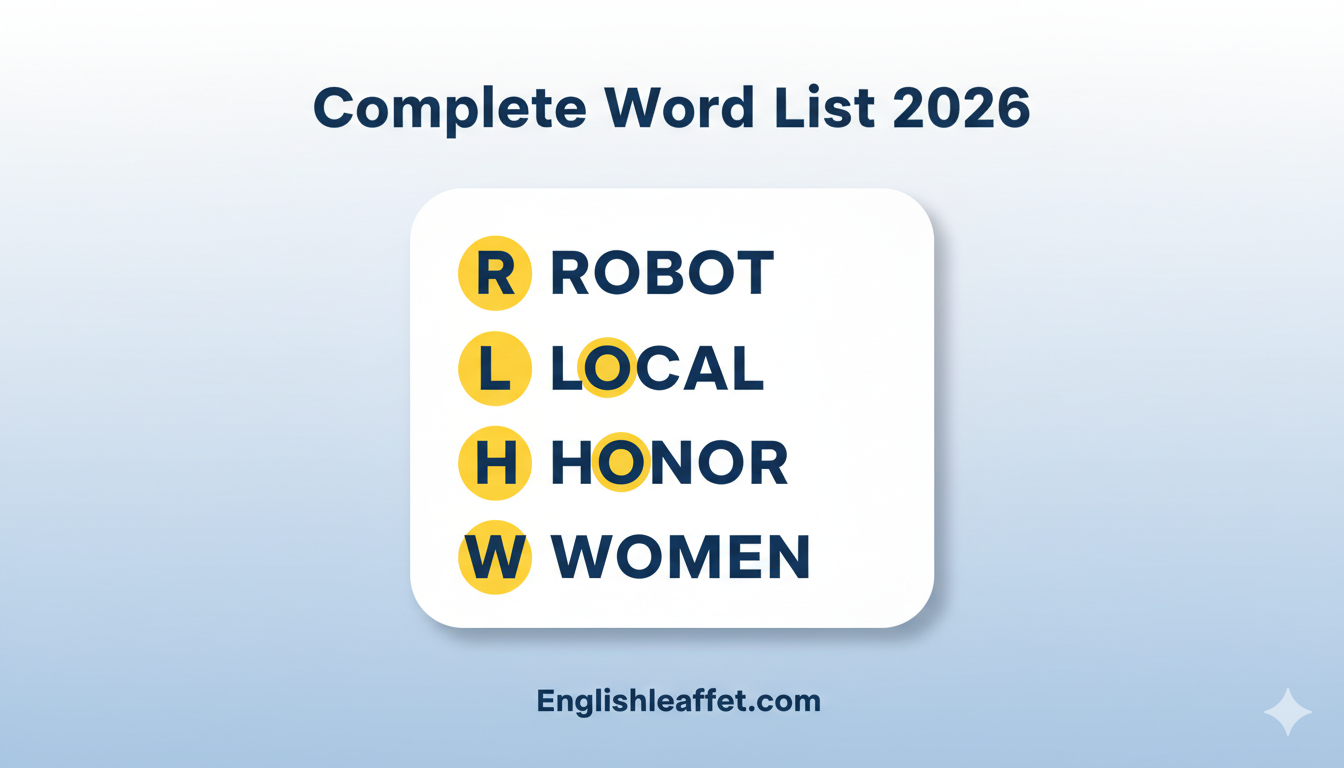
Complete Word List: Common 5 Letter Words With O in the Middle
Here’s a comprehensive collection of the most frequently used five-letter words with O in the middle position:
A – C Words: ABODE, ABORT, ABOUT, ABOVE, ADOBE, ADOPT, ADORE, AFOOT, AGONY, ALONG, ALOOF, AMONG, ANODE, ATONE, ATOPY, AVOID, AWOKE, AXONS, AZOTE, BLOAT, BLOCK, BLOKE, BLOOD, BLOOM, BLOWN, BOOST, BOOTH, BOOTS, BOOZE, BROKE, BROOM, BROOD, BROOK, BROWN, CHAOS, CHORD, CHOKE, CHOMP, CHOOSE, CHOPS, CHORD, CHOSE, CHORE, CLONE, CLOSE, CLOTH, CLOUD, CLOUT, CLOWN, CROAK, CROCK, CROOK, CROON, CROPS, CROSS, CRONE, CRONY, CROWD, CROWN
D – F Words: DEPOT, DIODE, DROME, DRONE, DROOL, DROOP, DROPS, DROSS, DROVE, DROWN, EBONY, ELOPE, EPOCH, EPOXY, ERODE, EXONS, FLOOD, FLOOR, FLORA, FLOSS, FLOUR, FLOUT, FLOWS, FOXED, FROGS, FROCK, FROND, FRONT, FROST, FROTH, FROWN, FROZE, FUTON
G – K Words: GHOST, GHOUL, GLOBE, GLOOM, GLORY, GLOSS, GLOVE, GNOME, GNOSY, GROAN, GROOM, GROPE, GROSS, GROOT, GROVE, GROWL, GROWN, GROUT, IONIC, IRONS, IRONY, IVORY, KIOSK, KNOBS, KNOCK, KNOLL, KNOWN, KNOWS
L – O Words: LEONA, LIONS, LIONS, LOOSE, MEOWS, MOTOR, MOOSE, MOONS, MOORE, MORAL, MORON, NOOSE, OZONE, PHONY, PHONE, PHOTO, PIANO, PIOUS, PIVOT, PRONE, PROOF, PROPS, PROSE, PROUD, PROVE, PROWL, PROXY, QUOTE, RHOMB, SHONE, SHOOK, SHOOS, SHOOT, SHOPS, SHORE, SHORN, SHORT, SHOUT, SHOW, SHOWN, SLOBS, SLOOP, SLOPE, SLOPS, SLOSH, SLOTH, SLOT, SMOKE, SMOCK, SMOTE, SNOBS, SNOOD, SNOOP, SNORE, SNORT, SNOUT, SNOWY, SPOKE, SPOOF, SPOOK, SPOOL, SPOON, SPORT, SPOTS, STOLE, STOMP, STONE, STONY, STOOD, STOOL, STOOP, STOPS, STORE, STORK, STORM, STORY, STOUT, STOVE, STOWS, SWOON, SWOOP, SWORD, SWORE, SWORN
T – Z Words: TALON, THORN, THOSE, THONG, THORN, TOONS, TOOTH, TROOP, TROLL, TROPE, TROTH, TROUT, TROWS, TWOS, UNSOC, VIOLS, WAGON, WHOLE, WHOMP, WHOOP, WHOSE, WOOFS, WROTE, WRONG, WROTE, XENON, ZIONS, ZOOMS, ZOONS
Popular 5 Letter Words With O in the Middle for Wordle
Wordle specifically uses common, recognizable words that average English speakers know. Here are the most likely Wordle answers with O in the middle:
High-Frequency Wordle Words: ABOUT, ABOVE, AMONG, CHOSE, CLOSE, CLOUD, FLOOD, FLOOR, FRONT, GHOST, GLOBE, GLORY, PHONE, PHOTO, PROOF, PROUD, QUOTE, SHONE, SHORE, SHORT, SHOUT, SLOPE, SMOKE, SPOKE, STONE, STORE, STORM, STORY, STOVE, THOSE, WHOLE, WHOSE, WRONG, WROTE
These words appear frequently in everyday conversation and writing. Wordle’s algorithm tends to favor words that players would recognize immediately rather than obscure vocabulary.
When playing Wordle, if you’ve identified O in the middle position, these common words should be your first guesses. They have the highest statistical probability of being the correct answer.
Words Categorized by Letter Patterns
Words Starting With Common Consonants
B-Start Words: BLOCK, BLOOD, BLOOM, BOOST, BOOTH, BROKE, BROOM, BROOD, BROOK, BROWN
C-Start Words: CHAOS, CHORD, CHOKE, CHOMP, CHOSE, CHORE, CLONE, CLOSE, CLOTH, CLOUD, CLOUT, CLOWN, CROAK, CROOK, CROSS, CROWD, CROWN
F-Start Words: FLOOD, FLOOR, FLORA, FLOSS, FLOUR, FLOWS, FRONT, FROST, FROTH, FROWN, FROZE
G-Start Words: GHOST, GLOBE, GLOOM, GLORY, GLOSS, GLOVE, GNOME, GROAN, GROOM, GROPE, GROSS, GROVE, GROWL, GROWN
P-Start Words: PHONE, PHONY, PHOTO, PIANO, PIOUS, PRONE, PROOF, PROPS, PROSE, PROUD, PROVE, PROWL, PROXY
S-Start Words: SHOCK, SHONE, SHOOK, SHOOT, SHOPS, SHORE, SHORN, SHORT, SHOUT, SHOWN, SLOPE, SMOKE, SNOOP, SNORE, SNORT, SNOUT, SPOKE, SPOOF, SPOOK, SPOOL, SPOON, SPORT, SPOTS, STOKE, STOLE, STOMP, STONE, STOOD, STOOL, STOOP, STOPS, STORE, STORK, STORM, STORY, STOUT, STOVE
T-Start Words: THORN, THOSE, TROOP, TROUT, TROLL
W-Start Words: WHOLE, WHOMP, WHOOP, WHOSE, WRONG, WROTE
Words Starting With Vowels
A-Start Words: ABODE, ABORT, ABOUT, ABOVE, ADOBE, ADOPT, ADORE, AFOOT, AGONY, ALONG, ALOOF, AMONG, ANODE, ATONE, AVOID, AWOKE, AXONS
E-Start Words: EBONY, ELOPE, EPOCH, EPOXY, ERODE, EXONS
I-Start Words: IONIC, IRONS, IRONY, IVORY
O-Start Words: OZONE
Scrabble Strategy: High-Scoring O-Middle Words
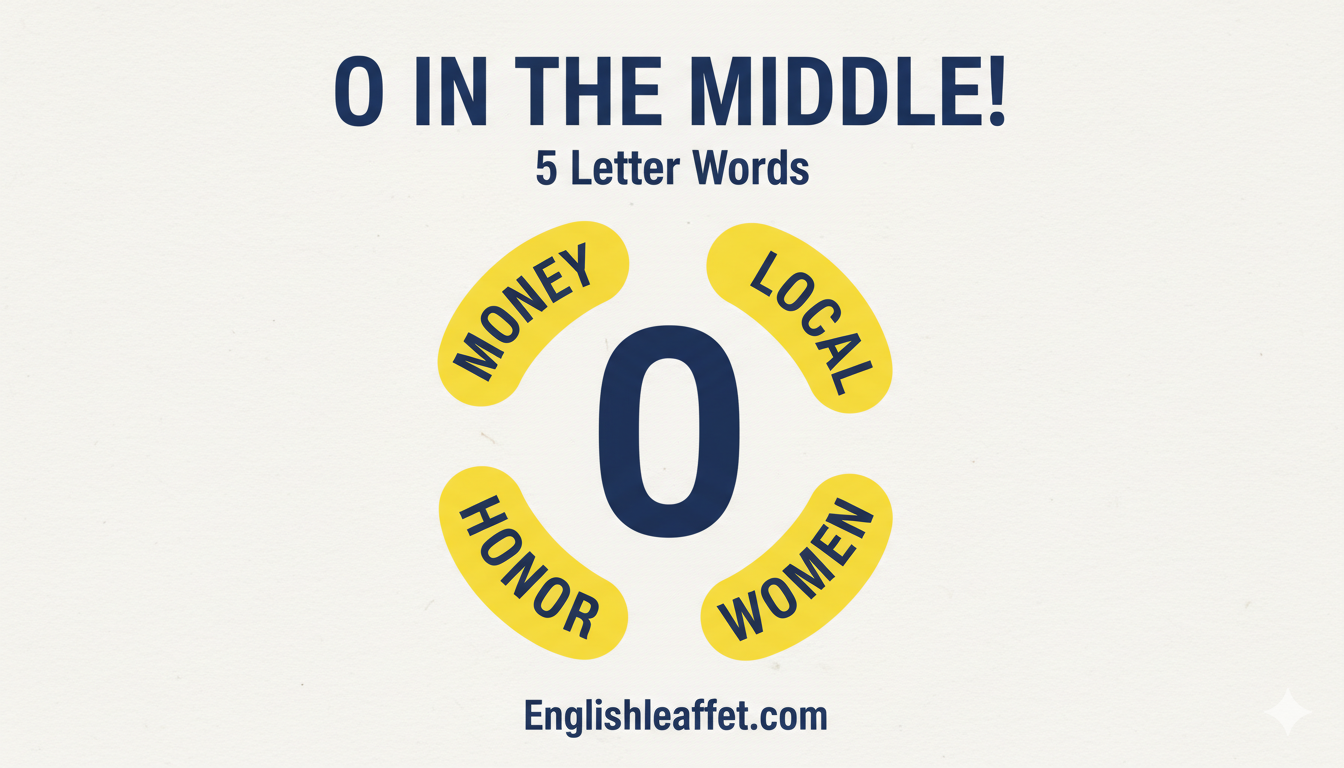
Scrabble players need to maximize points while using their letter tiles efficiently. Here are high-value words with O in the middle:
Premium Scoring Words: EPOXY (17 points), PROXY (17 points), FROZE (17 points), GROZY (18 points), OZONE (14 points), BOOZY (19 points)
Double/Triple Letter Opportunities: Words ending in X, Y, or Z offer bonus scoring when placed on premium squares. PROXY placed on a triple word score with the X on a double letter can yield 51 points.
Words with common consonant clusters like TH, CH, SH, or ST are easier to play because these combinations appear frequently on your rack. THOSE, CHOSE, SHONE, and STONE are tactically valuable.
Vowel-Heavy Options: ABOUT, ADOBE, AFOOT, and AGONY help when you’re stuck with multiple vowels. These words balance your rack while maintaining decent point values.
The key to Scrabble success with O-middle words is recognizing patterns quickly. When you spot O in your tiles, mentally catalog which two-letter combinations work before and after it.
Words With Friends Tactical Advantages
Words With Friends uses slightly different point values and board layout than Scrabble. The game rewards longer words and strategic tile placement more heavily.
Premium WWF Words: EPOCH, GHOUL, IVORY, PROXY, QUOTE, SWOOP, SWORN, WRONG
These words score well in Words With Friends because they use high-value letters (Q, X, Y, Z, W) or create multiple word combinations when placed strategically.
Parallel Play Opportunities: Words like FLOOD, BLOOD, BROOD, and STOOD work excellently for parallel plays. When placed adjacent to existing words, they can create 3-4 additional two-letter words simultaneously.
The TWL (Tournament Word List) and SOWPODS dictionaries used by Words With Friends include all these O-middle words, making them valid plays in competitive matches.
Most Common Letter Combinations
Understanding which letters commonly appear before and after O in the middle helps predict words and make educated guesses:
Common Prefixes (First Two Letters): AB-, AD-, AG-, AL-, AM-, AT-, AV-, AW-, BL-, BR-, CH-, CL-, CR-, DR-, EB-, EL-, EP-, ER-, EX-, FL-, FR-, GH-, GL-, GN-, GR-, KN-, PH-, PR-, SH-, SL-, SM-, SN-, SP-, ST-, SW-, TH-, TR-, WH-, WR-
Common Suffixes (Last Two Letters): -CK, -DE, -FT, -KE, -LD, -LL, -NE, -NY, -OD, -OK, -OM, -ON, -OP, -OT, -OW, -PE, -PH, -RE, -RM, -RN, -RS, -RT, -RY, -SE, -ST, -TE, -TH, -VE, -WL, -WN, -XT, -ZE
Recognizing these patterns helps you construct valid words quickly during gameplay or puzzle-solving.
Nouns With O in the Middle
Nouns represent people, places, things, or concepts. Here are common nouns following the O-middle pattern:
Concrete Nouns: BLOOD, BLOOM, BOOTH, BROOM, BROOD, BROOK, CLOUD, FLOOR, FLOOD, FRONT, FROST, GHOST, GLOBE, GLOOM, GROOM, GROVE, PHONE, PHOTO, PROOF, QUOTE, SHOCK, SHORE, SLOPE, SMOKE, SPOON, STORM, STONE, STORE, STORK, STORY, STOVE, SWORD, THORN, TROOP, TROUT, WHOLE
Abstract Nouns: AGONY, CHAOS, EBONY, EPOCH, GLORY, GNOME, IRONY, IVORY, MORAL, PROOF, PROXY, QUOTE, STORY, TROTH
These nouns appear frequently in everyday writing and conversation. They’re essential vocabulary for clear communication and effective word game play.
Verbs With O in the Middle
Verbs express actions, occurrences, or states of being. Many common verbs follow this pattern:
Present Tense: AVOID, BOOST, CHOOSE, CLOSE, CROSS, DROWN, ELOPE, ERODE, FLOOD, FROST, GROAN, GROOM, PHONE, PROVE, QUOTE, SHOCK, SLOPE, SMOKE, SNOOP, SNORE, SPOKE, STOCK, STOMP, STORE, SWOON, SWOOP
Past Tense: AWOKE, BROKE, CHOSE, CLOSE, DROVE, FROZE, SHONE, SHOOK, SMOTE, SPOKE, STOKE, STOLE, STOOD, SWORE, TROLL, WROTE
Continuous Forms: Many of these verbs can add -ING to become present participles, though that changes them from five-letter words.
Understanding verb forms helps predict word patterns and improves your strategic options during gameplay.
Adjectives With O in the Middle
Adjectives describe or modify nouns. These descriptive words are valuable in both communication and word games:
Descriptive Adjectives: ABOVE, ALONE, ALOOF, BLOWN, BROKE, BROWN, CLOSE, DROLL, FLUOR, FRONT, GHOST, GROSS, KNOWN, LOOSE, MORAL, PHONY, PIOUS, PRONE, PROUD, SHONE, SHORE, SHORT, SHOWN, SMOKE, STOCK, STONY, SWORN, THOSE, WHOLE, WHOSE, WRONG
Comparative/Superlative Forms: Some adjectives can be compared (CLOSE, CLOSER, CLOSEST), though the five-letter form is typically the base adjective.
Color adjectives like BROWN appear in this category. Physical descriptors like SHORT also follow the pattern.
Adverbs With O in the Middle
Adverbs modify verbs, adjectives, or other adverbs, often indicating manner, place, time, or degree:
Common Adverbs: ABOUT (approximately), ABOVE (overhead), AFOOT (in progress), ALOOF (at a distance), ALONG (in company with)
While fewer adverbs follow this exact pattern compared to other parts of speech, those that do appear frequently in English usage.
Many words can function as multiple parts of speech depending on context. CLOSE can be a verb (close the door), adjective (close proximity), or adverb (stand close).
Wordle Solving Strategy With O-Middle Words
When Wordle reveals O in the middle position (green tile in spot 3), employ these tactical approaches:
Step 1: Eliminate Common Words First Start with high-frequency words like ABOUT, THOSE, CLOSE, STONE, PHONE. These appear most often in Wordle’s solution set.
Step 2: Consider Letter Frequency Common starting letters: A, C, F, G, P, S, T, W. Common ending letters: E, D, K, N, T, Y. Prioritize combinations using these letters.
Step 3: Use Process of Elimination If you’ve already eliminated certain letters (gray tiles), avoid words containing them. This dramatically narrows your options.
Step 4: Think About Word Patterns Recognize common patterns like SH-O-RT, ST-O-NE, CL-O-SE. These consonant clusters appear frequently.
Step 5: Consider Vowel Distribution Most five-letter words contain 2-3 vowels. If O is your only vowel so far, look for words with A, E, I, or U in positions 1, 2, 4, or 5.
Words for Different Difficulty Levels
Beginner-Friendly Words
Easy words that most English speakers recognize immediately:
ABOUT, ALONG, AMONG, BLOCK, BLOOD, BLOOM, BROWN, CHOSE, CLOSE, CLOUD, CROWN, FLOOR, FLOOD, FRONT, GHOST, PHONE, PHOTO, PROOF, SHORT, SHOUT, STONE, STORE, STORM, STORY, THOSE, WHOLE, WRONG, WROTE
These words appear in everyday conversation and basic reading materials. They’re perfect for newcomers to word games or language learners.
Intermediate Words
Moderately challenging words requiring broader vocabulary:
ABODE, ABORT, ADOBE, ADOPT, ADORE, ATONE, BROKE, BROOM, CHORD, CHORE, CLONE, EPOCH, EPOXY, ERODE, GLOBE, GLORY, GROAN, GROOM, GNOME, IVORY, PRONE, PROSE, PROUD, PROVE, QUOTE, SHOCK, SLOPE, SMOKE, SPOKE, STOVE, SWORN, THORN, TROOP, TROUT
These require more reading experience or specific knowledge but aren’t obscure.
Advanced/Challenging Words
Less common words that may stump casual players:
ABOHM, AFOOT, AGONY, ANODE, ATOPY, AZOTE, CRONY, DROME, EBONY, ELOPE, EXONS, FUTON, GNASH, IONIC, KIOSK, KNOLL, OZONE, PROXY, RHOMB, STOIC, TROTH, XENON
These words appear less frequently in everyday usage and may require specialized knowledge or extensive vocabulary.
Letter Position Analysis
Understanding which letters commonly appear in specific positions helps strategic guessing:
Position 1 (First Letter): Most common: A, B, C, F, G, P, S, T, W Less common: D, E, I, K, X, Z This position favors consonants, particularly those that can form common digraphs.
Position 2 (Second Letter): Most common: H, L, N, R, T, W Vowels: A, E, I, O, U (moderately common) The second position often completes consonant clusters (TH, SH, CH, BR, CR, etc.)
Position 3 (Third Letter): Fixed as O in all these words.
Position 4 (Fourth Letter): Most common: N, R, S, T Vowels: E, O (moderately common) This position often begins the word ending.
Position 5 (Last Letter): Most common: E, D, K, N, S, T, Y The final position heavily favors consonants, particularly word-ending letters.
Themed Word Collections
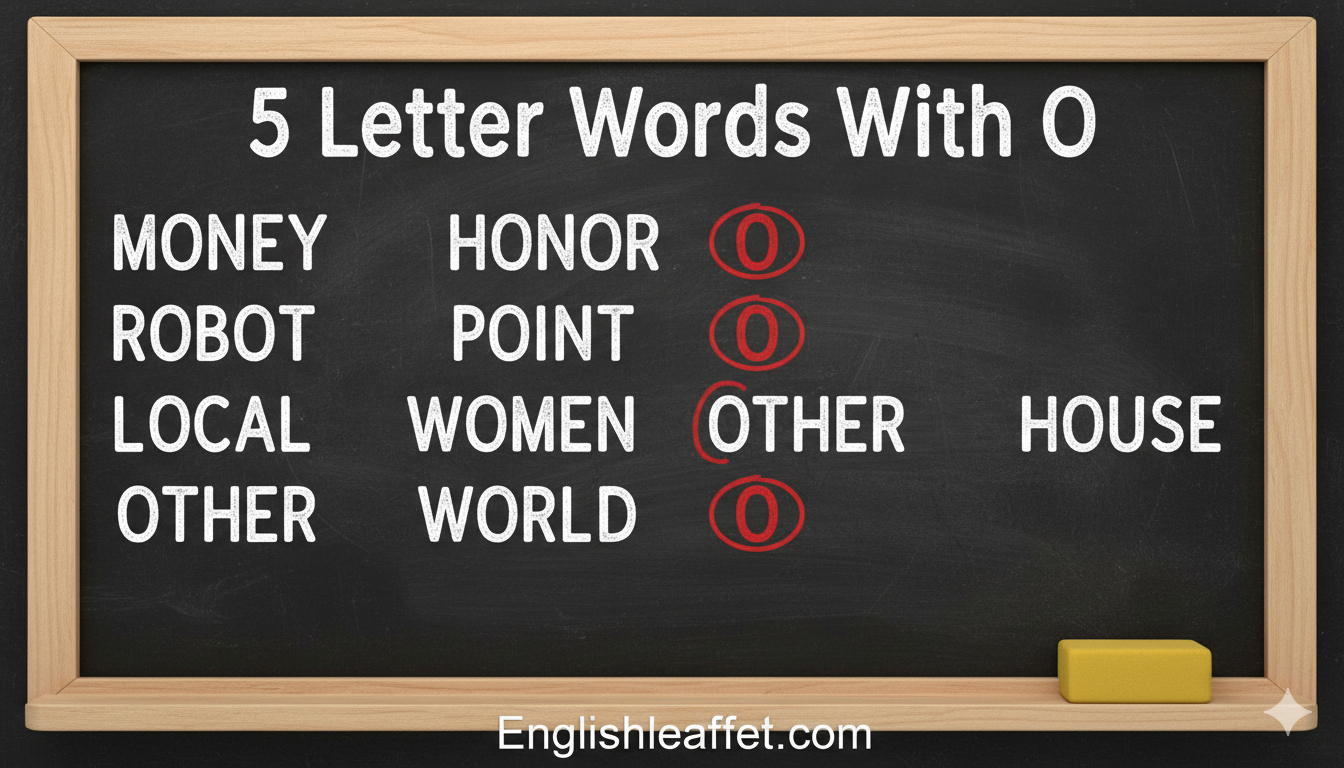
Weather-Related Words
CLOUD, FLOOD, FROST, STORM, SNOWY
These words describe weather conditions and natural phenomena.
Emotion/Feeling Words
AGONY, GLOOM, GROAN, PROUD, SHOCK
Words expressing emotional states or reactions.
Action/Movement Words
CROSS, DROVE, DROWN, ELOPE, FLOAT, FLOWS, GROWL, PROWL, STOMP, SWOON, SWOOP
These verbs indicate physical movement or action.
Nature/Animal Words
BROOD, BROOK, FLORA, FROGS, GROVE, LIONS, MOOSE, STORK, THORN, TROUT
Words related to natural world, plants, and animals.
Technology/Modern Words
PHONE, PHOTO, PROXY, DRONE, KIOSK
Contemporary words often related to technology or modern life.
Common Mistakes to Avoid
Mistake 1: Confusing Letter Positions Remember that “middle” means position 3, not position 2 or 4. Words like OCEAN (O in position 1) or ROBOT (O in position 3 AND 4) may confuse players.
Mistake 2: Overlooking Simple Words Players often jump to complex words when simple options like ABOUT or THOSE solve the puzzle. Always consider common words first.
Mistake 3: Ignoring Word Frequency Rare words like AZOTE or RHOMB are valid but unlikely Wordle answers. Focus on familiar vocabulary.
Mistake 4: Forgetting Verb Tenses Past tense forms (CHOSE, DROVE, WROTE) are equally valid as present tense. Don’t limit yourself to one grammatical form.
Mistake 5: Not Using Elimination If you’ve eliminated certain letters, cross them off your mental list. Don’t waste guesses on words containing eliminated letters.
Regional Spelling Variations
American and British English sometimes spell words differently, though most O-middle words remain consistent:
Consistent Spellings: Most words with O in the middle maintain identical spelling across English variants: ABOUT, CLOSE, PHONE, PHOTO, QUOTE, STONE, STORE, THOSE, WHOLE, WRONG.
Potential Variations: Color-related words might vary (COLOUR vs COLOR), but these are six letters, not five.
Word games typically specify which dictionary they use (Merriam-Webster for American English, Oxford for British English). Familiarize yourself with the appropriate word list for your game.
Expanding Your O-Middle Vocabulary
Reading Strategies: When reading books, articles, or online content, consciously notice five-letter words with O in the middle. This passive learning builds recognition.
Flashcard Method: Create digital or physical flashcards featuring these words. Review regularly to reinforce memory.
Word Association: Group words by theme or pattern. Associating FLOOD with BLOOD and BROOD helps remember all three.
Daily Practice: Play Wordle, Scrabble, or Words With Friends daily. Regular exposure to word patterns improves recognition speed.
Crossword Puzzles: Traditional crossword puzzles feature many five-letter words. Solving them builds vocabulary naturally.
Using Word Finders and Solvers Ethically
Word finder tools can assist learning and practice when used appropriately:
Legitimate Uses:
- Checking whether a word is valid before playing it
- Finding words for practice and vocabulary building
- Learning new words after completing a puzzle
- Teaching and educational purposes
Ethical Considerations: Using solvers to cheat during competitive play defeats the purpose and diminishes achievement. Most serious players consider this unsportsmanlike.
Learning vs. Cheating: The difference lies in timing and intent. Using tools to learn after attempting a puzzle yourself builds skills. Using them instead of thinking provides no educational value.
Tool Features: Many word finders allow filtering by letter position, included/excluded letters, and word length. These features help practice specific patterns.
Pattern Recognition Techniques
Developing pattern recognition skills accelerates word finding:
Visual Patterns: Notice how certain letter combinations look together. TH-, SH-, CH-, -CK, -NG, -NK appear frequently.
Phonetic Patterns: Words often follow pronunciation rules. If you can say it smoothly, it’s more likely to be a valid word.
Morphological Patterns: Understanding word roots and affixes helps predict valid combinations. PHOTO comes from Greek “photos” (light).
Frequency Patterns: Common letters (E, T, A, O, N, R) appear more often. Rare letters (Q, X, Z) appear infrequently.
Practice Exercise: Set a timer for 60 seconds. Write down as many O-middle words as possible. This drilling exercise improves recall speed.
Advanced Wordle Tactics
Opening Word Strategy: Some players recommend starting with words that test common letters. ABOUT tests A, B, T (common) and O, U (vowels). This provides maximum information.
Second Guess Optimization: If your first word reveals O in the middle, your second guess should test different letters while maintaining the O position. SHONE tests S, H, N, E.
Hard Mode Considerations: Wordle’s hard mode requires using revealed hints in subsequent guesses. This limits flexibility but forces logical deduction.
Elimination Efficiency: Track which letters have been eliminated. Mentally maintaining a list of possible letters for each position reduces cognitive load.
Statistical Approach: Some players use letter frequency data from English text corpora. E appears in ~11% of positions, while Q appears in ~0.2%.
Psychology of Word Games
Understanding why these games appeal helps maintain motivation:
Achievement Motivation: Solving puzzles triggers dopamine release. Each correct word provides satisfaction and encourages continued play.
Pattern Recognition Satisfaction: Humans naturally seek patterns. Recognizing word structures satisfies this innate tendency.
Social Competition: Sharing results with friends creates friendly competition. Wordle’s social sharing feature capitalizes on this motivation.
Learning Pleasure: Discovering new words provides intellectual stimulation. The combination of challenge and education appeals to many players.
Routine and Ritual: Daily word games become comfortable routines. This predictability provides structure and reduces decision fatigue.
Educational Applications
Teachers and parents can use O-middle words for educational purposes:
Spelling Practice: These words work excellently for spelling tests. The consistent pattern helps students remember structure.
Vocabulary Building: Learning these words expands functional vocabulary. Each word represents concepts students can use in writing.
Phonics Instruction: The O-middle pattern demonstrates vowel placement rules and consonant clustering.
Reading Comprehension: Recognizing these words quickly improves reading fluency. Automatic word recognition frees cognitive resources for comprehension.
ESL Instruction: English language learners benefit from organized word lists. The pattern provides structure for memorization.
Word Game Tournament Preparation
Competitive players preparing for tournaments should:
Memorize Word Lists: Systematically learn valid words from official dictionaries (TWL, SOWPODS). Focus on unusual valid words opponents might challenge.
Study High-Value Combinations: Memorize words using Q without U, words with X, and other high-scoring combinations.
Practice Speed Recognition: Use timed exercises to improve word-finding speed. Tournament play often includes time constraints.
Learn Anagram Techniques: Quickly rearranging letters mentally improves efficiency. Practice with anagram solvers.
Understand Probability: Know which words appear most frequently. This improves strategic decision-making under pressure.
Digital Tools and Resources
Online Word Finders: Websites like WordFinder, Wordle Solver, and Scrabble Word Finder offer filtering by letter position.
Mobile Apps: Dictionary apps (Merriam-Webster, Oxford) include word game features. Anagram apps help practice letter manipulation.
Browser Extensions: Some extensions provide word suggestions for online games, though these may violate terms of service.
Spreadsheet Databases: Create personal word lists in Excel or Google Sheets. Sort and filter by pattern, length, or point value.
Vocabulary Apps: Apps like Vocabulary.com and Quizlet support custom word lists for study and practice.
Word Origins and Etymology
Understanding word origins enhances appreciation and memory:
Greek Origins: CHAOS (χάος – primordial void), EPOCH (ἐποχή – fixed point in time), GNOME (γνώμη – thought)
Latin Origins: ABORT (aboriri – to disappear), ADOPT (adoptare – to choose), ATONE (at + one – to be at one)
Old English Origins: BLOOD (blōd), BROOD (brōd), FLOOD (flōd), GHOST (gāst), SHOOT (scēotan)
French Origins: ADORE (adorer), CHOSE (chose), CLOSE (clore), FRONT (front), PROOF (preuve)
Etymology reveals why words are spelled particular ways and helps remember them.
Cross-Cultural Word Games
Different cultures enjoy word games with variations:
Scrabble Variations: Over 30 language versions exist. Rules remain consistent, but valid word lists differ by language.
Wordle International: Wordle variants exist in Spanish (Wordle Español), French (Le Mot), German (Wördle), and many other languages.
Cultural Differences: Some cultures emphasize collaborative word games while others prefer competition. Educational approaches vary globally.
Universal Appeal: Despite linguistic differences, the fundamental appeal of word pattern recognition transcends cultures.
Memory Techniques for Word Lists
Chunking: Group words by starting letter (all A-words, all B-words). This organizational system aids recall.
Mnemonic Devices: Create memorable phrases using first letters. “All Bears Can Do Exercises” reminds you of ABODE, BLOOD, CHOSE, DRONE, ELOPE.
Spaced Repetition: Review words at increasing intervals (1 day, 3 days, 1 week, 1 month). This technique optimizes long-term retention.
Active Recall: Test yourself without looking at the list. Active retrieval strengthens memory more than passive review.
Context Association: Create sentences using multiple O-middle words: “The GHOST in the STOVE ate TOAST near the PHONE.”
Seasonal and Topical Words
Certain O-middle words relate to specific seasons or topics:
Winter Words: FROST, FROZE, SNOWY
Spring Words: BLOOM, FLORA, GROVE
Summer Words: SHORE, FLOOD
Autumn Words: BROWN, FROST
Holiday Words: GHOST (Halloween), STORK (baby celebrations)
Connecting words to contexts and experiences improves recall and makes learning more engaging.
Frequency Analysis Data
Based on English language corpora analysis:
Most Frequent O-Middle Words:
- ABOUT – appears in ~0.8% of English text
- THOSE – appears in ~0.4% of English text
- AMONG – appears in ~0.15% of English text
- ABOVE – appears in ~0.12% of English text
- WHOLE – appears in ~0.11% of English text
Least Frequent Valid Words: ABOHM, AZOTE, EXONS, RHOMB – appear in less than 0.001% of text
This data helps prioritize which words to learn first and which are most likely in Wordle.
Creating Your Personal Study System
Step 1: Assessment Test current knowledge. How many O-middle words can you list in 5 minutes? This establishes baseline.
Step 2: Goal Setting Set specific targets. “Learn 20 new O-middle words per week” is more actionable than “improve vocabulary.”
Step 3: Resource Gathering Compile word lists, create flashcards, download apps. Having tools ready reduces friction.
Step 4: Scheduled Practice Dedicate 10-15 minutes daily to focused practice. Consistency outperforms sporadic intensive sessions.
Step 5: Progress Tracking Record which words you’ve mastered. Seeing progress maintains motivation.
Step 6: Application Use new words in actual games and writing. Application reinforces learning more effectively than memorization alone.
Frequently Asked Questions (FAQs)
What are the most common 5 letter words with O in the middle?
The most common words include ABOUT, THOSE, AMONG, CLOSE, PHONE, STONE, WHOLE, STORY, FRONT, and QUOTE. These appear frequently in everyday English usage and Wordle solutions.
How many 5 letter words have O in the middle position?
There are approximately 1,000-1,200 valid five-letter words with O in the middle position, depending on which dictionary you use. Common word lists contain about 240-300 frequently used options.
What is the best starting word for Wordle with O in the middle?
ABOUT is an excellent starting word because it tests common letters (A, B, T) and two vowels (A, O, U). Other strong openers include STONE, THOSE, and PHONE.
Are there 5 letter words with double O in the middle?
No, words cannot have double O in the middle of a five-letter word because the middle position is only one letter (position 3). Words like PROOF have O in position 3 and 4.
Which 5 letter O-middle words score highest in Scrabble?
BOOZY (19 points), GROZY (18 points), EPOXY (17 points), PROXY (17 points), and FROZE (17 points) are among the highest-scoring options in standard Scrabble.
Can proper nouns be 5 letter words with O in the middle?
Proper nouns like BRONX exist but aren’t valid in most word games. Wordle, Scrabble, and Words With Friends only accept common nouns, not proper names or places.
What are good 5 letter words with O in middle for beginners?
Beginner-friendly words include ABOUT, CLOUD, PHONE, PHOTO, STONE, STORY, THOSE, WHOLE, BROWN, SHORT, and FRONT. These common words appear in basic English vocabulary.
How do I practice 5 letter words with O in the middle?
Play Wordle daily, use word game apps, create flashcards, practice with online word finders, and solve crossword puzzles. Regular exposure through actual gameplay improves recognition fastest.
Are there offensive 5 letter words with O in the middle to avoid?
Yes, some valid dictionary words are offensive. Most word game platforms filter inappropriate content, but players should be aware of potentially offensive words when playing casually.
What’s the difference between TWL and SOWPODS word lists?
TWL (Tournament Word List) is used in North American Scrabble, while SOWPODS combines British and American dictionaries for international play. SOWPODS includes more words than TWL.
Conclusion
Mastering 5 letter word with o in the middle patterns unlocks significant advantages in Wordle, Scrabble, Words With Friends, and countless other word puzzles.
With over 1,000 valid combinations ranging from everyday words like ABOUT and THOSE to challenging options like EPOCH and PROXY, this specific letter pattern appears frequently enough to warrant dedicated study.
The strategic value extends beyond simple memorization—understanding common letter combinations, frequency patterns, and grammatical variations transforms casual players into competitive experts.
Whether you’re solving today’s Wordle puzzle, maximizing Scrabble points, or simply expanding your English vocabulary, these O-middle words form an essential foundation.
The combination of high-frequency appearance, diverse meanings, and tactical gameplay utility makes them invaluable knowledge for any word game enthusiast.
