

Rising action definition troubles many students, but it’s actually the most exciting part of any story. Think of it as the rollercoaster climb before the big drop.
Every great book, movie, or play uses rising action to hook readers and build tension.
This guide breaks down rising action with clear examples from literature that will make you understand plot structure like never before.
You’ll discover how authors use this technique to create unforgettable stories.
Let’s dive into the world of rising action and see how it transforms ordinary tales into masterpieces.

What is Rising Action? The Simple Definition
Rising action is the series of events that build tension and develop the story after the exposition but before the climax.
It’s like climbing a mountain – each step gets you higher and closer to the peak.
The rising action creates suspense and makes readers want to know what happens next.
During this phase, conflicts grow bigger and characters face increasing challenges.
Think of rising action as the “buildup” part of any story.
It connects the beginning (exposition) to the most exciting moment (climax).
Without rising action, stories would be boring and flat.
This literary device keeps readers glued to the page.
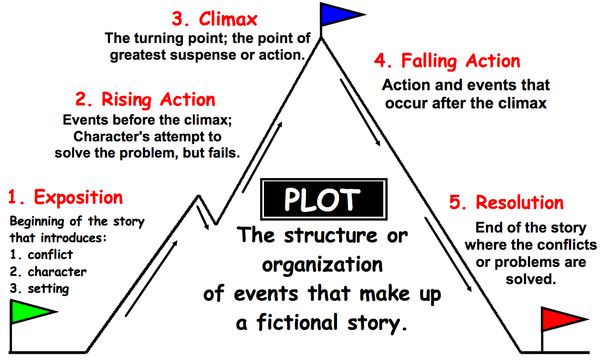
The 5 Elements of Plot Structure: Where Rising Action Fits
Understanding plot structure helps you see how rising action works within the bigger picture.
Every story follows a similar pattern called the plot diagram or story arc.
Here are the five main elements:
1. Exposition The beginning where characters and setting are introduced.
2. Rising Action Events that build tension and develop the conflict.
3. Climax The most intense moment or turning point.
4. Falling Action Events that happen after the climax.
5. Resolution The ending where conflicts are resolved.
Rising action takes up the largest portion of most stories.
It’s the engine that drives the narrative forward.
Without strong rising action, readers lose interest quickly.
Rising Action vs Other Plot Elements: Key Differences
Many people confuse rising action with other plot elements.
Let’s clear up the confusion with simple explanations.
Rising Action vs Exposition: Exposition introduces characters and setting. Rising action develops conflict and builds tension.
Rising Action vs Climax: Rising action leads up to the most exciting moment. Climax is that single most intense moment.
Rising Action vs Falling Action: Rising action builds tension toward the climax. Falling action shows what happens after the climax.
Rising Action vs Conflict: Conflict is the problem in the story. Rising action shows how that conflict develops and grows.
Think of rising action as the journey up the mountain. The climax is reaching the peak. Falling action is the journey down.
How Rising Action Creates Tension and Suspense
Rising action works by gradually increasing the stakes in a story.
Each event makes the situation more difficult for the main character.
Authors use several techniques to build tension during rising action:
Obstacles and Challenges: Characters face increasingly difficult problems.
Time Pressure: Deadlines create urgency and stress.
Emotional Stakes: Characters risk losing something important to them.
Mystery and Questions: Unanswered questions keep readers curious.
Character Development: We learn more about characters as they face challenges.
The best rising action makes readers feel like they’re on an emotional rollercoaster.
Each scene should add another layer of tension.
This keeps readers engaged and eager to continue.
Rising Action in Romeo and Juliet: A Classic Example
Shakespeare’s Romeo and Juliet provides perfect examples of rising action.
The story doesn’t jump straight to the tragic ending.
Instead, Shakespeare builds tension through a series of escalating events.
The Balcony Scene: Romeo and Juliet declare their love, but their families are enemies.
The Secret Marriage: They marry in secret, creating more complications.
Mercutio’s Death: Romeo’s best friend dies in a fight with Juliet’s cousin.
Romeo Kills Tybalt: Romeo kills Juliet’s cousin in revenge.
Romeo’s Banishment: Romeo is exiled from Verona.
Juliet’s Arranged Marriage: Juliet’s parents force her to marry Paris.
The Sleeping Potion: Juliet takes a potion to fake her death.
Each event makes the situation worse for the young lovers.
The tension builds until it reaches the climax where both characters die.
This rising action makes the tragic ending more powerful and emotional.
Rising Action in Harry Potter: Building Magic and Conflict
J.K. Rowling masters rising action throughout the Harry Potter series.
Let’s examine how she builds tension in the first book.
Harry Learns He’s a Wizard: This creates wonder but also confusion.
Sorting Hat Ceremony: Harry almost gets placed in Slytherin house.
Learning About Voldemort: Harry discovers the truth about his parents’ death.
Quidditch Match: Harry’s broom acts strangely during the game.
The Three-Headed Dog: Harry and friends discover something hidden in the school.
Discovering the Philosopher’s Stone: They learn someone wants to steal it.
Hagrid’s Dragon: They help Hagrid with an illegal dragon.
Forest Detention: Harry encounters Voldemort in the Forbidden Forest.
Protecting the Stone: They decide to stop the thief themselves.
Each chapter adds new information and increases the danger.
Rowling keeps readers wondering what will happen next.
The rising action builds toward the climax where Harry faces Voldemort.
Rising Action in The Hunger Games: Survival and Rebellion
Suzanne Collins uses rising action brilliantly in The Hunger Games.
The story builds tension through life-or-death situations.
Katniss Volunteers: She takes her sister’s place in the deadly games.
Training for the Games: Katniss learns skills but faces competition.
The Interviews: She must present herself to win sponsors.
Entering the Arena: The games begin with immediate danger.
The Tracker Jacker Attack: Katniss uses poisonous wasps as weapons.
Rue’s Alliance: Katniss teams up with a young tribute.
Rue’s Death: Katniss loses her ally and friend.
The Rule Change: Two tributes from the same district can win together.
Finding Peeta: Katniss discovers Peeta is badly injured.
The Feast: They risk their lives to get medicine.
The Final Tributes: Only Katniss, Peeta, and Cato remain.
Collins makes each event more dangerous than the last.
The rising action creates emotional investment in the characters.
Readers care about what happens because they’ve been on the journey.
Rising Action in Mystery Stories: Clues and Red Herrings
Mystery writers use rising action to reveal clues and build suspense.
Agatha Christie was a master of this technique.
The Crime Discovery: Someone finds a dead body or theft.
Initial Investigation: Police or detectives begin looking for clues.
Interviewing Suspects: Each person has secrets and motives.
False Clues: Red herrings mislead readers and investigators.
New Evidence: Fresh clues change the direction of the investigation.
Mounting Pressure: The detective faces deadlines or more crimes.
Narrowing Suspects: The list of possible criminals gets smaller.
The Final Clue: One last piece of evidence points to the killer.
Mystery rising action works by giving readers just enough information to stay engaged.
Each clue should either reveal something new or create more questions.
The best mysteries make readers feel like they’re solving the puzzle alongside the detective.
Common Mistakes Writers Make with Rising Action
Many new writers struggle with creating effective rising action.
Here are the most common problems and how to avoid them:
Mistake 1: Too Much Exposition Don’t dump information on readers. Weave background details into the action.
Mistake 2: Flat Tension Each event should increase the stakes. Avoid events that don’t build toward the climax.
Mistake 3: Rushing the Build-Up Give readers time to care about characters. Don’t jump to exciting events too quickly.
Mistake 4: Forgetting Character Development Rising action should reveal character traits. Show how characters change under pressure.
Mistake 5: Weak Connections Each event should connect to the main conflict. Remove scenes that don’t advance the plot.
Mistake 6: Predictable Events Surprise readers with unexpected twists. Avoid clichéd rising action sequences.
Mistake 7: Inconsistent Pacing Balance fast and slow moments. Give readers time to process intense scenes.
Learning from these mistakes helps writers create better rising action.
How to Identify Rising Action in Any Story
Recognizing rising action becomes easier with practice.
Here’s a simple method to identify it in any story:
Step 1: Find the Exposition Look for the beginning where characters and setting are introduced.
Step 2: Locate the Climax Identify the most intense or exciting moment.
Step 3: Mark the Middle Everything between exposition and climax is likely rising action.
Step 4: Look for Increasing Tension Rising action events should build upon each other.
Step 5: Check for Character Development Characters should change or grow during rising action.
Step 6: Identify the Central Conflict Rising action should develop the main problem.
Step 7: Notice the Pacing Rising action typically speeds up as it approaches the climax.
This method works for books, movies, plays, and short stories.
Practice with stories you know well to improve your skills.
Rising Action in Different Genres
Different types of stories use rising action in unique ways.
Understanding these differences helps readers and writers alike.
Romance Novels: Rising action develops the relationship between main characters. Obstacles keep the couple apart. Each scene brings them closer together or pushes them apart.
Horror Stories: Rising action increases fear and supernatural threats. Characters face growing danger. Each event makes the situation more terrifying.
Adventure Stories: Rising action involves physical challenges and quests. Characters overcome obstacles to reach their goal. Each challenge tests their skills and determination.
Science Fiction: Rising action explores futuristic conflicts and technology. Characters adapt to new worlds or situations. Each event reveals more about the science fiction setting.
Fantasy Stories: Rising action builds magical conflicts and quests. Characters develop magical abilities or face magical threats. Each event adds to the fantasy world’s complexity.
Thriller Stories: Rising action creates suspense and danger. Characters face time pressure and life-threatening situations. Each event increases the stakes and tension.
The Psychology Behind Rising Action
Rising action works because it matches how our brains process stories.
Psychologists have studied why this story structure is so effective.
The Anticipation Effect: Our brains release dopamine when we anticipate rewards. Rising action creates anticipation for the climax.
The Investment Principle: We care more about things we’ve invested time in. Rising action makes readers invest emotionally in characters.
The Pattern Recognition: Humans naturally look for patterns and connections. Rising action provides a satisfying pattern of cause and effect.
The Stress Response: Controlled stress (like in stories) can be enjoyable. Rising action creates safe stress that readers can enjoy.
The Curiosity Gap: We have a strong need to fill in missing information. Rising action creates questions that readers want answered.
The Emotional Escalation: We respond strongly to increasing emotional intensity. Rising action gradually increases emotional stakes.
Understanding this psychology helps writers create more engaging stories.
Teaching Rising Action to Students
Educators can use several methods to teach rising action effectively.
These approaches work for different age groups and learning styles.
Visual Methods: Use plot diagrams and story mountains. Show how tension rises like climbing a hill.
Interactive Activities: Have students create their own rising action sequences. Use familiar stories to identify rising action events.
Comparative Analysis: Compare rising action in different genres. Show how different authors handle rising action.
Creative Writing: Have students write short stories with clear rising action. Focus on building tension through connected events.
Multimedia Examples: Use movies and TV shows to demonstrate rising action. Visual media makes the concept clearer for some students.
Story Mapping: Have students map out rising action in their favorite books. This helps them see the structure in action.
Peer Discussion: Let students discuss rising action in small groups. Different perspectives help deepen understanding.
Rising Action in Modern Media
Rising action principles apply to more than just books.
Modern media uses these same techniques to engage audiences.
Television Series: Each episode contains mini rising action sequences. Season-long arcs use rising action across multiple episodes.
Movies: Films compress rising action into 90-120 minutes. Action movies use physical rising action sequences.
Video Games: Players experience rising action through increasingly difficult levels. Story-driven games use traditional rising action techniques.
Podcasts: Narrative podcasts build tension through episodic rising action. True crime podcasts reveal clues like mystery novels.
Social Media: Influencers use rising action to build suspense in their content. Story posts create mini rising action sequences.
Marketing: Advertisers use rising action to build desire for products. Product launches follow rising action principles.
Understanding rising action in modern media helps us become better consumers of information.
Famous Authors and Their Rising Action Techniques
Great authors have signature approaches to rising action.
Studying their techniques improves our understanding of storytelling.
Stephen King: Uses ordinary settings with extraordinary events. Builds tension through character psychology. Creates rising action through mounting dread.
Jane Austen: Develops rising action through social situations. Uses misunderstandings and social pressure. Builds tension through character relationships.
Charles Dickens: Creates rising action through social conflicts. Uses multiple storylines that converge. Builds tension through social injustice.
George R.R. Martin: Uses political intrigue and betrayal. Builds tension through unpredictable character deaths. Creates rising action through multiple perspectives.
Margaret Atwood: Uses social and political rising action. Builds tension through dystopian situations. Creates rising action through female perspectives.
Ernest Hemingway: Uses understated rising action. Builds tension through what’s not said. Creates rising action through character actions.
Each author’s approach shows different ways to handle rising action effectively.

Common Questions About Rising Action
What is the definition of rising action?
Rising action is the part of a story where tension and conflict build after the introduction. It leads directly to the climax.
What describes a rising action?
A rising action includes events, decisions, and character developments that increase suspense. It drives the plot toward its most intense moment.
What is the rising action of the story?
The rising action is the series of plot points that develop the main conflict. It deepens the stakes and builds anticipation for the climax.
What is a good example of rising action?
In The Three Little Pigs, each pig building a house and the wolf testing them is rising action. It builds tension before the final confrontation.
What is the best definition of climax?
The climax is the turning point and most intense moment in the plot. It’s where the main conflict reaches its peak.
What is rising action in a text?
Rising action in a text is the buildup of events that increase conflict or tension. It develops characters and pushes the story forward.
Conclusion: Mastering Rising Action for Better Stories
Rising action definition becomes clear when you see it in action across different stories.
This crucial plot element transforms simple events into compelling narratives.
From Romeo and Juliet’s tragic love to Harry Potter’s magical adventures, rising action creates the emotional journey that keeps readers engaged.
Remember that rising action is about building tension through connected events.
Each scene should increase the stakes and develop your characters.
Whether you’re reading literature or writing your own stories, understanding rising action will deepen your appreciation for great storytelling.
Practice identifying rising action in your favorite books and movies.
Notice how master storytellers use this technique to create unforgettable experiences.
The next time you read a gripping story, you’ll recognize the careful craft behind the rising action that kept you turning pages.
Start applying these principles to your own writing and watch your stories come alive with tension and excitement.
Rising action isn’t just a technical term – it’s the heartbeat of every great story ever told.
