

Why is The Little Mermaid Black? This is one of the most searched questions since Disney announced Halle Bailey as Ariel in 2019.
The casting of a Black actress in this iconic role sparked global debate, viral moments, and a conversation about representation in Hollywood that is still ongoing in 2026.
Whether you are curious, confused, or just want the full picture, this guide breaks down every angle of the story clearly and honestly.
Why Is The Little Mermaid Black? — The Core Answer
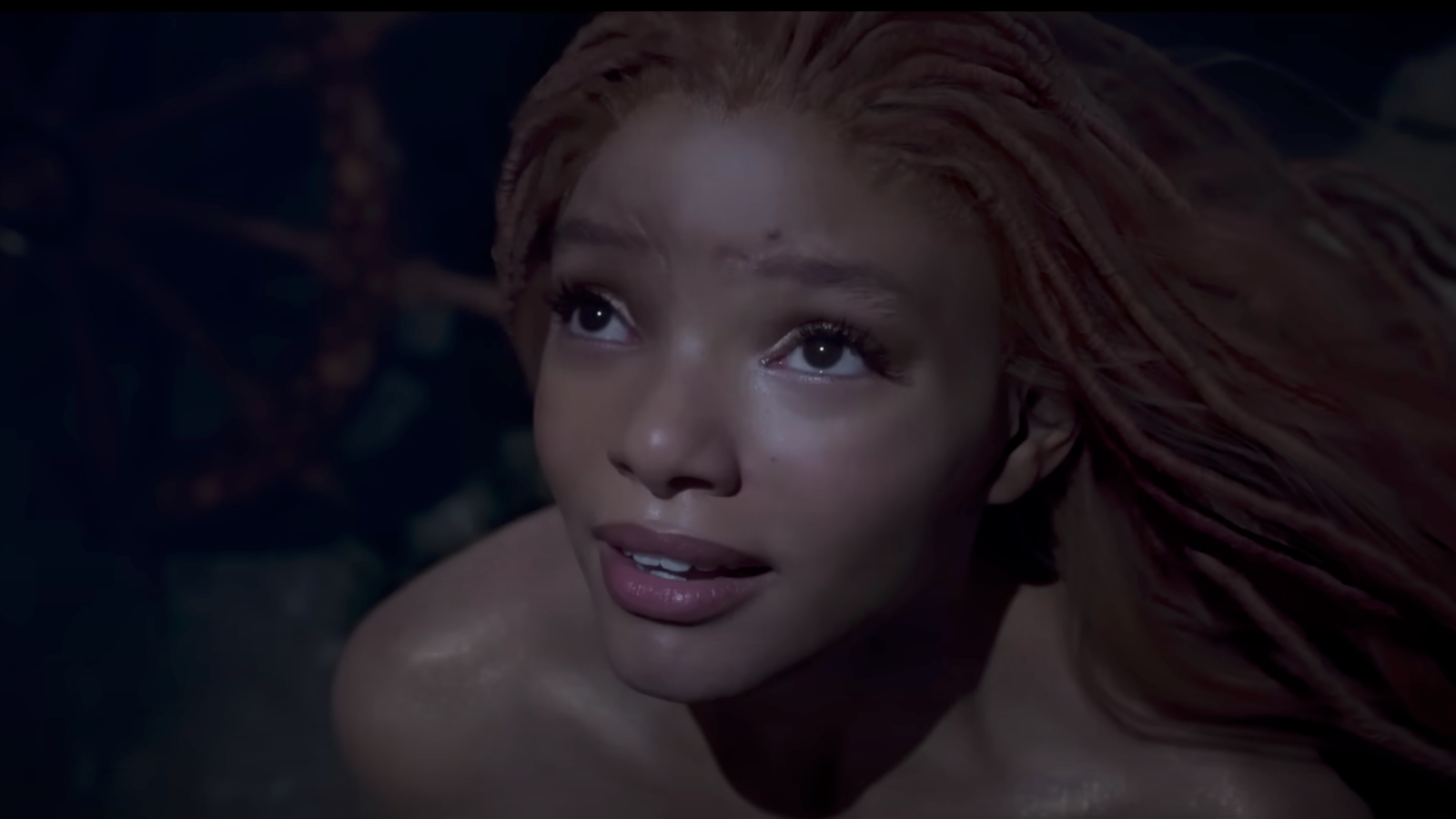
Disney cast Halle Bailey, a Black actress and singer, to play Ariel in the 2023 live-action remake of The Little Mermaid. Director Rob Marshall has been very direct about this: there was no diversity agenda. His team auditioned hundreds of actresses across every ethnicity and simply chose the best person for the role.
Bailey came in, sang “Part of Your World,” and by Marshall’s own words, left him in tears. That was the reason.
Who Is Halle Bailey?
Halle Bailey is an American singer and actress, best known as one half of the R&B duo Chloe x Halle alongside her sister Chloe Bailey. The duo toured with Beyoncé, earned Grammy nominations, and starred in the Freeform series Grown-ish.
She was 19 years old when Disney announced her casting in 2019. By the time the film released in May 2023, she had become one of the most talked-about actresses in the world.
What Did the Director Say?
Director Rob Marshall shut down the “agenda” narrative very clearly and directly.
“We just were looking for the best actor for the role, period. The end,” Marshall told Entertainment Weekly. “We saw everybody and every ethnicity. The goal was to find someone who could be incredibly strong, passionate, beautiful, smart, clever, and with a great deal of fire and joy.”
Marshall has also called critics of the casting “small-minded,” and emphasized that the story of The Little Mermaid is built on universal themes, not racial identity.
Is Ariel Originally a Black Character?
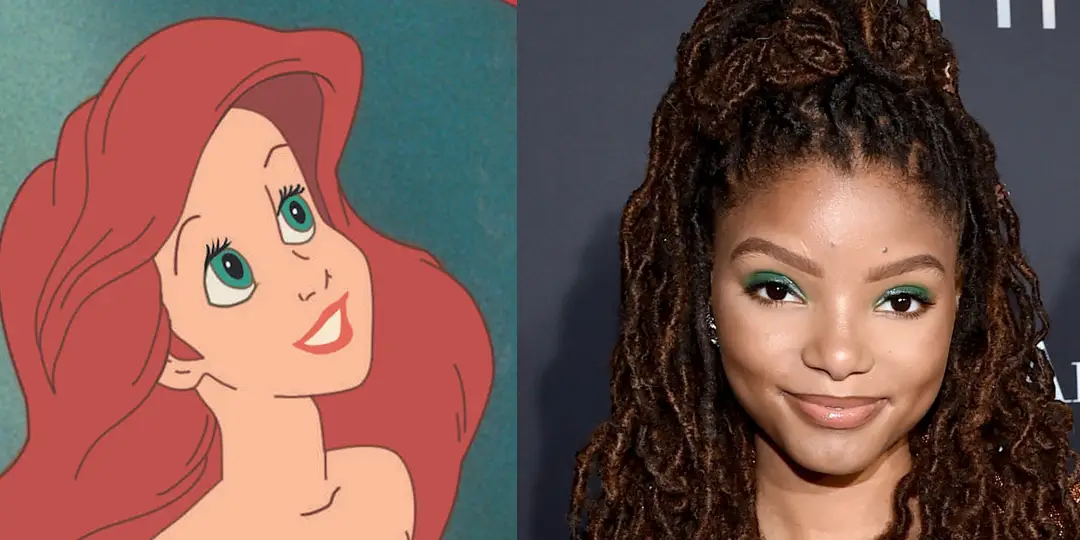
No. In the original 1989 Disney animated film, Ariel is depicted as a white character with red hair. The character is loosely based on a fairy tale by Danish author Hans Christian Andersen, first published in 1837.
However, and this is the key point: mermaids are fictional. They do not belong to any race, ethnicity, or real-world culture. There is no biological or historical rule that says a mermaid must be white.
The History of Disney Princesses and Race
Disney has a long and well-documented history of defaulting to white protagonists.
| Disney Princess | Race/Ethnicity | Year Introduced |
|---|---|---|
| Snow White | White | 1937 |
| Cinderella | White | 1950 |
| Aurora (Sleeping Beauty) | White | 1959 |
| Ariel | White | 1989 |
| Belle | White | 1991 |
| Jasmine | Middle Eastern | 1992 |
| Pocahontas | Native American | 1995 |
| Mulan | Chinese | 1998 |
| Tiana | Black | 2009 |
| Rapunzel | White | 2010 |
| Moana | Polynesian | 2016 |
It was not until 2009, with the release of The Princess and the Frog, that Disney introduced its first Black princess in an original animated film. That is 72 years after the studio’s first animated feature film, Snow White. The context of Halle Bailey’s casting sits directly inside this historical gap.
What Is Colorblind Casting?
Colorblind casting, also called race-neutral casting, is the practice of hiring actors for roles without making race a requirement. The focus is entirely on talent, not skin color.
This approach has been used in theater for decades and is increasingly common in film and television. The 2023 Little Mermaid is one of the highest-profile examples of this practice in modern Hollywood.
Why Did the Casting Cause Such a Strong Reaction?
The backlash was loud, but so was the support. Here is a balanced breakdown.
The Criticism
Many online critics argued that Ariel is a white character from European folklore and should remain that way. The hashtag #NotMyAriel trended heavily on social media after Disney’s announcement. Some pointed to the 1989 animated film as the “definitive” Ariel that should not be changed.
However, research later revealed that a significant portion of the negative social media activity was driven by bot accounts rather than real viewers.
The Support
Viral videos of young Black girls seeing the trailer for the first time went wildly viral. The children’s reactions — shock, joy, tears — showed exactly what representation means at an early age. These videos received millions of views and became a central part of the cultural conversation around the film.
Mattel released an Ariel doll modeled after Bailey, complete with red braids and a mole above the eyebrow. It became a number-one bestseller on Amazon.
The Box Office Reality
Despite the online noise, the film performed strongly in the United States.
| Market | Performance |
|---|---|
| US Opening Weekend | $118.6 million (4-day Memorial Day) |
| US Total Domestic | Over $200 million |
| Global Total | Over $569 million worldwide |
| China | Only $3.6 million (struggled significantly) |
| South Korea | Underperformed due to backlash |
| CinemaScore | “A” grade from audiences |
| PostTrak Audience Score | 91% positive |
The film’s US opening was the fifth-biggest Memorial Day weekend opening of all time. The audience was notably diverse: 35% of ticket buyers were Black, 33% were white, 23% Latino, and 9% Asian or other.
The Representation Argument Explained
Why does on-screen representation matter? Research from the Geena Davis Institute on Gender in Media has found that seeing diverse leads in children’s content is significantly linked to higher self-esteem and stronger career aspirations among children of color.
When a child sees someone who looks like them as a hero, a princess, or a lead character, it sends a clear message: you belong here. Before 2023, young Black girls had very few Disney princesses to connect with. Tiana from The Princess and the Frog was largely the only one.
Halle Bailey herself spoke about what the role meant. “For me, I am just so proud to be a part of being a Black princess and showing these babies and children that representation is so important and for them to be able to see themselves on screen,” she said.
Black Mermaids in Mythology: A Real History
This is the part of the story most people miss. The idea of Black mermaids is not new or invented.
Several African and African diaspora cultures have their own water spirits and sea goddesses that long predate Disney.
Yemaya is the Yoruba goddess of the ocean and the sea. She is widely honored across West Africa and throughout the African diaspora in religions like Candomblé and Santería.
Mami Wata is a water spirit celebrated across Sub-Saharan Africa, often depicted as a woman with a fish tail, much like a mermaid. She is associated with beauty, healing, and wealth.
Oshun is a Yoruba deity connected to rivers, femininity, and divinity. She is among the most celebrated figures in Yoruba spiritual traditions.
Iara comes from Brazilian indigenous mythology, described as the “lady of the lake,” a woman of the water who enchants those who hear her voice.
These traditions show that water spirits and sea beings in the form of women are not limited to European folklore. The concept exists across many cultures.
What Halle Bailey Said About the Backlash
Bailey has spoken openly about the racism she faced after her casting was announced. She has also been remarkably clear-eyed and unbothered about it.
In a 2026 interview with The Independent, Bailey reflected on the experience: “It was actually freeing to be in the middle of this conversation where so many different opinions were coming in… I learned how to block out the noise.”
She has shared that her grandparents — who lived through segregation — told her that the hatred she received was nothing compared to what they experienced. Their words of encouragement grounded her. “You don’t understand what this is doing for us, for our community, for all the little Black and brown girls who are going to see themselves in you,” they told her.
Disney’s Track Record With Diversity
Disney has been steadily diversifying its casts across live-action remakes and original productions. A look at recent choices:
- Halle Bailey as Ariel — The Little Mermaid (2023)
- Yara Shahidi cast as Tinkerbell — Peter Pan and Wendy (2023)
- Leah Jefferies cast as Annabeth — Percy Jackson and the Olympians (2023)
- Noma Dumezweni as Queen Selina — The Little Mermaid (2023)
All of these castings followed a similar pattern: announcement, controversy, viral support, and ultimately strong audience reception.
The “Blackwashing” Debate
Some critics frame the casting of Black actors in traditionally white roles as “Blackwashing,” arguing it is a forced political statement rather than organic storytelling.
This argument has a few significant problems.
First, the original Ariel is based on a fictional mermaid, not a real historical figure. There is no cultural or factual ownership over what she should look like.
Second, the opposite of this — casting white actors in roles originally written for people of color — has happened for decades in Hollywood with little to no controversy. Casting white actors as Arab, Asian, or indigenous characters has been standard practice for much of cinema’s history.
Third, the director explicitly stated that casting was based entirely on talent, not race. Bailey earned the role.
What Critics and Audiences Actually Said
Critics generally praised Bailey’s performance while being mixed on the film overall.
The film received an “A” CinemaScore, which measures audience satisfaction. PostTrak gave it 91% positive audience scores. The issue was never the performance — it was always the casting controversy.
Many reviewers noted that Bailey’s voice was exceptional. Her version of “Part of Your World” was described as transformative, shifting Ariel from a naive girl to a soulful, longing young woman.
Why This Conversation Still Matters in 2026
Three years after the film’s release, the conversation about Halle Bailey as Ariel still surfaces online regularly. This is because it sits at the intersection of several large, ongoing debates.
Hollywood diversity and inclusion — Who gets cast in what roles, and why?
The definition of iconic characters — Can a fictional character’s race be changed? Should it be?
The power of representation — Does on-screen diversity actually help real-world self-esteem in children?
The role of social media in culture — How much of the “backlash” was genuine, and how much was manufactured by bots and bad actors?
There are no simple answers to any of these questions. But they are worth asking carefully and honestly.
Timeline of Key Events
| Date | Event |
|---|---|
| 2019 | Disney announces Halle Bailey as Ariel |
| 2019 | #NotMyAriel trends on social media |
| September 2022 | First official trailer released; viral Black girls’ reaction videos |
| May 26, 2023 | The Little Mermaid opens in US theaters |
| May 2023 | $118.6M domestic opening weekend |
| May 2023 | Struggles in China ($3.6M), South Korea ($4.4M) |
| 2023 | Final global gross: over $569 million worldwide |
| 2026 | Halle Bailey reflects on the experience positively |
What Parents Should Know
If you are watching the 2023 Little Mermaid with your children, here is the honest summary:
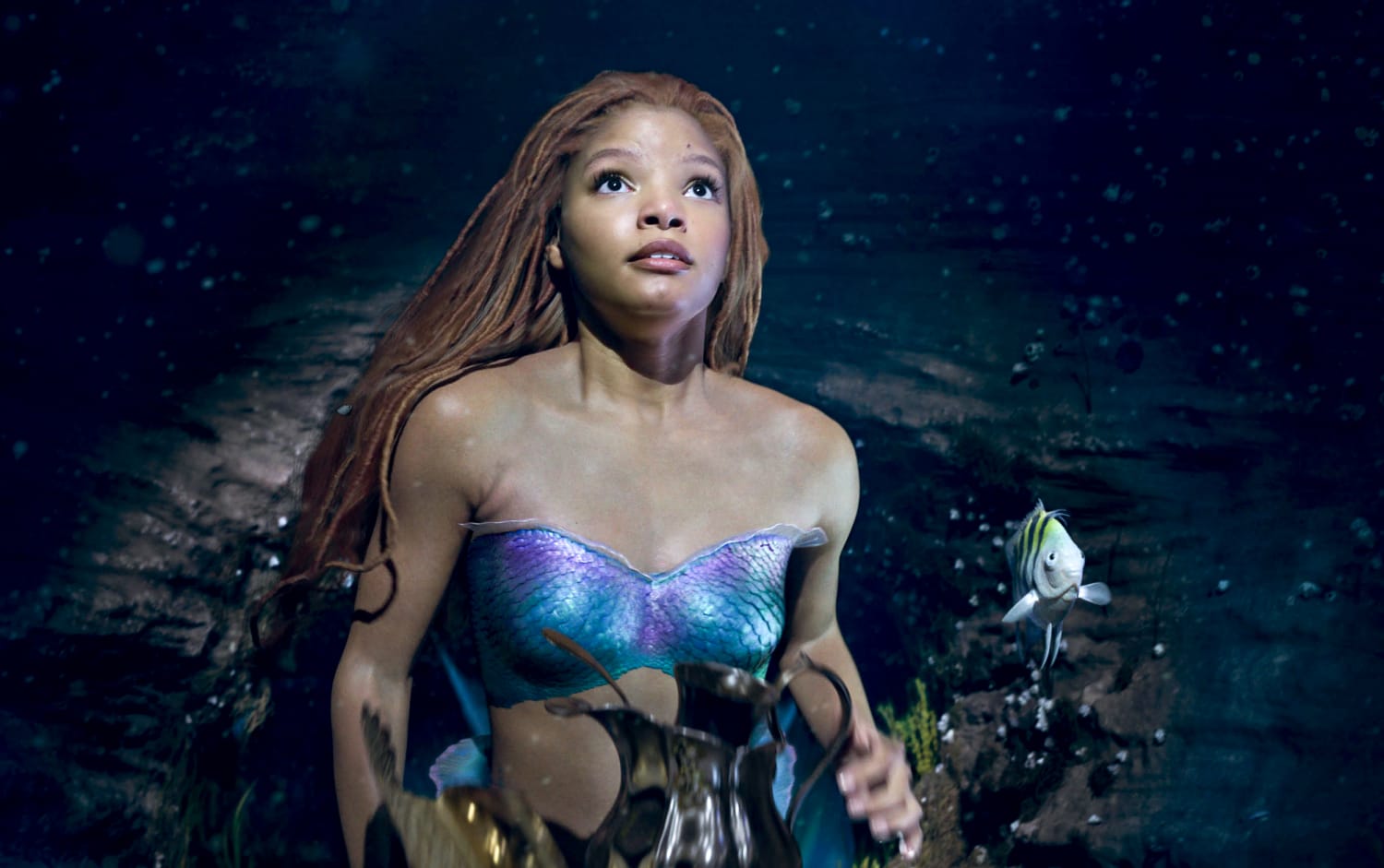
The film follows the same basic story as the 1989 original. Ariel is curious, adventurous, and determined to explore the human world. She saves a prince from a shipwreck, makes a deal with Ursula, and ultimately finds love and belonging.
The core themes — curiosity, courage, independence, and family — are identical. The only meaningful change for younger viewers is that Ariel now has brown skin and locs instead of white skin and straight red hair.
For many children, that change is not a loss. It is a gain.
The Bigger Picture: What This Casting Tells Us
The debate over Halle Bailey’s casting as Ariel reveals something important about how society thinks about race and media.
When a white character is reimagined as Black, it is called political or controversial. But when a character of color is reimagined as white, it is considered standard. That double standard is worth noticing, regardless of where you stand on the casting choice itself.
The film exists. Bailey’s performance is widely celebrated. Young Black girls have a Disney princess who looks like them. And the conversation continues — which, ultimately, may be exactly the point.
Frequently Asked Questions (FAQs)
Why is The Little Mermaid Black in the 2023 movie?
Disney cast Halle Bailey, a Black actress, after an open audition across all ethnicities. Director Rob Marshall chose her purely based on her talent, voice, and performance.
Who is Halle Bailey?
Halle Bailey is an American R&B singer and actress, one half of the Grammy-nominated duo Chloe x Halle. She was discovered and mentored by Beyoncé.
Was there a diversity agenda behind the casting?
Director Rob Marshall denied any casting agenda. He stated clearly that his team auditioned every ethnicity and hired the best performer for the role.
Did The Little Mermaid 2023 do well at the box office?
Yes, it opened to $118.6 million domestically over Memorial Day weekend and grossed over $569 million worldwide. It underperformed in China and South Korea.
What is the original Little Mermaid based on?
It is based on a Danish fairy tale by Hans Christian Andersen, first published in 1837. The 1989 Disney animated film was the most well-known adaptation before 2023.
Was Ariel always white in the original story?
In the 1989 Disney animated film, Ariel appears as a white character. However, mermaids are fictional creatures and have no inherent racial identity in Andersen’s original text.
What is colorblind casting?
Colorblind casting means hiring an actor for a role based entirely on talent, without race being a requirement. It is a common practice in theater and increasingly in film.
How did Black children react to the new Ariel?
Videos of young Black girls seeing the trailer for the first time went viral on TikTok and Instagram, showing joyful and emotional reactions. These videos were widely shared globally.
Are there Black mermaids in mythology?
Yes. African and diaspora traditions include Yemaya, Mami Wata, and Oshun — powerful female water spirits with mermaid-like qualities that predate Disney by centuries.
What did Halle Bailey say about the backlash?
Bailey has spoken positively about the experience, saying it was “freeing.” She credits her grandparents’ encouragement and her own ability to block out negativity for helping her through it.
Conclusion
Why is The Little Mermaid Black? Because Disney director Rob Marshall auditioned hundreds of actresses and chose the most talented one.
Halle Bailey is a Grammy-nominated singer with extraordinary vocal range, natural screen presence, and the emotional depth the role demanded. Her race was never the criterion — her talent was.
The cultural conversation that followed her casting revealed deep, ongoing tensions around representation, diversity, and who gets to be a princess.
The film grossed over $569 million worldwide, earned strong audience scores, and gave an entirely new generation of children — especially young Black girls — a princess they could see themselves in.
Whatever side of the debate you sit on, the impact of Halle Bailey’s Ariel is real, documented, and lasting. That is the true story behind the question.
